
Flounder with potatoes and a barrel of herring
The Wikipedia entry on Pomeranian cuisine describes it as a mixture of the cuisine of the German-speaking and Pomeranian population with Swedish and Danish influences. In the coastal part it grew out of settlements of sailors and fishermen, and in the south, in the lakeland belt, it was the cuisine of farmers: the main crops included turnips, sugar beet and potatoes, and poultry farming was also important. Wikipedia points out that from the beginning of the 19th century many settlements hosted holidaymakers, which also left its mark on the cuisine.
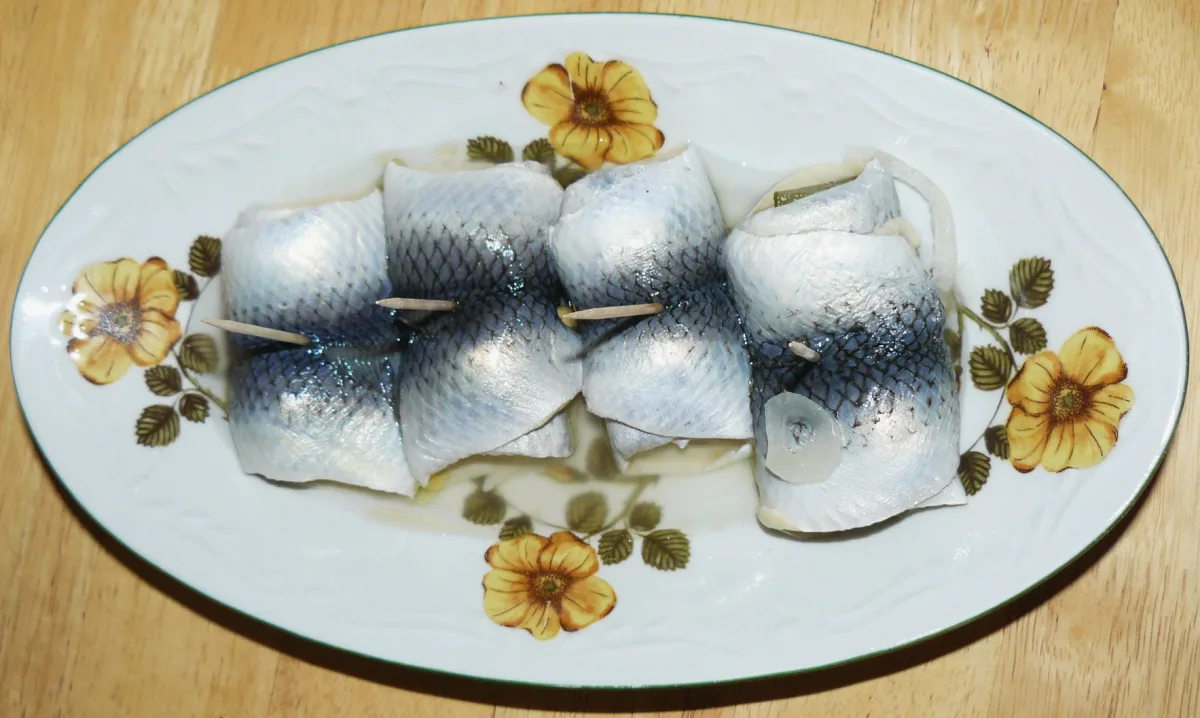
According to the same entry, among the dishes of coastal settlements in the 19th century smoked eels and salmon, marinated herring and even gulls' eggs were popular. The most popular dish, however, was flounder cooked in one pot with potatoes. Large quantities of salted herring were also eaten. The entry adds that sea and freshwater fish were popular at local stalls and that the old tradition of rybaczenie, that is, fishing for one's own use in waters that were not necessarily one's own, was alive.
On the Baltic shore, as Wikipedia writes, hot-smoked herring is also popular: pikling in Polish, böckling in Swedish, bückling in German. The entry also lists Bismarck-style marinated herring among the traditional dishes of Pomeranian cuisine. A museum showing old fishing is housed in the former town hall in Świnoujście; according to Wikipedia it has natural history, maritime and history departments.
Geese, ham and Sunday półgęsek
Wikipedia, in the entry on półgęsek, states that it was an Old Polish dish: boneless goose breast with the skin, cured and smoked. It was treated as a fairly luxurious dish, eaten mostly in noble manor houses. In the 19th century półgęski became widespread in Pomerania, where raising geese for giblets became common. The giblets were exported to France for Strasbourg pâté, and the meat went to the local market.
The entry on Pomeranian cuisine adds that półgęski were eaten together with ham only on Sundays. On ordinary days dinner began around twelve o'clock and most often consisted of a single course, soup: pea soup, sweet-and-sour bean soup, krupnik (barley soup), potato soup, swede soup, with a meat addition depending on the housewife's means. On Fridays dinners were meatless: mushroom or fish soup, then pasta, herring, pancakes with marmalade or potatoes with fried eggs for the main course. After a pig was slaughtered there was more meat, from which hams, lightly smoked liver sausage and cervelat were made.
A description of the table at the manor in Warcino, which Wikipedia cites from Joachim von Kürenberg's 1952 book about Johanna von Bismarck, says a lot about this cuisine: cheeses as big as cartwheels, mushrooms, lapwing eggs, long sausages, liver sausage from Darłowo, smoked fish from Słupsk and large breasts of smoked geese. This is a description of a wealthy manor, not of the everyday dinner of a village family. Wikipedia also writes that before the First World War smoked sprats from Słupsk became famous in France.
Szczecin and herring
According to National Geographic Traveler magazine, Szczecin has been associated with herring since the 19th century: in every grocery shop there then stood large vats of salted herring. The love of this fish was taken up by several enthusiasts who in 2001 founded the Szczecin Herring-Eaters' Club. According to the same text they developed nearly 2,000 recipes with herring in the leading role: from herring dumplings and herring black pudding to salads, cakes, desserts and even herring vodka.
Herring Szczecin style (Śledzie po szczecińsku) is on the Ministry of Agriculture and Rural Development's list of traditional products, in the category of fishery products. According to the gov.pl website it was entered on 2 March 2015.
A Szczecin cookbook from 1845
A Szczecin cookbook has survived from the 19th century, the Stettiner Kochbuch by Marie Rosnack, published in 1845. The Encyclopaedia of West Pomerania (pomeranica.pl) gives from it a recipe for Szczecin gingerbread: a pound of good sugar syrup, a pound of fine flour, half a lot of purified potash, half a lot of pork lard, cinnamon, lemon peel, cloves, mace and a little pepper. Szczecin gingerbread was entered on the list of traditional products on 28 July 2011.
Wikipedia mentions another book: in the cookbook Pommersche Küche, published in 1905, there is a recipe for beer soup to which soaked herring was added. Wikipedia cites it via the website smakizpolski.com.pl.
After 1945
The make-up of the cuisine changed after the war. Wikipedia writes that pierogi, buckwheat dishes and pierogi with sour milk came into the regional cuisine with Poles expelled from the Kresy (the former eastern borderlands) and from the south of Poland, among others Lemkos. The entry concerns the whole of historical Pomerania, not Szczecin alone.


Be the first! Add a comment.
You need to log in to add a comment.
Log in