
The Quistorp cement works in Lubin
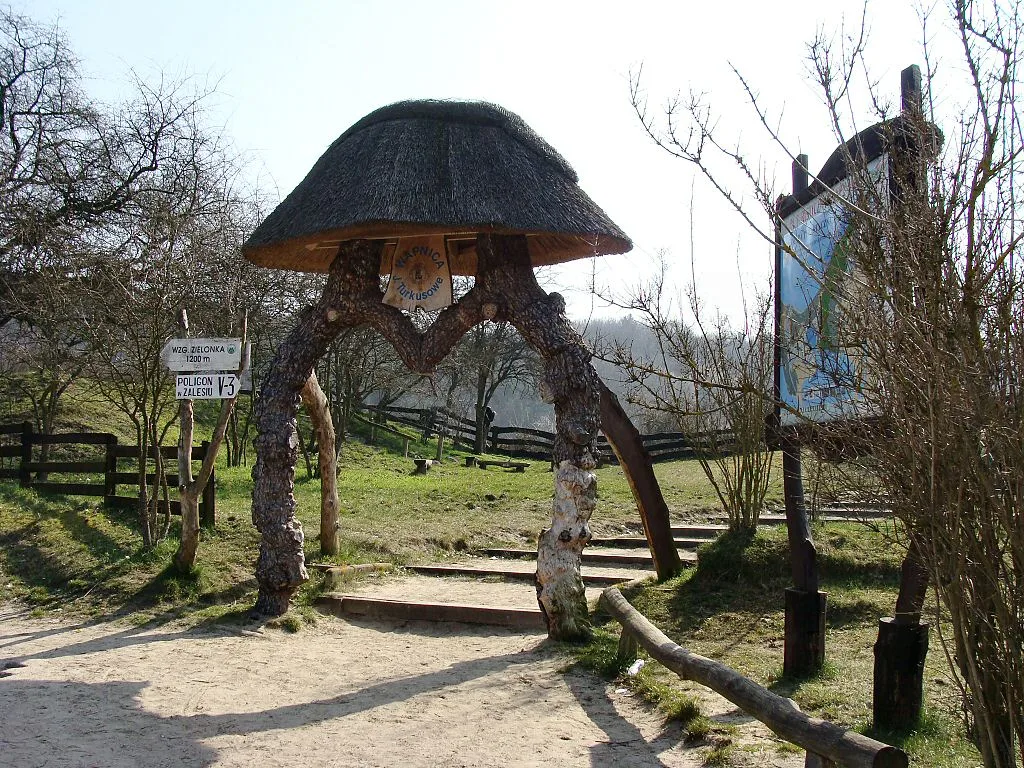
Lake Turkusowe lies in Wolin National Park, south of Wapnica, in the municipality of Międzyzdroje. According to Wikipedia it has an area of 6.74 hectares and a depth of 21.2 metres. It occupies the pit of a former chalk mine, which supplied raw material to the cement works in nearby Lubin, about half a kilometre to the west.
The cement works were founded by the Szczecin entrepreneur Johannes Quistorp. According to Wikipedia he began construction in Lubin in 1855, on the bank of Wicko Małe, and the plant produced Portland cement under the name Lebbin. The entry on Lubin states that it soon became the largest producer of Portland cement in Germany and that at the end of the 19th century it employed about 800 people. At peak periods before 1910 the plant produced up to 1800 barrels a day, and its own barrel workshop was part of the cement works. After Quistorp's death in 1899 the firm was taken over by his son Martin, and according to the same entry the cement works operated until 1945.
The raw material came from Wapnica. Wikipedia describes how chalk was extracted on the northern slope of Piaskowa Góra, and was delivered to the cement works by a conveyor belt almost a kilometre long. The deposit had an unusual origin: it was a huge bed of chalk, a glacial raft, which the ice sheet tore from the floor of an ancient sea and deposited among sands and gravels. Many years of extraction removed a considerable part of the hill and reached a dozen or so metres below sea level.
From pit to lake
According to Wikipedia the cement works stopped work in March 1945, with the front approaching. After the Soviet troops entered, the equipment of the mine and the plant was dismantled and taken to the Soviet Union. The pit began to fill with groundwater, but in 1948 the Polish authorities resumed extraction: the water was pumped out and machinery was brought in. The mine operated until 1954, when extraction ended because the deposit was running out and obtaining chalk from an ever deeper pit was becoming more and more difficult.
Only then did the basin fill permanently. The entry on the lake says that the process was slow and not catastrophic in nature, unlike the origin of Lake Szmaragdowe in Szczecin. Around 1960 the water level equalled that of the Szczecin Lagoon. The water surface today lies at 2.6 m above sea level, so the lake forms a cryptodepression 18.6 m below sea level.
The wording in Wikipedia about the period the mine worked differs slightly. The entry on the lake says that the mine worked until the Second World War and that the pit existed until the middle of the 20th century, and only further on describes the resumption of extraction in 1948 and its end in 1954. This account can be reconciled as two periods of work: up to 1945 and from 1948 to 1954.
Where the turquoise colour comes from
The name comes from the blue-green colour of the water. According to Wikipedia it is caused by the scattering of sunlight in clear water and the reflection of glints from the white, chalky bed with calcium carbonate compounds lying on the bottom. Wikipedia does not mention algae as the cause of the colour, so it is not linked with them. The shade depends on the lighting and the time of day.
Piaskowa Góra, the hillfort and the surroundings
On the high southern shore of the lake rises Piaskowa Góra, a viewpoint over the lake, Wapnica and the Lubin-Wapnica Hills (Pagórki Lubińsko-Wapnickie). The lake lies in Wolin National Park, and beside it runs the blue trail By the Baltic and the Szczecin Lagoon, from Międzyzdroje to Wolin. Not far away grows the four-hundred-year-old oak Prastary, a natural monument, which according to Wikipedia was set on fire by vandals in 2015.
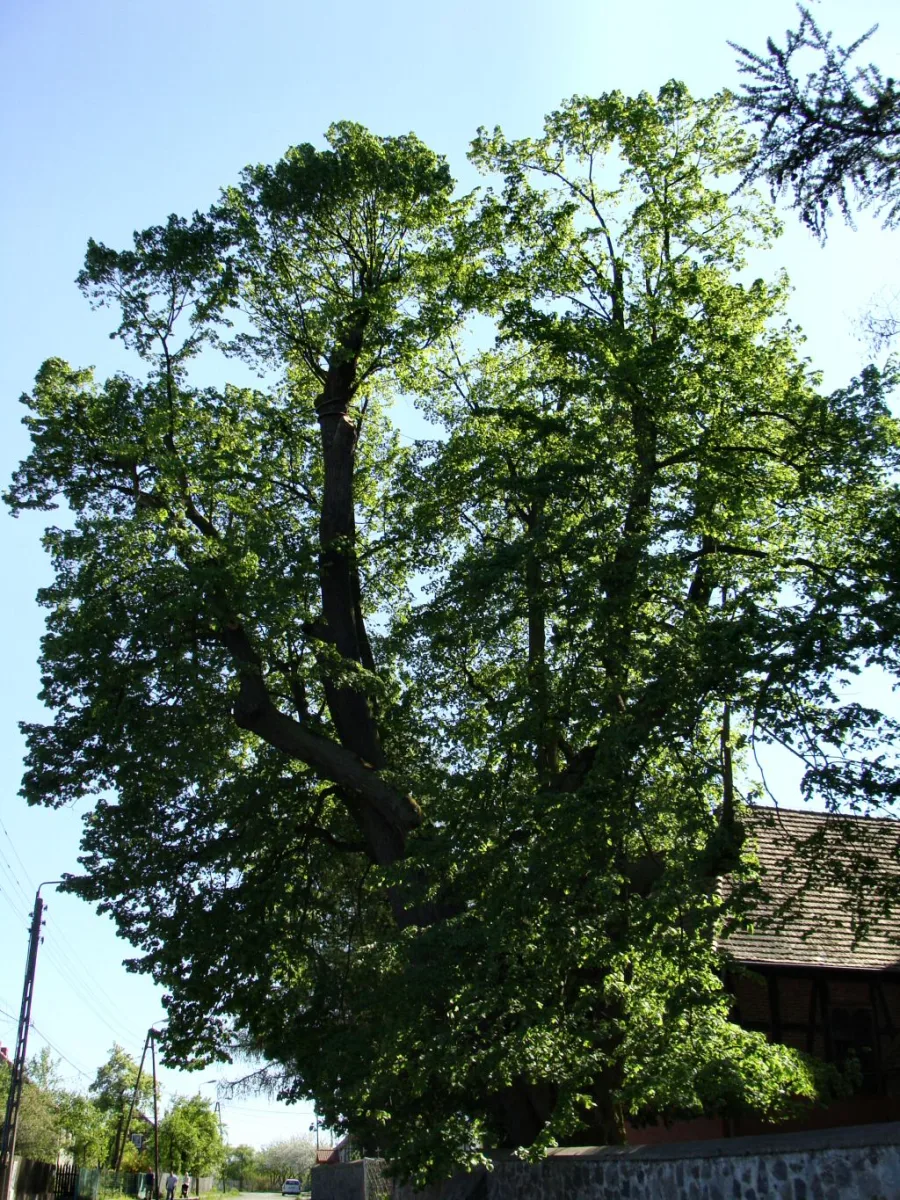
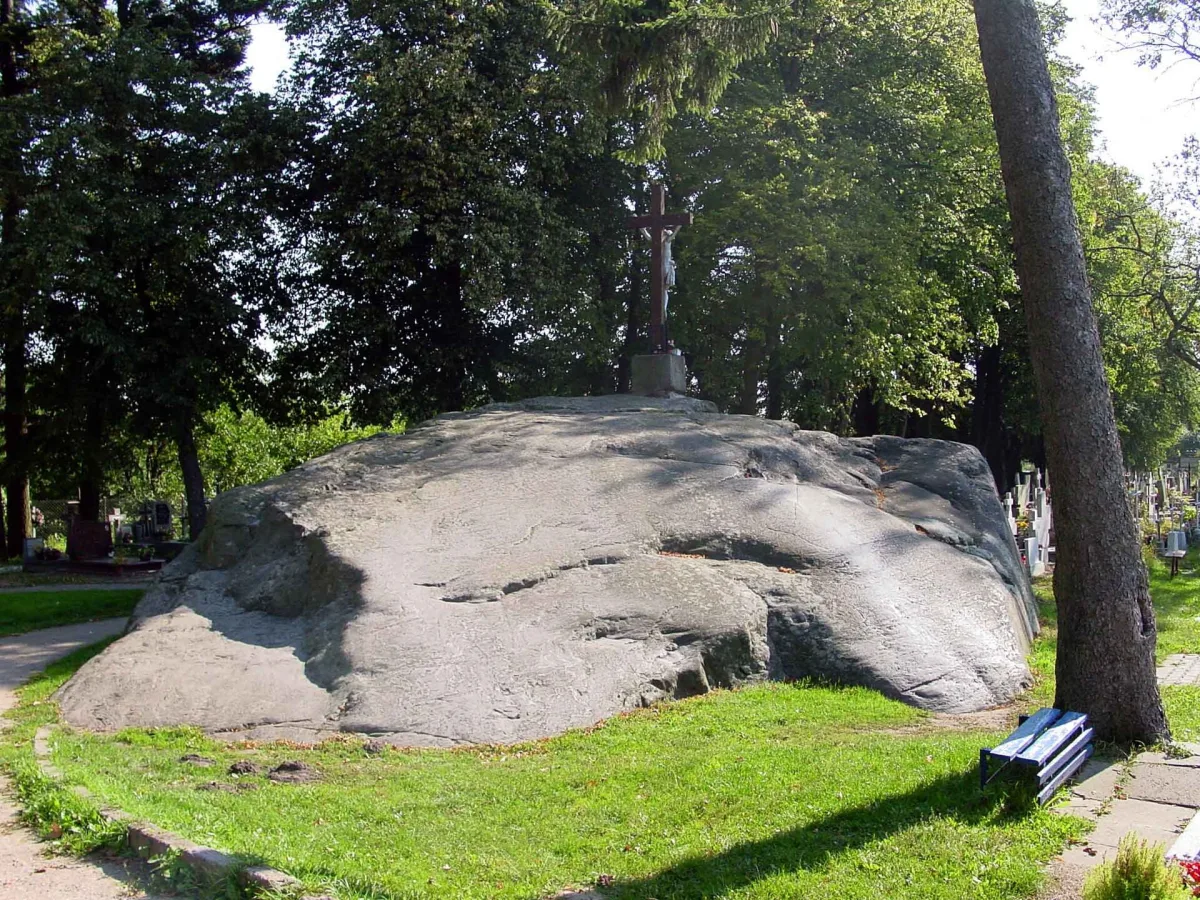
In Lubin, from where the cement came, traces of much older history remain. The Lubin hillfort is the remains of a Slavic stronghold on the cliff of the Szczecin Lagoon, which according to Wikipedia was destroyed in 1173 by the forces of King Valdemar I of Denmark. On the same viewing trail stands the neo-Gothic Church of Our Lady of Jasna Góra from 1861, and beside it grows the lime tree Babka Proszalna, a natural monument. The brick office buildings of the former cement works stand today in the fishing port, and on a terrace on Główna Street a boulder commemorates Johannes and Martin Quistorp.
Be the first! Add a comment.
You need to log in to add a comment.
Log in