
Kołobrzeg and Koszalin lie on the central coast of West Pomerania and fit well into a single route: the first day by the sea, among fortifications, the pier and museums in the centre of the spa, the second in the town on the Dzierżęcinka, where exhibitions mix with parks, a narrow-gauge railway and a water park. Below is a suggested order, based on what museums, the sites' own websites and Wikipedia say about the individual places.
Saturday: Kołobrzeg from the town hall to the pier
A good starting point is the Kołobrzeg Museum “Patria Colbergiensis” in the cellars of the town hall on Ratuszowy Square. According to Wikipedia it opened on 27 September 2014, and according to the entry it belongs neither to the town nor to the state, but operates as a museum created by private individuals. The collections are dominated by items from the Thirty Years' War, the Seven Years' War and the Napoleonic campaign, and a separate collection concerns the former guilds.
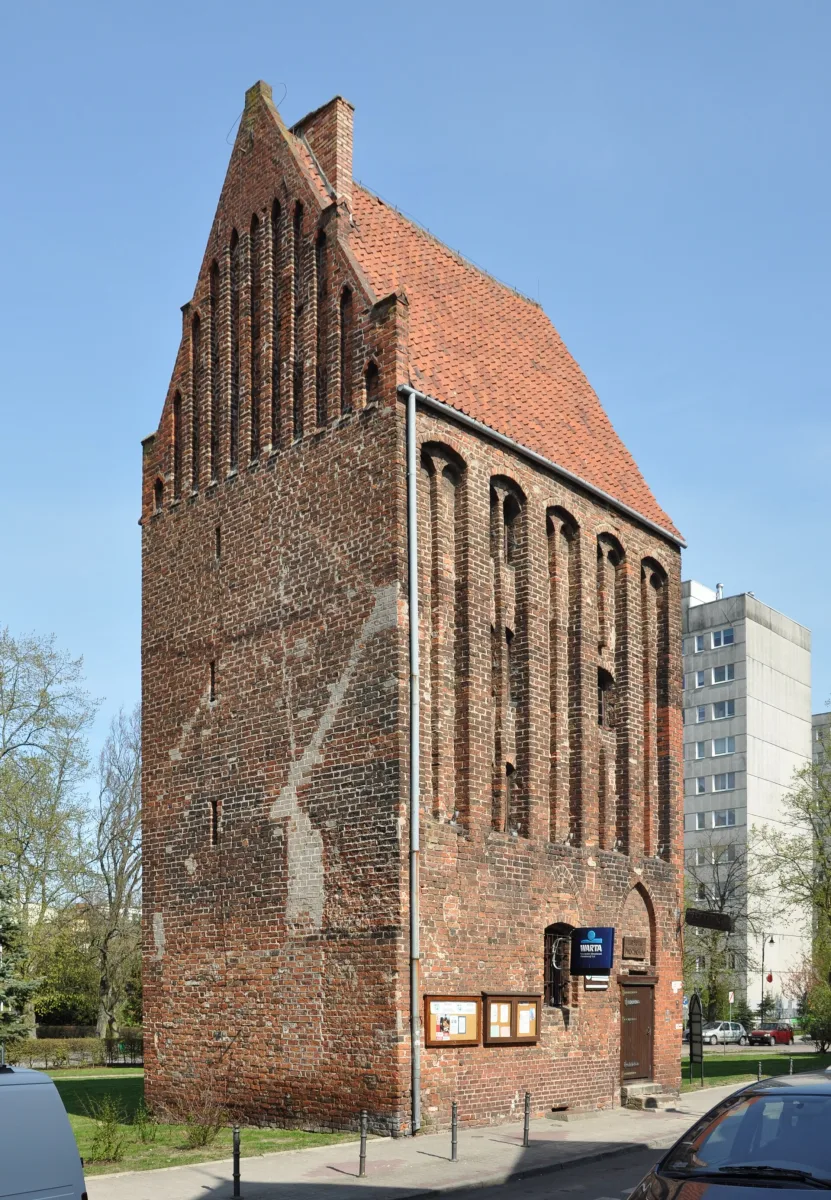
About 100 metres from the museum stands the Match Tower (Baszta Lontowa), according to Wikipedia the only fully preserved element of Kołobrzeg's medieval town walls. It was built in the 14th century and survived both the construction of the bastioned fortifications and the demolition of the fortress at the end of the 19th century. It is colloquially sometimes called the Gunpowder Tower, but according to the same entry this is a mistake resulting from an incorrect translation of the German name.
The third stop in this area is the Brunswick Palace, according to the website of the Museum of Polish Arms a building in the Empire style, which the merchant Plüddemann built in the first two decades of the 19th century as a dowry for his daughter. Today it houses the Kołobrzeg Town Museum, a branch of the Museum of Polish Arms. Best known is the banqueting hall with a ceiling painting showing Flora, the Roman goddess of spring vegetation.
Nearby is also the Amber Museum. According to the institution's website, it invites visitors on a journey from prehistory to the present day, following the discoveries, legends and properties of amber, and apart from the exhibition it runs workshops showing past and present techniques of processing.
The fortress and the port
Kołobrzeg was a fortress, which can still be seen on the ground. Kamienny Szaniec (Stone Redoubt), formerly Waldenfels Redoubt, was built, according to Wikipedia, in 1832-1836 in a belt of dunes right by the sea and closes the spa park from the east. Today it is largely a ruin. In the area of the present redoubt, before it was built, in 1807, during the siege of the town by Napoleonic troops, according to Wikipedia the bloodiest fighting took place between the defenders of the fortress and the 1st Infantry Regiment of the Poznań Legion.
A walk towards the port leads to the Kołobrzeg Maritime Open-Air Museum, a branch of the Museum of Polish Arms. According to the museum's website, it is an outdoor exhibition of warships brought out of the water on slipways, unique on a national scale. Next to it lies the port, and nearby the Kołobrzeg Lighthouse. According to Wikipedia, the present tower was built in 1945 on the platform of a former fort, after German sappers blew up the previous one. The year of construction is given differently, as 1945 or 1946.
The day is best ended on the pier in the Spa District. According to Wikipedia, the present reinforced concrete one was opened on 19 June 1971; it is 220 m long, and its predecessor was a wooden jetty from 1881 by the Strandschloß sanatorium. On the way you pass the spa park, where the remains of a redoubt also stand.
Sunday: Koszalin and its museums
The Museum in Koszalin has exhibitions scattered in several places in the town. According to Wikipedia, the present institution has operated since 1947, and the beginnings of museum activity in the town go back to 1912, when a German regional society opened the first exhibition in the town hall. In Gellert's House an exhibition of period interiors from the Baroque to Art Nouveau was arranged, and the exhibition “Osieki 1963-1981” shows works from the outdoor art workshops in Osieki near Koszalin, by Henryk Stażewski and Tadeusz Kantor, among others.
The Jamno Culture Open-Air Museum on Młyńska Street belongs to the same institution. According to Wikipedia it was created in 1982 and consists of a fisherman's cottage from 1869, a shoemaker's workshop and a reconstructed barn with a forge, of timber-frame construction with reed roofs. It tells of the village of Jamno, which had its own island culture. A separate site is the former filter station on Żwirowa Street, where the Water Museum operates, with plans of the waterworks network and a fragment of a pipe from 1726.
The walk between exhibitions is most pleasantly interrupted in the Park of the Pomeranian Dukes on the Dzierżęcinka. According to the heritage register the park dates from 1817-1887, and Wikipedia lists 124 species and varieties of trees and shrubs in it, as well as a fragment of the town walls.
For those who want more: the railway and the pool
The Koszalin Narrow-Gauge Railway has a track gauge of 750 mm. According to Wikipedia, services began on 1 November 1898, and today tourist trains run in the summer on the Koszalin - Rosnowo section, along the Dzierżęcinka. The timetable must be checked on the railway's website.
For the rainy part of the weekend a good fallback is the Koszalin Water Park. According to the site's website it consists of six pools, including two outdoor ones, one of which is open all year round, as well as six slides and a separate sauna zone.

Be the first! Add a comment.
You need to log in to add a comment.
Log in