
The Museum of Polish Arms and its branches
Kołobrzeg waited eighteen years after the war for a museum. According to the website of the Museum of Polish Arms, the order to establish a regional museum was issued on 9 May 1963, while Wikipedia gives the date of founding as a day earlier, 8 May. The basis of the collection was the excavations at Budzistowo led by Prof. Lech Leciejewicz. According to Wikipedia, the institution was initially to have a historical and municipal profile, devoted to the history of Kołobrzeg, and from 1966 it became mainly a military-history museum, which also deals with the history of the town.
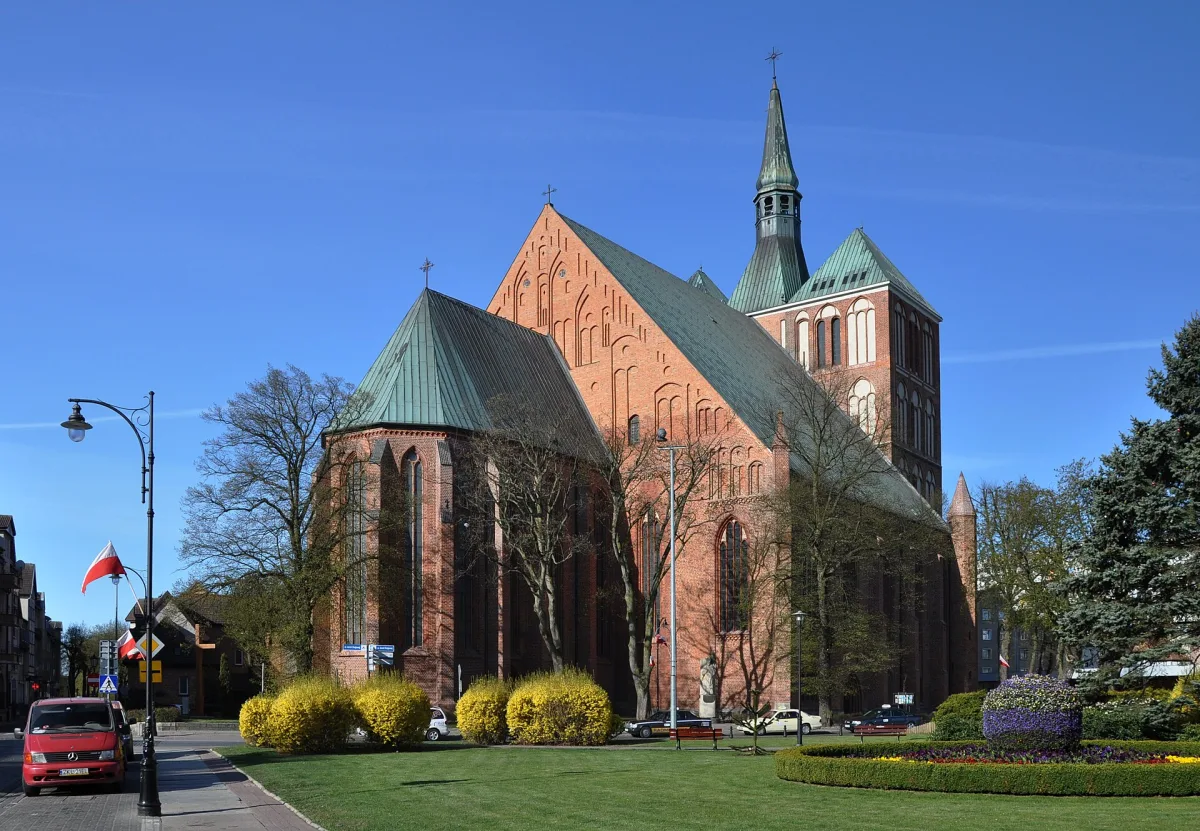
The first military exhibition, “The History of Polish Arms in West Pomerania”, was opened on 8 May 1966 in the tower of the rebuilt collegiate church, today the co-cathedral basilica. According to the museum it occupied three rooms covering 750 square metres. In 1974 the church was handed over to the Catholic Church, and in 1976 the tower was given to the parish, so the military collections were moved to an open-air exhibition on Emilii Gierczak Street, opened on 12 October 1977. The main exhibition in the temporary premises was opened there on 17 March 1980. According to Wikipedia it shows uniforms from both world wars, as well as vehicles, aircraft and artillery in the technology hall and at the open-air exhibition.
Today the museum runs, according to Wikipedia, several branches: the exhibition The History of Polish Arms, the Kołobrzeg Town Museum in the Braunschweig Palace, the Maritime Open-Air Museum, the Cold War Museum in Podborsko and an aviation branch in Rogowo. The Cold War Museum in a former atomic ammunition store was opened on 10 September 2016, and the hangar in Rogowo was bought by Kołobrzeg County in 2018 and, according to Wikipedia, renovation work is under way there.
The Braunschweig Palace and the Schliffen House
The history of the town has its own branch in the museum, in the Brunswick Palace, also called the Braunschweig Palace. According to the museum, it was built in the first twenty years of the 19th century by the merchant Christian Plüddemann as a dowry for his daughter Alma. After her marriage to Henryk Braunschweig the palace took the name of the family, which the museum links with salt boiling since 1282. On the upper floor is a banqueting hall with a ceiling painting on paper depicting the Roman goddess Flora.
The exhibitions on the history of the town have changed location. According to Wikipedia, the permanent exhibition was opened on 23 May 1970 in a medieval house on Emilii Gierczak Street. It was shown in the palace cellars in 1977, but closed after a few months because of the poor condition of the rooms. The version opened on 9 May 2003 concerned mainly the Middle Ages, and after a thorough rebuilding the Kołobrzeg Town Museum was opened again on 2 July 2017. According to Wikipedia it presents the history and prehistory of the town up to 1945, with particular emphasis on the Middle Ages, the era of the Kołobrzeg Fortress and the seaside resort. The palace also houses an exhibition of weights and measures from West Pomerania, opened, according to Wikipedia, on 16 July 1985.
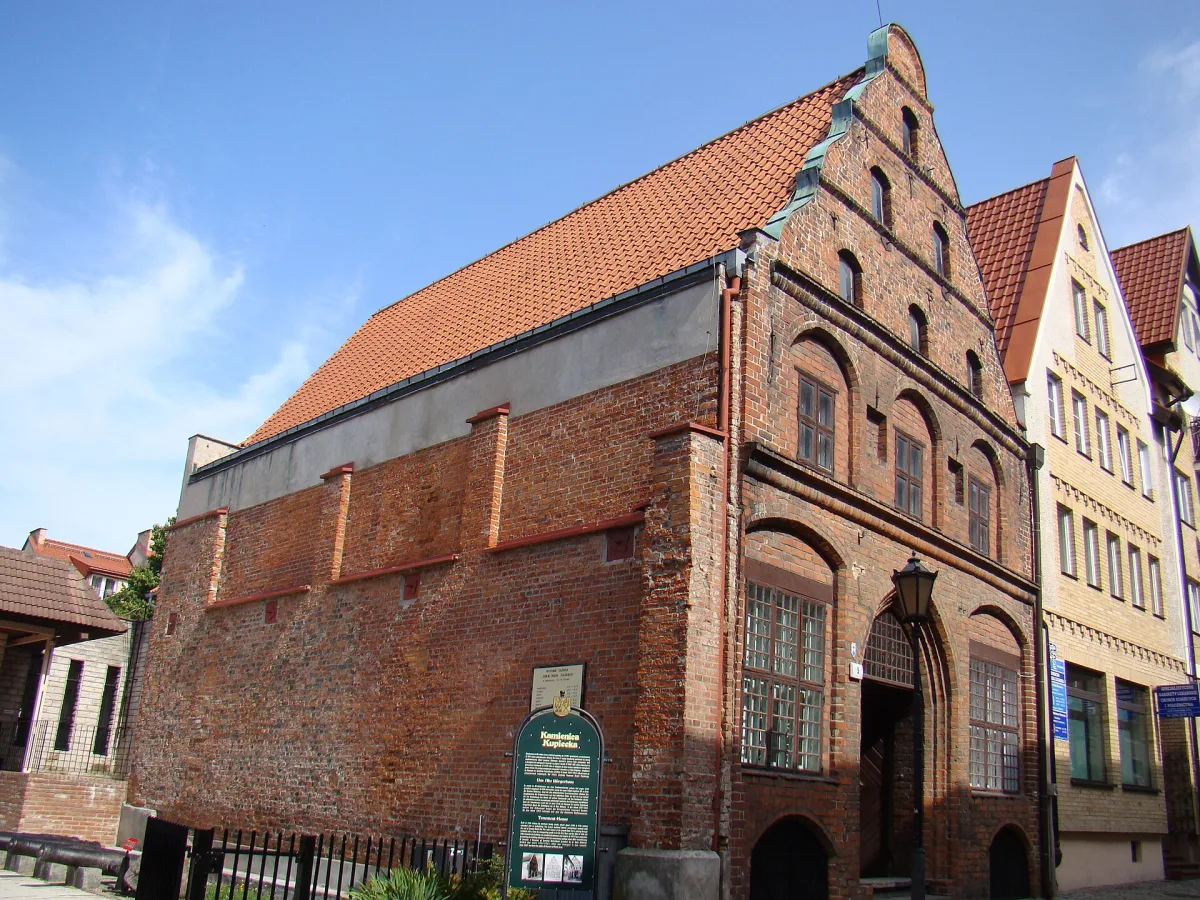
The Schliffen House belongs to the same institution. According to Wikipedia, it is the oldest surviving house in Kołobrzeg, Gothic, built in the 15th century and rebuilt in the 16th and 19th centuries. The heritage register gives a wider dating, from the 14th to the 16th century. In the interwar period it housed the Joachim Nettelbeck museum, in 1945 the building was destroyed, and after the war it was reconstructed. Since 1963 it has belonged to the Museum of Polish Arms.
A museum in the town hall cellars
A separate institution is the Kołobrzeg Museum “Patria Colbergiensis”, located in the western part of the cellars of the town hall. According to Wikipedia it was opened on 27 September 2014 during the European Heritage Days. It belongs neither to the town nor to the state: it is a non-governmental organisation, operating under regulations agreed with the Minister of Culture and entered in the register of museums established by private individuals.
The museum shows the thousand-year history of the town and the region. According to Wikipedia, it is dominated by items from the time of the Thirty Years' War, the Seven Years' War and the Napoleonic campaign, and the collections also include medals, phaleristics, edged weapons and black-powder firearms, municipal numismatics, cartography, glass, porcelain and souvenirs of the former craft guilds. The museum's website lists the rooms: “Under the Clock”, “Kołobrzeg, a First-Class Spa Resort”, “Kołobrzeg Pioneers”, “The Kołobrzeg Fortress” and “The Siege of Kołobrzeg in 1806/07”.
Warships on land
The third of the museum's historical branches lies in the fishing port. The Kołobrzeg Maritime Open-Air Museum was opened in August 2013. According to the museum, its concept arose four years earlier and was linked to the lack of berths at the port quays and the high cost of maintaining museum ships afloat. That is why the ships stand on land, hauled out on slipways. According to the museum two of them can be visited: the patrol ship ORP Fala and the missile boat ORP Władysławowo. There are also parts of the destroyer ORP Burza, the first Polish museum ship, an ocean-going yacht, mines, minesweeping gear, guns and a depth-charge thrower, and the museum describes these exhibits on its website.
Private collections of amber and glass
Near the old town there are two small private institutions. The Amber Museum invites visitors, according to its own website, on a journey from prehistory to the present, following the discoveries, legends and properties of amber, a fossil resin from around 40 million years ago. Besides the exhibition it runs workshops demonstrating past and present processing techniques.
The Glass Museum shows, according to its own website, glassware from around the world: art glass, utility glass and collectors' glass. It is visited with a guide, who discusses glassmaking techniques and types of glass. Each of these institutions gives its opening hours and entry rules on its website.
Be the first! Add a comment.
You need to log in to add a comment.
Log in