
In the medieval towns and castles of West Pomerania, walls decided survival, so it is no wonder that the greatest number of stories grew up around them. Four of them share the same pattern: a siege, one person's cunning, and the salvation, or ruin, of a whole community. Below, each legend is given with the name of its source, and next to it what can be said for certain about the place itself.
The Crayfish of Moryń and the lake it comes out of at night
Moryń lies on Lake Morzycko, and in the market square stands the fountain of the Great Crayfish, unveiled on 20 September 2008 (according to Wikipedia). It refers to a local legend, but its versions differ. Wikipedia speaks generally of a tale about an animal living in the nearby lake. According to the cycling website of the West Pomeranian Voivodeship self-government (rowery.wzp.pl), the story is much longer and more than three hundred years old, and was told by the former German inhabitants of the town.
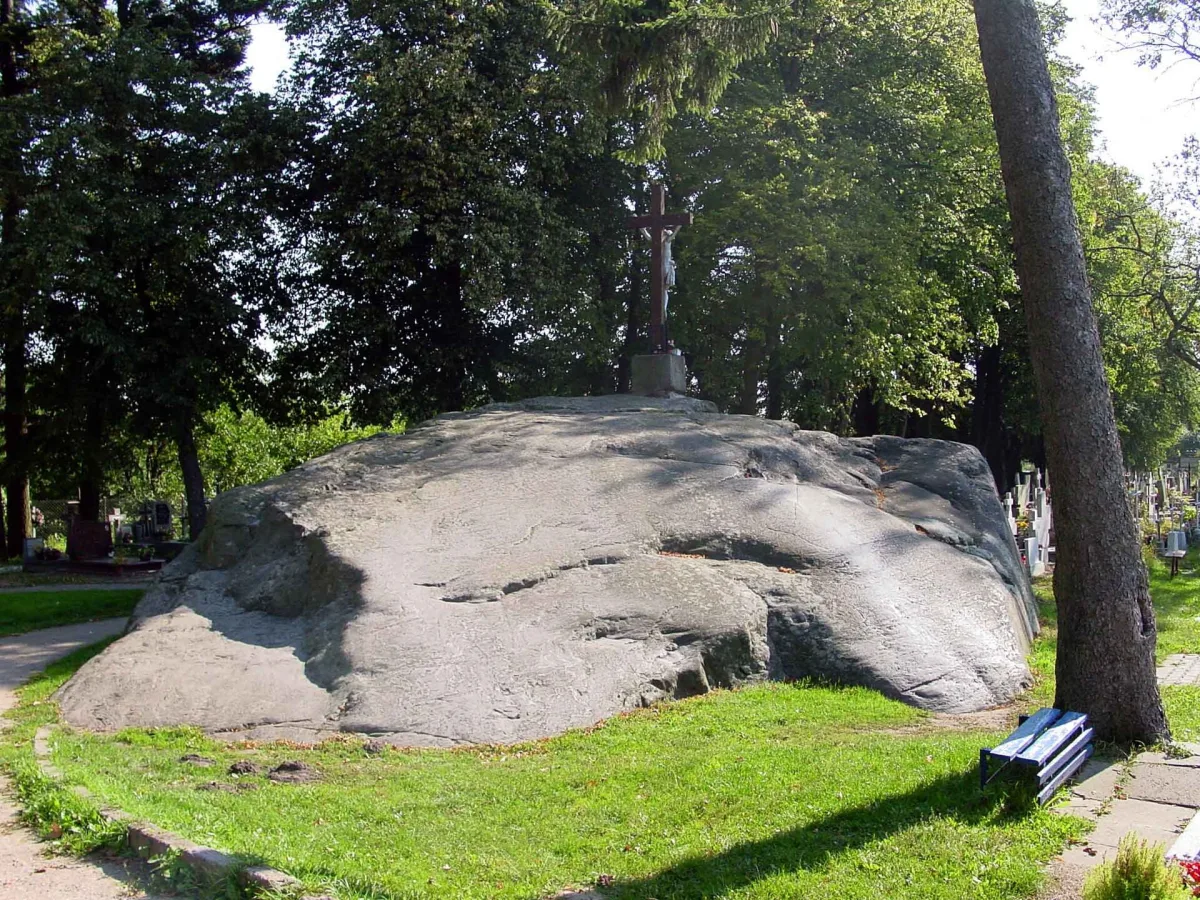
The legend says that attackers surrounded Moryń and waited for the inhabitants to surrender from hunger. One of the knights defending the town, who was called Rak, volunteered to cross Lake Morzycko and bring help. By his cunning he avoided the enemy patrols and found help, but on the way back he was surrounded and killed. He still managed to shout to the townspeople that relief was coming. Struck on the head with an axe, he fell into the lake. The tale adds that to this day a huge crayfish emerges from the water at night and approaches the town. According to the same source, a metal figure of a crayfish stands on a large boulder, beside which the town's coat of arms has been placed.
A bowl of hot porridge in Trzebiatów
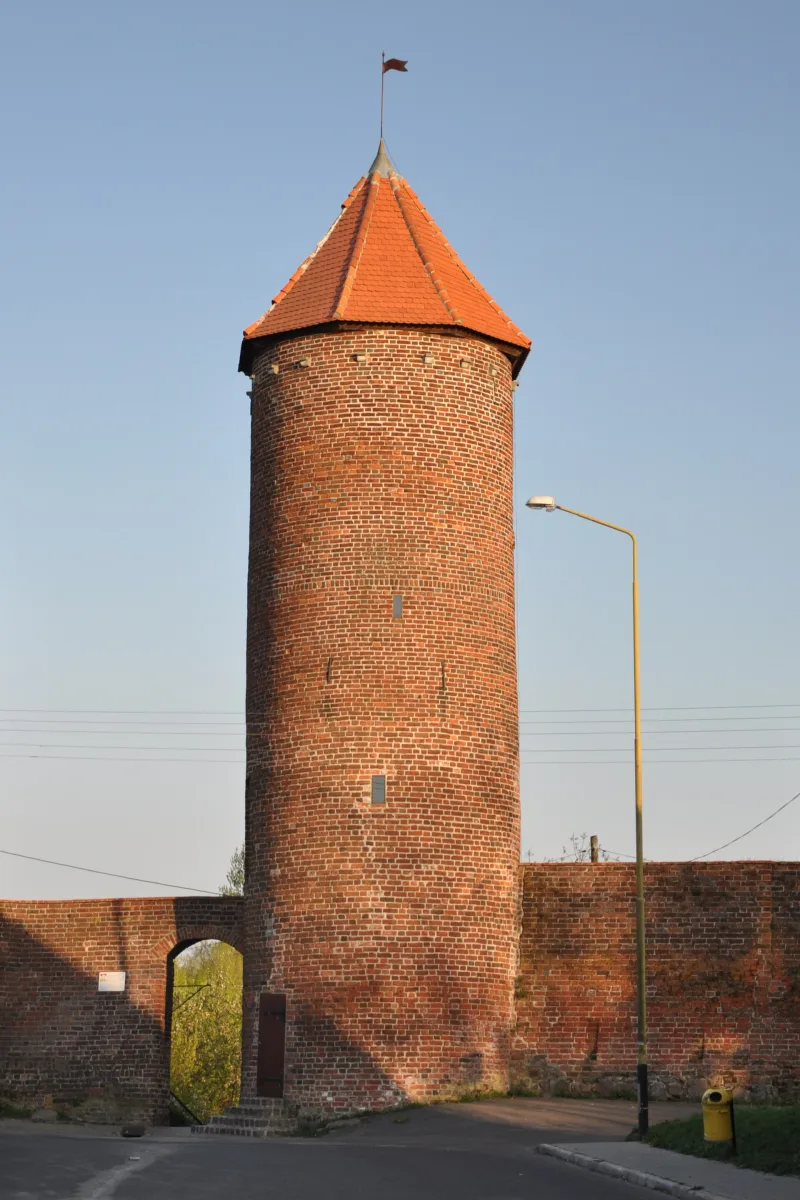
The Kaszana Tower (the Porridge Tower) is a cylindrical brick tower 21 metres high, part of the defensive walls of Trzebiatów. According to Wikipedia it was built in the first half of the 14th century to strengthen a corner of the walls and to watch over the Rega River, later served as a gunpowder store, was raised in the 15th century, and in 1994 was rebuilt with a new roof, stairs and floors. A prison dungeon is located on the ground floor.
The name comes from a legend, which Wikipedia relates as follows: in the 15th century one of the guards watching the walls at night was said to have dropped a bowl of hot porridge from the tower. It fell on the head of one of the men of Gryfice who were preparing to storm Trzebiatów, and this accident saved the town from a treacherous attack. The legend is linked to a summer festival, the Porridge Festival (Święto Kaszy). The legend gives no specific year or names, and Wikipedia does not indicate an older source for it, so we treat it as a town tradition, not a record of an event.
The fisherman's net from a window of Drahim Castle
Drahim Castle was for centuries one of the important strongholds on the Polish-Brandenburg border. According to the history of the castle on the Czaplinek town website, in 1422, at the urging of the Teutonic Knights, burghers from nearby Drawsko attacked the Drahim castle and briefly captured it.
This event is linked with a legend about a German fisherman, Paweł Waszniak, who had a chamber in Drahim. He threw a net down from the window, and a Polish relief force climbed it into the stronghold. The town website refers here to chronicles but does not name them, which is why in this text it remains a tale. In memory of this story, a monument to a fisherman stands in the market square in Czaplinek.
Seven cloaks in Szczecin
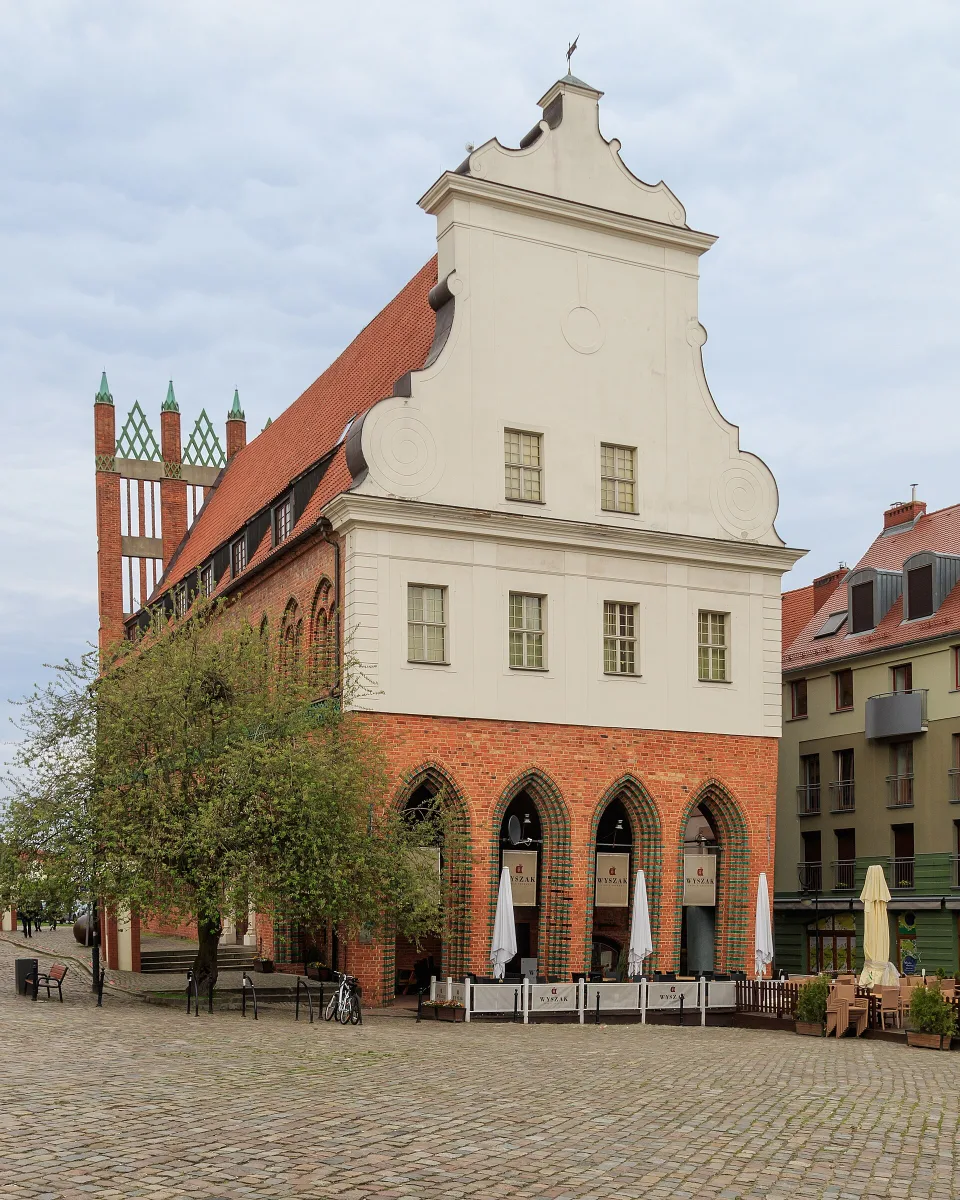
The Maiden Tower (Baszta Panieńska) is also called the Tower of Seven Cloaks. Wikipedia states that the name Panieńska comes from the Maiden Gate of 1307, leading to the Cistercian nuns' convent, and that the tower was completed in the second half of the 15th century. Destroyed in 1944, it was rebuilt in 1961-64 according to Wikipedia. According to Wikipedia, historians link the second name with the tailors' guild, which paid for the upkeep of the structure. There is, however, a legend pointing to a different origin of the name: seven cloaks sewn for Duke Bogislaw X.
The dates of the tower's construction are also not clearly established: the Encyclopedia of West Pomerania writes of construction probably before 1462 and notes that the tower was often confused with the towers of the gate itself. The same encyclopedia calls it the only surviving medieval tower in the Szczecin town walls.
What these stories have in common
In all four cases the legend explains something that can still be seen today: a figure in the market square, the name of a tower, a monument, the second name of a tower. The earliest records cited by the available sources are late or are not indicated, so when visiting it is best to treat them as part of the identity of the place, not as an account of the sieges.
Be the first! Add a comment.
You need to log in to add a comment.
Log in