
The three robber brothers of the pass
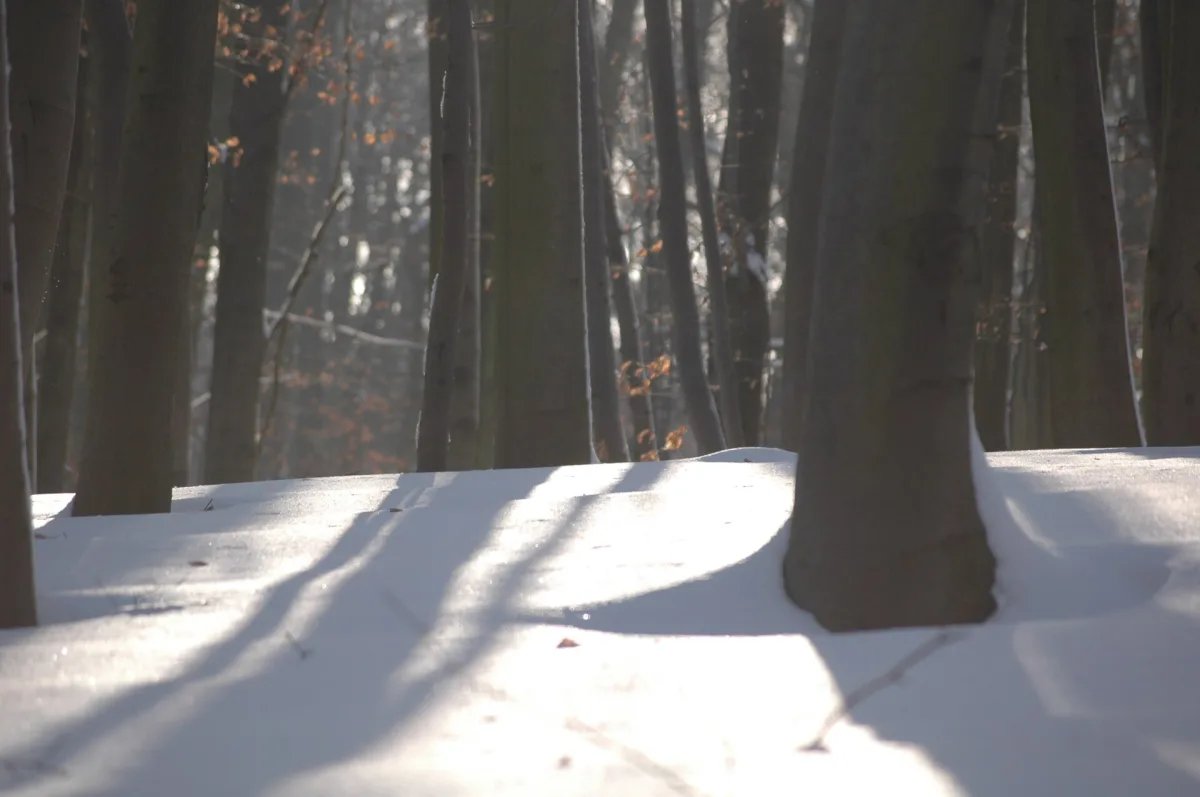
The Beech Forest (Puszcza Bukowa), according to Wikipedia a forest complex in the Beech Hills near the south-eastern districts of Szczecin, is part of the Beech Forest Szczecin Landscape Park, established in 1981. People named places here in their own way, and many of them have tales attached.
The Three Brothers Pass (Przełęcz Trzech Braci), according to Pomeranica, lies at about 130 m above sea level between three hills: Bukowiec (148.3 m), Klasztorny (133.7 m) and Kopytnik (132.0 m). The Kołowska Road runs through it. A legend is linked with the pass: three brothers attacked travellers, robbing and killing them, until after one of the attacks they met a girl with whom they all fell in love. A brawl broke out and the brothers killed one another. The girl buried them under three stones, which are said to be the three hills of today, and she herself turned into a tree, an oak at the fork of the Kołowska Road and the Klucka Road.
Pomeranica gives as its source a thread on the prawobrzeze.eu forum, so this is a local tale without scholarly treatment. It is worth reading together with a map: Bukowiec hill, the highest in this part of the Beech Hills, is the destination of the Bukowiec Mountain Trail.
The castle that sank underground
Chojna hill is, according to Pomeranica, 74 m above sea level and lies on the northern edge of the landscape park, in the Bukowe Zdroje nature reserve. On its flattened summit there is an early medieval stronghold from the 9th-12th century, called in scholarly literature the Klęskowo stronghold or the Śmiłowo Stronghold. The ruined ramparts are about 300 m long and enclose a central yard of 0.75 ha.
The tale cited in this entry says that a mighty castle of robber knights stood here, who ruthlessly plundered travellers. Placed under a curse, the stronghold sank underground together with its garrison. Pomeranica cites the guide by Wojciech Lipniacki, "Knieja Bukowa pod Szczecinem" (PTTK, Warsaw 1981, p. 63), that is, a written work.
Skarbek from the chalk mine
The best documented is the legend of the ghost Skarbek. According to Wikipedia, Szmaragdowe Lake in Zdroje formed in the pit of a former chalk and marl mine, worked by the "Stern" cement works, founded in 1862. The mine was flooded on 16 July 1925, when water-bearing sands were struck in the southern wall, and all the workers managed to escape.
A local legend, cited from the Lexicon of the Beech Forest, explains the flooding differently. Ever since the first mines in the area were opened, at the beginning of the 14th century, a greedy and spiteful ghost called Skarbek was said to haunt them. Over a long time he gathered enormous riches and hid them underground, at the foot of the southern escarpment. When a miner's pick exposed the hiding place, Skarbek flooded everything with water. The date at the beginning of the 14th century comes from the legend itself: according to Wikipedia, industrial extraction of marl at this site began only in 1862.
Boulders, oaks and a linden: tales in the landscape
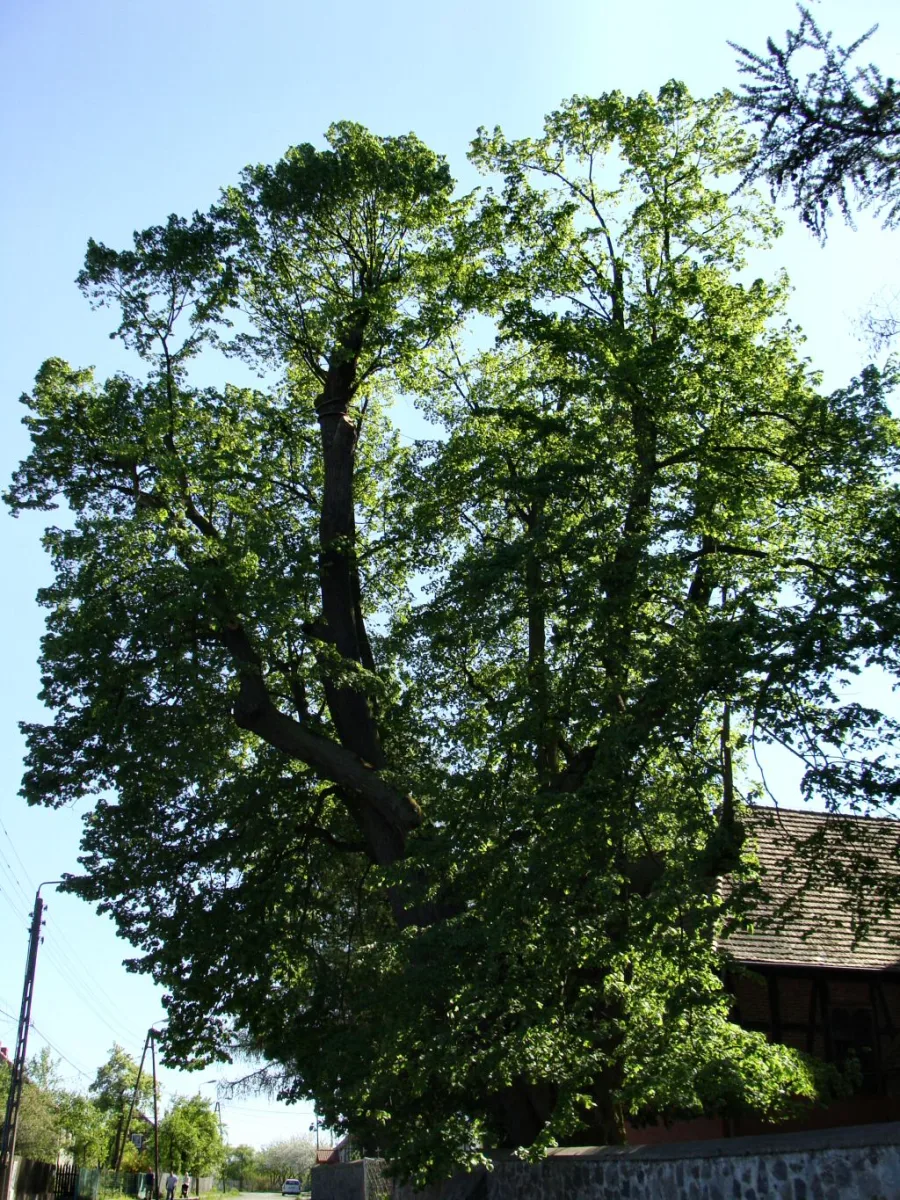
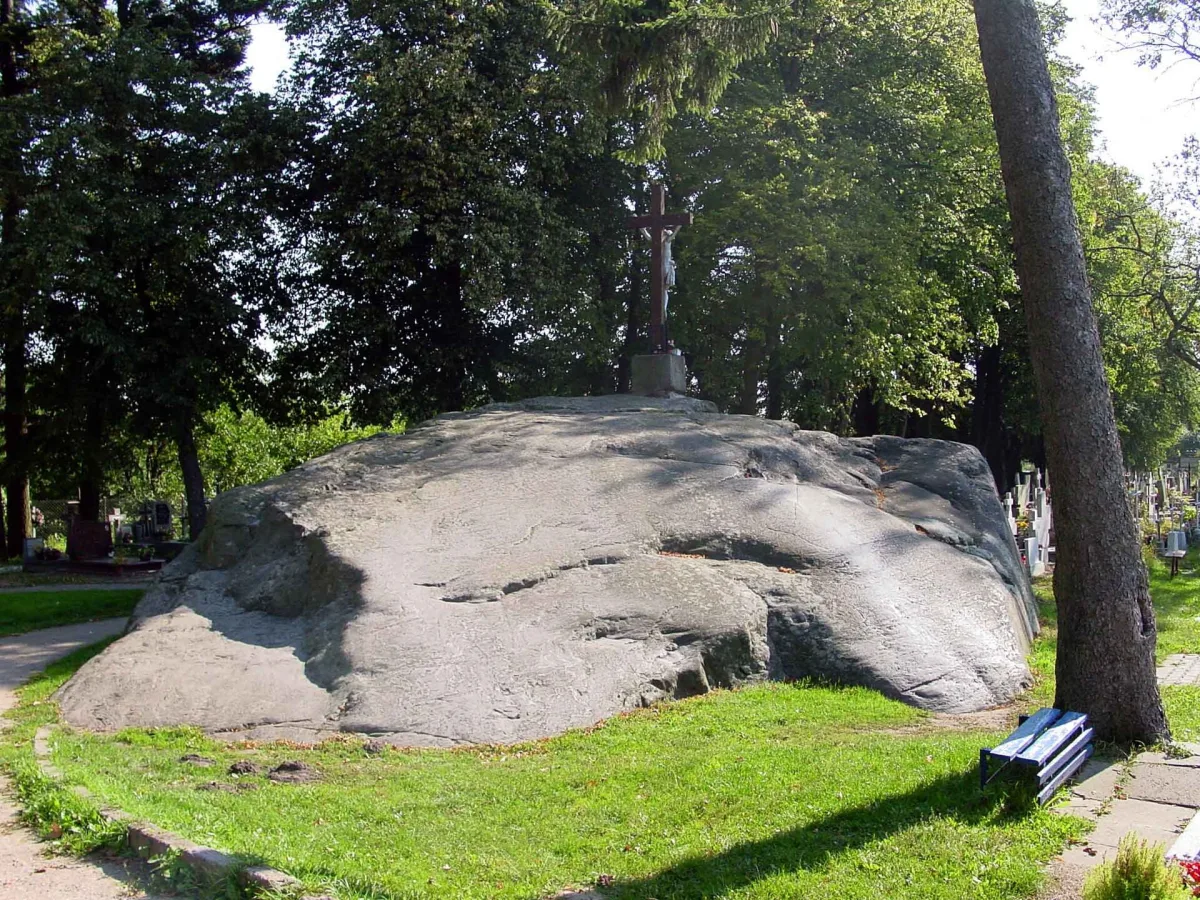
Other places in the Beech Forest have shorter tales. In the Beech Hills, 880 erratic boulders have been recorded, and some are protected as inanimate natural monuments. According to an anecdote cited in Wikipedia, a boulder by Grońskiego Road was used to build parts of the colonnade of the National Gallery in Berlin, and a paved road to Kołowo was built from a huge boulder near Dobropole. The Krzywousty Oaks (Dęby Krzywoustego) in Klęskowo are said by legend to remember the year 1121, when Bolesław Wrymouth defeated the Pomeranian armies in the fields between Klęskowo and Zdunowo. The St Otto's Linden in Płonia is said by legend to have been planted in 1124, but the age of the tree is estimated today at 300-400 years.
Be the first! Add a comment.
You need to log in to add a comment.
Log in