

A park laid out as a French garden
Połczyn-Zdrój is hard to describe without its spa park, because most of the spa facilities stand in it. According to Wikipedia the park covers 80 ha, of which 35.6 ha is green space, and it is entered in the heritage register. It was laid out in 1836-1839. The oldest, northern part with an alpine garden, a pond and fountains was created in the French style: with symmetrical lawns, flower carpets and straight paths for pedestrians.
Not long afterwards a much larger southern part was added, with hilly terrain and freely scattered greenery. Two styles in one park are a good hint on how to explore it: first the regular part by the spa buildings, then a walk uphill, towards the trees and paths. In the arboretum, according to Wikipedia, about 60 species of trees and shrubs grow, among them Caucasian wingnut, Kentucky coffeetree and black walnut. In the western part there are ponds and a fitness trail, and the park also has an amphitheatre.
Wikipedia also describes the history of one fountain. At the beginning of the 20th century a fountain with fish heads and a figure of a boy playing a pipe stood in the park. It was destroyed probably in 1945, around 1956 it was replaced by a sphere, in the early 1990s by a mushroom, and around 2005 the figure of the piper returned to the plinth, though it was soon destroyed and replaced by a replica. The “Joasia” mineral water pump room, which stands in the park, is according to the same Wikipedia out of use.
Springs, peat and the legend of the clothmaker
According to Wikipedia the local ferruginous springs were discovered in 1688. The same encyclopedia, however, cites a report by the Połczyn pastor Joachim Tilt to the church authorities from the 1670s, which confirms the existence of a spring, so the beginnings are earlier than that date. Therapeutic peat, according to Wikipedia, was discovered here in the 19th century. Today the spa relies on documented deposits of peat and on sodium chloride and iodide waters with a total mineralisation of 7.5 percent. The spa's website writes that the Połczyn brine comes from a depth of about 1200 metres.
The legend has it that the properties of the water and mud were discovered by a craftsman suffering from rheumatism: he washed in the spring, put his leg in the mud and was said to have recovered the next day. Wikipedia writes of a clothmaker, and the spa's website of a weaver. This is a tale, not a confirmed fact.
The first spa house, according to Wikipedia, was built in 1705 by Jakub von Krockow. At the end of the 19th century, in 1894-1896, large sanatorium buildings were built on today's Solankowa Street: the Kaiserbad, later the “Gryf” spa hospital, and the Kurhaus, today “Podhale”. Wikipedia records that “Gryf” was until the 1970s the largest sanatorium facility in Poland. The “Fürst Bismarck” spa house from the early 20th century no longer exists.
The spa after 1945
After the war the spa tradition did not disappear at once, but for several years it changed character. According to Wikipedia, in 1945-1947 the “Gryf” and “Podhale” sanatoria were under the administration of the Red Army, and the town became a large hospital and convalescence centre for soldiers. Then it returned to the role of a spa. In 1945 78 houses were destroyed, which according to Wikipedia was about a quarter of the town's buildings.
From 1950 holiday homes operated next to the park, later belonging to the Workers' Holiday Fund. At the end of the 1960s Wikipedia lists for Połczyn exotic plant species in the park, a rosarium, a group of ponds, two cinemas, a theatre hall and an amphitheatre. In 1974 and 1975 two mineral water bottling plants started up, and a promenade was laid out along the main street.
The castle, the church and the Połczyn Switzerland
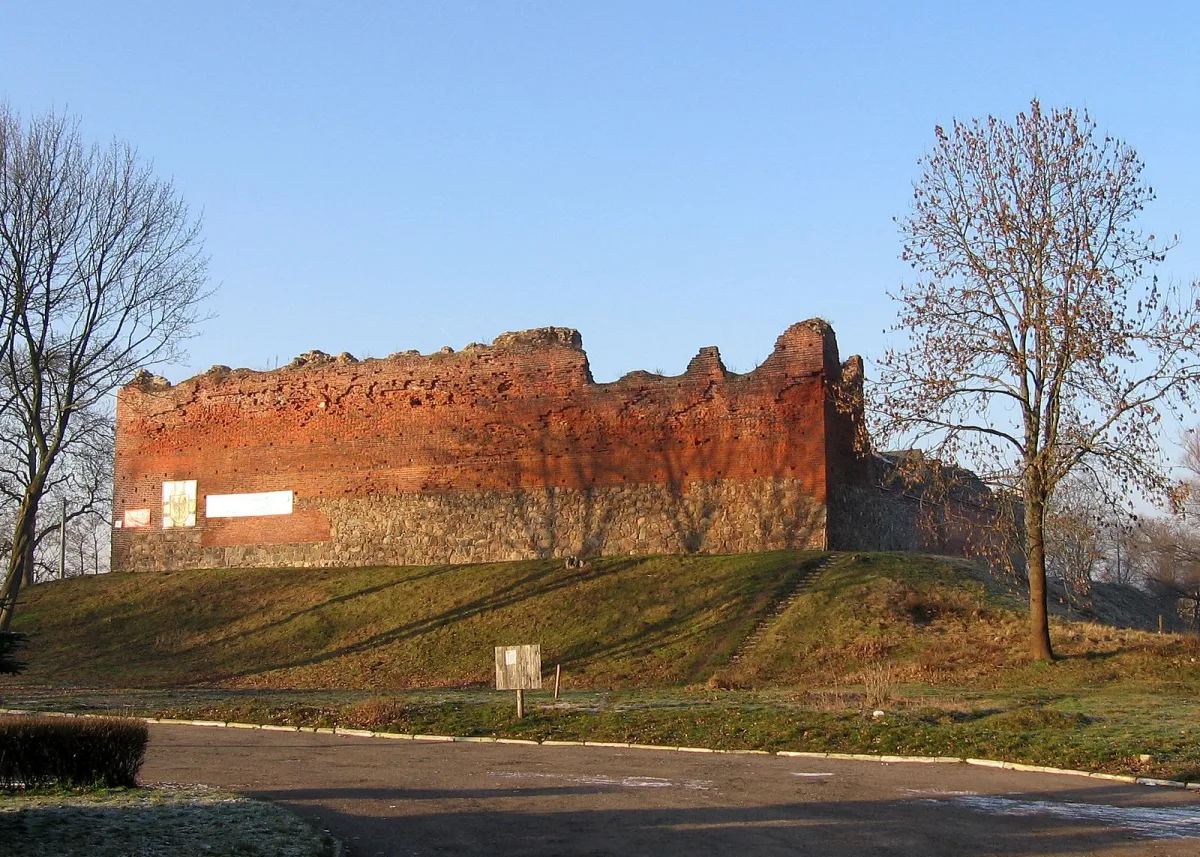
A walk from the park leads to the centre. On a hill by Wolności Square stands the palace built in the 18th century on the site of a castle which, according to Wikipedia, was built around 1290 by Duke Bogusław IV. About two hundred metres further stands the Church of the Immaculate Conception of the Blessed Virgin Mary. The present Neo-Gothic structure dates from 1860-1870, and the first mention of a church comes from 1389, although the church may have existed as early as 1343.
The town lies among moraine hills which are called the Połczyn Switzerland (Szwajcaria Połczyńska). Their finest part is protected by the Dolina Pięciu Jezior nature reserve, with an area of 228.78 ha, about 7 km south-east of the town. The reserve was established on 29 December 1987 and covers the sources of the Drawa and a chain of lakes in a deep glacial channel. From Połczyn marked trails lead there to Czaplinek, including the red Salt Trail, which refers to the medieval road from Kołobrzeg.


Be the first! Add a comment.
You need to log in to add a comment.
Log in