
The Pomeranian bishopric travelled a long road: from Wolin, through a short episode in Wołogoszcz, to Kamień Pomorski, where the cathedral and the bishop's court stood for more than three centuries. Throughout that time a dispute continued over whom the diocese was subject to: Magdeburg, Gniezno and, according to Wikipedia, also Lund. Here the dates from the sources are collected, together with the places where the sources diverge. The mission of Otto of Bamberg in 1124 is mentioned only as a starting point.
From Wolin to Kamień: 1140, 1176 and 1188
The Wikipedia entry on the Kamień bishopric begins with the sentence that the diocese was created in 1176 after the transfer from Wolin of the Pomeranian bishopric, which had existed since 1140. The year 1140 is linked to the bull of Pope Innocent II of 14 October 1140, which, according to the entry on Warcisław I, confirmed Wojciech as bishop in Wolin. The same entry, however, says something different about the beginning: the bishopric was supposedly established as early as 1124 in Wolin by Warcisław and Otto of Bamberg, four years later the seat was moved to Wołogoszcz, and only in 1176 to Kamień, on the initiative of Bogusław I.
In the entry on the bishopric, Wikipedia gives a different motive and a different person: the Danish raids of 1170 and 1173 destroyed Wolin, and Bishop Konrad decided to move the seat in 1176. In the description of the co-cathedral in Kamień, in turn, we read that in 1176 the cathedral was founded by Duke Kazimierz I. These accounts do not have to be set against each other, because they speak of different elements, but not all the entries agree on who made the decision.
The year 1176 does not close the matter. According to the same entry, the formal transfer of the episcopal see took place only on 25 February 1188, under the bull Ex iniuncta nobis a Deo of Clement III. At that time the diocese also received the right of exemption, that is, of being subject directly to the Holy See, without the mediation of a metropolitan.
Exemption and the dispute over the metropolis
According to Wikipedia, exemption settled the rivalry to make the diocese a suffragan of one of the archbishoprics, waged between Magdeburg, Gniezno and Lund. The entry on the bishopric, however, describes the dispute over metropolitan subordination, conducted in parallel with regard to Magdeburg and Gniezno, as ending only on 13 July 1380. At that time Pope Urban VI issued the document Executorium, which forbade the archbishops of Gniezno to advance claims to authority over the Kamień diocese.
This is an apparent contradiction within the same entry: exemption in 1188 was supposed to settle the dispute, yet the end of the dispute with Gniezno is linked to the year 1380. The entry does not explain this difference.
A curiosity is the year 1247, when, according to Wikipedia, Pope Innocent IV considered turning Kamień into the seat of a new metropolis. The bishops of Schwerin and Ratzeburg were entrusted with giving an opinion on the matter, and the project was never carried out.
Bishops as landowners
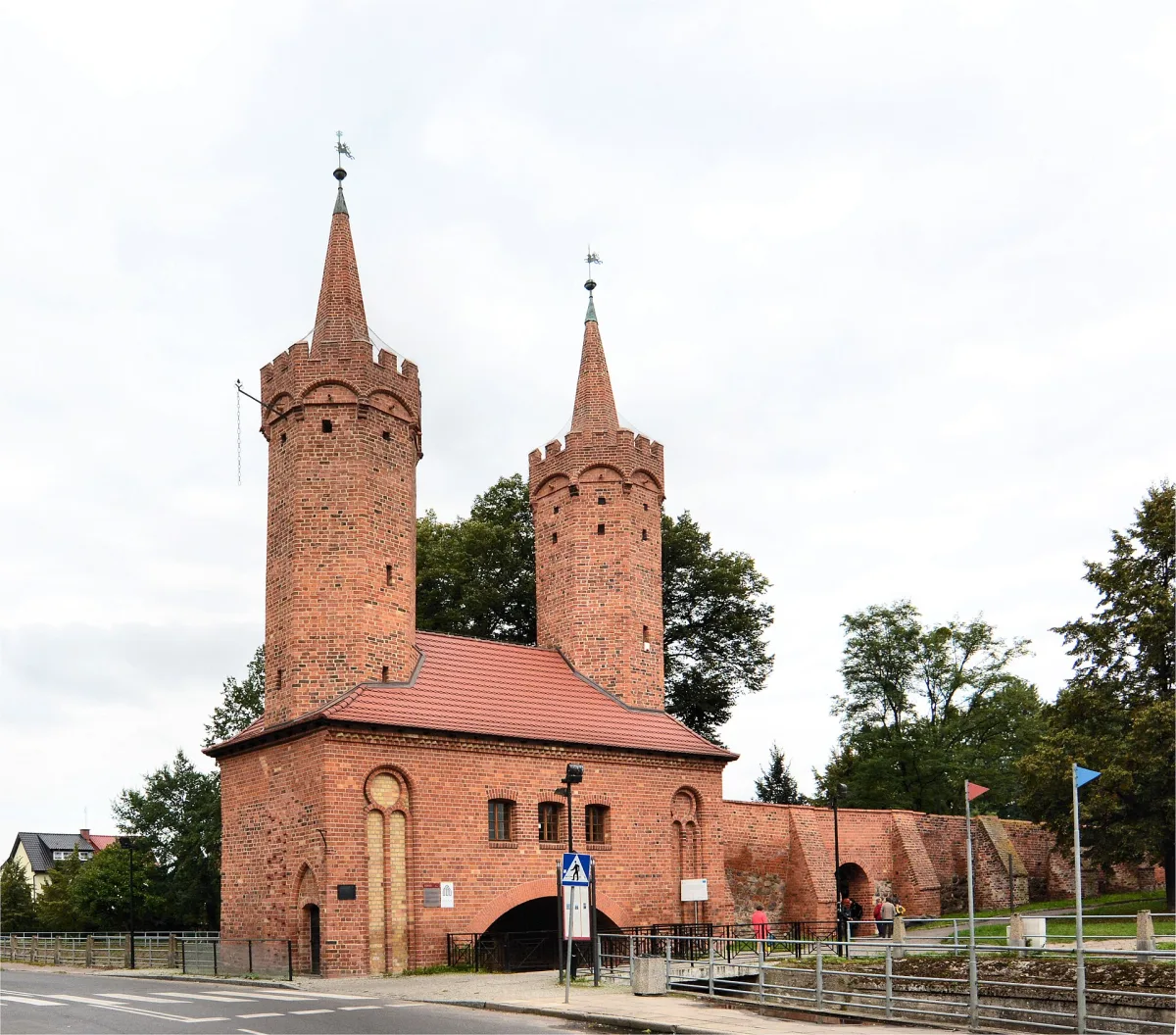
Wikipedia states that in the second half of the 12th century the bishopric held about one eighth of the territories of all the duchies of West Pomerania, and from the 13th century it was economically and politically independent of the ducal court. In 1304 the bishopric bought Golczewo, and in 1308 Bishop Henryk von Wacholz fled for a time from Brandenburg raids to the castle in Golczewo. The Castle Tower in Golczewo still stands there today.
The same bishop planned to move the seat to the monastery in Białoboki or to Kołobrzeg. According to Wikipedia, the Kamień town council opposed this, and Pope John XXII forbade a change of capital on 14 January 1333. In 1321 the whole of Kamień Pomorski became the property of the bishops of Kamień. In the 1330s the cathedral settlement, the canons' houses, the cathedral and the bishop's house were extended.
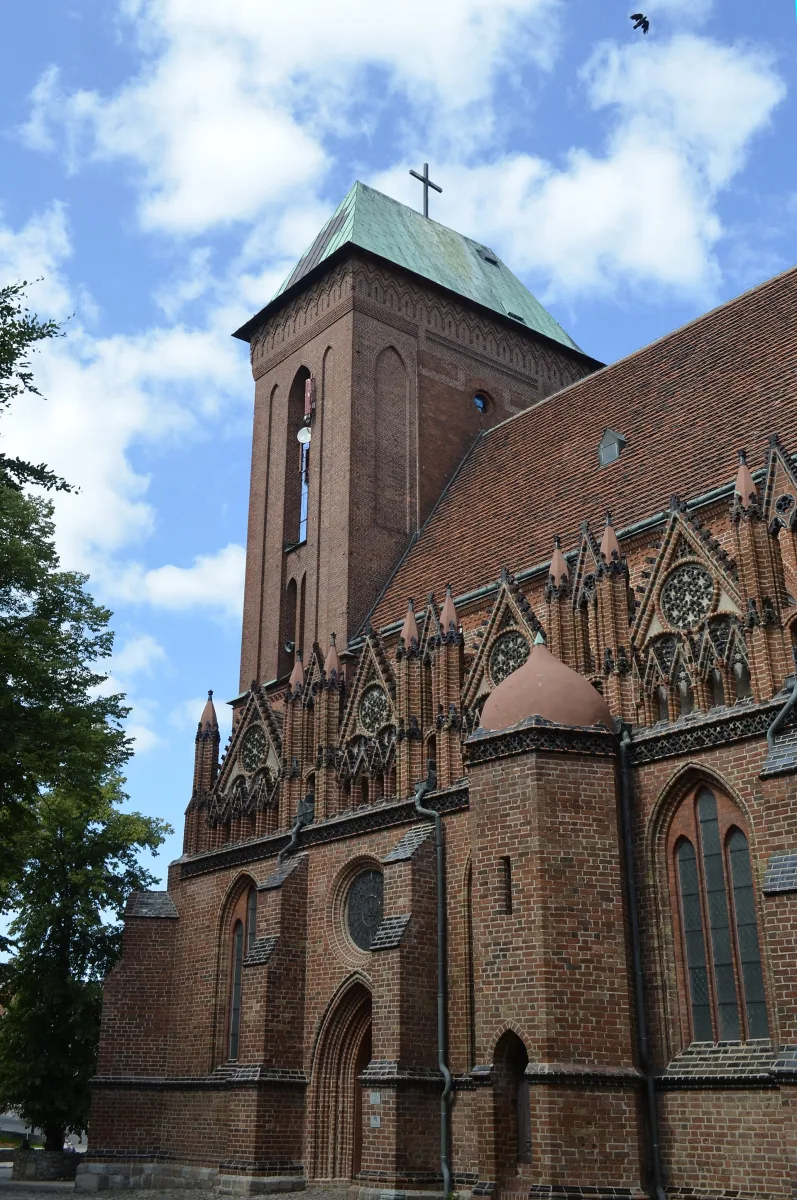
A trace of that expansion remains in Kamień. According to the description of the site, the Co-Cathedral of St John the Baptist has a Gothic nave, the work on which was completed in 1370. Next to it stands the Bishop's Palace, which, according to the heritage register, was built in the second half of the 15th century on the site of an earlier curia court from the 14th century.
Dispute with the dukes and the end of the bishopric
In the mid-1350s a conflict broke out with the Duchy of Wołogoszcz. The dukes of Wołogoszcz demanded the return of part of the lands, an agreement was signed in Wolin in December 1355, and a year later Bishop Jan I recognised ducal authority. In 1372 the dukes of Szczecin took power over Kamień Pomorski and the whole region. After the death of Bishop Philipp von Rehberg in 1385, the permanent seat of the bishops, until the Reformation, became, according to Wikipedia, the castle in Karlino.
The entry on the Duchy of Pomerania states that in 1248 the Kamień bishopric became a separate principality of the Empire with its seat in Kołobrzeg. The entry on the bishopric, on the other hand, says that Kamień remained the main residence, and the bishops stayed at times in Golczewo and later in Karlino. Kołobrzeg appears in it only as a plan of Henryk von Wacholz from the early 14th century, so these are two different accounts of the same matter.
The end came with the Reformation: on 13 December 1534 the Treptow diet recognised Protestantism as the state religion, and after the death of the last bishop, Erasmus von Manteuffel, in 1544, the Catholic Church disappeared from West Pomerania. The bishopric was revived by the bull of Paul VI of 28 June 1972 as the Szczecin-Kamień diocese with its seat in Szczecin, and in 1992 it became an archdiocese.
Be the first! Add a comment.
You need to log in to add a comment.
Log in