
The Templars on Lake Drawsko
According to the Czaplinek town website, the beginnings of the settlement go back to the autumn of 1286. At that time the Greater Poland duke Przemysł II brought the knights of the Order of the Temple of Jerusalem, that is, the Templars, to these lands. They built the Temple Stronghold, in Latin Tempelburg, next to an already existing fishing settlement. Hence the German name of the town, which survived until 1945, while the Polish form Czaplinek appears in the sources in the 16th century.
Wikipedia gives the same beginnings but adds details: the castle of the commandery was said to have been built in 1291, and in the same year the town was said to have received town rights under Polish law. In 1300 the commandery was said to have passed to the Neumark (New March), that is, under Brandenburg rule. Over the following centuries the borders of this land changed several times, because it lay at the meeting point of Greater Poland, Pomerania and Brandenburg.
The Hospitallers and the dispute over dates
After the Templars the commandery was taken over by the Knights Hospitaller. Here the accounts diverge. The Czaplinek town website gives the year 1345, while the Wikipedia entry on Czaplinek speaks of around 1319-1320. The entry on the Drahim starostwo (starosty) explains the background: after the dissolution of the Templar order in 1312 its property was taken over by the Margrave of Brandenburg, and from 1345 the estates were in the hands of the Hospitaller order. The two dates can therefore be linked to two stages of the same takeover, but none of the sources settles this directly.
The Hospitallers sat in Czaplinek, and to protect the commandery on the Pomeranian side they built Drahim Castle on the isthmus between lakes Drawsko and Żerdno, described in Wikipedia as a stronghold in today's Stare Drawsko. The town website gives its location as about six kilometres from the town. The ruins can be seen at Drahim Castle. The knights were vassals of the Polish king, but according to the entry on the starostwo not always loyal ones: they tried to pursue their own policy towards the Crown.
Wikipedia also says that in 1376 the Pomeranian duke captured the castles in Czaplinek and Machliny, while Drahim held out. The entry on Czaplinek itself speaks of the castle being demolished by the Pomeranians in 1380. Both versions describe the same period of wars with the Pomeranians, but they differ in the year.
The Drahim starostwo in the Polish Crown
These lands returned to Poland under Casimir the Great. Wikipedia states that in 1366 the king acquired the Hospitaller estates, and an agreement with the Margrave of Brandenburg in 1368 transferred the commandery with Czaplinek and Drahim to the Crown. The entry on Stare Drawsko claims that a starostwo was created here in 1366, renewed in 1407. The entry on Czaplinek gives the beginning of the starostwo as 1407, and the town website describes the expedition of Władysław Jagiełło against Drahim in that very year, 1407. According to the website, the king called on the Hospitallers to submit, and when they refused, his knights captured the castle. The knights of the order were expelled, and Polish starostas took up residence in the castle.
Throughout the existence of the starostwo, Czaplinek, as the town website puts it, remained in the shadow of Drahim and played a subordinate role to the castle. Even so, it grew. Wikipedia records that in 1565 Sigismund Augustus set fair dates and weekly Saturday markets for the town, and in 1580 the town was moved from Polish to Magdeburg law. In 1552 tax was paid by 63 townspeople. The town website adds that in the 17th century Czaplinek had one of the larger cloth-making centres in West Pomerania, as well as mills, windmills, a sawmill and a brickworks. Fires, however, did not spare it, and several times destroyed almost all of its buildings.
The pledge to Brandenburg
The end of Polish Czaplinek came with the Swedish Deluge. According to the town website, on 21 July 1655 the Swedes entered the borders of the starostwo near Siemczyn, plundered the town and moved on towards Wałcz. After the Treaties of Wehlau and Bydgoszcz King John Casimir gave the starostwo to Brandenburg as a pledge for the costs of recruitment. Here too the dates are not the same: Wikipedia in the entry on Czaplinek gives 1658 as the year the town passed into Brandenburg hands, and in the entry on Stare Drawsko it speaks of a pledge of 1657 and a debt of 120,000 Rhenish thalers. Drahim Castle, according to the entry on the starostwo, was held by the Polish starosta, Hetman Stanisław Rewera Potocki, and the Brandenburgers took it over only in 1668 after his death.
The pledge was never redeemed. According to the town website, the starostwo could not be recovered until the first partition in 1772, when these lands came under Prussian rule. Wikipedia adds that from 1701 the town officially bore the name Tempelburg and lay within Prussia, and from 1871 to 1945 in Germany.
The town after the starostwo
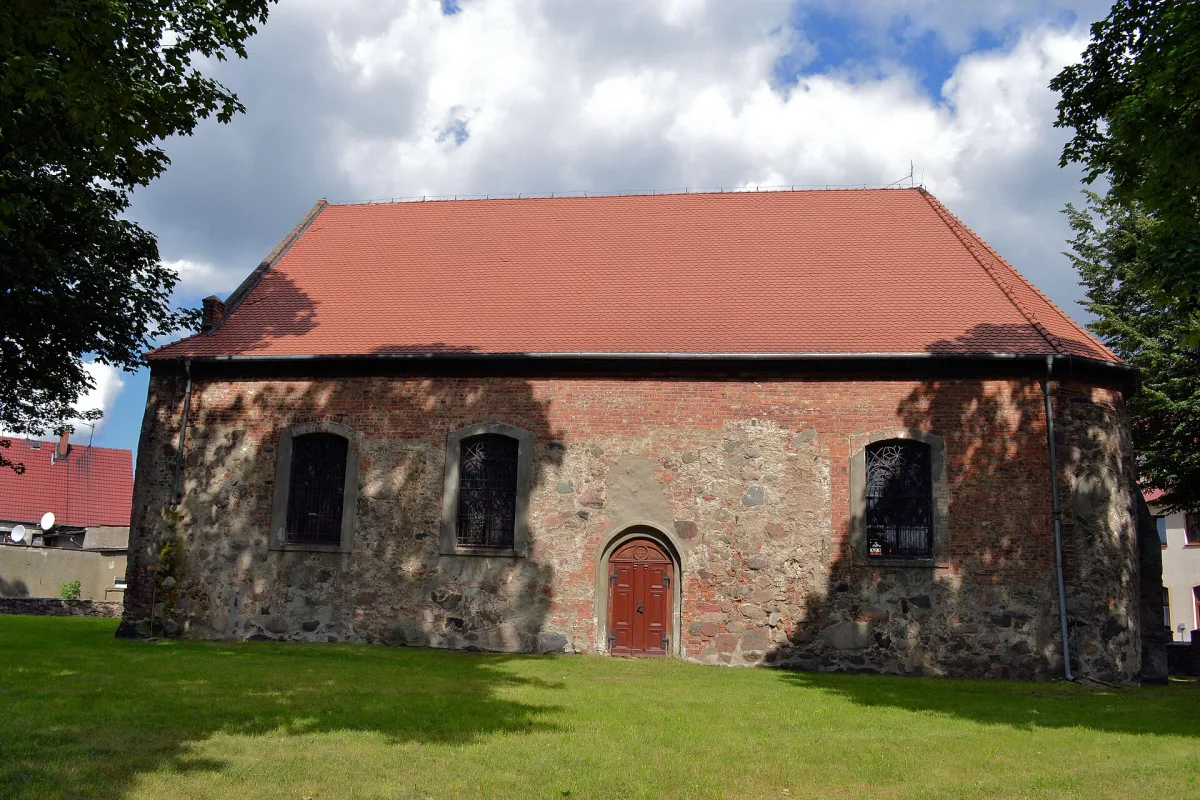
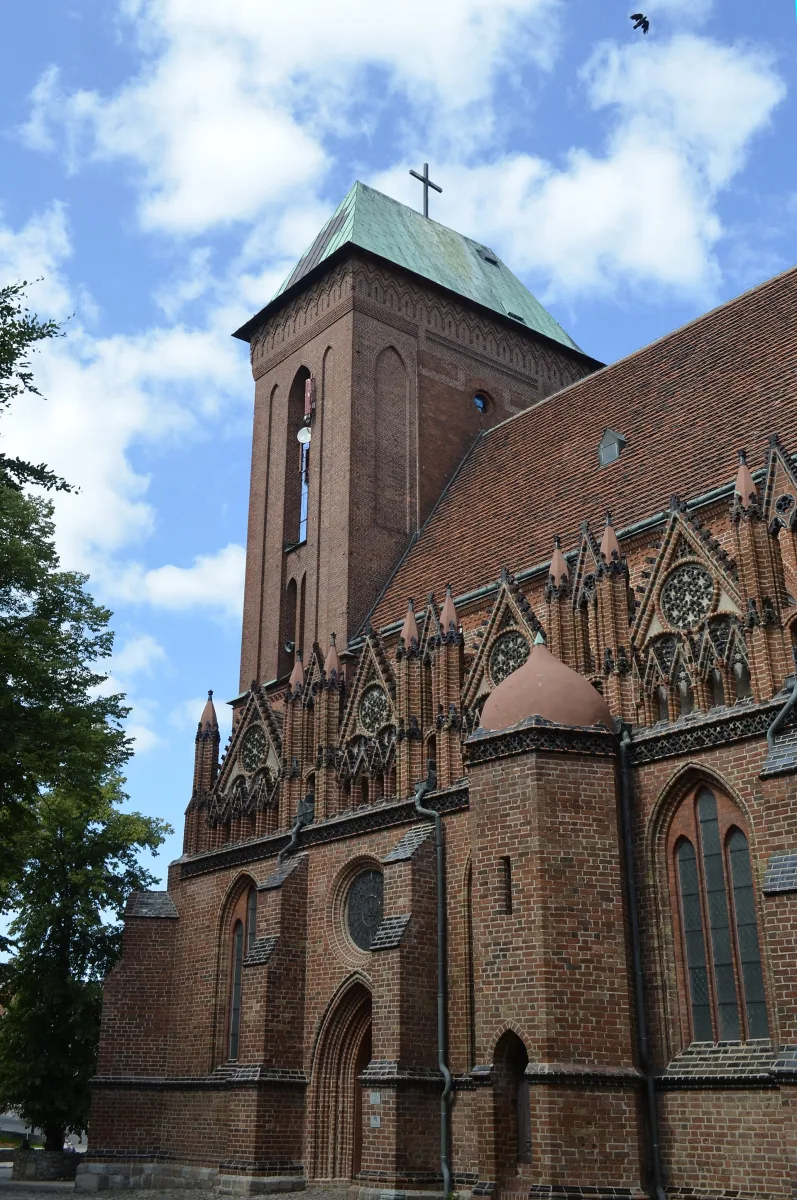
Traces of this history can be seen in the town centre. According to Wikipedia, the Church of the Holy Trinity dates from the 13th century and was restored in 1725, and a wooden bell tower from the 18th century is also in the heritage register. Entered in the register is the town hall from 1845 on the Market Square, and the neo-Romanesque church from 1829-1830, today Roman Catholic, has polychromes. When visiting the town one therefore comes across the Church of the Holy Trinity, the Church of the Exaltation of the Holy Cross and the town hall.
After the Second World War, according to Wikipedia, the town was taken on 3 March 1945 by units of the 7th Regiment of the 3rd Infantry Division. The name Czaplinek was formally introduced on 12 November 1946, and earlier the name Czaplice had been used temporarily.
Be the first! Add a comment.
You need to log in to add a comment.
Log in