
Where the Orthodox churches of West Pomerania came from
The Orthodox and Greek Catholic churches of the West Pomeranian Lakeland are linked to the post-war resettlement of people from eastern Poland onto former German lands. According to the Wikipedia entry on Operation Vistula (akcja “Wisła”), in the autumn of 1946 more than 140,000 people of Ukrainian nationality remained within Poland's borders, belonging mainly to the Greek Catholic and Orthodox churches. The formal decision on the operation was taken by the Political Bureau of the Central Committee of the Polish Workers' Party on 29 March 1947, and the resettlement plan of 18 April 1947 provided for the deportees to be placed in the Szczecin and Olsztyn voivodeships. Szczecinek was one of the distribution points for the transports. According to an article by Witold Bobryk in the journal “Textus et Studia”, 48,465 people from the three voivodeships being cleared were settled in the area of the Szczecin Voivodeship within its borders before 1950.
The churches standing in the Lakeland today are mostly former buildings of other denominations, adapted for Eastern liturgy. Below is an overview of seven such places, from handovers in the 1940s to buildings from the late 20th and early 21st centuries.
Orthodox churches in former Protestant and Jewish buildings
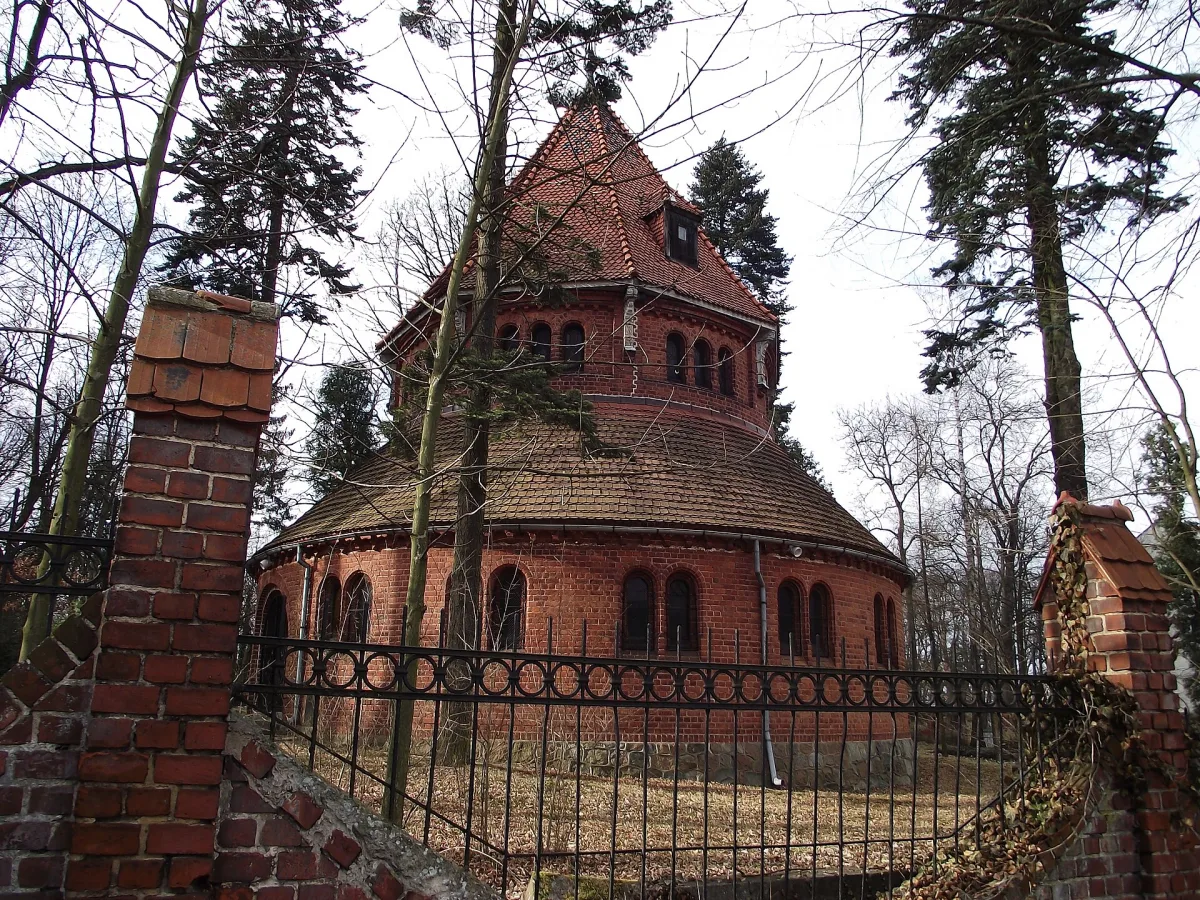
The best documented handover date is 1947 in Wałcz. The Church of the Holy Trinity occupies a brick building put up in the second half of the 19th century as a Protestant cemetery chapel. According to Wikipedia, citing an article in “Przegląd Prawosławny”, the building passed into the ownership of the Orthodox parish in 1947. The iconostasis comes from a dismantled church in the Lublin region, and the parish received the icons in 1947 from the Warsaw metropolitanate. The church and cemetery were entered in the heritage register on 4 January 1985. The interior furnishings therefore come from other regions, while the building itself is a former Protestant chapel.
A similar pattern can be seen in Łobez. The Church of St George did not grow out of a church but out of a residential house built in 1912, whose ground floor was converted into a place of worship. According to Wikipedia, the building was handed to the Orthodox parish in 1948, and until 1951 the church was located on the first floor. The iconostasis comes from the parish in Międzyleś, from a church demolished in 1938.
In Szczecinek the Church of the Holy Trinity stands on Szkolna Street in a building from 1824. Accounts of its original function diverge: the heritage register, according to the zabytek.pl service, describes it as a synagogue, while Wikipedia also mentions another source, according to which it was a Protestant church. Both give the same year of construction. According to Wikipedia, the building was adapted for Orthodox liturgy in 1952.
In Bobolice the Church of All Saints operates in a masonry building from 1902, which was built as an Old Lutheran church. The heritage register describes it as neo-Gothic and brick, and it was entered on 16 August 2007 under number A-323. Inside stands a modern iconostasis.
The four Orthodox churches belong to the Wrocław-Szczecin Diocese of the Polish Autocephalous Orthodox Church, which was established, according to Wikipedia, in 1951 and had previously been a vicariate. The diocese covers, among others, the West Pomeranian Voivodeship.
Greek Catholic churches: a former chapel and new buildings
The sources give later dates for the Greek Catholic parishes than for the Orthodox handovers. In Wałcz a Greek Catholic parish has existed, according to Wikipedia, since 1959 and belongs to the Wrocław-Koszalin Eparchy. The Church of the Exaltation of the Holy Cross occupies a building constructed in 1923-1924 as a Lutheran hospital chapel with a mortuary. It is a brick structure in an eclectic style, with neo-Romanesque elements predominating. On the east wall is a bas-relief from the 1920s commemorating those killed in the First World War: Christ comforting a widow with a child. The iconostasis is modern, made by the Ukrainian icon painter Valentyna Biriukovych.
In Biały Bór the Greek Catholic parish was established, according to Wikipedia, in 1957. Its church, the Church of the Nativity of the Most Holy Mother of God, is a new building. It was designed by Jerzy Nowosielski in collaboration with the architect Bogdan Kotarba, and according to Wikipedia it was built in 1992-1997. The heritage register gives the years 1992-1993, so the construction dates in the two accounts do not match. Wikipedia states that the church was entered in the heritage register in 2019 and that at the time of entry it was the youngest historic monument in the country. The iconostasis is limited to three icons, and on major feast days its role is played by the flat façade of the building.
The youngest of the seven is the Church of St Michael the Archangel in Szczecinek. Construction began on 6 June 2010, and according to Wikipedia the church was set on fire on 6 January 2014, during the Greek Catholic Christmas celebrations, for religious motives. It was consecrated on 12 September 2015 by Bishop Włodzimierz Juszczak, ordinary of the Wrocław-Gdańsk Eparchy. It is therefore not a building taken over from another denomination but one built from the ground up.
What these buildings have in common
The seven churches show two paths: adapting an existing building of another denomination (Wałcz in two places, Łobez, Szczecinek, Bobolice) and building from scratch (Biały Bór and Szczecinek on Karlińska Street). The rules for entering the interiors are set by the parishes, as these are active places of worship.
Be the first! Add a comment.
You need to log in to add a comment.
Log in