
Kołobrzeg: from sea bathing to brine and peat
The name of Kołobrzeg has salt in it. According to the Encyclopedia of West Pomerania, the town was recorded in Latin as salsae Cholbergiensis, that is the Kołobrzeg brine, as early as the 10th century, which is rare in Pomerania, and most of the roughly twelve hypotheses about the origin of the name link it with salt. Wikipedia says that the brine was known here as early as the 7th century, but was used for therapeutic baths only in the 1830s, and that the founder of the brine bathhouses was Gottlieb Keutel. According to Wikipedia, the Kołobrzeg brine contained, among other things, bromine, iodine, sodium and ions of calcium, iron and magnesium.
The spa is considered to have begun in 1802. A convicted Prussian officer, Jan Henryk Held, was sent to the fortress then for a year and a half, and after his stay he wrote a book about the seaside resort in Kołobrzeg. In 1803 the first sea-bathing establishment was opened at the mouth of the Parsęta, operating from June to September, with separate bathing areas for women, men and families with children. Peat began to be used for treatments in 1882, according to Wikipedia and the spa.
The development of the resort was accelerated by the railway and by the dismantling of the Kołobrzeg Fortress: the land fortress in 1872 and the sea fortress in 1887. The moats were then filled in, the ramparts taken down and the town could expand. On the initiative of supporters of the resort a spa park was laid out, today's Stefan Żeromski Park. It was officially created in 1853 on the basis of plantings from 1809, but the consent of the fortress command was obtained only in 1863, because the fortifications hampered the whole undertaking. In 1884 construction began on the Dune Promenade, today's Nadmorska Avenue. From 1887 the area around the former redoubt was laid out as a recreational part of the spa: this is how one of the most fashionable places of the resort came into being, today's Kamienny Szaniec (Stone Redoubt). In 1899 the Strandschloss sanatorium, which served as the spa house, was opened, and the 5th International Congress of Marine Medicine, held in Kołobrzeg in 1911, granted the spa first-category status.
Accounts of the post-war launch of the spa give different dates. Wikipedia says the spa started operating in 1956, while the Encyclopedia of West Pomerania says that Kołobrzeg formally received spa status in 1967. The state enterprise Uzdrowisko Kołobrzeg was established in 1953 and on 1 February 1999 it was transformed into a joint-stock company. The spa calls brine “white gold” and peat, a kind of turf, “black gold”. According to Wikipedia, adults are treated here for diseases of the respiratory, circulatory, endocrine and metabolic systems, and children for respiratory diseases and allergic skin diseases.
Traces of the spa tradition can be seen in the Spa District. Wikipedia lists graduation towers, guesthouses, sanatoria and natural-treatment establishments there, and by the sea runs the pier from 1971. Kołobrzeg mineral water from local springs, enriched with amber and honey, is served at the Jantar Amber Water Pump Room.
Kamień Pomorski: brine from a search for coal
The history of Kamień Pomorski as a spa begins with a chance event. According to Wikipedia, brine springs were discovered there by accident in 1876, and in time peat from the surrounding bogs began to be used as well. The spa's website specifies that the brine was exposed by drilling in search of hard coal, and that the brine bathhouse was put into use in 1882.
According to the spa's website, it was established by an order of the Minister of Health on 7 September 1959, ceremonially opened on 31 October that year, and the first patients arrived on 1 November. The spa describes itself as the 27th in Poland. The former German Solbad was renovated from 1958 and became the Feniks Natural Treatment Establishment, and after the war the buildings were occupied by the army, which delayed the admission of patients.
According to Wikipedia, the spa uses sodium chloride waters (brine), iodide and ferruginous waters, and peat deposits. It lists the areas of treatment: rheumatic, cardiological, neurological, orthopaedic and trauma conditions, and diseases of the lower respiratory tract, as well as children's diseases. Kamień Pomorski was also the seat of the Pomeranian bishops, as recalled by the Cathedral of St John the Baptist.
Połczyn-Zdrój: ferruginous springs, borehole brine and a park
In Połczyn-Zdrój, Wikipedia states that the local ferruginous mineral waters were discovered in 1688, and the existence of the spring is confirmed by a report of the Połczyn pastor to the church authorities from the 1670s. The dates are therefore inconsistent: the pastor's report predates 1688. According to legend, a craftsman suffering from rheumatism washed in water from the spring, put his leg in the mud and was said to have recovered the next day. Wikipedia writes of a clothmaker, while the spa's website speaks of a weaver. It is a legend, not a confirmed fact.
According to Wikipedia, in 1705 Jakub von Krockow built the first spa house. In 1836 to 1839 the Spa Park was laid out, which according to Wikipedia is now 80 ha, with a northern part in the French style, with an alpinarium, a pond and fountains. In 1894 to 1896 the Kaiserbad was built, today's Gryf Spa Hospital, which according to Wikipedia was the largest sanatorium facility in Poland until the 1970s. The opening of a railway line to Świdwin in 1897 also contributed to the spa's development. According to the spa's website, the record year before the First World War was 1913, with 4,126 patients. In 1926 the word Bad was added to the town's name, confirming its spa character.
Brine appeared later than in Kołobrzeg and Kamień. According to the spa's website, in 1965 a brine rich in bromine and iodine was drilled in Połczyn, which opened up new areas of treatment, and the town received spa town status on 1 January 1972. Wikipedia states that the spa has documented peat deposits and sodium chloride and iodide therapeutic waters with a total mineralisation of 7.5 per cent. Orthopaedic and trauma, rheumatological and nervous system conditions are treated here.
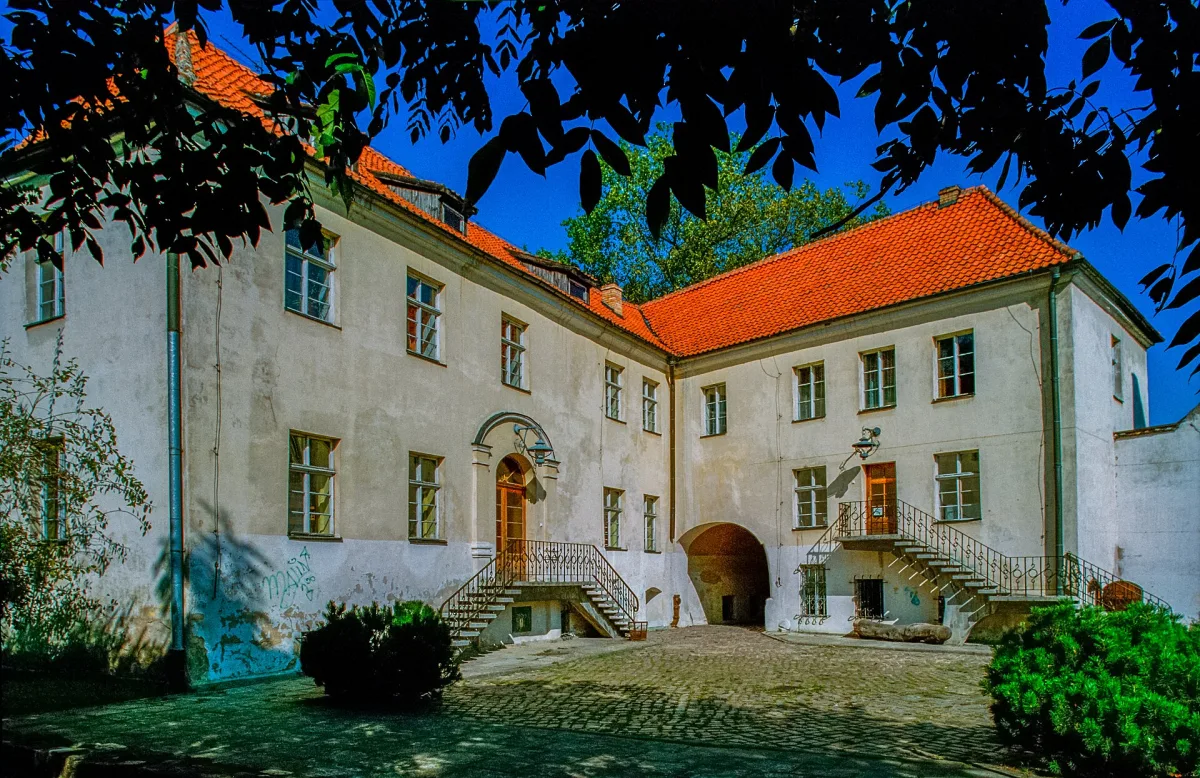
Besides the sanatoria, the town has the Palace in Połczyn-Zdrój, which was built in the 18th century on the site of a former castle. In the vicinity lies the Dolina Pięciu Jezior nature reserve, known as the Połczyn Switzerland, with the sources of the Drawa, which is reached, among other routes, by the red Salt Trail.
Świnoujście as a point of comparison
A similar course of development was followed by Świnoujście, where the first bathing season was opened in 1824, and the Spa Park was designed, according to sources, in the 1820s, with Peter Joseph Lenné as its designer according to them. Today there are brine graduation towers by the sea, down whose twigs flows brine from the Świnoujście Spa.
Be the first! Add a comment.
You need to log in to add a comment.
Log in