
A capital with a caveat: what the sources say
According to Wikipedia, in 1298-1537 Myślibórz was the capital of the Neumark (New March) and the leading economic centre of the region. Its capital character was said to have led the town to build prestigious buildings, to surround itself with strong walls, and to host assemblies of the estates and courts within its limits. That is the article on the town. A separate Wikipedia article on the Neumark itself puts it more carefully and more precisely: in 1281 Myślibórz became the superior centre over the other towns of the region as regards municipal law, and after the collegiate chapter was established in 1298 and the archdeaconry was moved here from Santok it became the political centre of the Neumark, where the margraves often resided.
So both articles agree on the year 1298, which corresponds to the founding of the chapter. The year 1537 appears only in the article on the town, with no explanation of what ended then. It is also worth remembering that the office of the land governor, that is, the ruler's deputy, moved around: according to the article on the Neumark, from 1413 its seat was in Chomętowo, near the border, and in the second half of the 15th century it became Kostrzyn. Myślibórz was therefore a capital in the political and ecclesiastical sense, not the permanent seat of the land administration.
The beginnings were modest. The first mention of Myślibórz comes from a document of 1238 in which Duke Władysław Odonic granted the Templars a thousand hides of land on the Myśla river. In 1261 the settlement became part of the March of Brandenburg, and in 1262-1270 it received municipal rights. The town lay at the crossing of trade routes, and its fairs were so famous that the weights and measures used in Myślibórz, known as Myślibórz measures, applied throughout the Neumark.
The collegiate church and the Dominicans: two churches of the court and the chapter
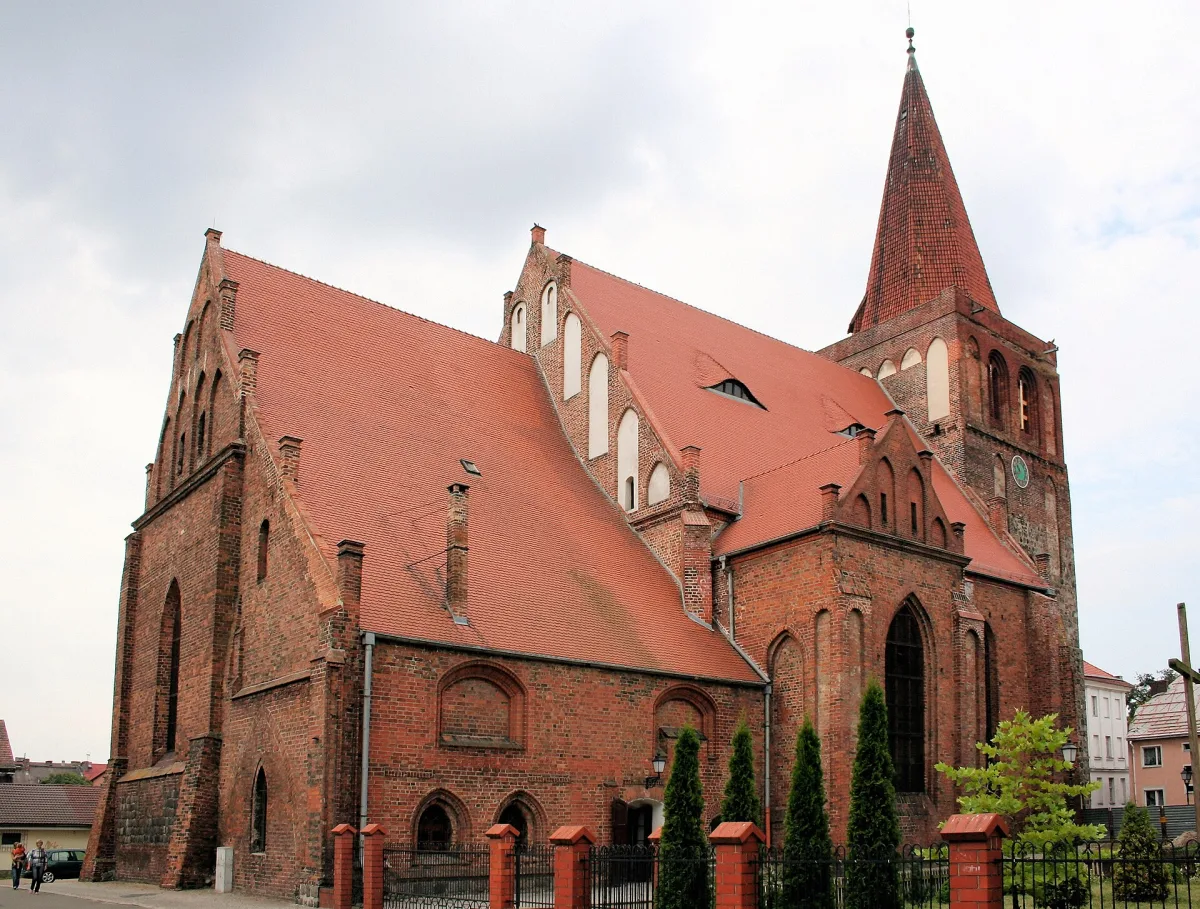
The church that gave the town its rank is the Collegiate Church of St John the Baptist. In the 1260s a first church was built of granite blocks, but it was destroyed soon afterwards, most probably in 1271 during the raid of Duke Bolesław the Pious. In 1298 Margrave Albrecht III established the collegiate chapter, which supervised the churches in the Neumark. Until 1945, according to the parish website, the collegiate church was dedicated to Saints Peter and Paul. Today's building is a Gothic hall church from the early 15th century with granite fragments from the second half of the 13th century.
The second place connected with the ruler is the Dominican monastery, the only monastery of this order in the Neumark. Its Gothic church from the second half of the 13th century, according to Wikipedia, served as the court church of Margrave Albrecht III, who often stayed in Myślibórz, and two of the ruler's sons were buried in it. The friars did not live to see the end of the era: the monastery was secularised in 1543 and finally dissolved in 1547. Of the quadrangle of buildings, the church and one monastery wing survived, in which two rooms have crystal and palm vaults resting on a single pillar. Today they house the Myślibórz Cultural Centre and the municipal library.
Both churches went through the same disasters. In 1433 they were burnt by the Hussites, who during the Polish-Teutonic war also destroyed the town itself. In 1538 the collegiate church became a Protestant congregation, and after the great fire of the town in 1539, which damaged it, for about half a century the Dominican church served as the parish church. Wikipedia gives the years 1539-1593 for the Dominicans as the period of the Lutheran parish church. The collegiate church was rebuilt in 1582-1593. The Baroque high altar was donated in 1697, and the organ was built in 1843-1848 by Carl August Buchholz of Berlin. Next to it stands the Neoclassical town hall of 1771-1772, the seat of the town authorities, which replaced buildings destroyed in earlier fires.
Walls, gates and towers
The strength of the capital town was visible from afar. According to Wikipedia, the stone-and-brick defensive walls from the second half of the 13th century were originally about 1,900 metres long. They were reinforced by 49 towers, mainly shell towers, spaced every 24-30 metres, and three gates. Small fragments of the walls, two gates and two towers have survived to this day.
- The Pyrzyce Gate, Gothic, brick, built in the first half of the 14th century, with pointed-arch blind windows and a tented roof. It was thoroughly renovated in 1729. Since 2002 it has housed the archaeological workshop of the Myślibórz Lakeland Museum.
- The Nowogródek Gate, also from the first half of the 14th century, with a double-row decorative frieze and a tented roof. The renovation date of 1737 appears on the weathervane at the top of the roof. In 1968 a youth hostel and an equipment hire shop opened in it, and a branch of the PTTK also found a home here.
- The Gunpowder Tower, Gothic, brick, built on a circular plan at the turn of the 14th and 15th centuries. The crenellation and conical roof date from the 19th century and, as Wikipedia notes, do not have to correspond to the original appearance.
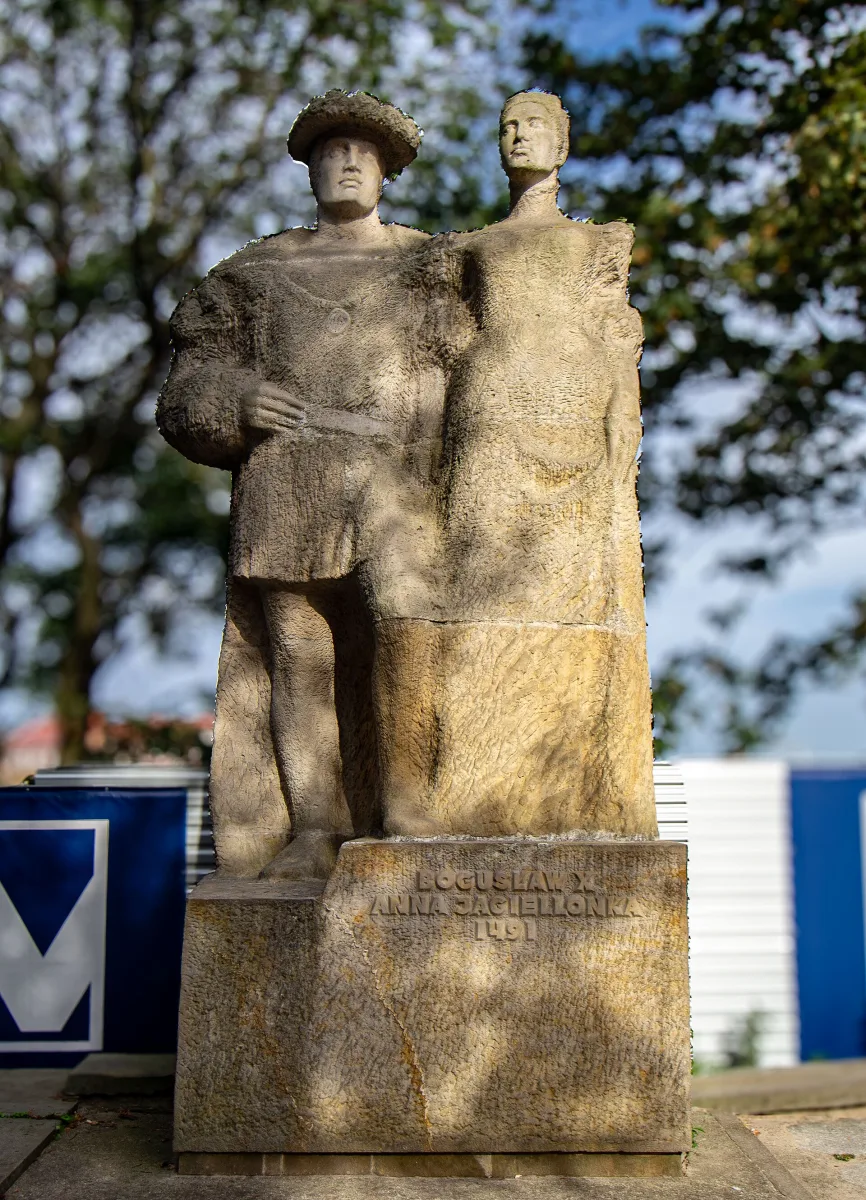
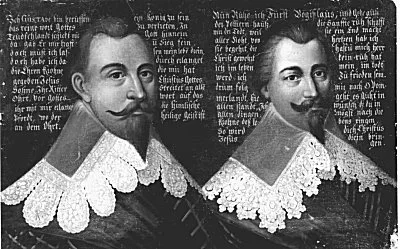
The inhabitants were, however, capable of standing up to their own ruler: according to Wikipedia, in 1349 the townspeople pulled down the margraves' castle. During the civil war caused by the appearance of the False Waldemar, Myślibórz, as the article on the Neumark states, at first sided with the impostor. From 1373 the town belonged to the Bohemian Crown, in 1402 it was sold to the Teutonic Knights, and in 1455 the Teutonic Knights sold it back to Brandenburg. In 1473 it was taken and destroyed by the West Pomeranian duke Bogislaw X.
Chapels and a Way of the Cross outside the town
Small brick chapels also belong to the medieval landscape. The Jerusalem Chapel was consecrated on 1 March 1514 by Bishop Martin of Kamień. According to Wikipedia it stood outside the town walls as most probably the last station of an old Way of the Cross. Legend has it that the distance from the Chapel of the Holy Spirit corresponds to the distance between the place where Jesus was condemned by Pilate and the place where Simon of Cyrene helped him carry the cross. In the 1990s it turned out that the figure of the Crucified Christ from the chapel is an original Gothic sculpture in lime wood. The museum now shows the original, and a copy stands in the chapel.
The Chapel of the Holy Spirit mentioned above dates from the mid-14th century and, according to Wikipedia, its original purpose is not clear: it may have been the margrave's chapel or belonged to a merchants' guild. After the Reformation it was used as a sheepfold and a brewery, in the 18th century as a salt store, and in the mid-19th century as a fire station. Since 1979 it has housed the Myślibórz Lakeland Museum. From the second half of the 15th century, and according to the heritage register from 1470, dates the hospital Chapel of St Gertrude, a former hospital chapel. In 1933 the coffins of two Lithuanian pilots, participants in the New York - Kaunas flight, who died in an air crash near Pszczelnik, were displayed in it. The event is commemorated by a monument in front of the chapel.
The lake and later layers of the town
The buildings of the town lie on the southern shore of Lake Myślibórz. It is the largest body of water in the Myślibórz Lakeland. According to the Inland Fisheries Institute it has an area of 617.7 hectares, while a measurement from maps gives 595 hectares. The average depth is 8.4 metres and the greatest 22.3 metres. In sources it appears in 1780 as Soldinsche See, and the official name was given in 1950. Today there are two bathing areas by it and sailing regattas are held.
After the loss of its capital rank the town did not regain its former importance. The wars of the 17th and 18th centuries, especially the Thirty Years' War and the Seven Years' War, according to Wikipedia caused enormous destruction and weakened economic development. Hope came only with the railway connections: with Kostrzyn nad Odrą and Stargard in 1882, with Barlinek in 1883 and with Gorzów Wielkopolski in 1912. In 1945 the town was destroyed to about 40 per cent, and the Red Army took it on 2 February. Wikipedia states that the entering Soviet troops shot residents, and a mass grave in which 120 people lie was discovered in 1995.
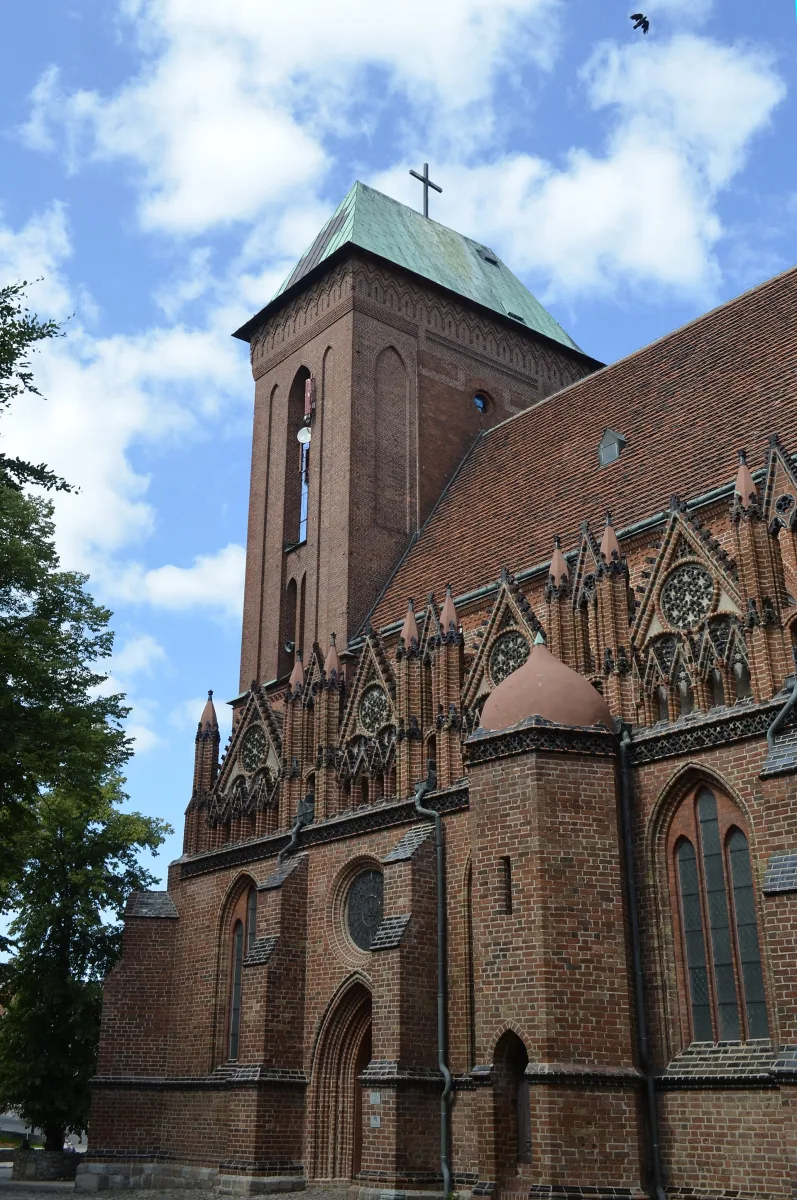
In 1947 the newly founded Congregation of the Sisters of Jesus the Merciful moved from Vilnius to Myślibórz. From this period dates the Neo-Gothic Church of the Holy Cross of 1905-1907, since 1993 the Shrine of Divine Mercy with relics of St Faustina. To the medieval layers of the town, connected with the margraves and the chapter, one more, from the 20th century, has thus been added.
Be the first! Add a comment.
You need to log in to add a comment.
Log in