
For more than half a millennium West Pomerania was ruled by a single dynasty, today called the Griffins (Gryfici). Its name comes from the griffin, a mythical creature with the body of a lion and the head of an eagle, which to this day appears in the coat of arms of the West Pomeranian Voivodeship. Below is gathered what Wikipedia and the Encyclopaedia of West Pomerania say about the beginnings of the house and the griffin in its coat of arms, together with the places where traces of the dynasty can be seen.
More than six hundred years of rule
According to the Encyclopaedia of West Pomerania, the Griffins were one of the longest-ruling princely dynasties in Europe: more than 600 years, from about 1046 to 1637. The oldest record of a Pomeranian duke, Siemomysł, dates from precisely 1046. Wikipedia puts it more broadly: the dynasty ruled West Pomerania from the 12th to the 17th century.
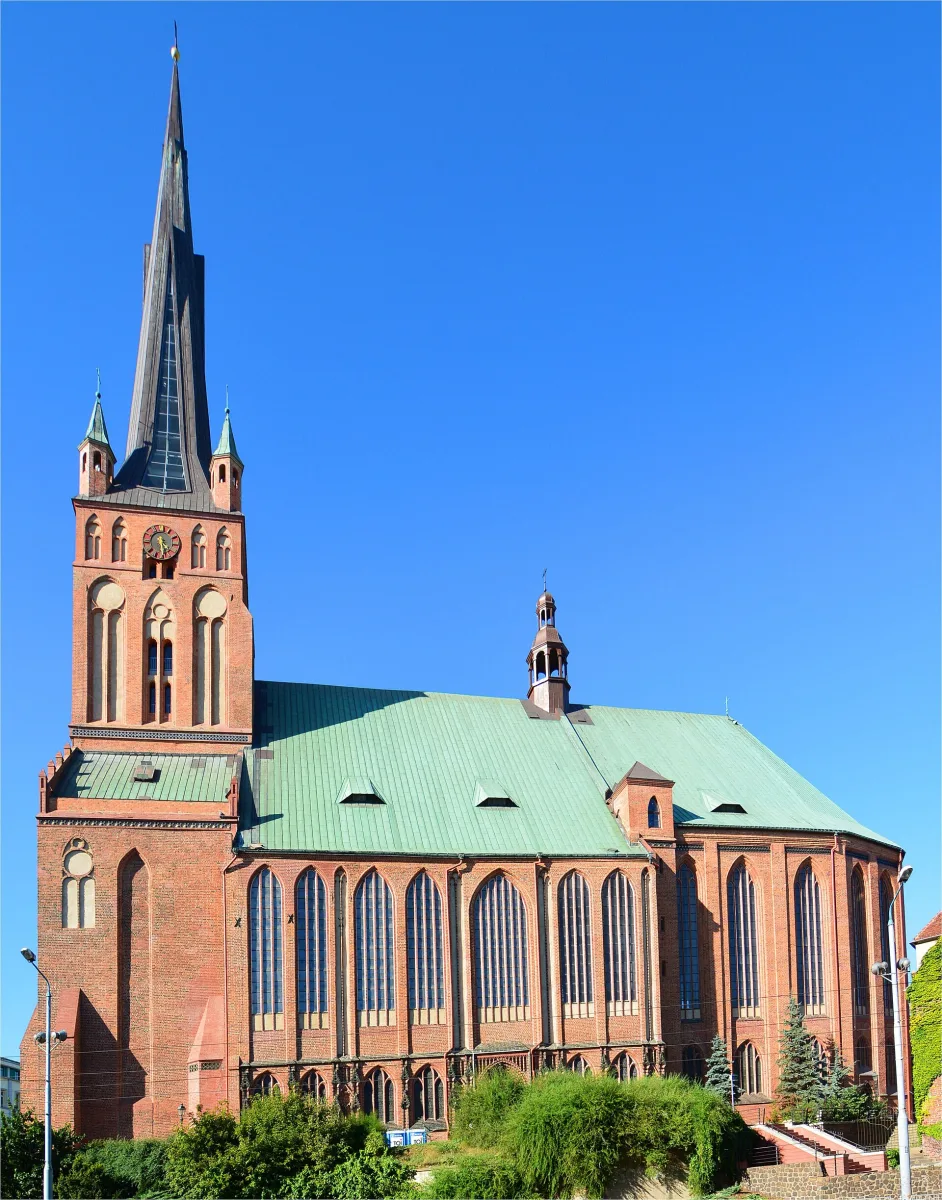
The last duke in the male line was Bogusław XIV, who died in Szczecin on 10 March 1637. The last ruler from the house was, according to the encyclopaedia, Anna de Croy, daughter of Bogusław XIII, who died in 1660 in Słupsk. In Szczecin the dynasty's legacy is best seen on the hill above the Oder, in the Castle of the Pomeranian Dukes, which according to Wikipedia stands on the site of a Slavic stronghold with the timber court of Duke Warcisław I. The Griffins were buried in several Szczecin churches, among others in St James' Cathedral Basilica, and according to Wikipedia from the 16th century most ducal burials took place at the castle.
Where the name came from
Wikipedia notes that the name of the house took shape only in the 15th century. Earlier, members of the dynasty were also described as the Warcisławowie (Wartislavs), after its historical progenitor. The coat of arms itself is much older than the name, but the dates given for its appearance differ.
Wikipedia states that members of the family used the griffin as a coat of arms from 1214. The Encyclopaedia of West Pomerania, on the other hand, writes that the circumstances in which the heraldic griffin appeared in Pomerania are not known, and the turn of the 12th and 13th centuries is assumed. According to it, the first duke to use the griffin on his seal was Casimir II of Demmin, in 1193. The dukes of Szczecin took over this emblem, according to the encyclopaedia, from Bogusław II. The dates 1214 and 1193 therefore remain inconsistent.
The encyclopaedia points out that Pomerania was the only Slavic land that adopted the griffin as the coat of arms of the state and kept it until the dynasty died out in 1637. From old armorials it appears that the duke of Szczecin used a red griffin on a silver field, and the dukes of Wolgast and Słupsk a black griffin on a gold or red one. Today a red griffin on a silver background is the official coat of arms of the West Pomeranian Voivodeship.
The dispute over origins
Wikipedia states that the origin of the house is not fully known, and the Griffins were certainly of Slavic descent. There are several hypotheses about the roots of the dynasty. Some point to kinship with the Piasts, others to a common ancestor with the Sobiesławic dynasty or to descent from Duke Świętobór.
Jan Długosz derived the Griffins from the Lesser Poland Świebodzic family. According to a footnote in Wikipedia, Długosz's account was accepted uncritically until the 19th century, and in today's historiography this theory has been abandoned. The 17th-century family tradition, that is, a relatively late one, referred to the legendary Gryphus or Baltus as the first member of the house. The family tree on the Lubinus Map points, in turn, to Świętobór. This map can, incidentally, be seen in the castle in Darłowo, where, according to the museum's website, it hangs on the wall of the staircase.
The Encyclopaedia of West Pomerania recalls that the beginnings of the dynasty are not known, and neighbouring peoples, including the Poles, tried to prove links between the Griffins and their own noble, and even royal, families. According to it, a genealogy from Siemomysł is often accepted, though not very reliably documented. He is said to have been the father of Świętobór, and Świętobór the father of Warcisław I and Racibor I. The encyclopaedia adds that there are poorly proven hypotheses about other possible rulers of Pomerania: Świętopełk, son of Mieszko I, Wrytsleof, who in 1026 stayed at the court of the king of England and Denmark, Canute the Great, and Dytryk, son of Świętopełk.
Warcisław I and the road to the division of the duchy
Wikipedia regards Warcisław I as the historical progenitor of the dynasty, a duke associated with the strongholds on the Parsęta, Białogard and Budzistowo. In 1120-1123 Bolesław the Wrymouth made him his vassal and granted him West Pomerania as a fief. The Encyclopaedia of West Pomerania records him as ruler together with Racibor I in 1124. After his death, probably in 1135, power was taken over by his brother Racibor.
Bogusław I married the daughter of Mieszko III the Old, Anastazja, which according to Wikipedia began a rapprochement of the dynasty with the Greater Poland Piasts. In 1185 he became a vassal of Denmark. After the death of Barnim I in 1295 the duchy split into Wolgast and Szczecin parts, which were then divided further.
One of the Griffins, Eric of Pomerania, in 1397 took, according to Wikipedia, the united thrones of Denmark, Norway and Sweden as the head of the Kalmar Union. His sarcophagus is in the church in Darłowo. In 1534, at the diet in Trzebiatów, the dukes adopted Lutheranism as the state religion of West Pomerania.
The traces that remain
According to Wikipedia the Griffins never had a family necropolis, and members of the dynasty were buried in many places, among others in Darłowo, Kamień Pomorski, Kołbacz, Słupsk and Szczecinek. The castle crypt in Szczecin was opened in 1731 on the orders of the fortress commandant. Fourteen sarcophagi and two damaged coffins were found at that time. According to Wikipedia, in the 1990s the surviving bones were handed over for forensic medicine examination.
An image of the whole house has also been preserved in the National Museum in Szczecin: a seven-metre family tree by Cornelius Krommeny from 1598 shows 155 people from the house of the Griffins. In paintings, in town coats of arms and in the coat of arms of the voivodeship, the Pomeranian griffin endures to this day.
Be the first! Add a comment.
You need to log in to add a comment.
Log in