
After the fighting of 17 and 18 December 1970, Szczecin was left with questions: how to bury the dead, when to publicly demand justice for them, and where to commemorate them. Following publications of the Institute of National Remembrance (IPN), the Przełomy Dialogue Centre and Wikipedia, this text describes the night-time funerals, the march of 1 May 1971 and the later commemorations, from the plaque of 1980 to the monument of 2005.
Funerals at night and without families
According to the IPN, sixteen residents were killed in Szczecin. The figure of sixteen is also given by the National Museum in Szczecin, which runs the Przełomy Dialogue Centre. The publication of the Szczecin branch of the IPN contains short biographies of the victims, based on family accounts and documents, and from them it emerges what the burials were like.
Some of the funerals took place during the night of 22-23 December 1970. Families learned of them just before the ceremony began or only afterwards, and in one of the cases described the relatives were refused permission to bury their son by day and in the presence of a priest. The accounts also mention the presence of a photographer and a priest at the grave. It happened that a family searched for a missing relative in hospitals and at the prosecutor's office, and in the mortuary was told that the body had already been buried.
The only victim of the Szczecin December who, according to the IPN, was buried officially and in daylight was Stanisław Nadratowski. The funeral took place on 23 December 1970 in the presence of priests, family, friends, several dozen altar boys and an honour guard. Against the wishes of the family he was buried in uniform.
In two of the cases described, families held second ceremonies. In the first, after the night funeral, the family arranged a reburial the next day with a Mass at the grave, in the presence of young people from the school of the dead schoolgirl and friends. In the second, the exhumation was carried out early in the morning of 10 February 1971, and at 10.00 a second funeral took place.
Not all of those killed were laid to rest in Szczecin. The IPN publication lists burials in family towns and villages, among others in Polanica-Zdrój, Cebrze and Wdziękoń. For the victims buried in Szczecin the IPN gives locations in Szczecin Central Cemetery, in plots marked among others as 8B, 9A, 9D, 9F, 9J, 9L and 45A. The description of the cemetery on the portal notes that the victims of December 1970 were buried near the second gate. The rules of entry and conduct in the cemetery are given by its administrator.
The May Day march of 1971
The first public expression of remembrance was, according to the IPN, the traditional May Day march of 1 May 1971. The IPN calls it the "black march", and the Przełomy Dialogue Centre uses the term "black march" as well. In the column, banners were carried demanding punishment of those guilty of the tragedy, and the march passed in front of the party authorities standing on the reviewing stand. According to the IPN, those standing on it included Kazimierz Barcikowski, a member of the Central Committee of the Polish United Workers' Party (PZPR), alongside the consuls of the USSR, Czechoslovakia and the GDR.
The column stopped below the stand. Henryk Toczek, brother of Zygmunt, who was killed on 17 December, and the people carrying the banners turned towards the stand. The orchestra stopped playing, and the march's announcer fell silent too. Toczek raised his left hand, outstretched in front of him in a black glove, and stood motionless. The IPN publication quotes the account of the historian Michał Paziewski: pupils of the Basic Shipbuilding School and the Shipbuilding Technical School also raised their fists for about five minutes, and after a dozen or so seconds the orchestra played a funeral march. According to the IPN the march then went on to the cemetery on Ku Słońcu Street, where most of the victims were buried. The demonstration was followed by reprisals against its participants. The first date of this remembrance that the sources link with the march is therefore 1 May 1971, not the day after the December fighting.
The plaque, the crosses and the monument
In August 1980 the Inter-Factory Strike Committee at the Szczecin Shipyard demanded, in point 13 of its demands, that a plaque commemorating the victims of December 1970 be funded in front of the shipyard gate. The Government Commission under Barcikowski accepted this demand. The Plaque in Memory of Those Killed in December 1970 was unveiled at the shipyard gate on 17 December 1980.
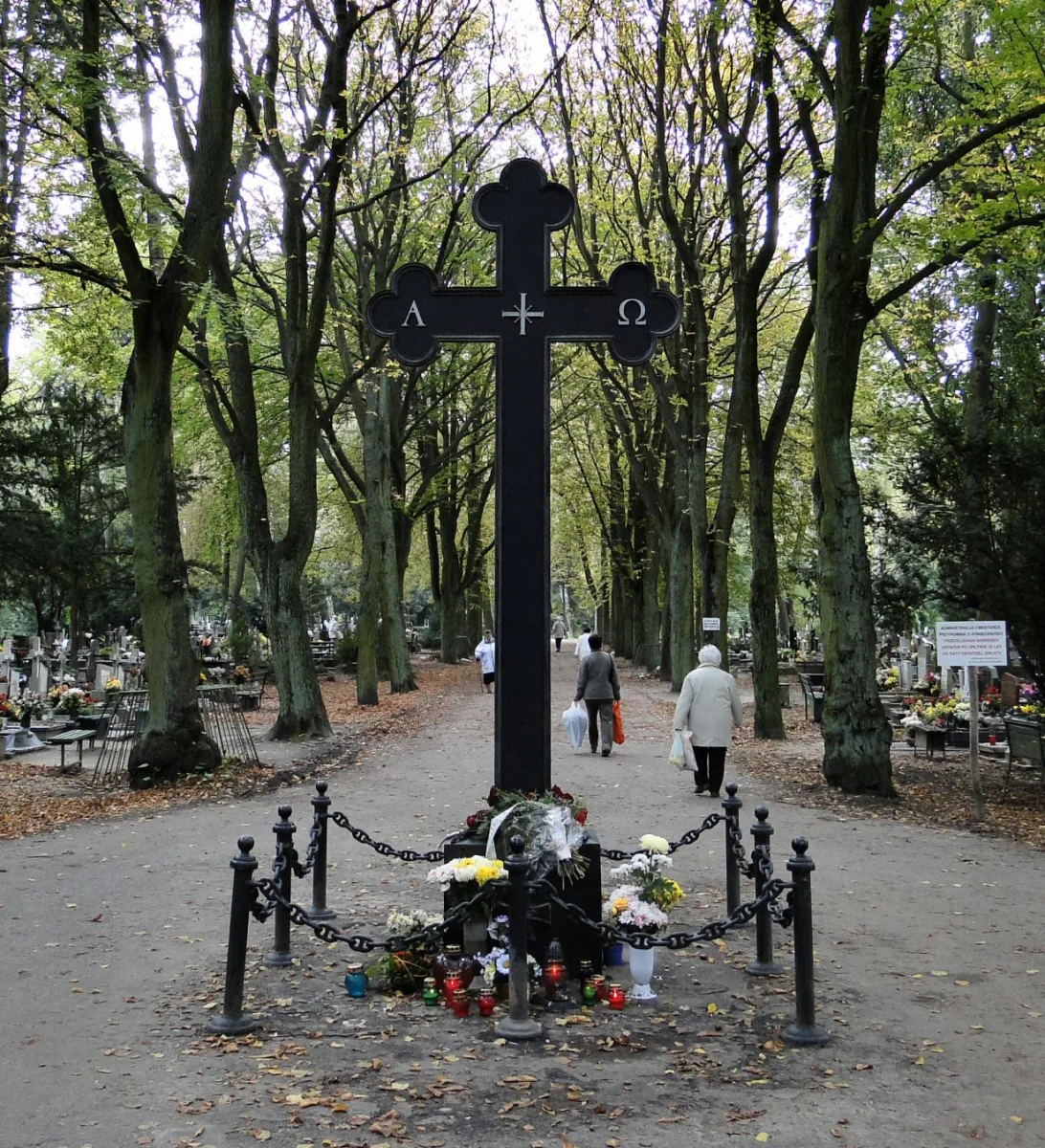
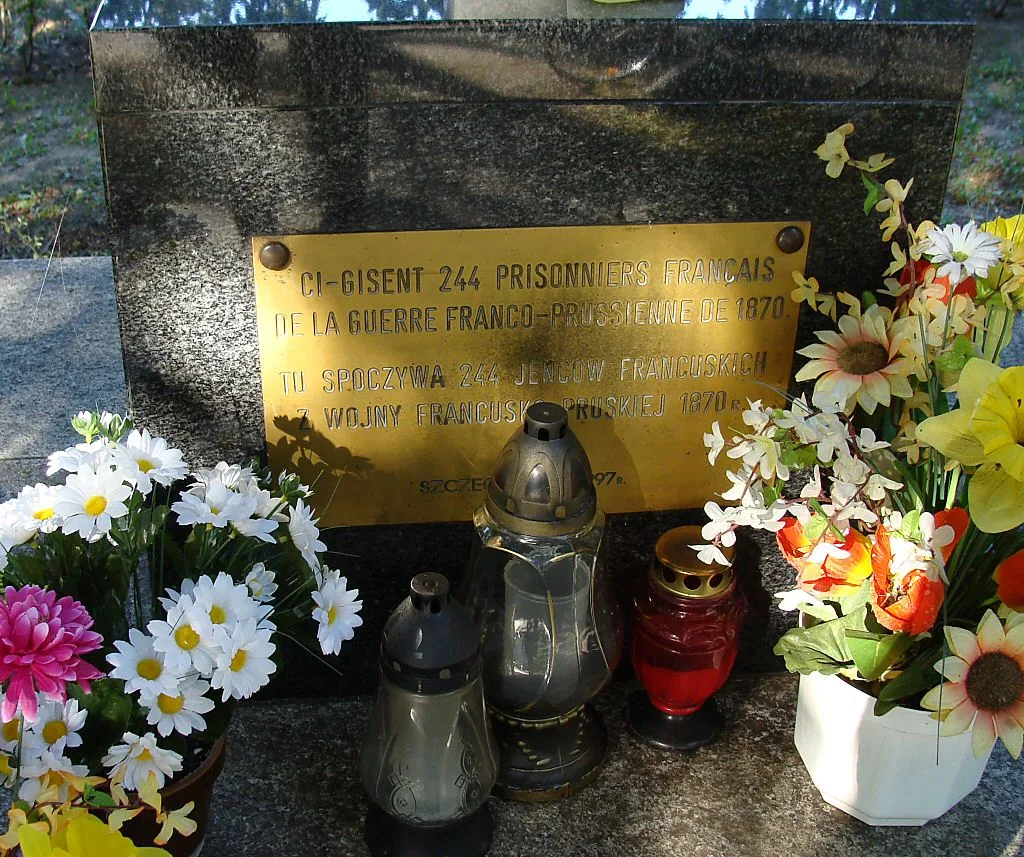
Earlier, the role of commemoration was played, according to the IPN, by a cast-iron cross standing near the grave of sixteen-year-old Jadwiga Kowalczyk, killed in her own home. Candles were lit and flowers laid beside it. The cross was originally dedicated to soldiers killed in the Franco-Prussian War of 1870 and 1871, but residents made it their own monument to the victims of December. Only in 1999 was the Cross of the Martyrdom of the Polish Nation, known as the Cross of December 1970, set up in Szczecin Central Cemetery, by the plots of those buried in December. According to the IPN, the granite monument in the shape of a boat was made from the catafalque on which the coffin of Father Jerzy Popiełuszko stood.
The largest commemoration is linked with Solidarity Square. The foundation stone for the Monument to the Victims of December 1970 was laid on 17 December 2003, and the initiative came, according to Wikipedia, from city councillors and the December 70 - January 71 Association. Construction was financed from city funds, public funds and gifts from the American Polonia. The unveiling took place on 28 August 2005. According to Wikipedia, citing the Encyclopaedia of Szczecin, the author is Czesław Dźwigaj, and the bronze monument is 11 metres high and weighs 9.5 tonnes. It shows an angel with raised wings holding a crown of thorns arranged into the inscription "Grudzień 1970", standing on a boat emerging from the ground. Around it are four granite slabs with inscriptions and the names of the dead. The IPN writes that the monument stands on the site of the bloodiest episode of the Szczecin December, in front of the former provincial militia headquarters.
Beneath Solidarity Square is the Przełomy Dialogue Centre, a branch of the National Museum in Szczecin, with part of the exhibition devoted to December 1970 and January 1971. Visiting rules are given by the museum.
Anniversaries as a recurring custom
Dates connected with December set the rhythm of remembrance: the foundation stone was laid on 17 December, the plaque at the shipyard gate was unveiled on the same day of the month in 1980, and the monument was unveiled as part of the celebrations of the 25th anniversary of the August Agreements. The authors of the IPN publication issued for the fiftieth anniversary recall the words of the historian Jerzy Eisler, that an anniversary is talked about loudly for a few days and then forgotten again for the following years, until the next, round one. They write that little is still known about the Szczecin victims, because for years families kept silent for fear for their own safety, and that this is why they gathered documents and accounts about each of them.
Be the first! Add a comment.
You need to log in to add a comment.
Log in