
A town built for an artillery school
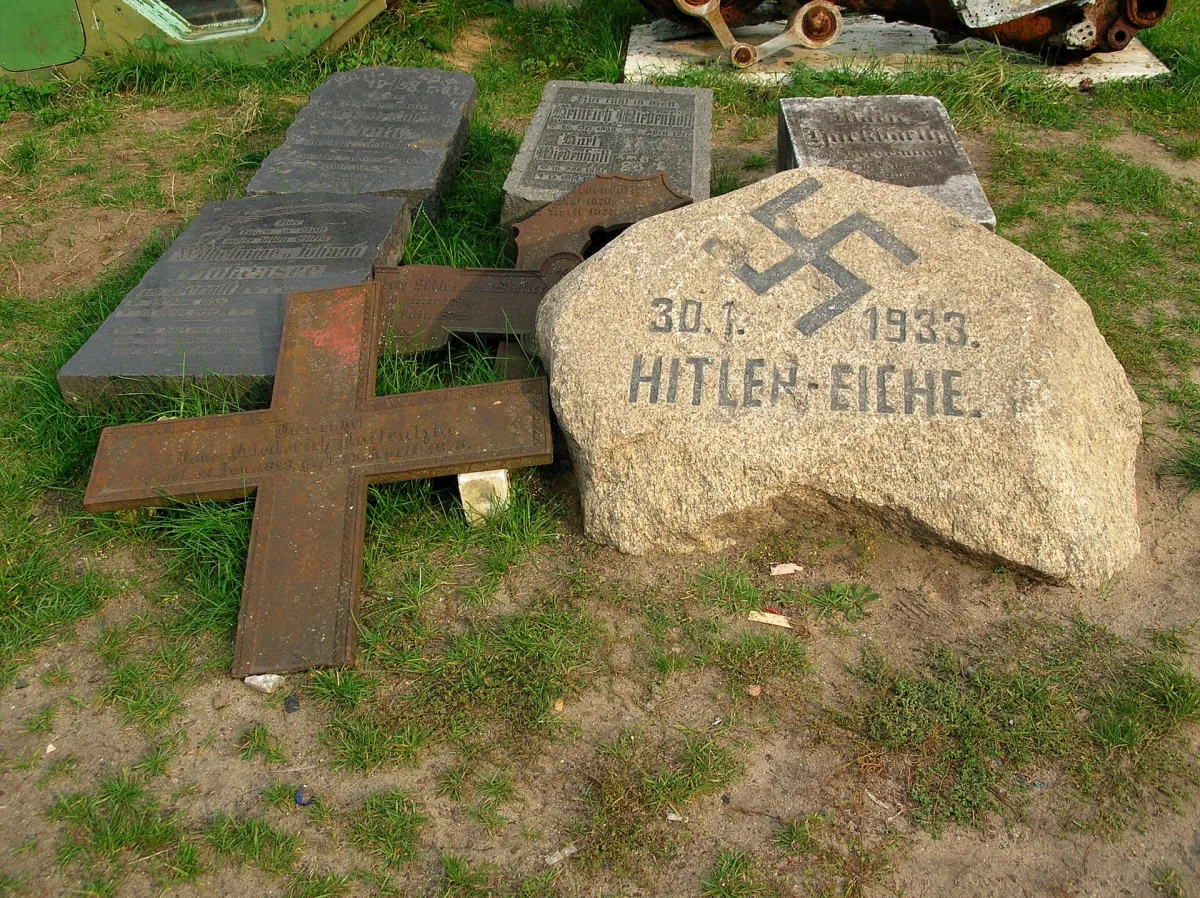
On the site of Borne Sulinowo, until the 1930s there stood a small village, Linde, and to the south of it the village of Großborn. According to the Encyclopedia of West Pomerania, in 1933-1938 the military town of Groß Born was built here from scratch, as the base of a training ground, with barracks and the Wehrmacht Artillery School. Wikipedia writes that the Reich government bought up part of the land and expelled the population from it, and the building of the town for the artillery school was completed in 1936. The Encyclopedia of West Pomerania places the official opening of the garrison on 19 August 1938, while Wikipedia gives 18 August 1938 and notes that this date requires confirmation in sources.
Two prisoner-of-war camps also operated in the area: from the autumn of 1939 a stalag for other ranks, and from 1 June 1940 Oflag II D Gross-Born for officers, located near today's Kłomino. Held there were French prisoners of war, and from mid-1942 Polish ones. According to Wikipedia, in January 1945 there were 5,391 Poles there. The history of the camp is a topic in its own right and appears here only as part of the history of the garrison.
The Soviet Army garrison from 1945
According to the Encyclopedia of West Pomerania, there was no heavy fighting in the town in 1945, and in February it was taken by the Red Army. Wikipedia draws attention to a legal discrepancy: the area was formally incorporated into Poland, in the land register it appeared as "forest land", and in practice it was cut off from state structures and subject to the Northern Group of Forces.
According to the Encyclopedia of West Pomerania, it was the largest group of Soviet ground forces in Poland. Stationed here were a division, two mechanised regiments, a tank regiment and battalion, an artillery regiment, an operational-tactical missile brigade and a fuel depot. The Encyclopedia estimates the size of the garrison at about 25,000 soldiers, and the training ground covered 18,000 hectares. Wikipedia, speaking of the troops' departure in 1992, mentions 15,000 soldiers of the 6th Vitebsk-Novgorod Guards Mechanised Division, that is, a figure lower than 25,000. The sources do not explain the difference, so we give both values as estimates from different moments.
The town was kept secret: according to the Encyclopedia, it disappeared from maps and from the lists of localities administered by Poland. Wikipedia adds that in nearby Brzeźnica, in a closed area, there was one of the Soviet nuclear weapons stores, and in the forests shelters remain from mobile SS-20 launchers.
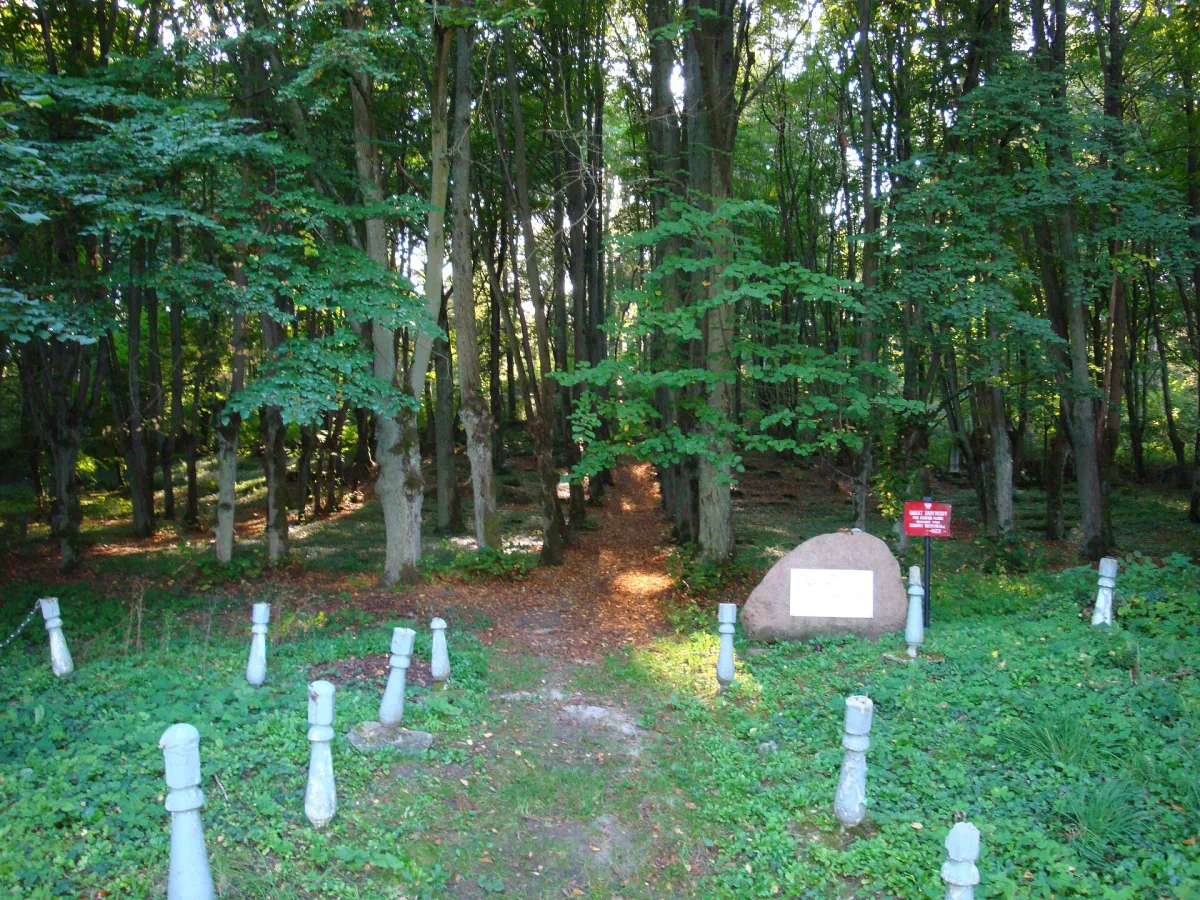
For military families the town had its own infrastructure. The Officers' House, built in 1934-1936 for the German artillery school, was, according to the Encyclopedia, a cultural centre with a cinema, theatre, concert hall and local television. A trace of the garrison's everyday life is also the Soviet cemetery in the forest. According to the description in Wikipedia, it was established in 1945, and in 2007 remains from Soviet cemeteries being closed down in Kołobrzeg and Białogard were moved there. After 1970 only children from the families of base personnel were buried there.
Withdrawal of the troops and opening of the town
The Encyclopedia of West Pomerania regards 8 April 1991 as the official start of the troop withdrawal, when the operational-tactical missile brigade left. The last transport, according to the same Encyclopedia, departed on 21 October 1992. Wikipedia, in the entry on the town, writes that by 12 October 1992 the army had left Borne Sulinowo. These two dates do not agree, and neither can be regarded as settled.
The town was taken over by 400 soldiers of the 41st Mechanised Regiment of the Polish Army, and the formal opening to civilians took place on Saturday 5 June 1993. Town status was granted by the Council of Ministers in the autumn of 1993. The dates given by the sources are not the same: the Encyclopedia of West Pomerania gives 15 September, Wikipedia in the text 2 October, and in the infobox 30 September. Until 1998 the locality belonged to the Koszalin Voivodeship.
Kłomino and traces in today's town
Kłomino, a dozen or so kilometres from the town, was, according to Wikipedia, established in the 1930s as a base serving the Wehrmacht artillery training ground. After the Russian soldiers left in 1992, unlike Borne Sulinowo, it was not resettled. Wikipedia states that until 1992 as many as 5,000 people may have lived there, and in 2012 12 were registered as residents. Buildings have been demolished since 2008; according to the entry, four were left. In the area lies the Diabelskie Pustacie nature reserve, on the site of the former training ground.
In the town itself, the memory of the garrison is collected by the Museum of Military History. The rules for visiting are given by the institution.
Be the first! Add a comment.
You need to log in to add a comment.
Log in