
Towns built of timber and clay
In the towns of West Pomerania and the Neumark, timber and half-timbered buildings with clay or brick infill dominated for centuries. A fire in one house could engulf a whole street. Four towns in the southern and eastern part of the Szczecin agglomeration have great fires recorded in their histories: Chociwel in 1492, Myślibórz in 1539, Dobrzany in 1606 and Nowe Warpno in 1692. The dates and consequences are given in the Wikipedia entries on these towns and their town halls, and below each piece of information is marked with the name of its source.
Chociwel, 1492: the start of three centuries of decline
Chociwel received town rights in 1338 as the property of the Wedel family, and fortifications were built there in 1375. According to Wikipedia, in 1492 a great fire destroyed the town's buildings and began a decline that lasted three centuries. The entry does not say how many buildings burned. Another blow came in 1637: according to the same source, plague left almost the whole town depopulated, and from 1648 Chociwel came under Brandenburg rule.
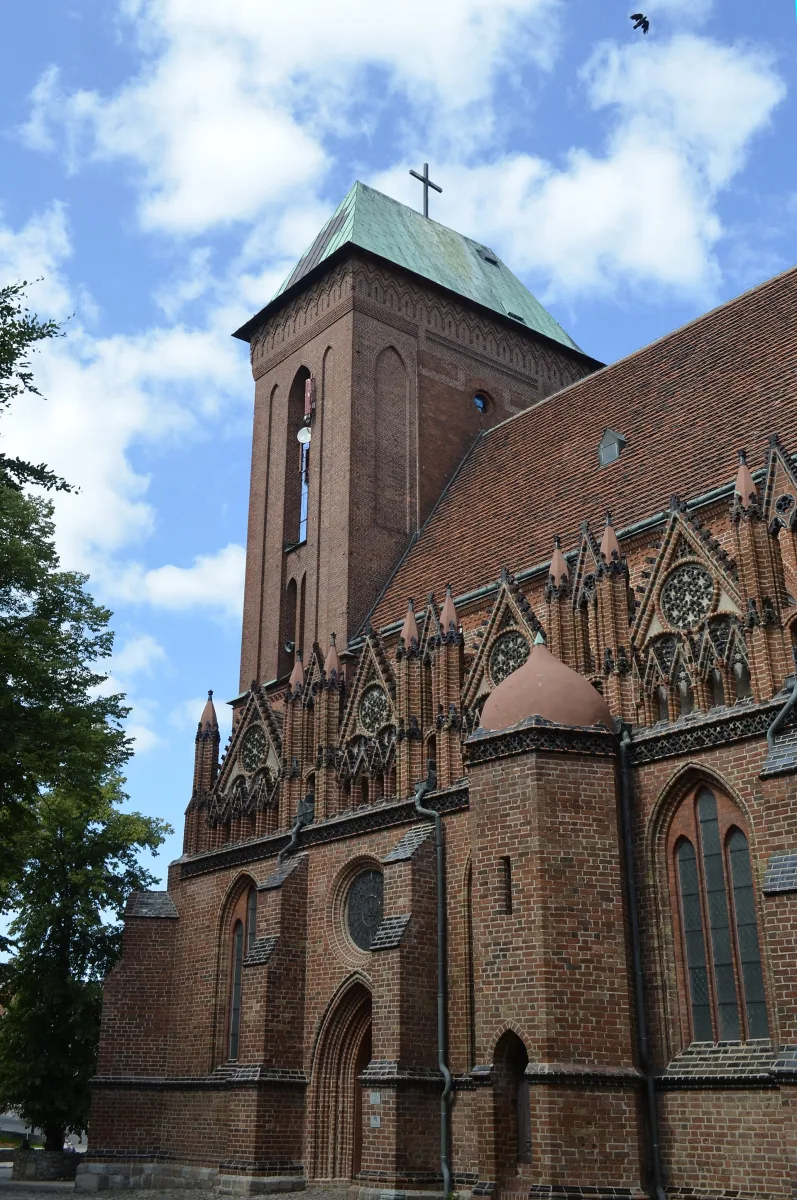
The fire of 1492 found a church in the town whose construction had begun in 1408 and was completed in 1460. The Gothic Church of Our Lady of Sorrows therefore dates from before the fire. Whether the fire reached it, the Wikipedia entry does not say.
Myślibórz, 1539: the first of several town halls
Myślibórz lay at a crossroads of trade routes, and its fairs were well enough known that, according to Wikipedia, the Myślibórz weights and measures applied throughout the Neumark. In the 16th century the town twice fell victim to great fires, in 1539 and in 1590, as the same source states.
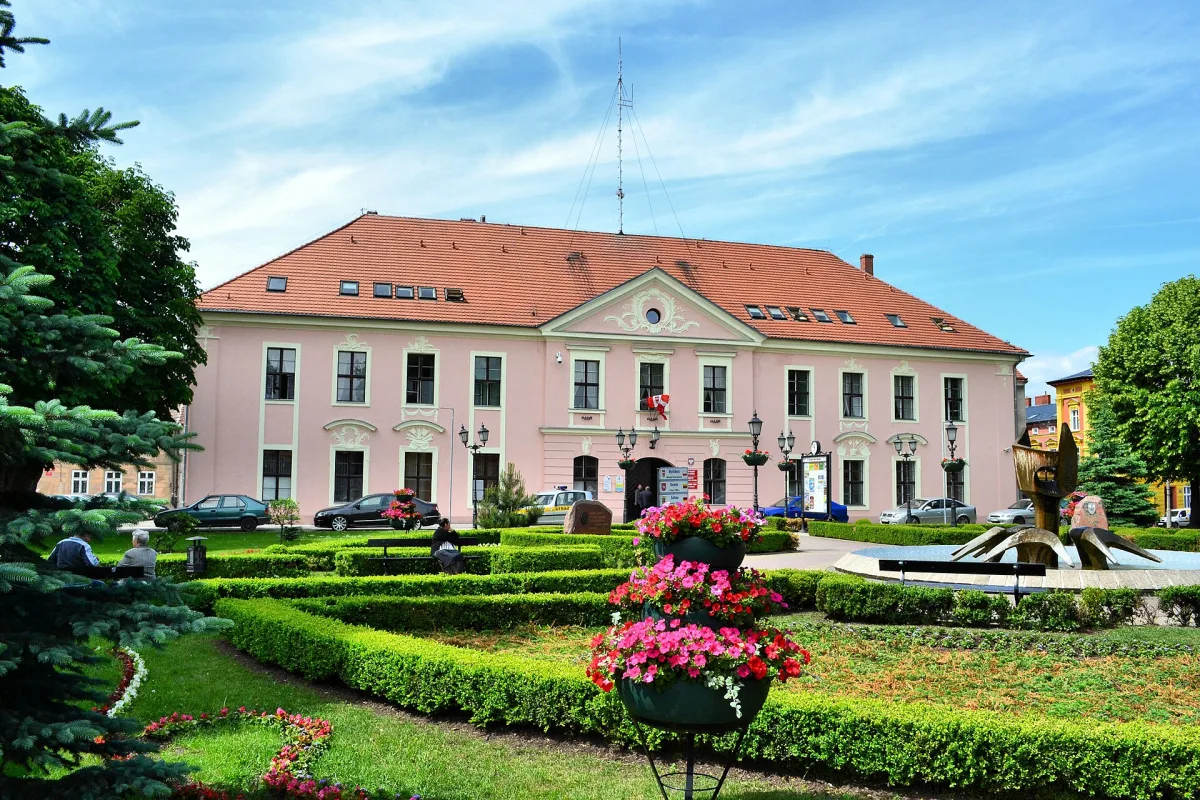
Wikipedia, in the entry on the town and in the entry on the town hall, describes the fortunes of the building of the town authorities. The first town hall burned down in the fire of 1539. The second, most probably, burned down in 1771. The present Neoclassical town hall in Myślibórz was built in 1771-1772 on a rectangular plan, of brick, with a rusticated central projection and a tympanum. According to Wikipedia it is the third town hall in the town's history, and its construction was financially supported by King Frederick II. In the wording about the fire of 1771 the entry uses the word “most probably”, so this is an uncertain finding.
Dobrzany, 1606: twenty-two houses and help from the duke
Dobrzany, formerly Jacobshagen, was chartered before 1336. According to Wikipedia, in January 1606 a fire struck the town: 22 houses burned, almost a hundred rooms and about half of the cattle and other livestock. Because of the losses, a large part of the inhabitants decided to leave the town and settle in neighbouring villages. The rest took advantage of help from the duke: 20 farmers received the right to fell timber in the forest, and a new inn was also built.
Reconstruction went well enough that in 1618 Dobrzany appeared on Eilhard Lubinus's Great Map of the Duchy of Pomerania as a town of some standing, as Wikipedia writes.
A second, larger fire concerns the same town. According to Wikipedia, in 1781 only four of the 294 houses in the town survived, and the fire forced a reorganisation of the buildings. Reconstruction was financed by a grant of 39 thousand thalers from the state treasury, supplemented by a collection of money throughout the country. Stones and bricks from the demolition of the castle in nearby Szadzko, destroyed in the Thirty Years' War, were used as material. Frederick II at first did not agree to the use of elements of the castle, but in the end permitted demolition under the supervision of the regency authorities, who issued written permits. Half-timbered houses from the 18th and 19th centuries have survived in the town, as the same entry mentions; the source does not link them directly with the fire of 1781.
Nowe Warpno, 1692: a half-timbered town hall on the site of the burned one
In Nowe Warpno, Swedish from the mid-17th century, a design for a new fortress was presented in 1678 by the fortification engineer Christian Kanxdorff. According to Wikipedia the plans were carried out only in part. In 1692 the main part of the town burned down in a great fire. Among other things, the town hall and the church were destroyed.
The church was rebuilt, and on the site of the old town hall a new building in half-timbered construction, in the Prussian wall technique, was erected in 1697. According to Wikipedia, after the fire most of the inhabitants moved to Altwarp, but returned after the reconstruction, and in the 18th century the town had about 1.3 thousand inhabitants (the entry marks this last sentence as needing a source). The town hall in Nowe Warpno has, according to the entry on it, a four-bay plan and a square clock tower on the western side, and all the wings were built in the half-timbered technique. It has been the seat of the town authorities from the start and still serves that function today.
What links the four fires
In all four towns the fire struck public buildings or ordinary houses, and the consequences were felt for years: an exodus of inhabitants in Dobrzany and Nowe Warpno, and a decline described by Wikipedia in Chociwel. Only in Myślibórz and Nowe Warpno is a trace of the fire visible today in a historic building: in both towns stands a town hall built after the loss of the previous one, in one of brick in the Neoclassical style, in the other half-timbered.
Be the first! Add a comment.
You need to log in to add a comment.
Log in