
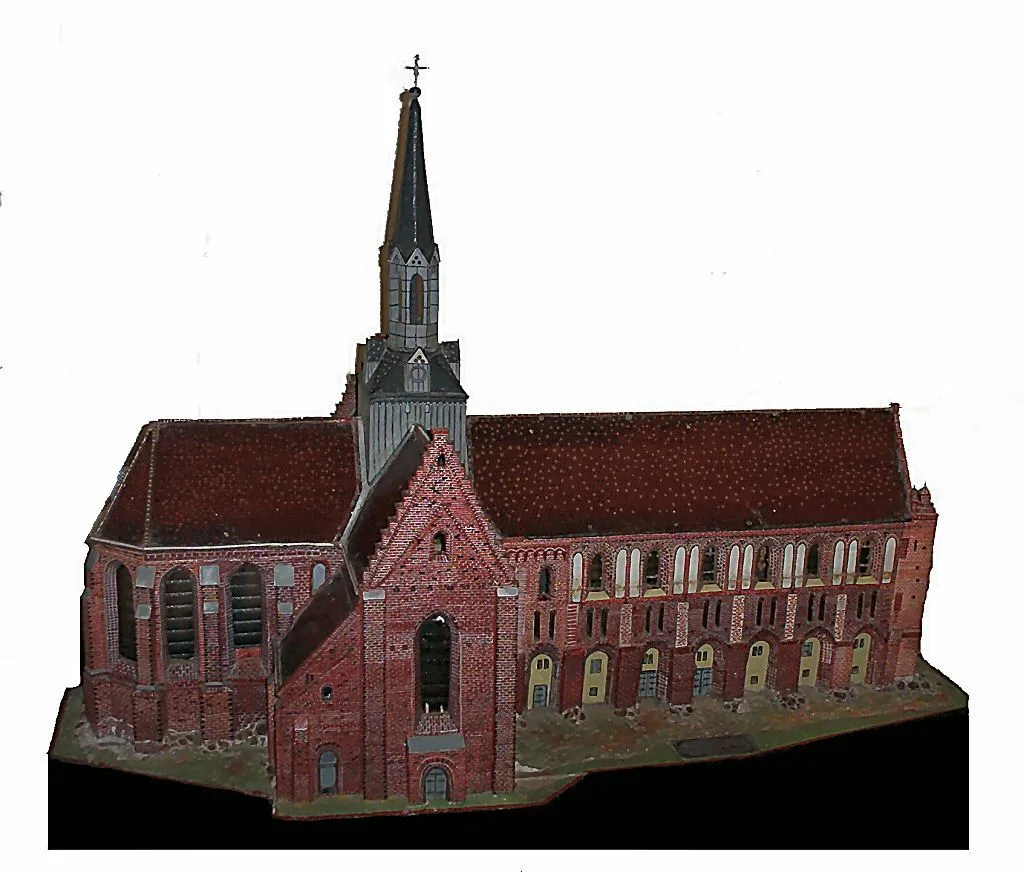
According to the entry on the village, Kołbacz on the Płonia River in Stare Czarnowo municipality was one of the most important political centres of the Duchy of Pomerania, and the dukes of Szczecin often gathered there. Wikipedia calls the former Cistercian monastery one of the most valuable examples of brick Gothic in the region, and in July 2014 the complex was designated a Historic Monument (pomnik historii) by order of the President of Poland. The foundation dates to 1173-1174, and the entry on Kołbacz links the end of the settlement's prosperity to a fire in 1662.
Foundation: 1173 or 1174
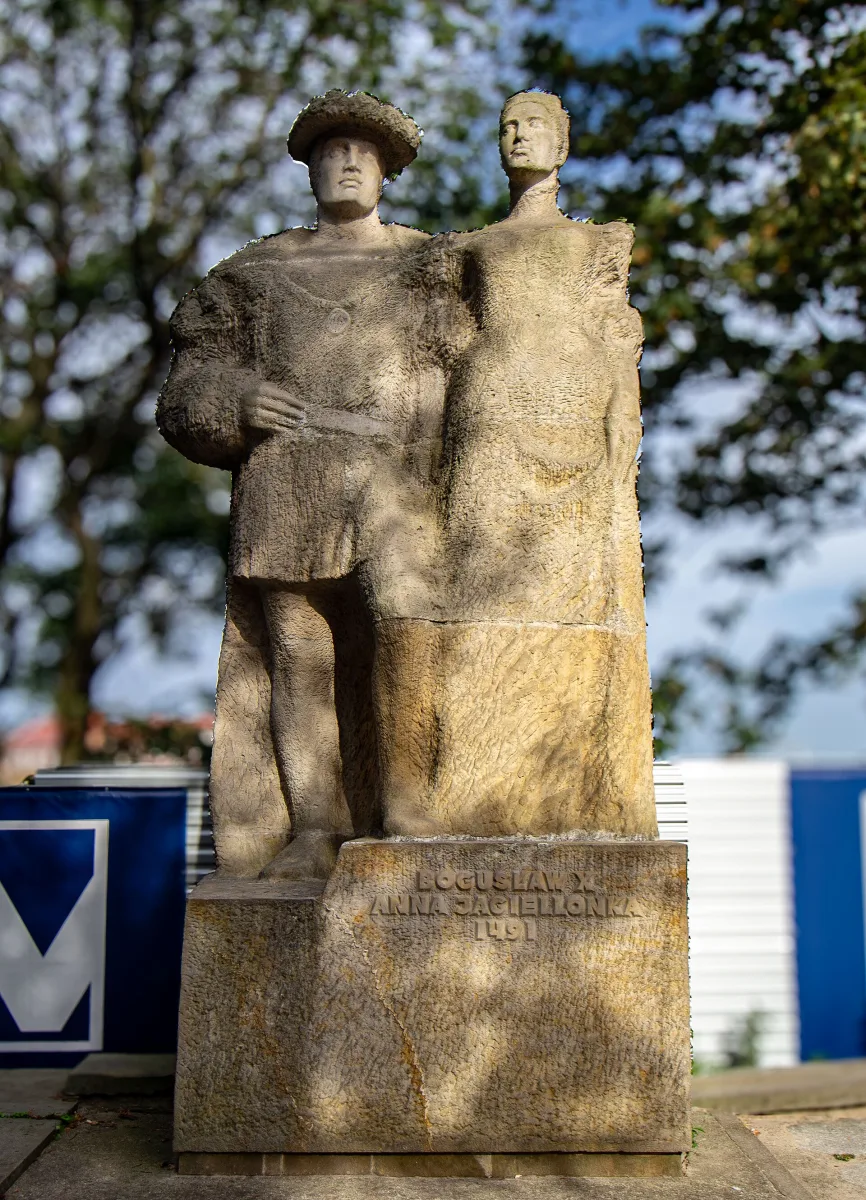
The chronology in the entry on the abbey begins in 1173, when the army of King Valdemar I of Denmark besieged Szczecin. The negotiations ended in defeat, and the castellan Warcisław II Świętoborzyc paid a ransom and handed over hostages, receiving Szczecin and its surroundings as a fief in return. He also undertook to bring monks from Denmark and to build a monastery for them within his estates. In the same year Duke Bogusław I confirmed the foundation. The mother house was the Danish abbey of Esrum on Zealand, a daughter house of Clairvaux Abbey.
The foundation dates differ depending on the entry. The main entry on the abbey says that the Cistercians arrived in Kołbacz in 1173, but the chronology in the same entry gives 2 February 1174 and a group led by Reinhold. The English entry on the abbey gives 1173 as the year of foundation and adds that the first abbot was Reinhold and that the monastery began operating in 1174. The German entry, Kloster Kolbatz, says that the monastery was founded in 1173 and settled in 1174. The German and English entries therefore separate these dates into a foundation in 1173 and the start of monastic life in 1174, while the Polish entry on the abbey uses both without explanation.
According to the entry on the abbey, the monks initially intended to call the settlement Mera Vallis, meaning Clear Valley, but for reasons that are not known they kept the old Slavic name Kolbatz.
Economy and daughter houses
In 1183, according to the chronology, the monks changed the course of the lower Płonia, and the damming of water near Kołbacz raised the level of Lake Miedwie. In 1185 Duke Bogusław II granted the Cistercians the right to use the forests in the Stargard land, to build mills on the Płonia and its tributaries, and to fish with large nets in several lakes. After 1237 granges were established: large farmsteads with granaries, stables, breweries and workshops. Before 1274, according to the chronology, the Cistercians owned more than eighteen villages and two towns, while the German entry lists 28 estates in 1236 and 64 villages in 1323.
Kołbacz founded three daughter monasteries: in Oliwa in 1186, in Bierzwnik in 1280-1294, and in Mironice, for which the entry gives the year 1278 with a question mark. According to the chronology, the period of intensive expansion of the estate ended in the 14th century, and the abbey lived off accumulated capital while extending the monastery church and the farm buildings. Disputes over land were conducted with the Knights Hospitaller in the second half of the 13th century and, according to the German entry, with Stargard over the Gollnower Heide in the first half of the 14th century. According to Wikipedia, Swietobor I, Duke of Szczecin, was buried in the monastery church in 1413, and from its foundation until the dissolution of the monastery the church was one of the burial churches of the dukes of Szczecin. The entry on Kołbacz adds that no tombstone has survived.
Construction of the church
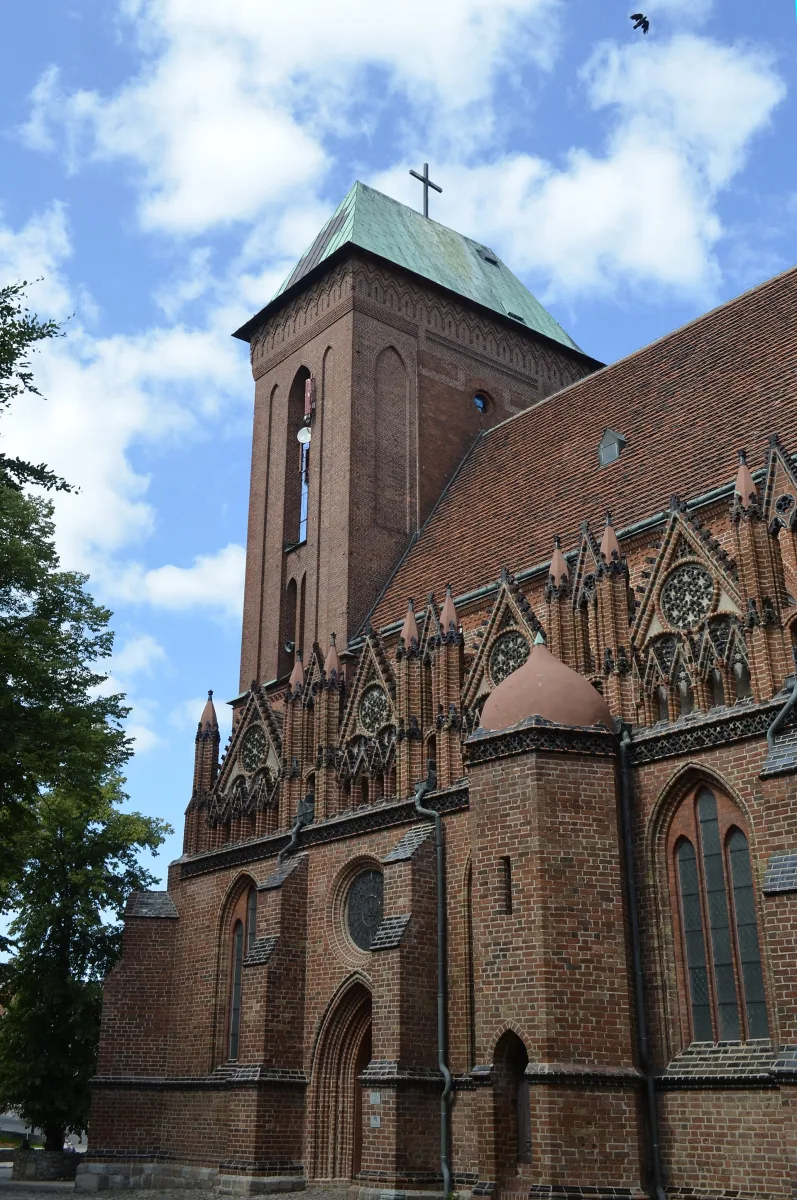
According to the Polish entry on the abbey, construction of the church began in 1210 in the Late Romanesque style and was completed in 1347 in the Gothic style. The German entry arranges these dates differently: around 1308 the church was to be finished as a three-aisled basilica, and in 1347 the polygonal chancel was consecrated. For the west façade with its large rose window the German entry gives the years around 1265-1270. According to the Polish entry, a bay of the presbytery, the transept with its chapels and two bays of the nave survive from the Romanesque church. Part of the star vaulting dates from 1500 and was reconstructed in 1851-1852. The Lay Brothers' House and the Abbot's House have also survived from the former complex. The entry on the abbey dates the Lay Brothers' House to around the middle of the 13th century, while the entry on the village of Kołbacz dates it to 1300-1340.
Dissolution of the monastery and later rebuilding
According to the chronology, the last abbot was Bartłomiej Schobbe, elected in 1534, who resigned in 1535 and received compensation from Duke Barnim IX in the form of a manor house, land and movable property. The entry on Kołbacz says that secularisation followed the Reformation, the estates became the dukes' domain, and the dukes converted the monastery buildings into a castle.
The description of later alterations in the Polish entries is not consistent. The entry on the abbey says that from 1555 a granary was set up in the nave, whereas the chronology links the conversion of the presbytery and transept into a chapel, and of the nave into a granary and coach house, with the 17th century. According to the same entry, the aisles were demolished in 1720, and according to the chronology, in 1721, after Pomerania came under Prussian rule, the monastery buildings began to be dismantled and the church was left standing. The German entry speaks only generally of the 18th century.
The fire of 1662: the church or the buildings
Two entries mention the fire of 1662, but they describe it differently. The entry on the village of Kołbacz says that in 1662 the settlement's period of prosperity finally ended as a result of an enormous fire, and that its former splendour never returned. It does not say what burned. The entry on the abbey mentions the fire in its description of the former church: the Romanesque columns with richly carved capitals survived the fire of 1662 and are in the National Museum in Szczecin. This allows the fire to be linked with the church, but none of the sources reviewed gives the extent of the damage or settles whether the fire also reached the monastery buildings.
Kołbacz after the monastery
Today the former monastery church is a parish church dedicated to the Sacred Heart of Jesus and occupies the presbytery and the transept. According to the entry on the abbey, the nave still serves as a storeroom. The high altar is a copy of a triptych made in 1990, and the 15th-century original is in St James' Cathedral Basilica in Szczecin. The Lay Brothers' House was restored in the 1970s and adapted as a cultural centre, and the Abbot's House was conserved and converted into a library. The rules for visiting the complex are given by the parish.
Wikipedia has also recorded a legend about the monastery: the prior supposedly made a bet with the devil that the devil would bring sieja, a type of whitefish, into Lake Miedwie, and the monks crowed like roosters, so the devil released the fish into the lake and fled. This is a legend, not a historical fact.
Be the first! Add a comment.
You need to log in to add a comment.
Log in