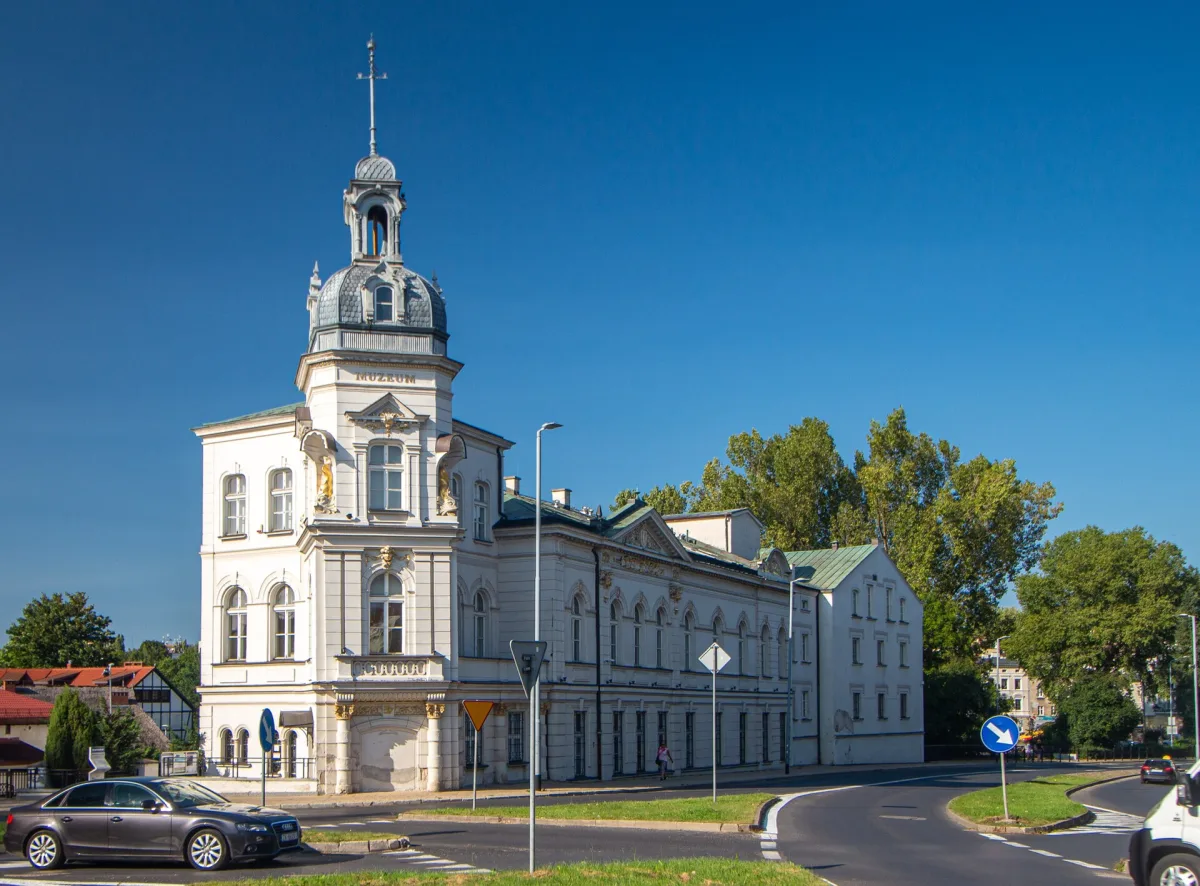
A museum with exhibitions of archaeology, historic art, numismatics and the history of Koszalin; it also runs the Jamno Farmstead and other sites in the town.
The Museum in Koszalin collects archaeological and historical objects, coins and art, mainly from Pomerania, and its displays are spread across several places in the town. The institution was founded in 1947 and since 2009 has been entered in the State Register of Museums under number 100.
The beginning of museum work in Koszalin is regarded as 1912, when the German Society for Regional Studies and Protection of the Land opened the first exhibition in the Old Town hall. Two years later the Heimatmuseum was given rooms in the Municipal House, and in 1929 the building at what is now Piłsudskiego 53. The museum was closed down in 1945. The present institution took over part of the former collections and on 15 June 1947 began operating on Piłsudskiego Street. Since 1999 it has come under the town office, and since 2000 it has borne its present name.
In the Gellert House the exhibition “Sztuka dawna i rzemiosło od baroku do secesji” (Old Art and Crafts from the Baroque to Art Nouveau) has been set up. It is a series of period interiors: an early Baroque room from the 17th century with a wardrobe from 1697, and Baroque, Empire, Biedermeier, Historicist and Art Nouveau salons, with furniture, portraits and decorative crafts. The exhibition “Osieki 1963-1981” shows works from the open-air workshops held in Osieki near Koszalin, by, among others, Henryk Stażewski, Tadeusz Kantor, Edward Krasiński and Natalia LL.
The other displays are “Koszalin od średniowiecza do współczesności” (Koszalin from the Middle Ages to the Present) on the development and appearance of the town, “Monety i medale ze zbiorów własnych” (Coins and Medals from the Museum's Own Collections) with a collection from antiquity to the present day (including a hoard of Roman denarii from the 1st and 2nd centuries), and “Pomorska codzienność połowy XX wieku” (Pomeranian Everyday Life in the Mid-20th Century) about settlers who after the war moved in among objects left by the former inhabitants. The exhibition “Pradzieje Pomorza” (The Prehistory of Pomerania) covers the history of settlement from the Stone Age to the Middle Ages, with an arranged archaeological trench.
The museum's website also lists the Jamno Farmstead, the Stone Circles and the Executioner's House as sites belonging to the institution, and in the exhibitions tab it offers virtual walks. A cobbler's workshop and a Pomeranian forge, with smiths' tools, are shown in a historic outbuilding of a fishing farmstead. Right next to the museum there is also the Jamno Culture Open-Air Museum.

Be the first! Add a comment.
You need to log in to add a comment.
Log in