
A village, a factory and part of Greater Szczecin
Podjuchy lies on the right bank of the Regalica, at the foot of the moraine hills that the former inhabitants called the Beech Hills (Góry Bukowe). According to Wikipedia the first written mentions of the settlement date from 1226 and 1307, and the Encyclopedia of West Pomerania adds the year 1305. In 1334 the village came into the possession of the city of Szczecin, and in 1517 it belonged to the Holy Spirit hospital and had 35 houses. Until 1791, according to Wikipedia, it was for a time the property of St John's monastery.
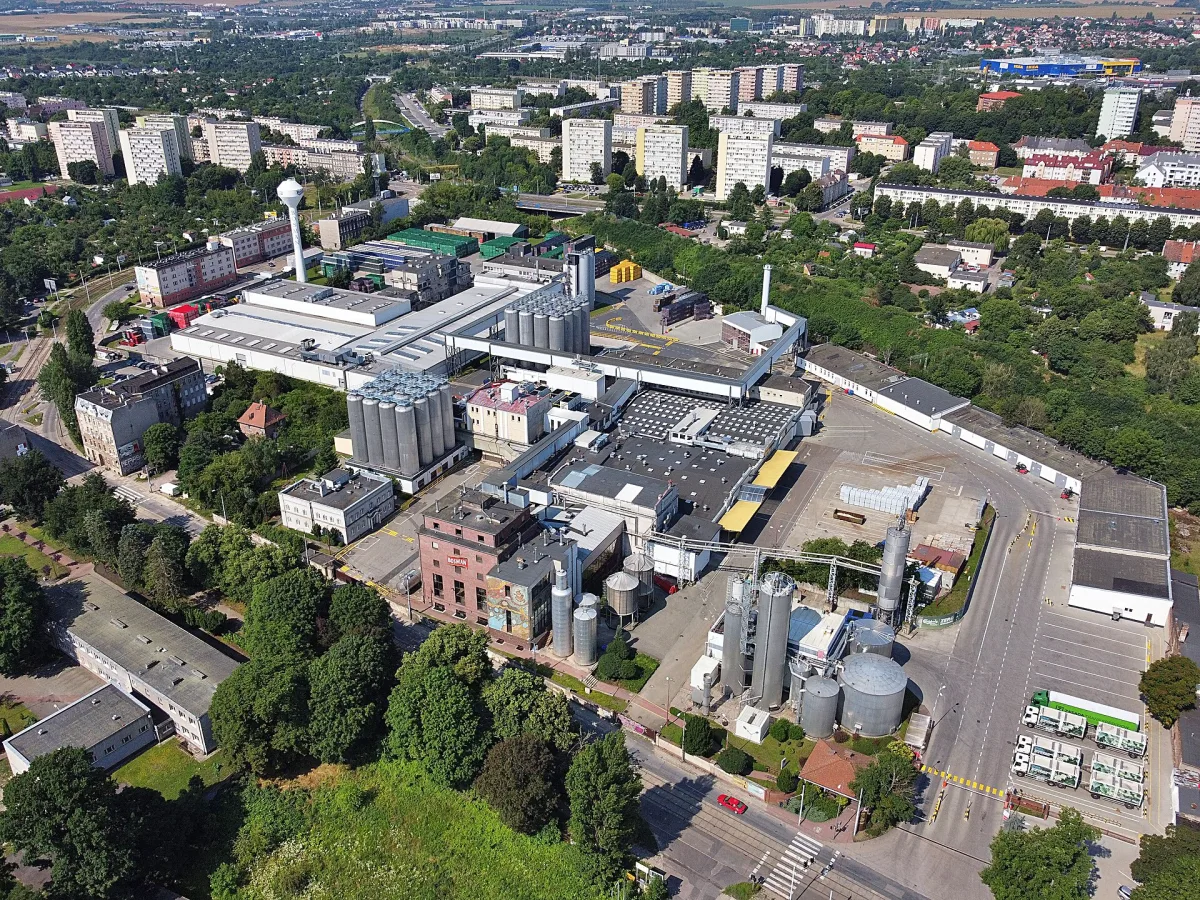
In the 19th century the agricultural settlement was transformed by an industrial economy based on local raw materials. In 1834 the Frenchman Friedrich Ferdinand Didier founded here one of the first refractory goods factories in Prussia, based on local clay. Lime kilns, brickworks and marl mines also operated around it. Of the buildings linked to the former industry, the director's villa of the fireclay factory on Niklowa Street still stands, although after the fire of 2022 it is damaged and not open to visitors. Wikipedia gives three different dates for its construction: 1860, 1875 or 1901.
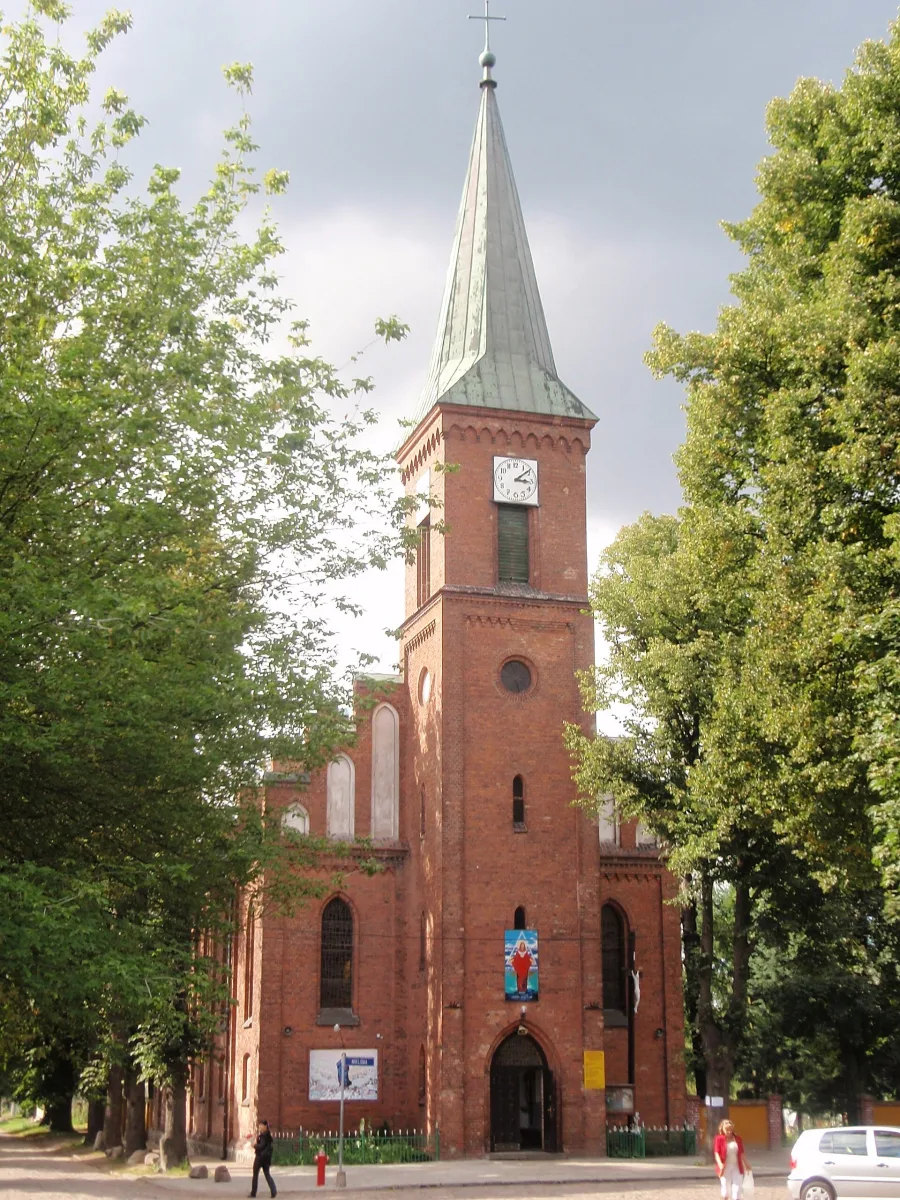
In the Middle Ages the village had its own church. It burned down in the fire of Podjuchy on 18 August 1868, and in its place in 1875-1876 a brick church on Niklowa Street was built. According to Wikipedia the peak of development fell in the 1930s. Barracks, a section of motorway, a road and a railway connection with the centre of Szczecin were built then, along with a municipal town hall and two schools. In 1939 Podjuchy had about 9200 inhabitants, including 8321 Protestants, and in the same year it was incorporated into Greater Szczecin together with most of the right-bank settlements.
1945: destroyed bridges and an independent town
The eastern districts of Szczecin were fought over from 14 to 20 March 1945. According to Wikipedia, after the Soviet troops occupied the right-bank settlements, the port was mined and the bridges over the Oder were destroyed. In Podjuchy the centre of the settlement, the fireclay products factory, the railway station and the bridges over the West Oder and the Regalica were destroyed. The left-bank city was taken on 26 April 1945 without a fight, and Polish authority was finally assumed there on 5 July.
The right bank was thus physically cut off from the rest of the city. According to Wikipedia, for this reason Podjuchy, like all the settlements of today's Prawobrzeże, was attached to Gryfino County and turned into an independent town. Wikipedia describes such cases as towns created because of broken lines of communication: there arose, as we read, a logistical necessity to attach Podjuchy and Dąbie to Gryfino County and give them the status of separate towns. The same fate met Dąbie, which according to Wikipedia was again an independent town from 1945.
The scale of this town was modest. In February 1946 it was home to 511 people, while the whole of Szczecin had, according to Wikipedia, 108,670 inhabitants in 1946. The development of the settlement and the resettlement campaign were held back by destruction, lack of security and communication difficulties. After the war the church was taken over by Catholics, who gave it the dedication of St Peter and St Paul on 15 September 1945, according to Wikipedia.
Incorporation into Szczecin in 1948
Revival came only after the bridges were rebuilt. Podjuchy was incorporated into Szczecin on 1 May 1948, as Wikipedia states, and the same date is given in the entry on Dąbie. The independent town thus existed for about three years. In administrative lists Podjuchy appears in 1945-1948 in Gryfino County, and from 1948 in Szczecin.
The 1950s were for the settlement a time of clearing rubble and demolishing old buildings; practically no new houses were built. Only at the end of the decade, after the extension of the artificial silk factory in Żydowce, did several blocks of flats appear on Krzemienna Street, and in the 1960s individual house building began. The settlement's self-government was established in 1990.
What remains of the former town in the layout of the settlement
Today Podjuchy consists of two parts. The western one, on the Regalica side, is the former medieval village centred on Wolności Square, of which, according to Wikipedia, little of the old buildings has survived. The other part is interwar villa development and newer buildings on the slopes of the Beech Hills. The forests in the south-eastern part of the settlement belong to the Szczecin Landscape Park “Puszcza Bukowa”. In 2016, according to Wikipedia, 8606 people were registered here as permanent residents.
Be the first! Add a comment.
You need to log in to add a comment.
Log in