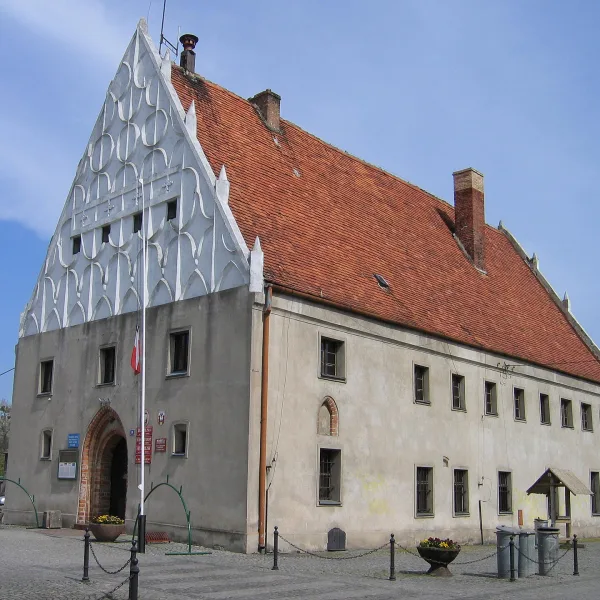
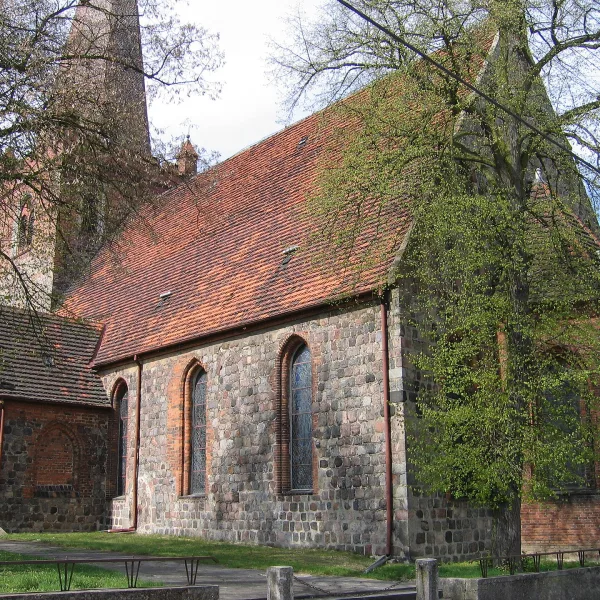
Things to do in Trzcińsko-Zdrój: a brick town hall on the market square, an early Gothic church from the 13th century and Lake Strzeszowskie with a beach.
Trzcińsko-Zdrój is a town in the Myślibórz Lakeland. A walk takes in the square with its town hall and the church, while the lake needs a short trip.
What to see in Trzcińsko-Zdrój on and around the market square
The town hall and the church are the two main buildings of the town and are easy to combine in one loop.
Ratusz w Trzcińsku-Zdroju (Town Hall in Trzcińsko-Zdrój) stands at Rynek 15, on the southern side of the market square. The brick building with a Gothic portal and a tracery gable was extended and rebuilt over several centuries. For more on town halls and walls in the region's small towns, see about the small towns of the New March.
Kościół Matki Bożej Nieustającej Pomocy w Trzcińsku-Zdroju (Church of Our Lady of Perpetual Help), at ulica 2 Lutego 1, was built in 1260-1280 as an early Gothic structure. It was rebuilt as a three-nave church, and inside are neo-Gothic furnishings and stained glass from the late 19th century. It belongs to the Chojna deanery.
Where to swim in Trzcińsko-Zdrój and learn the spa town's history
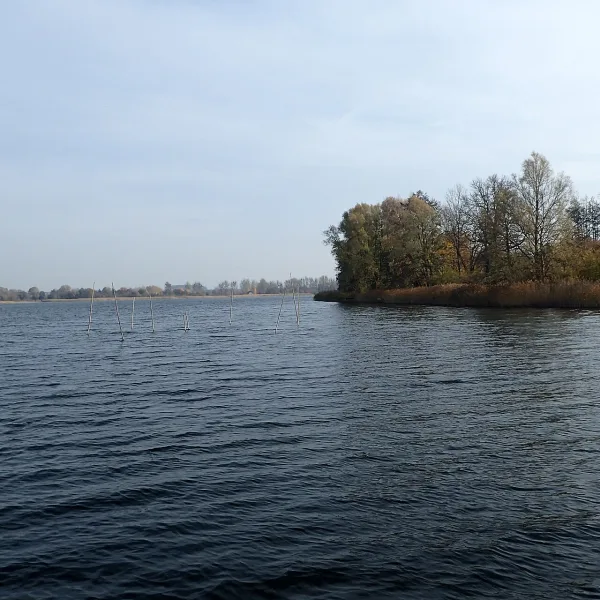
Strzeszowskie is the largest lake in the municipality, about 127 hectares in the Myślibórz Lakeland, north-east of the village of Strzeszów. A bathing area has operated there since 2018. For the spa history of the town, see about peat mud discovered in 1895.
Frequently asked questions
How large is Lake Strzeszowskie?
About 127 hectares, 127.2 according to the Inland Fisheries Institute. It is the largest lake in Trzcińsko-Zdrój municipality.
Which century is the church in Trzcińsko-Zdrój from?
The 13th century: it was built in 1260-1280 as an early Gothic church and later rebuilt with three naves.

 Lakes