Things to do in Pełczyce: the remains of a Cistercian nunnery, two monuments in the centre, a local history room for rain and a Jewish cemetery.
Pełczyce is a small town on Lake Panieńskie, where everything lies close to the market square. A walk takes in the medieval walls of the nunnery, a church with a Baroque interior, the town hall and a small museum.
What to see in the centre of Pełczyce?
In the centre, see the town hall on Rynek Bursztynowy, the Church of the Nativity of the Blessed Virgin Mary and the remains of the Cistercian nunnery. That is three different eras in one short walk, with no travel.
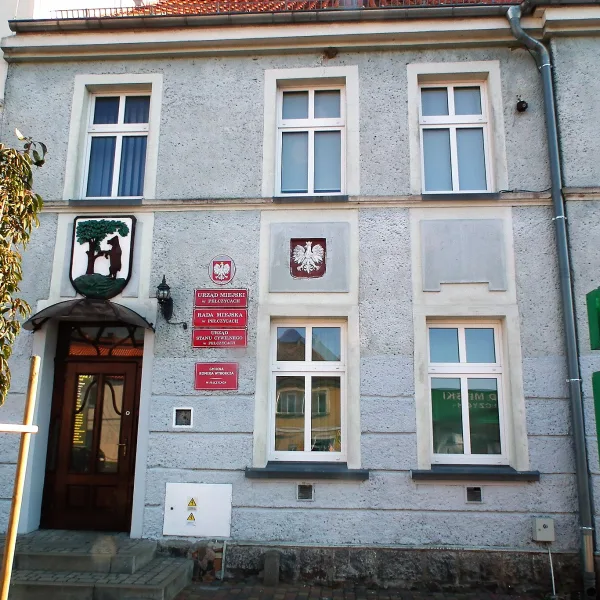
The town hall in Pełczyce stands at Rynek Bursztynowy 2 and houses the town and commune office. The brick building was raised in the 1920s, and the heritage register gives 1920. Its architecture refers to the old half-timbered buildings of the town: two joined rectangular blocks under a gabled roof, and above the entrance the coat of arms of Pełczyce with a bear leaning on an oak.
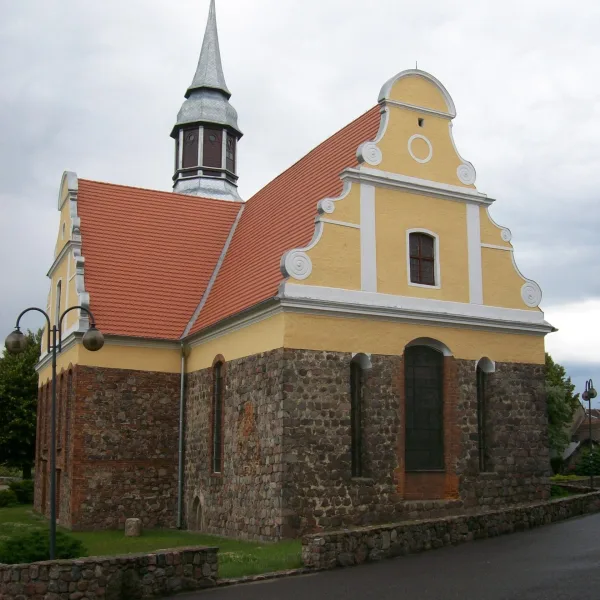
The Church of the Nativity of the Blessed Virgin Mary at ks. kan. Henryka Raźniewskiego 4 was built in the later part of the 13th century. It was originally an oriented hall church of stone and brick, and in the 15th century the nave was significantly widened to the west. From the Baroque period come the gables with scrolls and the stucco ceiling, and the tower is half-timbered.
The Cistercian Nunnery in Pełczyce was founded in March 1290 by the Brandenburg margrave Albert III and stands on a rise above Lake Panieńskie. The west wing survives, with the vaults of the former refectory. The nunnery was probably dissolved in 1539, when Margrave John of Küstrin introduced the Reformation. The convent church and the east wing were probably demolished before 1896. For walks on your own see the page Pełczyce solo.
What to do in Pełczyce when it rains?
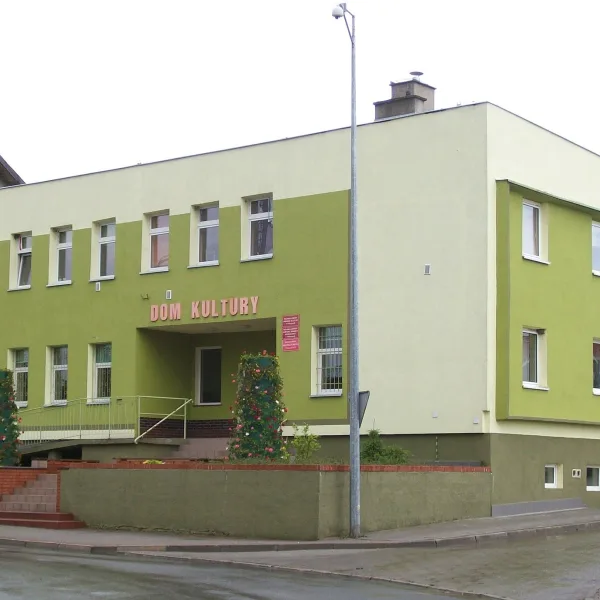
For rain, visit the Historical Room, a municipal museum under the cultural centre. It is a small exhibition of two rooms, enough for a short break from the weather.
The Historical Room in Pełczyce is in the cellars of the building of the Town and Commune Cultural Centre. It opened in December 2013 thanks to members of the Association of Friends of the Pełczyce Land, who gathered most of the collection. Here are archaeological finds from the Lusatian culture period, among them stone querns, parts of weapons and everyday objects. The second group is souvenirs of the 19th and 20th centuries: coins, militaria, decorations and photographs.
Is there a memorial site in Pełczyce?
Yes, the Jewish cemetery. It is listed apart from the other sites, in a plain tone, as a place of remembrance of the town's former residents.
The Jewish cemetery in Pełczyce was founded at the beginning of the 19th century. It covers about 0.3 hectares, and the heritage register dates it to the mid-19th century. Nineteen gravestones survive, the oldest from 1851. They are made of granite or sandstone, with inscriptions carved in Hebrew and German.
Frequently asked questions
How much time does Pełczyce need?
All the sites lie in town, so one afternoon is enough for the town hall, the church, the nunnery and the local history room.
What is left of the Cistercian nunnery in Pełczyce?
The west wing from the end of the 13th century, with the vaults of the former refectory. The rest of the complex was demolished.
Where to go in Pełczyce when it rains?
To the Historical Room in the cellars of the cultural centre. It shows finds of the Lusatian culture and souvenirs of the 19th and 20th centuries.
How many gravestones are preserved in Pełczyce?
Nineteen gravestones survive, the oldest from 1851, with inscriptions in Hebrew and German.

 Churches and monasteries