Things to do in Goleniów: the Wolin Gate, two towers by the Ina, the Gothic Church of St Catherine and a few places for a quiet walk.
Goleniów is a small town on the River Ina, with several medieval traces of its former fortifications. It suits a short visit on foot, ideally with stops at the gate, the towers and the granary.
What to see in Goleniów first?
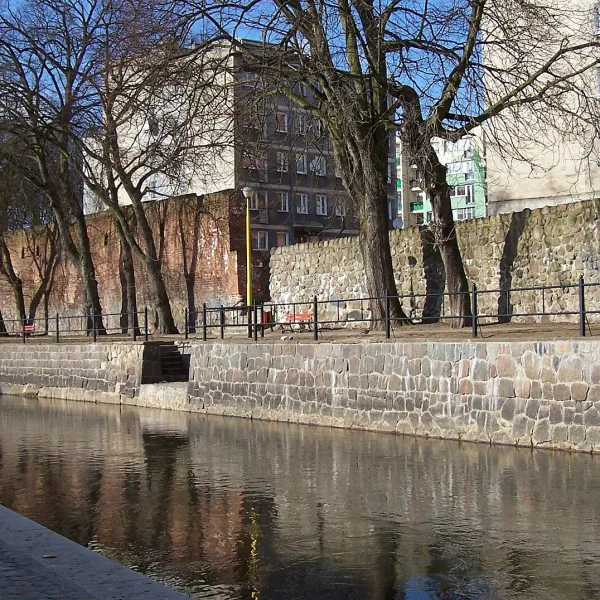
Begin with the remains of the town walls: the gate, two towers and the granary by the river. They lie close together, so sightseeing takes an hour or two. The history of these fortifications and the old mint is told in the article on the Wolin Gate, the towers and the groschen.
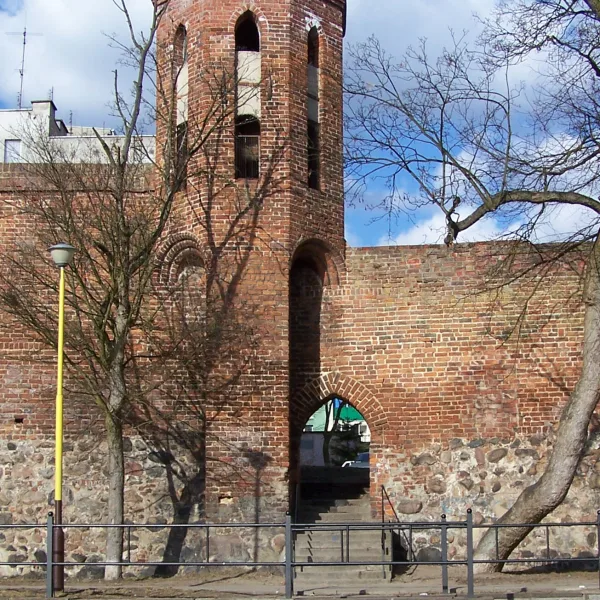
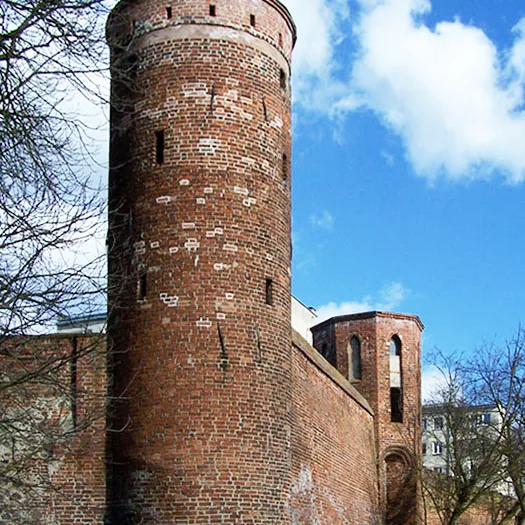
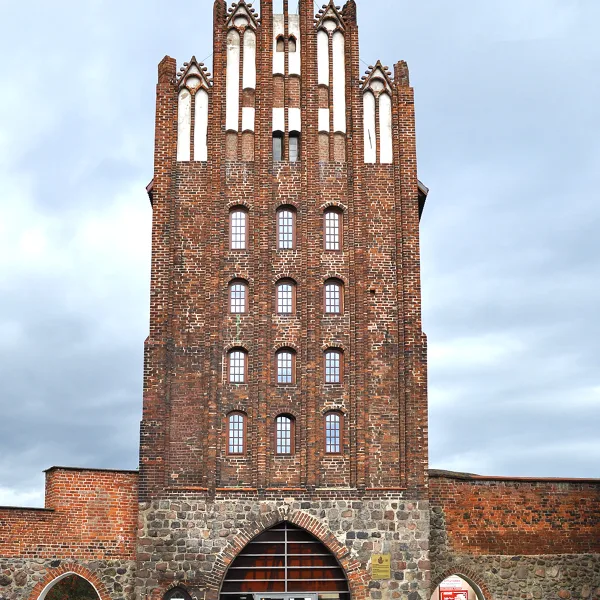
The Wolin Gate is a Gothic town gate from the 14th-15th century, 26 m high. It is the only one of four gates to survive, and houses a culture centre and a tourist information point. Two towers stand beside it. Baszta Mennicza (the Mint Tower) is an octagonal brick tower above the promenade by the Ina, a former mint where the Goleniów white groschen was struck. Baszta Prochowa (the Gunpowder Tower), also known as the Guard or Prison Tower, is cylindrical, stands over the river and once served as a powder store and a prison. The town walls, with 14th and 15th-century fragments scattered around the centre, complete the picture.
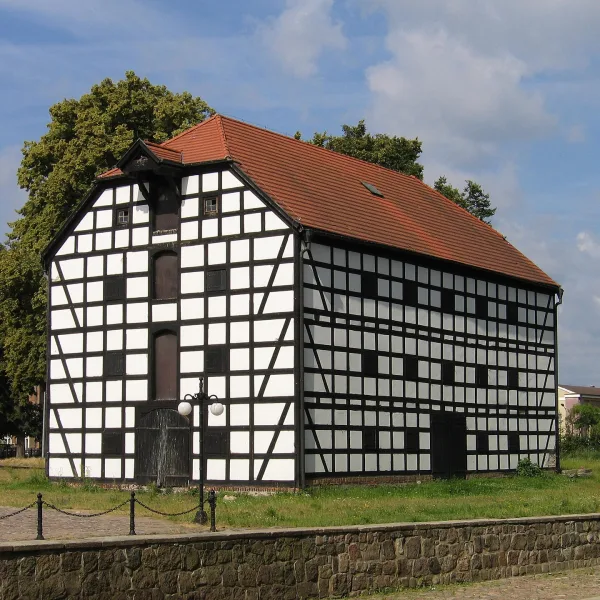
On the Ina also stands the granary at Nadrzeczna 8, from the 18th century, the only survivor of the old port's warehouses. For a comparison with other towns in the region see the article on the walls and gates of Gryfice, Trzebiatów and Goleniów, and for links with the Hanseatic League the text on the Hanse in West Pomerania. More monuments are under monuments in Goleniów, and buildings under architecture of Goleniów.
Which churches and other places are worth visiting in Goleniów?
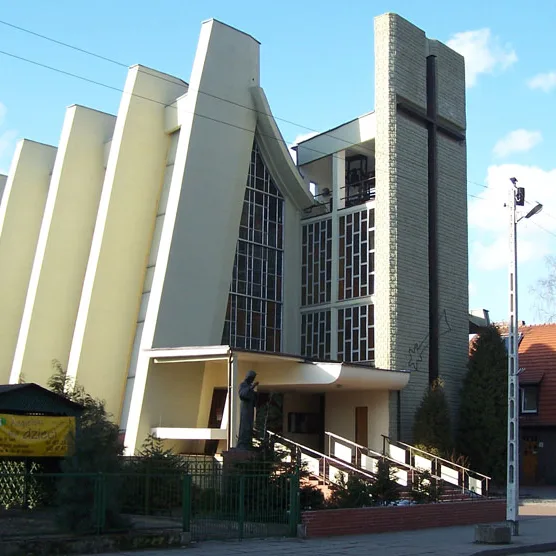
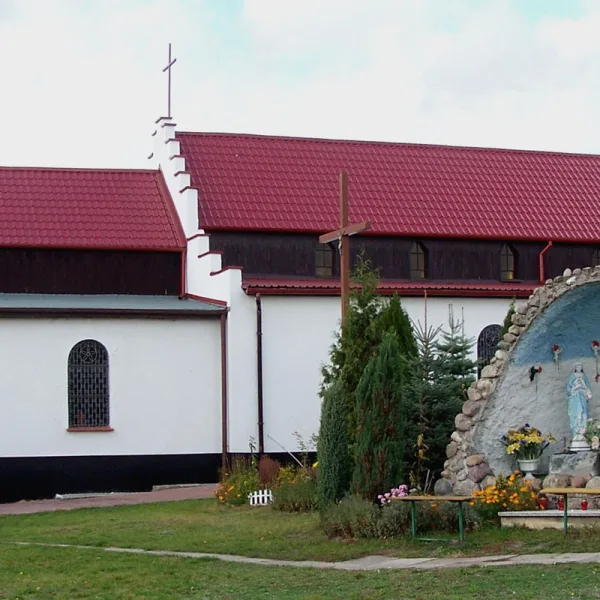
The churches of Goleniów differ in age, from a Gothic parish church to 20th-century buildings. All are listed under churches and monasteries in Goleniów.
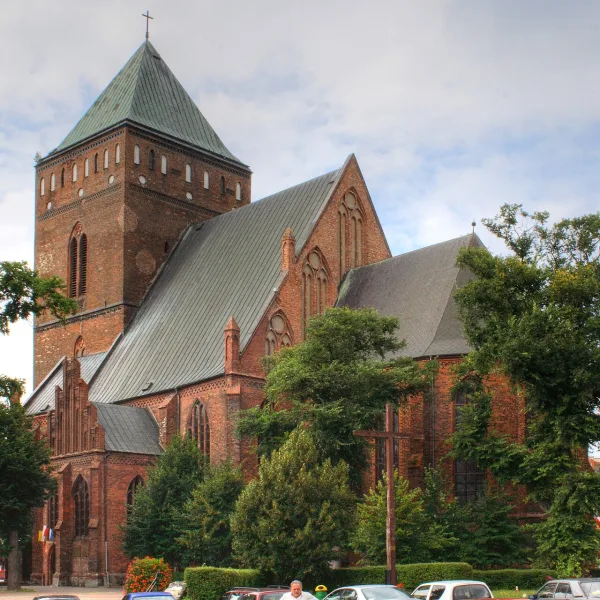
The Church of St Catherine on Mieszka I Square is a Gothic three-nave hall from the 15th century, a former parish church rebuilt after wartime damage, with relics of St Faustina. The ruins of St George's Chapel are, according to Wikipedia, the oldest monument in town: foundations of a medieval chapel and an 18th-century church uncovered in 2004 and laid out as a park with paths and a plaque. The newer Church of St George was built in 1930 and rebuilt in 1980-1987, and the Church of Our Lady of Perpetual Help stands in the Helenów estate.
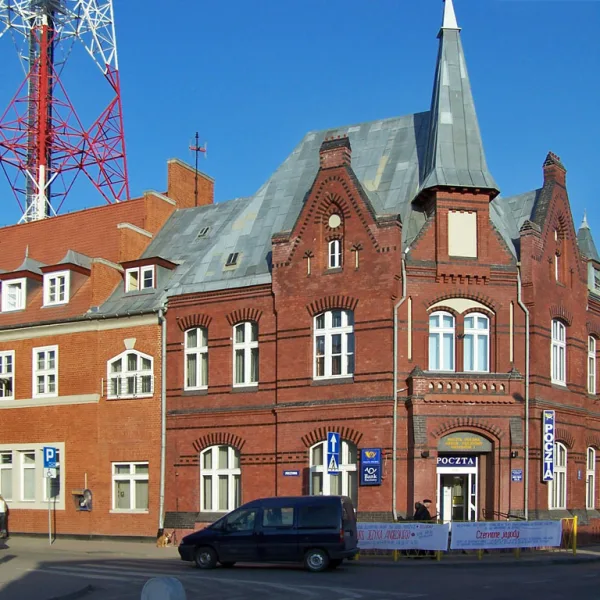
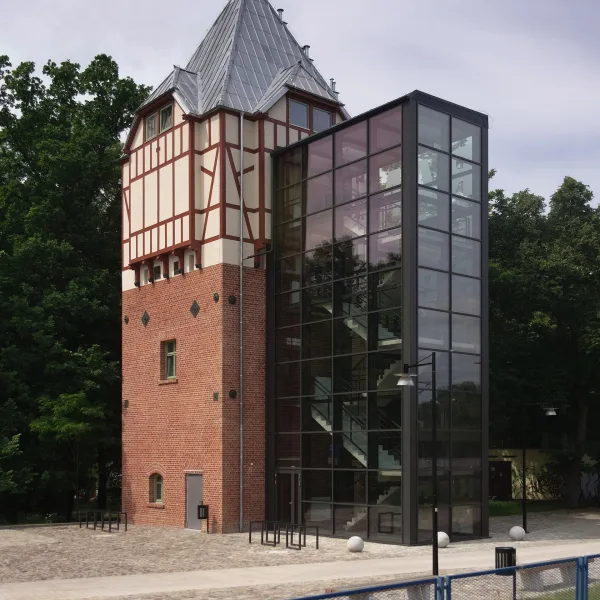
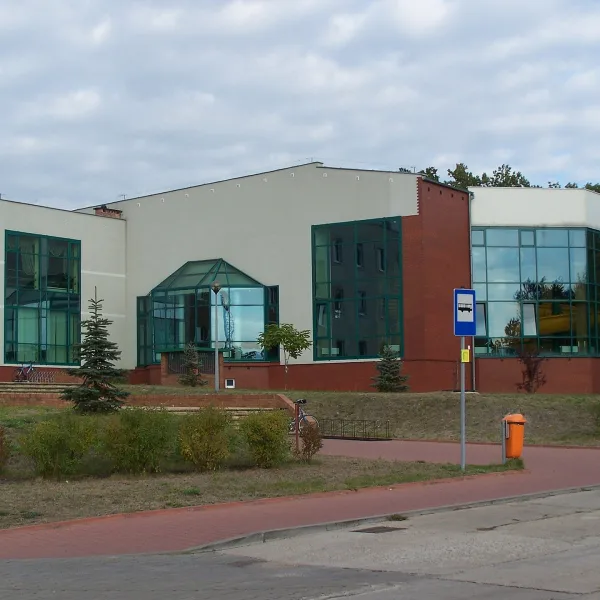
Beyond monuments, visit the Centre for Documentation of the History of the Goleniów Land at Pocztowa 2, a municipal venue with an exhibition on the history of the town and region, in a townhouse called the Yellow House. By the station stands the railway water tower from 1912, converted for cultural use after renovation, and in the centre the post office building from 1896-1898. To rest there is the 750th Anniversary Park, the largest in town, with wooden sculptures and a playground. For rain and families there is the Fala swimming pool at Niepodległości 1a, where you will find a lap pool of 25 m, a pool for swimming lessons, children's slides and saunas. Events in town are in the Goleniów calendar.
Frequently asked questions
How much can you see in Goleniów in a few hours?
The Wolin Gate, both towers on the Ina, the granary and the Church of St Catherine. All lie in the centre, so a walk is enough.
Is there anything for rain in Goleniów?
Yes: the Centre for Documentation of the History of the Goleniów Land and the Fala swimming pool. You can also step into the Church of St Catherine.
What is Goleniów's best-known building?
The Wolin Gate, the only one of four gates that survived. It is 26 m high and dates from the 14th-15th century.
What is free in Goleniów?
A walk along the walls, the towers and the 750th Anniversary Park costs nothing. The park is the largest in town and lies on the left bank.

 Historic sites