Things to do in Chojna: the Gothic St Mary church, two medieval gates, the town hall and nature reserves above the Oder. Eleven places.
Chojna lies close to the German border, and its centre has kept brick walls, gates and large Gothic churches. The commune adds nature reserves, so the town suits both a short walk and a full day out with a backpack.
What to see in Chojna first?
Begin with St Mary church, then the town hall and one of the two gates. These three places sum up a Gothic brick town and take around two hours together.
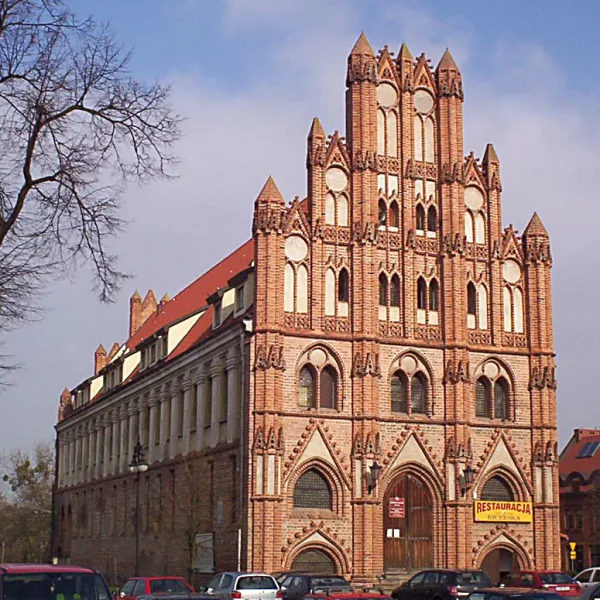
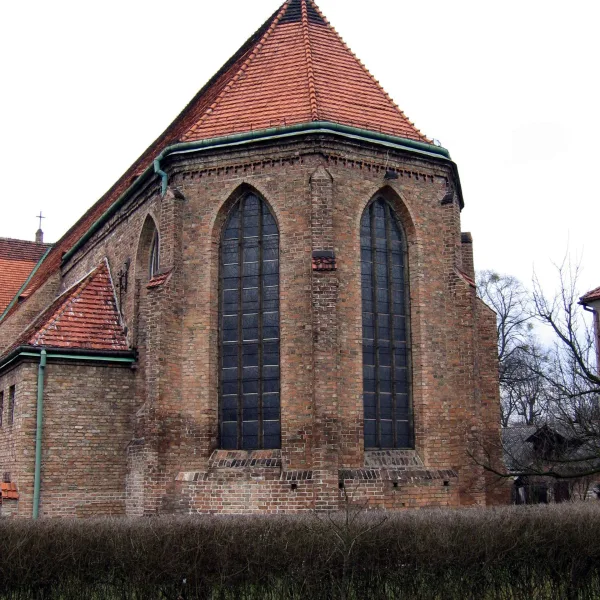
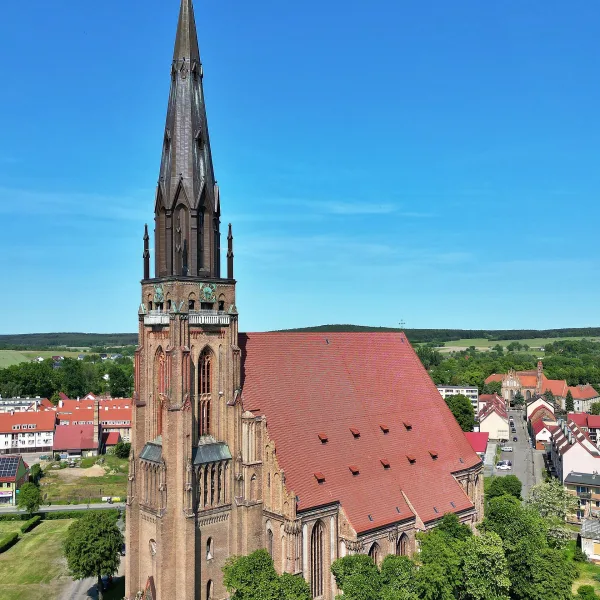
St Mary church is a three-aisled hall built in 1389-1407, extended in the 15th century and rebuilt after the fire of 1945. Glazed brick decorates the body, and a neo-Gothic tower rises over the town. It ranks among the largest Gothic churches in Poland, and its story is told in an article on Gothic, fire and reconstruction. The town hall at Plac Konstytucji 3 Maja 1 has a Gothic brick facade and, after rebuilding finished in 1986, houses a cultural centre and the town library.
Which gates and walls survive in Chojna?
Two tower gates from the 15th century survive from the old town walls. Both are brick and stand on opposite sides of the old town, so it is best to link them in one loop.
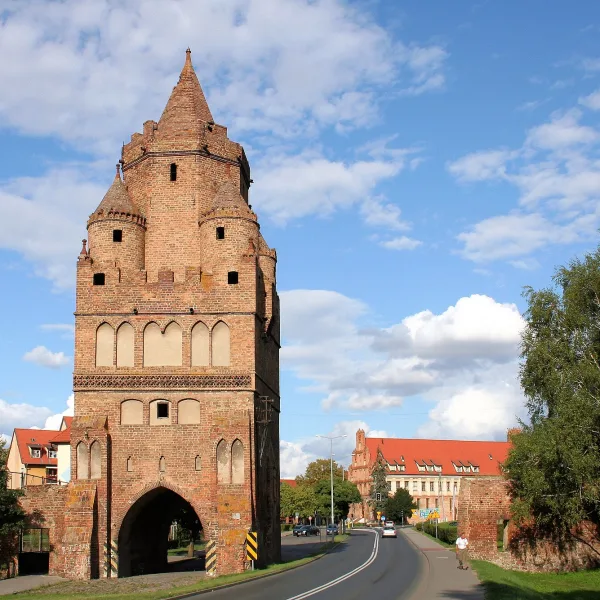
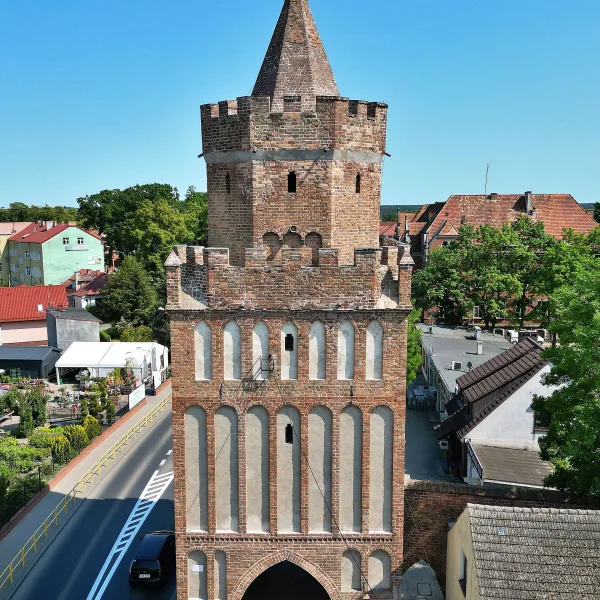
The Świecka Gate on ul. Basztowa has a defensive gallery, battlements and turrets. It is named after Świecie nad Odrą, today the German town of Schwedt, towards which the road ran. The Barnkowska Gate on ul. Bolesława Chrobrego has a viewing terrace. What is original and what is reconstruction is explained in an article on the town hall, the Świecka Gate and the walls.
Which churches in Chojna besides St Mary are worth a look?
Three more historic churches stand in town and in its former suburb. Each comes from a different era, so together they show how church architecture in West Pomerania changed.
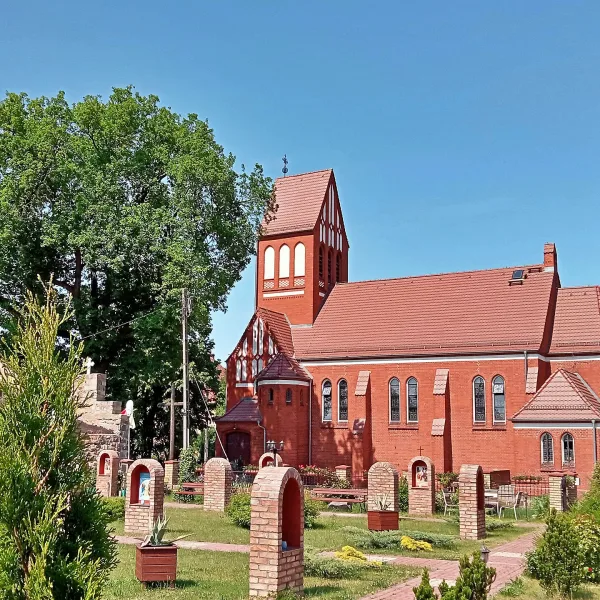
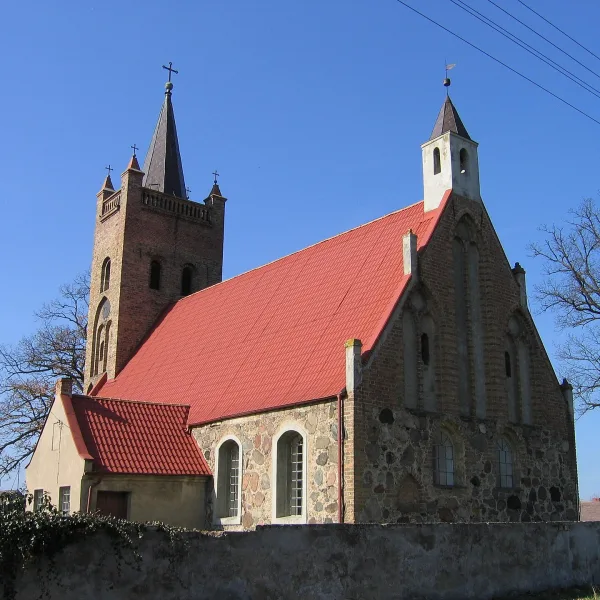
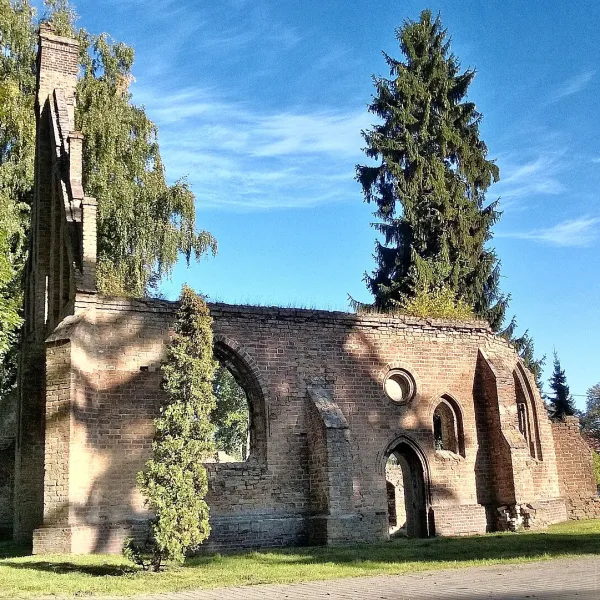
The Holy Trinity Church at ul. Malarska 24 is a Gothic single-nave building from the 14th century, Augustinian until 1536, rebuilt after the war in 1959-1965. The Church of the Sacred Heart at Roosevelta 5 is neo-Gothic brick from 1913, funded by Polish workers. St Mark Church in the former suburb of Barnkowo is a late Gothic building from the 15th century with a neo-Gothic tower. All of them are also on the page churches and monasteries in Chojna.
Which nature reserves are near Chojna?
Chojna commune has two nature reserves, both free. One is grassland on the slope of the Oder valley, the other a forest with monumental trees in the Cedynia Landscape Park.
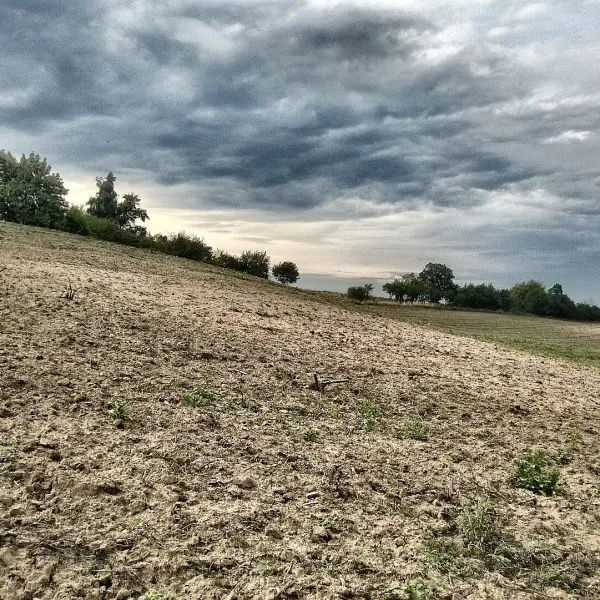
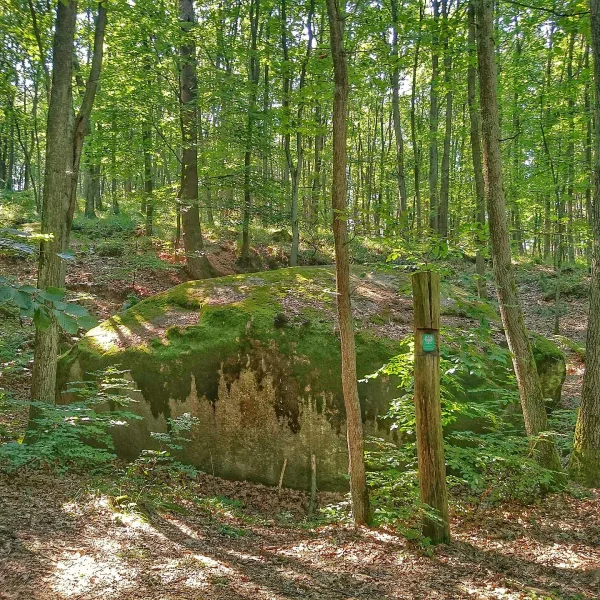
The Słoneczne Wzgórza reserve protects a mosaic of forest and steppe with dry grassland crossed by trails. Dąbrowa Krzymowska, established in 1985, has monumental oaks and pines and trails to the Twin Boulders. Tales from the surrounding forests are collected in an article on the legends of the Beech Forest.
Memorial sites in Chojna
Chojna has two cemeteries of a memorial character. They are visited quietly and not at the usual pace of town sightseeing.
The Jewish cemetery was founded around 1850 on ul. Wojska Polskiego. It covers 0.3 ha, is enclosed by a stone wall and keeps about ten gravestones. The Soviet Soldiers Cemetery from 1950-1954 is a common burial ground for 3985 soldiers who fell around Chojna and Kostrzyn.
Frequently asked questions
Is one day enough for Chojna?
The centre alone takes three to four hours: St Mary church, the town hall, both gates and one of the smaller churches. The reserves need a separate half-day trip.
Are there free places in Chojna?
Yes, the two nature reserves: Słoneczne Wzgórza and Dąbrowa Krzymowska.
Is Chojna good for architecture lovers?
Yes, it has Gothic brick, neo-Gothic and fragments of fortifications. The full list is on the page architecture in Chojna.
Can you visit Chojna on your own?
Yes, most places are outdoors or churches and gates seen from outside. Such suggestions are collected on the page Chojna solo.

 Churches and monasteries