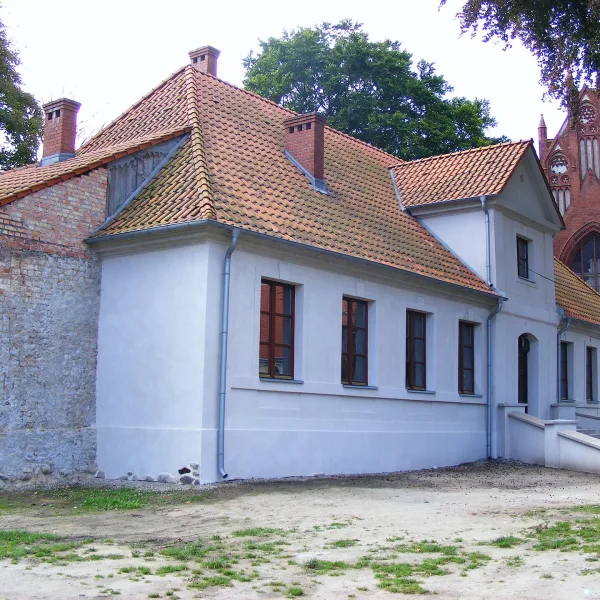
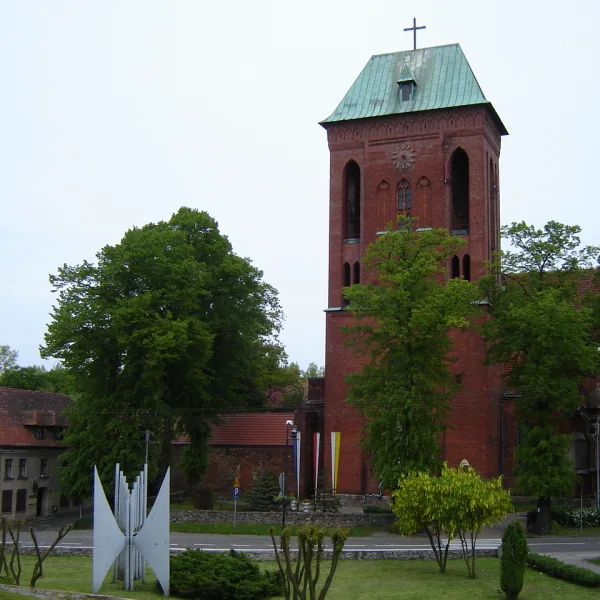
Kamień Pomorski in the rain: Kleist House, the Museum of the History of the Kamień Land and the Museum of Stones in a tower, three interiors for grey days.
On a rainy day Kamień Pomorski offers more than you might expect: two museums and a former deanery with a physics experiment in its past. All three places lie in the historic centre, near the cathedral and the town gate. Find more in what to see in Kamień Pomorski and other ideas from the region in rainy-day ideas.
What can you visit in Kamień Pomorski when it rains?
Start at Kleist House by the cathedral, move on to the town museum and end at the museum in the tower. Each interior shows a different side of the town.
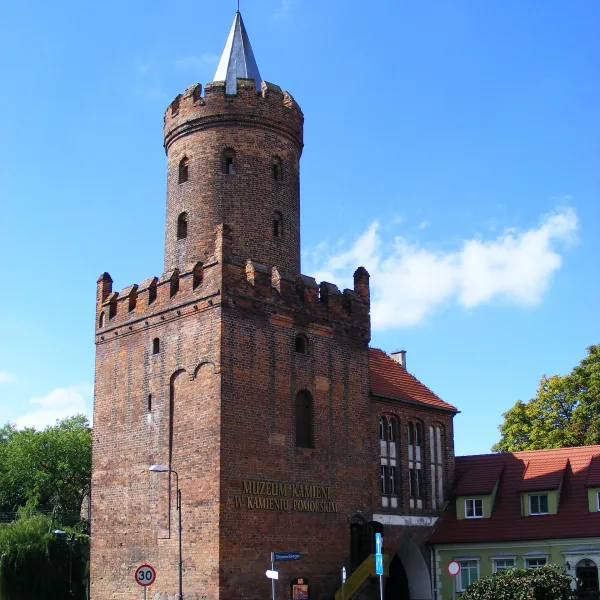
At Plac Katedralny 4 stands Kleist House, an 18th-century Baroque manor that served as the chapter dean's residence. Ewald Jürgen von Kleist, regarded as the inventor of the first electrical capacitor, lived here. In the Dominican Quarter, at Mickiewicza 34, stands the Kamień Land History Museum; the building opened in 2015, and its collections span archaeology, the town's past and cathedral treasures. Within the medieval walls, in the Wolin Tower and Gate, runs the Museum of Stones, a family collection of dinosaur fossils and minerals.
The town, its towers and museums are presented in the article Kamień Pomorski: town hall, tower, bishop's palace, museums and a spa on the Kamień Lagoon, and organ concerts are described in the text on the Kamień organ.
Frequently asked questions
Which Kamień museum occupies a tower?
The Museum of Stones, set up in the Wolin Tower and Gate. It exhibits dinosaur fossils and minerals.
Who lived in Kleist House?
Ewald Jürgen von Kleist, regarded as the inventor of the first electrical capacitor. The house is a former deanery, a Baroque manor by the cathedral.

 Museums