Churches and monasteries in Koszalin: the Gothic cathedral of the early 14th century, two Orthodox churches, St Gertrude's Chapel and a hilltop sanctuary.
Koszalin's places of worship represent several denominations: Catholic, Greek Catholic, Orthodox and Lutheran. From medieval brick to contemporary architecture, they fall into a short route across the town and its districts.
Which churches in Koszalin should you see first?
Begin with the cathedral, then St Gertrude's Chapel and the Orthodox church in the former castle church. These are three buildings with a medieval pedigree.
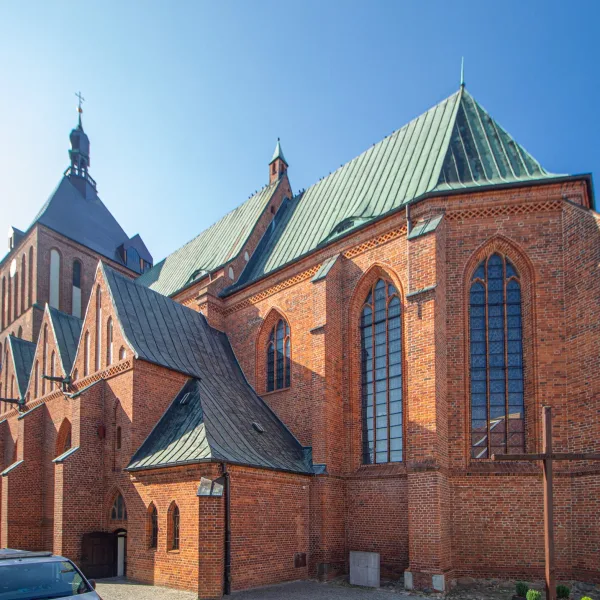
Władysława Laskonogiego 4 is the address of the Koszalin cathedral, called in its description the town's foremost and most precious monument. Work on the Gothic basilica with its heavy tower ran from 1300 to 1333, first for a parish church. It became the seat of a newly created diocese in 1972. For its surroundings, see the piece on the Old Town in Koszalin.
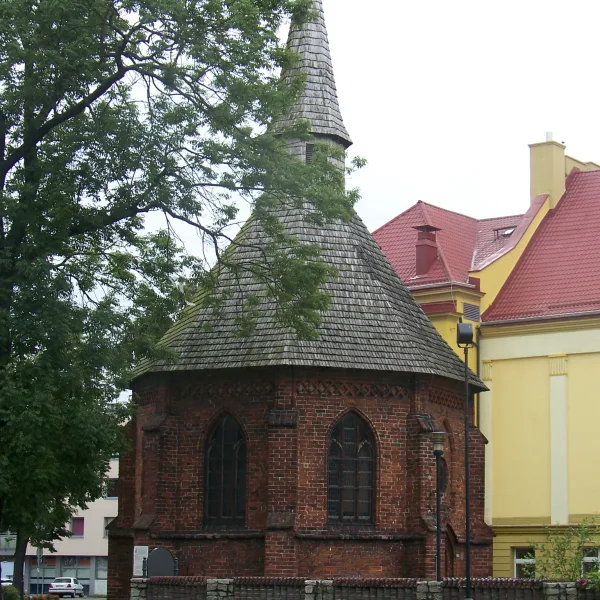
The Kaplica św. Gertrudy w Koszalinie (St Gertrude's Chapel) stands off Modrzejewskiej street. Wikipedia dates this octagonal brick structure to 1383 and places it beyond the town walls. Its use shifted over the centuries, and a Lutheran congregation now worships there.
Which Orthodox and Greek Catholic churches are there in Koszalin?
Two churches of very different character operate in town: one in a medieval historic building, the other in a modern brick structure.
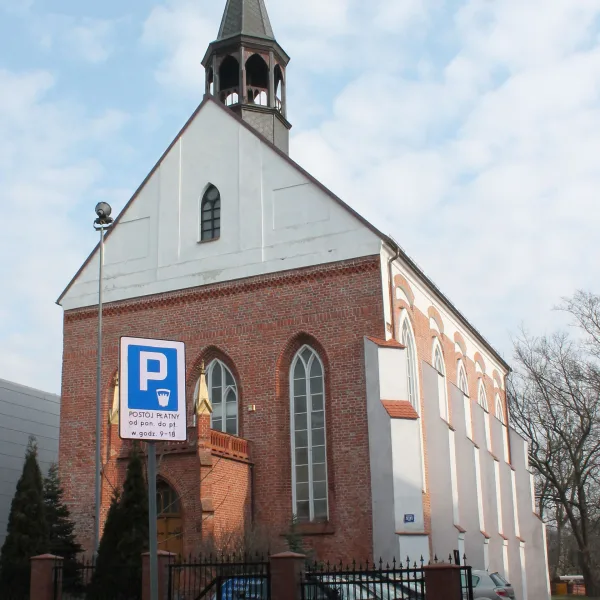
The Cerkiew Zaśnięcia Najświętszej Maryi Panny w Koszalinie (Orthodox Church of the Dormition) can be found at Adama Mickiewicza 22. An Orthodox parish took over the former castle church, which dates from the 13th and 14th centuries, and its iconostasis comes from 1955.
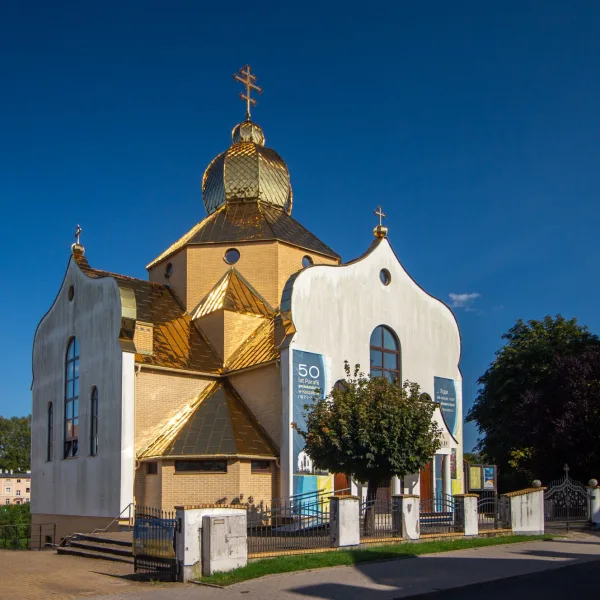
A modern answer to that tradition is the Cerkiew Zaśnięcia Najświętszej Bogurodzicy w Koszalinie (Greek Catholic Church of the Dormition) at Niepodległości 24-26. Brick walls went up between 1998 and 2006 for this Greek Catholic church, and a contemporary iconostasis fills the interior. The Wrocław-Koszalin eparchy uses it as a co-cathedral.
What is there to see in the districts and outside the centre?
Three churches lie away from the centre, and each comes from a different period. Visiting them takes more time than a walk round the Old Town.
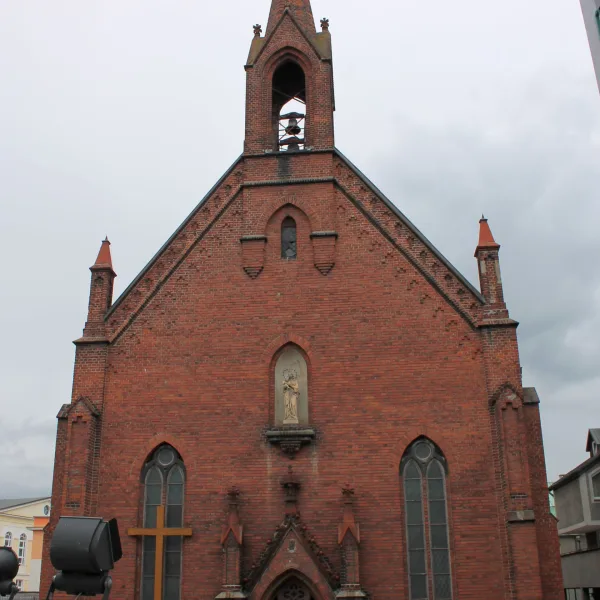
The Kościół św. Józefa w Koszalinie (Church of St Joseph) stands at Biskupa Czesława Domina 10. Red brick and a single nave define this Neo-Gothic church from 1869-1870. Per the description, it was the first Catholic church in town after the Reformation and the only one until 1945.
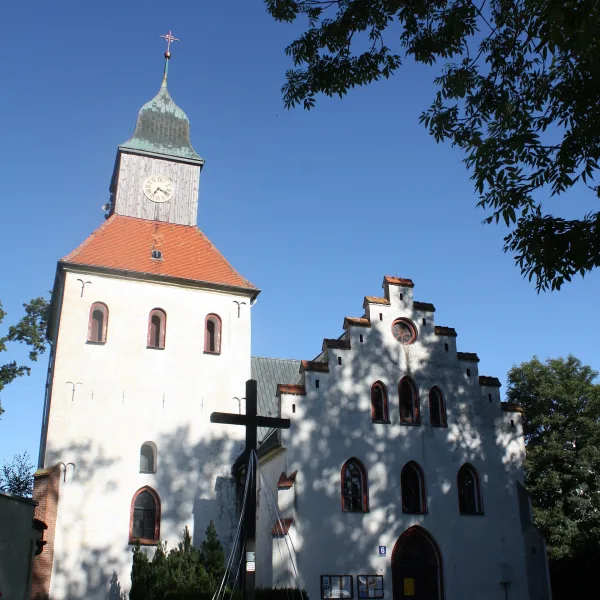
The Kościół Matki Boskiej Różańcowej w Jamnie (Church of Our Lady of the Rosary in Jamno) at Szkolna 6 is a Gothic church from the 1300s in the youngest district of the town. Polychrome paintings with Jamno motifs decorate its ceiling, and Jamno was once a village in Będzino municipality.
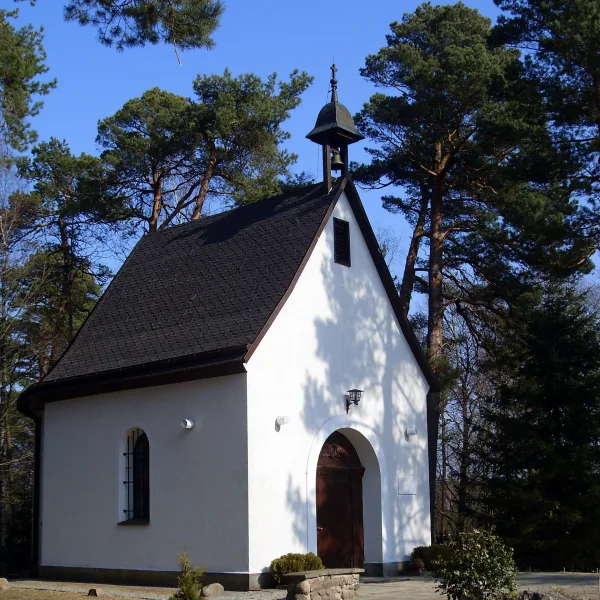
On Chełmska Hill stands the Sanktuarium Matki Bożej Trzykroć Przedziwnej w Koszalinie (Sanctuary of Our Lady Thrice Admirable). The Schoenstatt chapel serves the Apostolic Movement of Mary and exactly copies the one in Otwock-Świder. John Paul II consecrated it in 1991. Details of the hill itself are in an article on Chełmska Hill.
After the churches, look at the categories Muzea: Koszalin, Parki i przyroda: Koszalin or Teatry i opera: Koszalin. Koszalin as a whole is described on Koszalin, and churches from the region are gathered in Kościoły i klasztory.
Frequently asked questions
Which church in Koszalin should you visit first?
The descriptions point to the cathedral, a Gothic basilica raised at the start of the 14th century.
Are there Orthodox churches in Koszalin?
Yes, two: an Orthodox one in the former castle church by Mickiewicza street, and a Greek Catholic one built on Niepodległości street.
Which church in Koszalin is the oldest?
Among the oldest are the cathedral from the early 14th century, St Gertrude's Chapel of 1383 and the Gothic church in Jamno of the 14th century. The former castle church, now an Orthodox church, goes back to the 13th-14th century.
Where in Koszalin is a Marian sanctuary?
On Chełmska Hill, in the chapel consecrated by John Paul II, which serves as a base for the Apostolic Movement of Mary in the diocese.

 Churches and monasteries