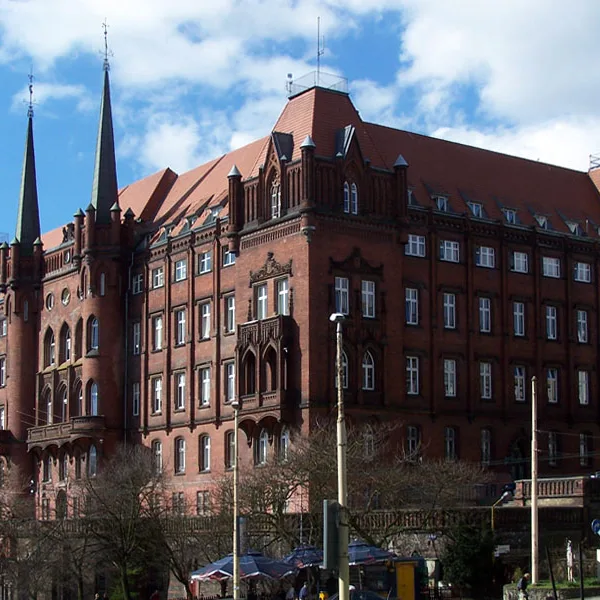
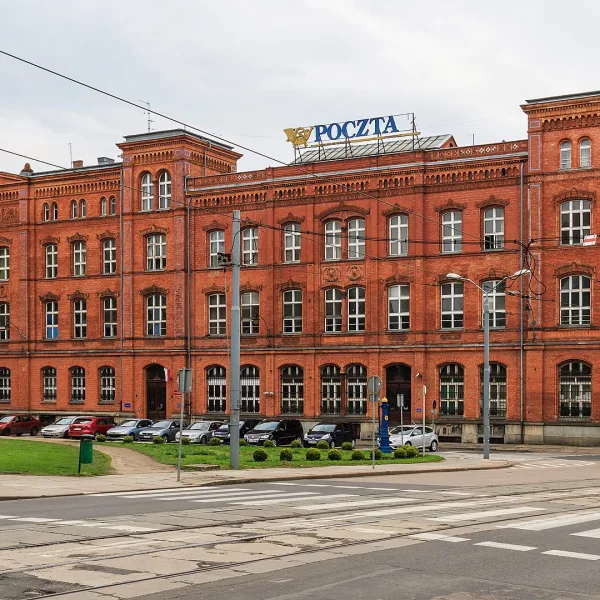
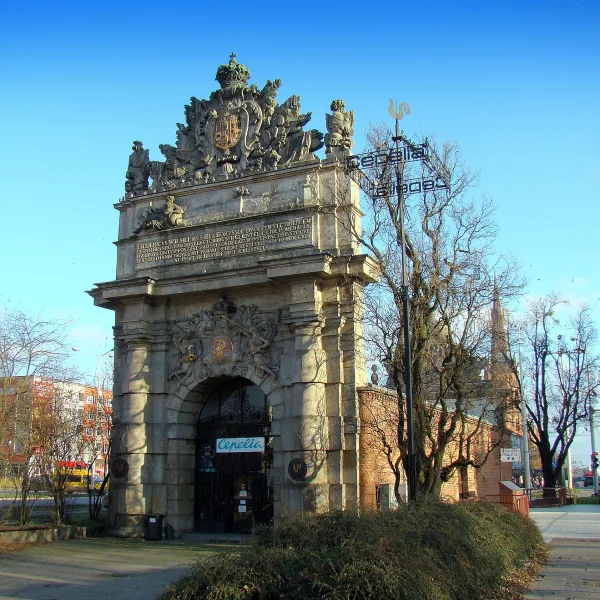
Historic landmarks in Nowe Miasto, Szczecin: the baroque Port Gate, the neo-Gothic Red Town Hall and the brick Post Office No. 2. Three buildings in one day.
Nowe Miasto gathers baroque and nineteenth-century architecture that is mostly admired from the outside. The three sites lie close together and suit a quiet walk on your own.
What historic landmarks are there in Nowe Miasto, Szczecin?
Brama Portowa w Szczecinie (Port Gate) is a baroque town gate, formerly called the Berlin Gate because the road to Berlin ran through it. It was raised in the first half of the 18th century and stands on Brama Portowa square. Together with the Królewska Gate it is one of two surviving gates of the Prussian fortifications.
Czerwony Ratusz (Red Town Hall) on Stefana Batorego square is a neo-Gothic building from 1875-1879 listed in the national register of monuments. It owes its name to the brick facade. Offices of state institutions occupy it today, so it is best seen from outside.
Where in Nowe Miasto can you see red-brick architecture?
Poczta nr 2 w Szczecinie (Post Office No. 2) at Dworcowa 20 is a complex of red-brick buildings put up in stages between 1872 and 1905 in the German Neo-Renaissance style, to a design by Carl Schwatlo. The upper facade shows tympana with horse heads, and eagles sit above the windows. The building still works as a post office.
All three carry the "Architektura" and "Solo" tags. To keep exploring, try the monuments of Nowe Miasto, the atmospheric places of the district and the full list of attractions in the district. For landmarks beyond this district, open the regional Zabytki list.
Frequently asked questions
Why was the Port Gate once called the Berlin Gate?
Because the road to Berlin led through it. Today it is one of two surviving gates of the Prussian fortifications, next to the Królewska Gate.
Can you go inside the Red Town Hall?
The building houses offices of state institutions, so the town hall is seen mainly from outside.
Is Post Office No. 2 still in use?
Yes, the building still houses a post office. It is also regarded as the oldest surviving example of 19th-century postal architecture.

 Historic sites