Solo in Niechorze means a lighthouse on a cliff, a miniature lighthouse park, a fishing open-air museum and a fisheries museum, six places to visit alone.
Niechorze is small, and most of the places in the set lie on Ludna Street or close to it, so a plan for a day alone almost makes itself. The other places in the village are listed under attractions in Niechorze, with more solo ideas gathered under solo places in West Pomerania.
What can you see alone near the lighthouse in Niechorze?
Three places cluster by the lighthouse: the tower itself, the miniature park and the open-air museum. All stand on one short stretch of Ludna Street, so you can cover them in a morning.
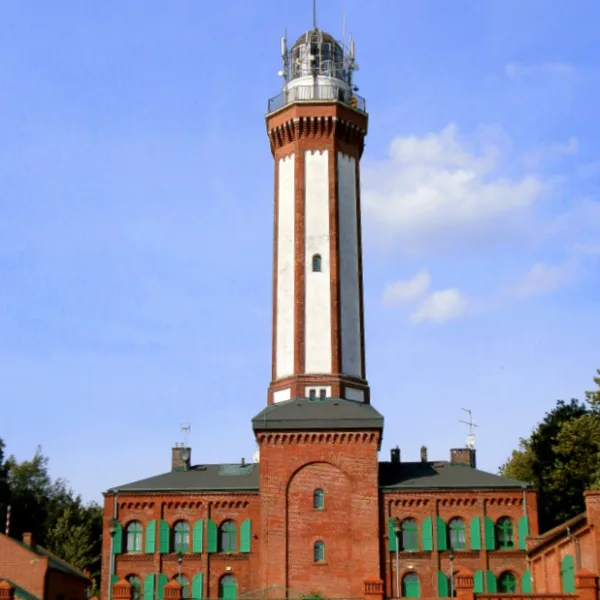
Latarnia Morska Niechorze (Niechorze Lighthouse) stands on a high cliff at Polna Street 30. The pale yellow brick tower is 45 metres tall, and 208 left-turning steps lead to the viewing terrace. Its first light was lit in December 1866. From the top you see the panorama of the Rewal coast, which for a lone walker is often the best reward.
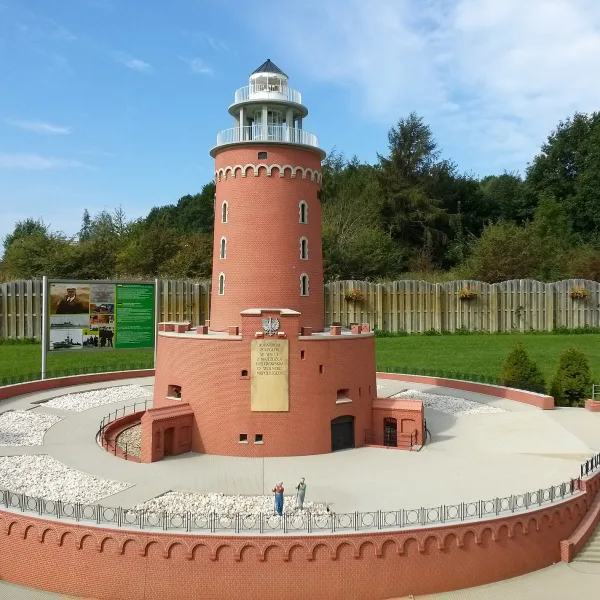
Close by is Park Miniatur Latarni Morskich (Lighthouse Miniature Park) at Ludna 16. Models at one-tenth scale take you past every lighthouse of the Polish coast, Krynica Morska to Świnoujście, within a single hour. Guides talk about them in three languages. For a traveller without company it is a handy lesson in coastal geography, and further maritime traces are described in Niechorze beyond the lighthouse: the fisheries museum, Liwia Łuża and ethnographic farmsteads.
Where in Niechorze can you learn about fishermen and village life?
To understand old Niechorze you need three addresses: the Ethnographic Park, the Sea Fishing Museum and the Kosiński family house. The first two carry the rainy-day tag, and the third is a farmstead best viewed from its yard.
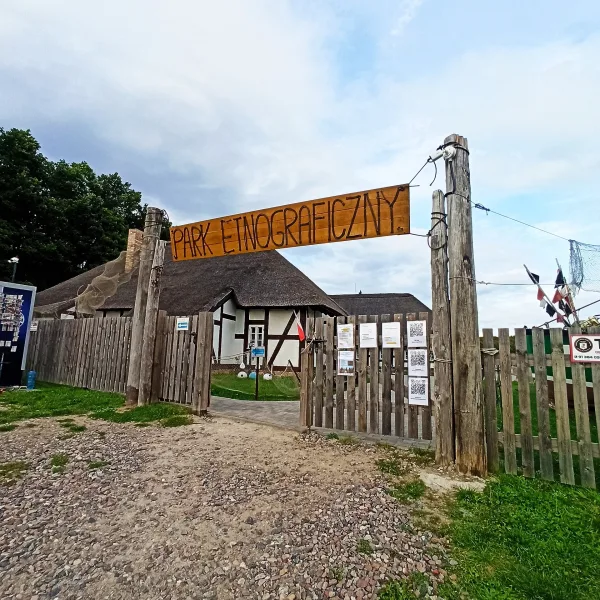
Park Etnograficzny (Ethnographic Park) at Ludna 22 is a village-life skansen beneath the lighthouse. It has a post mill from 1843, where grinding flour and groats and pressing oil are demonstrated, and fishermen's cottages from the settlements of Kępa and Niechorze with furnished interiors. A separate display shows a boat and nets for herring, flounder, cod and salmon.
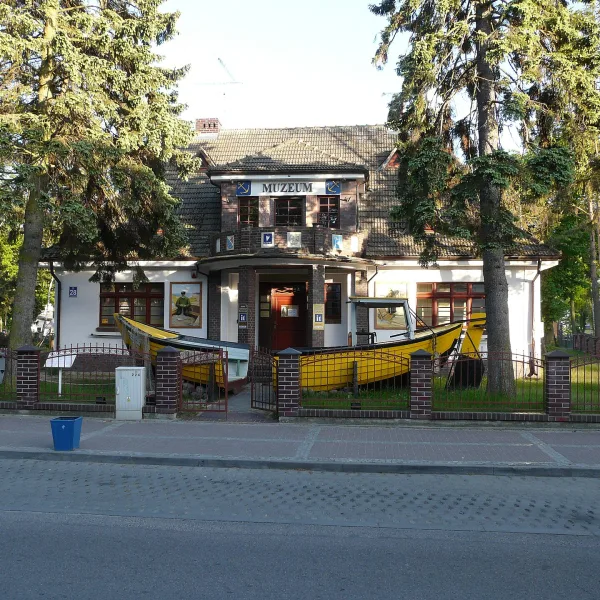
Muzeum Rybołówstwa Morskiego w Niechorzu (Sea Fishing Museum) occupies a former German villa of the 1930s at Aleja Bursztynowa 28. It has operated since 1994 and gathers keepsakes of the fishing tradition of West Pomerania: gear, amber and boats outdoors. More on cutters and landing places along this stretch of coast is in Cutters on the beach and fishing landings: Chłopy, Unieście and Dąbki.
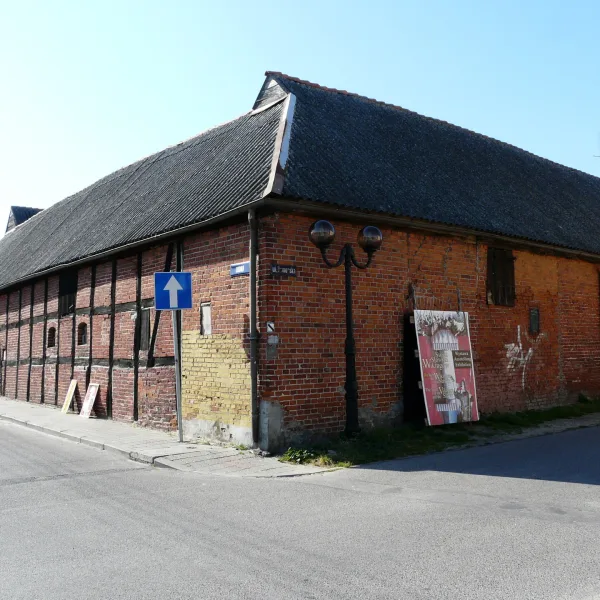
Dom Państwa Kosińskich (Kosiński Family House) is a farmstead dating from around 1800, standing on Ludna Street at the corner of Pomorska. The buildings form a closed quadrangle under one roof, and exhibitions of Slavic crafts have been set up inside.
Is there a church in Niechorze worth seeing?
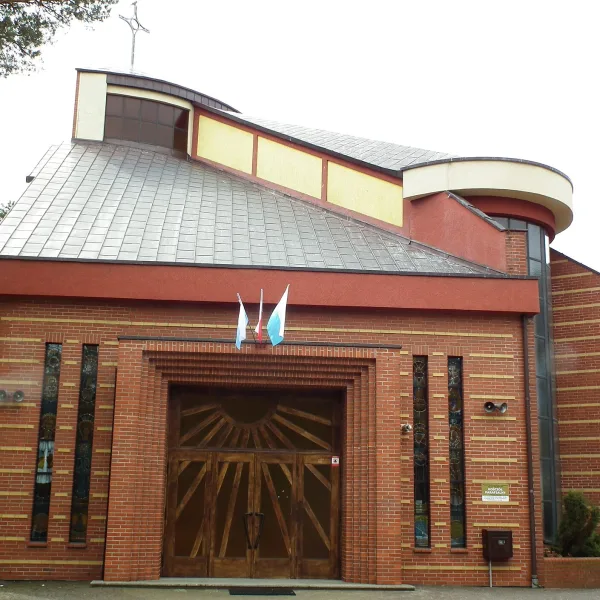
Kościół Matki Bożej Miłosierdzia w Niechorzu (Church of Our Lady of Mercy) on Krakowska Street is a modern church built in 1998-2002. It was designed by Halina Rutyna. It is known for a stained-glass window, The Calming of the Storm at Sea, and a granite altar, which suits a fishing village.
For a longer trip you can board a train. The Coastal Narrow-Gauge Railway, which links Rewal and Niechorze, is described in The Coastal Narrow-Gauge Railway: from a Prussian local line to a train through Rewal and Niechorze.
Frequently asked questions
What can you see alone in Niechorze?
The lighthouse, the Lighthouse Miniature Park, the Ethnographic Park, the Sea Fishing Museum, the Kosiński family house and the church of Our Lady of Mercy.
How many steps lead up the lighthouse in Niechorze?
There are 208 steps, and the tower is 45 metres tall.
What can you visit in Niechorze in the rain?
The Sea Fishing Museum and the Ethnographic Park, both with the rainy-day tag.
Where in Niechorze can you see all the Polish lighthouses in miniature?
In the Lighthouse Miniature Park at Ludna Street 16, right beside the lighthouse.

 Lighthouses and ports