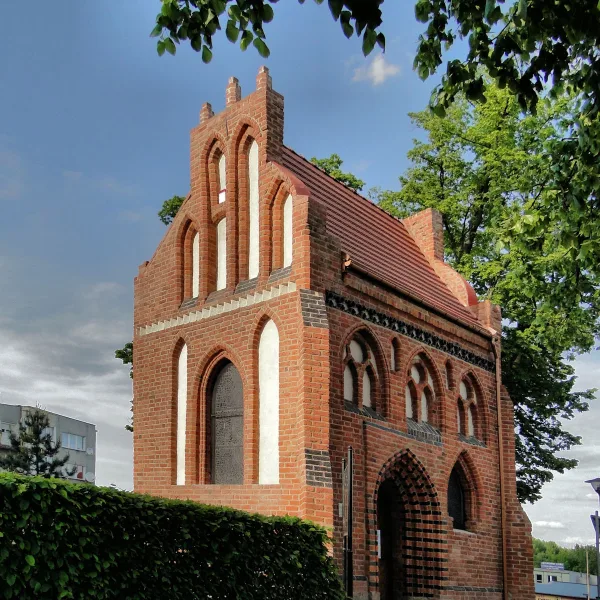
Solo in Police means a Gothic chapel, the ruins of an Augustinian monastery in Jasienica, three churches and a history museum, all easy to see alone.
The set is quiet and historical: six addresses in Police and Jasienica, without queues and without any need to book. See attractions in Police for the rest of the town, and solo places in West Pomerania for more trips alone.
What can you see alone in the old town of Police?
In the old town it is worth seeing a Gothic chapel and two parish churches. All three are within a short walk, and the chapel now has the extra role of a tourist information point.
Kaplica gotycka w Policach (Gothic Chapel), at Plac Bolesława Chrobrego 2, is all that remains of the former church of St Mary, demolished in 1895. This fifteenth-century structure was once a charnel house. It now hosts the tourist office, which makes it a handy place to pick up a map before moving on.
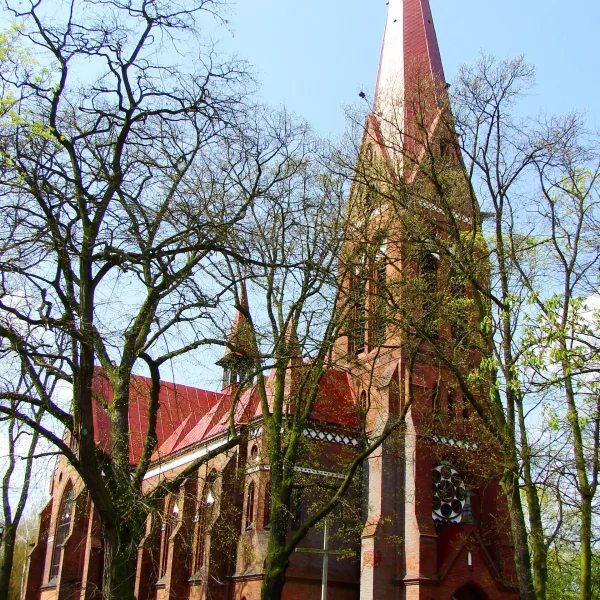
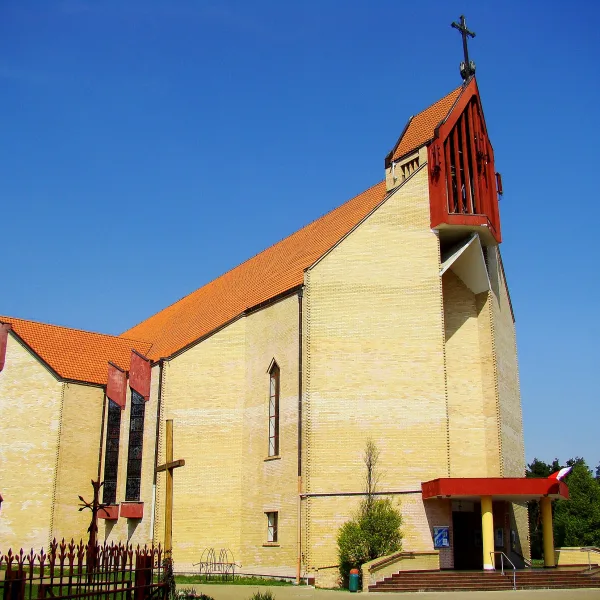
The present parish church is Kościół Niepokalanego Poczęcia Najświętszej Maryi Panny w Policach (Immaculate Conception church) from 1894. It rose on the site of the old St Mary's parish church, and its tower, taller than sixty metres, marks the skyline of the old town. The newest church in Police is Kościół św. Kazimierza Królewicza w Policach (St Casimir the Prince) on the Anna Jagiellon estate. Inside are Swiss-built organs and a Fátima chapel, and its parishioners form the largest congregation of the Szczecin-Kamień archdiocese.
What is there to see in Police-Jasienica on the Gunica?
Beside the Gunica in Jasienica you find the low walls of an Augustinian monastery and the oldest church of Police. A few dozen steps divide them, so you can see both together.
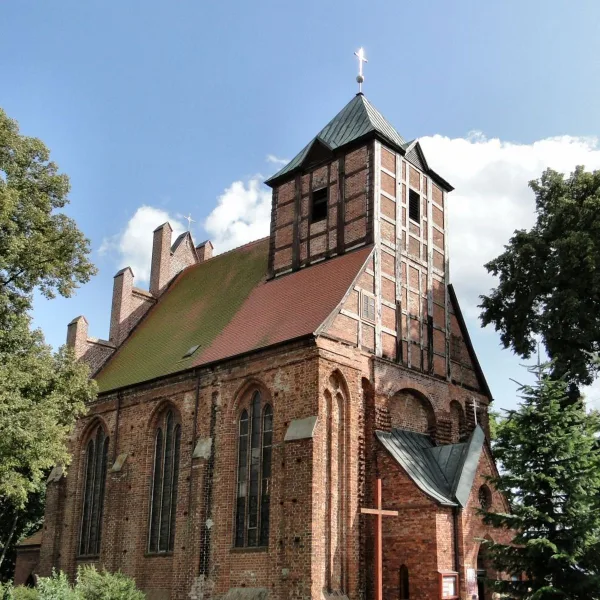
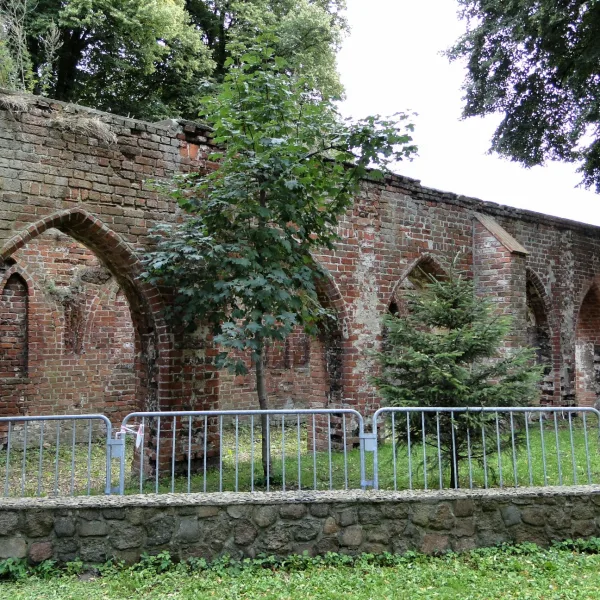
Klasztor Augustianów w Policach-Jasienicy (Augustinian Monastery) survives as a secured ruin. Duke Barnim III brought the friars here in 1331, and they straightened the Gunica, set up a mill and cultivated hops. The duke also granted them the right to fish on the Szczecin Lagoon. Next to it stands Kościół św. św. Apostołów Piotra i Pawła w Policach-Jasienicy (Church of Saints Peter and Paul), recorded from 1299 and the oldest church in the town. It once formed part of the monastery. The story of the monastery and nearby churches is told in Police and Jasienica: the Augustinian monastery, the Gothic chapel and churches.
Is there a museum about the factory and labour camps in Police?
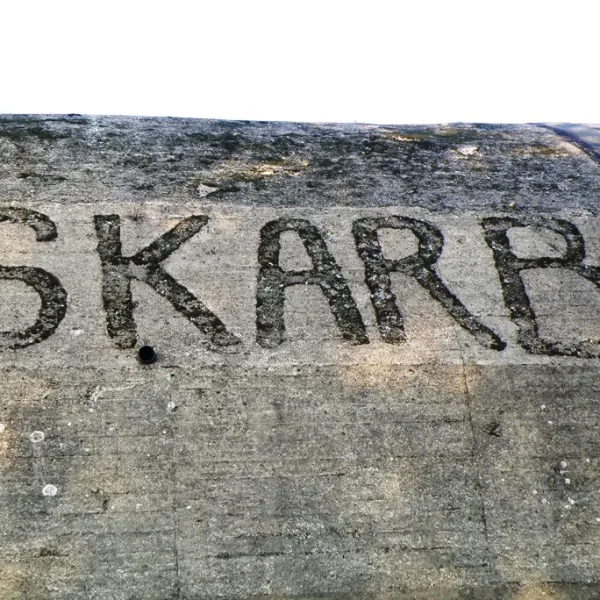
Yes, Muzeum Historyczne "Skarb" w Policach (“Skarb” Historical Museum), at Spółdzielcza Street 31, tells the history of the town, of the former Hydrierwerke Pölitz AG synthetic petrol plant and of the camps whose prisoners worked in fuel production. This subject calls for a factual approach.
The museum is run by the Association of Friends of the Police Land, which has opened the factory grounds to visitors since 2006. The exhibition is housed in bunkers and also includes collections of militaria. You can read about the plant and the sub-camp in The Hydrierwerke Pölitz plant in Police and the KL Stutthof sub-camp. The museum carries a rainy-day tag, because the exhibition is under a roof. Other small museums of the region are described in Museums of small towns: rooms, granaries and chapels with local collections.
Frequently asked questions
What is the oldest church in Police?
The Church of Saints Peter and Paul in Jasienica, recorded from 1299.
Where is the tourist information point in Police?
In the Gothic chapel at Plac Bolesława Chrobrego 2, the remnant of the St Mary's church pulled down in 1895.
What is the newest church in Police?
The Church of St Casimir the Prince on the Anna Jagiellon estate.
What can you visit in Police in the rain?
The “Skarb” Historical Museum, which has an exhibition under a roof and carries the rainy-day tag.

 Churches and monasteries