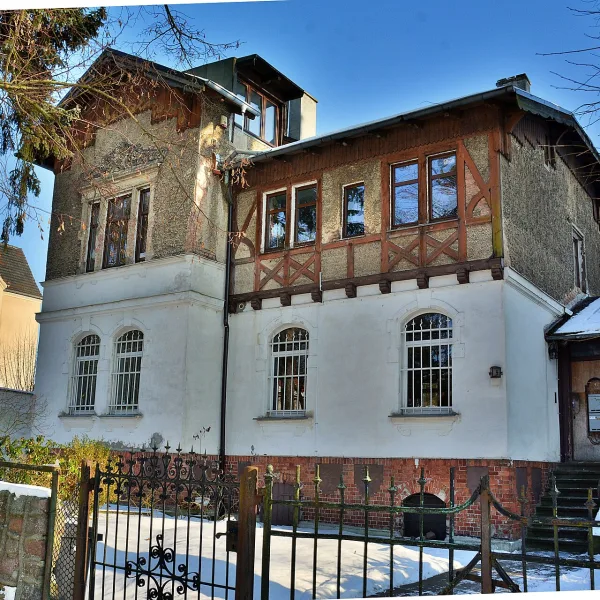
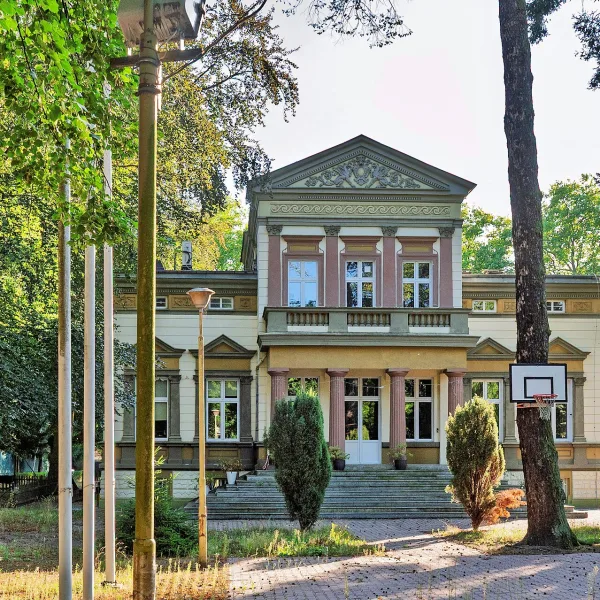
Monuments in Pogodno, Szczecin, are Art Nouveau and eclectic villas from the turn of the 20th century and a concrete platform shelter from the 1970s.
Seven objects entered in the register of monuments, gathered along a few neighbouring streets. Several of them now house offices, a public office, a school or a library, so they are viewed from the outside, on a walk through the district.
Which monuments in Pogodno should you see first?
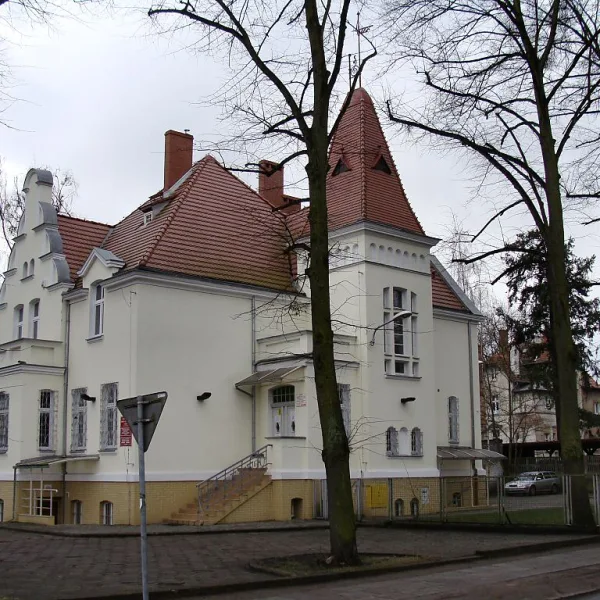
The easiest start is Wojska Polskiego Avenue, where two villas from the late 19th century stand at numbers 160 and 164: Willa Martina Quistorpa w Szczecinie (Martin Quistorp Villa) and Willa Wegnera w Szczecinie (Wegner Villa). Both are registered monuments, and both are worth comparing because they represent different styles.
The Quistorp Villa, from 1899, is eclectic, designed by Heinrich Hölling at the corner with Solskiego Street. It houses an office. The Wegner Villa from 1897 is neoclassical, with a Doric portico, and stands at the back of a double plot reaching all the way to Krasickiego Street. A private secondary school works there today.
Where in Pogodno to look for villas from the early 20th century?
Villas from the years 1900-1902 cluster around Solskiego Street and the neighbouring streets. This part of the district suits a short walk, because the neighbouring addresses lie close together.
Solskiego Street
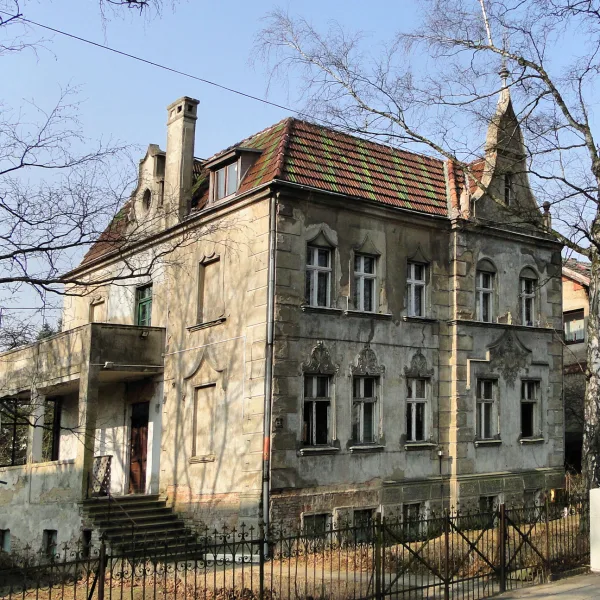
Willa Krahnstöver w Szczecinie (Krahnstöver Villa) stands at number 3. The Art Nouveau house went up from 1902 for the wine merchant Eduard Julius Krahnstöver and was restored in 2011. At number 4 stands Willa przy ul. Solskiego 4 w Szczecinie (the villa at Solskiego 4), a brick house built in 1900-1902 for a teacher and historian. It refers to the Swiss style and the northern Renaissance.
Konopnickiej and Hoene-Wrońskiego Streets
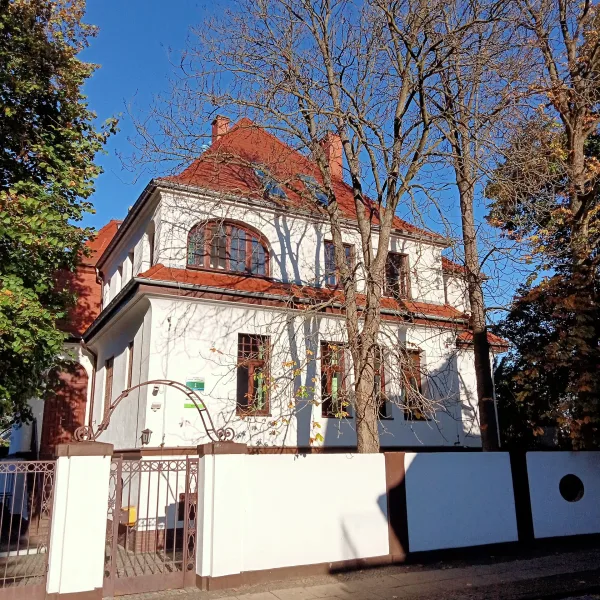
Willa Hermana Schultza w Szczecinie (Herman Schultz Villa), at Konopnickiej 27, was built in 1902 to a design by Paul Krekow. Wikipedia describes its style as stylistic pluralism with Art Nouveau elements, while the register of monuments calls it Art Nouveau. Willa przy ul. Józefa Hoene-Wrońskiego 1 w Szczecinie (the villa at Hoene-Wrońskiego 1) dates from 1910-1911 and is the youngest villa on the list. It was designed by the Dresden office Lossow und Kühne and entered the register in 2020 together with its brick fence and garden. It houses the management of the Municipal Public Library.
Is there a monument in Pogodno other than a villa?
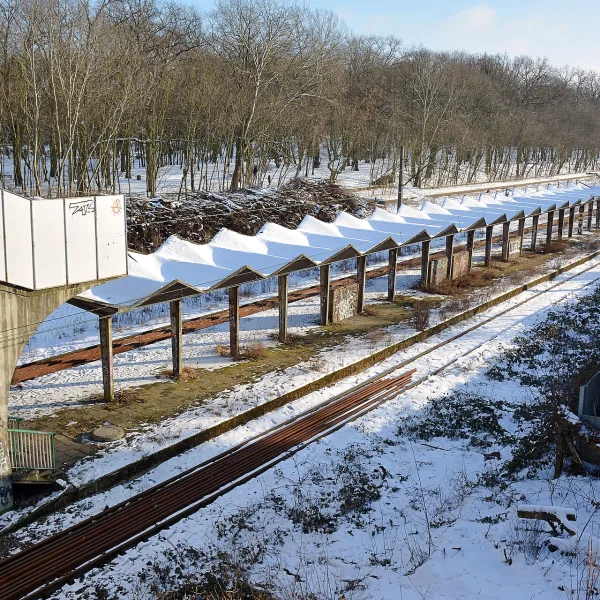
Yes: Wiata peronowa na przystanku Szczecin Pogodno (the platform shelter at Szczecin Pogodno station). The brutalist reinforced concrete structure dates from 1973 and entered the register in 2019. Its trademark is a mushroom-type roof slab on 21 pillars, nicknamed the chalices.
It was designed by the architect Danuta Rusiecka together with the structural engineer Henryk Kowalczyk. The structure was cast on site in three modules. It is a good counterpoint to the villa streets if you are interested in architecture of another era.
How to visit the monuments of Pogodno and what to read about them?
The villas with offices, a public office, a school and a library are viewed from the outside. The objects carry the tags Architecture, Solo and Villas, so they suit a solo walk, without planning any entries.
The story of the whole district, from Westend and Braunsfelde to the round square and the parks, is told in a separate article on Pogodno. To see more, go to the Pogodno page, the list Atmospheric places: Pogodno or the whole category Monuments in the region.
Frequently asked questions
Can you go inside the villas in Pogodno?
According to the descriptions, the villas house offices, a public office, a school or a library, so they are usually viewed from the outside.
Which villa in Pogodno is the oldest?
Among the objects on the list, the oldest is the Wegner Villa from 1897. The Quistorp Villa dates from 1899.
What is the shelter at Szczecin Pogodno station?
It is a reinforced concrete platform shelter from 1973 in the brutalist style, registered as a monument in 2019, with a mushroom-type roof on 21 pillars.
Who designed the shelter in Pogodno?
The architect Danuta Rusiecka, together with the structural engineer Henryk Kowalczyk.

 Historic sites