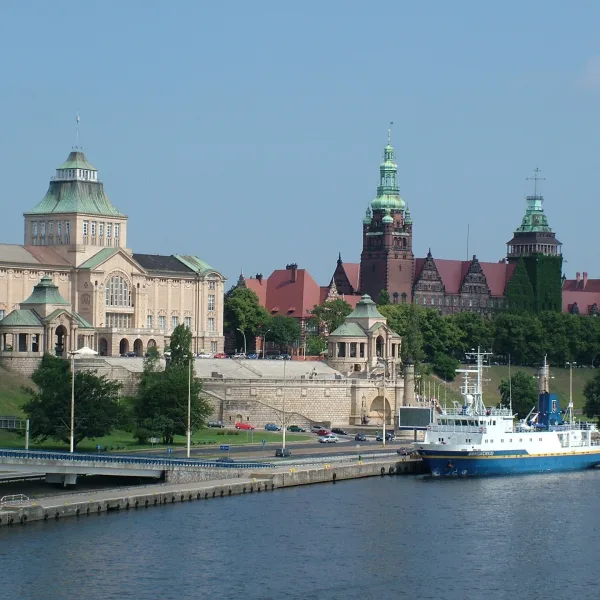
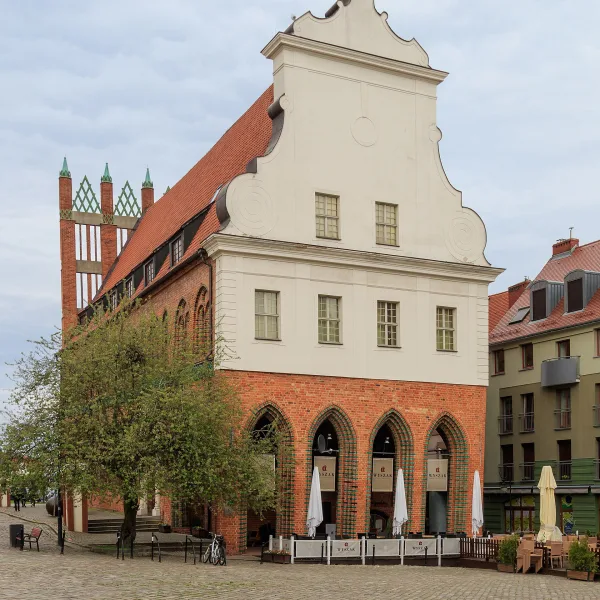
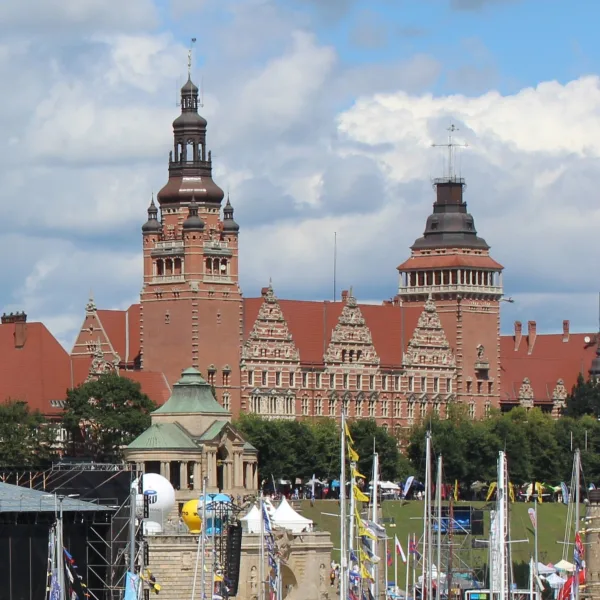
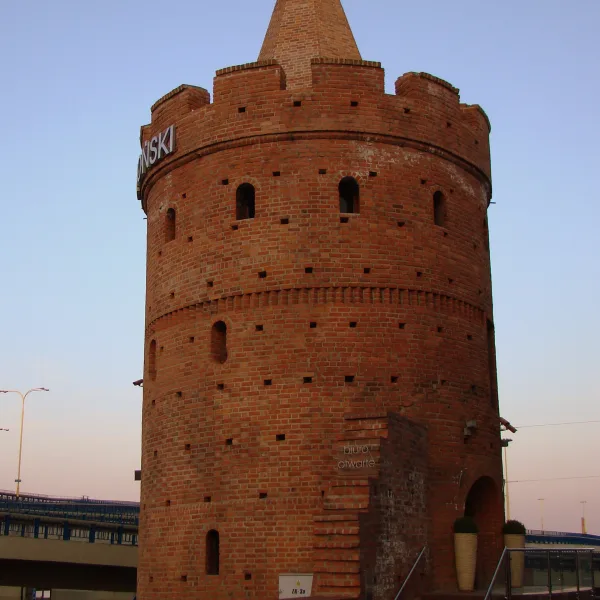
Monuments in Szczecin's Old Town: the Griffin dukes' castle, a terrace above the Oder, a Baroque gate, a tower and several palaces.
Buildings that survived the war or were reconstructed stand close enough here to cover on foot in a few hours. This selection helps you decide what to see up close and what is enough to pass on a walk.
Which monuments in Szczecin's Old Town should you start with?
A good start is the castle, the terrace above the river and the Gothic town hall. The first shows the ducal court, the second the city's early 20th-century showpiece, the third burgher life. Each occupies a separate part of the district and opens a different thread.
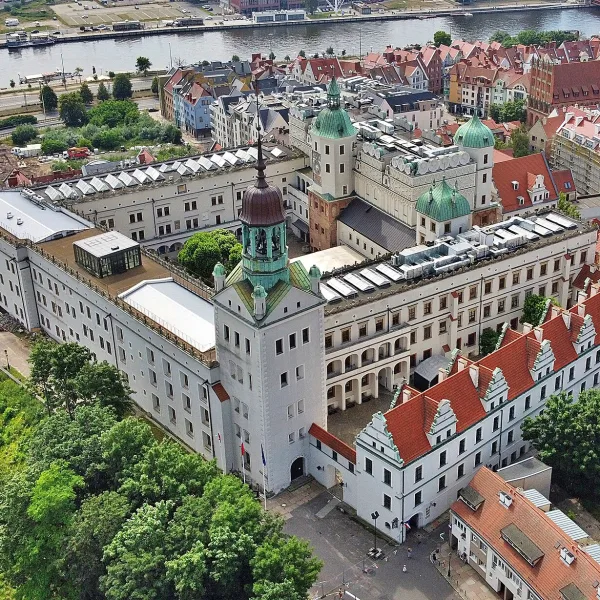
On Castle Hill, at Korsarzy 34, rises the Zamek Książąt Pomorskich w Szczecinie (Ducal Castle). The Griffin dukes ruled the duchy from here, and after wartime damage the building was restored in Renaissance form. You can visit the ducal crypt and the viewing tower.
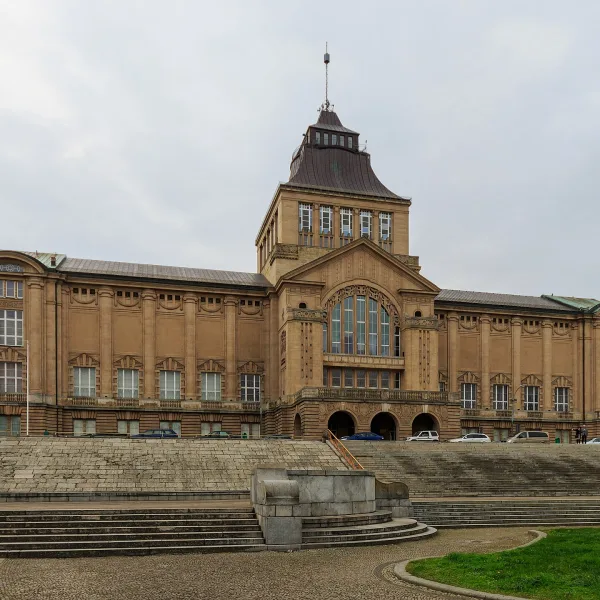
Above the Oder runs Wały Chrobrego (Chrobry Embankment), a scenic promenade on the escarpment, built in 1902-1921. Seen from the bridges, it reads as one riverside composition together with the museum, the regional government building and the maritime academy.
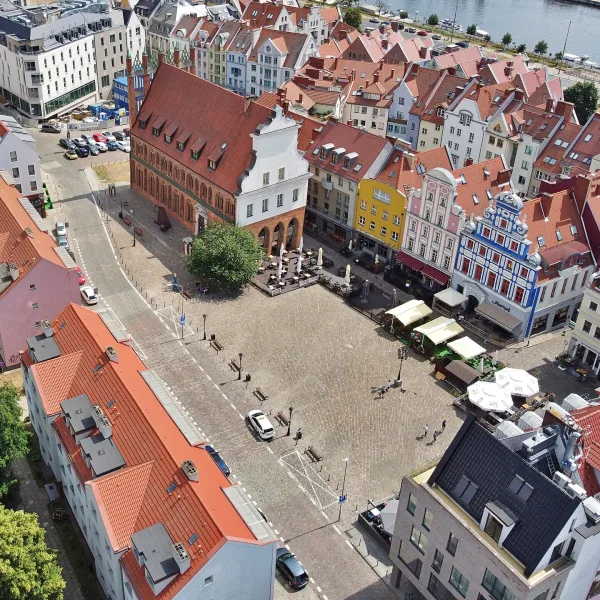
Beside the Hay Market, on Księcia Mściwoja II street, you will find the Old Town Hall. Its 15th-century Gothic brick was returned to its old form in 1972-1975, and the interiors hold the Museum of the History of Szczecin. It is worth going in to see what the city looked like before 1945.
The layout of the whole district, once called Altstadt, is described on the page Stare Miasto. Little of the old fabric survived the war, and the area below the castle has been rebuilt since the 1990s.
What remains of the old fortifications and the court near the castle?
Three elements of the old defences and the court's service buildings survive by the castle. You can reach them in a few minutes, but the interiors are usually closed, so these are mainly sites to see from outside.
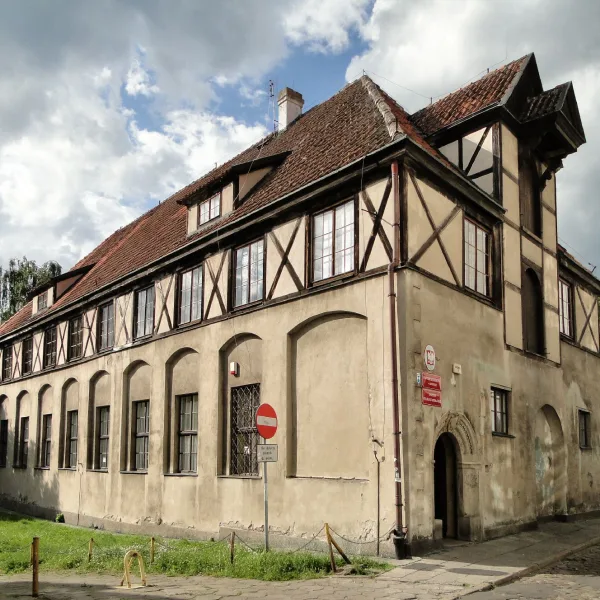
Under the castle walls, at Rycerska 3, you will see the half-timbered ducal stables, dated to around 1600 and entered in the register of monuments. It once served as the court's service building. Look at the Renaissance portal and the historic crane.
Not far away, on the Oder side, stands the Baszta Panieńska (Maiden Tower), also called the Seven Cloaks Tower. This Gothic relic of the 14th-century defences was reconstructed in 1964, and its name derives from the Maiden Gate of 1307. Address: Panieńska 47.
The Baroque note is struck by the Brama Królewska w Szczecinie (Royal Gate), set on Hołdu Pruskiego square. Its author was Bartholomé Damart, and the gables were adorned with figures of Mars and Hercules. It was built between 1725 and 1728, after Prussia took the city, as one of the fortress gates.
Which buildings define the character of the Chrobry Embankment?
Three large buildings arose together with the terrace in the early 20th century. Two of them are among the most recognisable on the Oder, and the third stands a little further, on Rybacka street.
At number 3 on the Embankment is the main building of the National Museum. Wilhelm Meyer-Schwartau designed it, and work lasted from 1908 to 1913. The mass resembles the letter E and rises 54 m. It is one of the museum's six sites in Szczecin.
Next to it, at number 4, rises the voivodeship office complex, put up for the Szczecin regency in 1906-1911. The entry Budynek Urzędu Wojewódzkiego w Szczecinie (Voivodeship Office Building) speaks of three connected buildings under one rich facade. A sculpture of a sailor looks down from the 72 m tower.
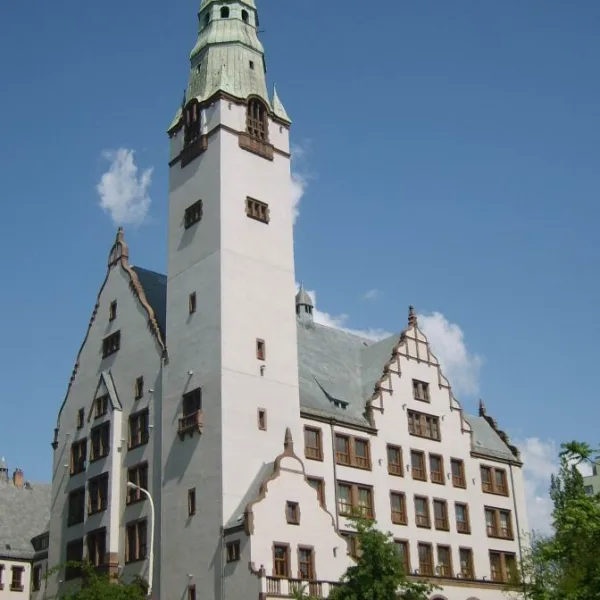
An administrative past also links the former New Town Hall at Rybacka 1 to the Embankment. The Neo-Renaissance building of 1900-1902 served the city authorities and is now the rectorate of a medical university.
Which palaces and townhouses should you see in the Old Town?
The palaces cluster around two squares: White Eagle and Żołnierza Polskiego. Most house universities, schools and museums, so you usually look at facades, from the neoclassical to the Neo-Baroque.
White Eagle Square
The Pałac Pod Globusem w Szczecinie (Palace Under the Globe) owes its name to the sculpture of the globe on top. The Neo-Baroque building of 1890-1891 replaced the Baroque Grumbkow residence, and the Academy of Art sits there today.
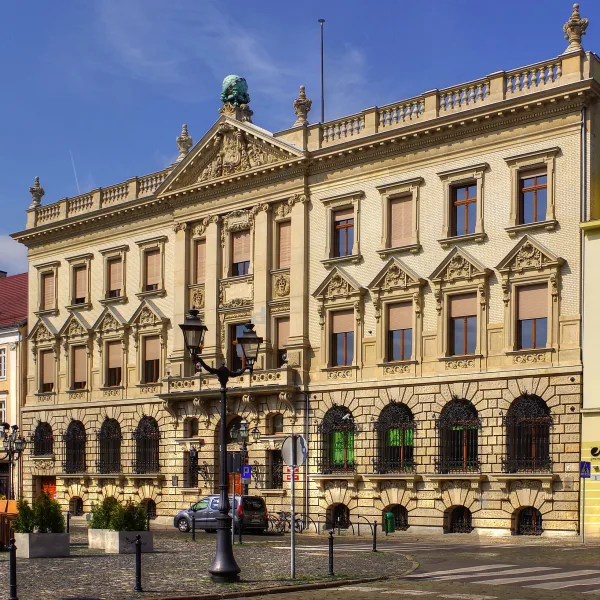
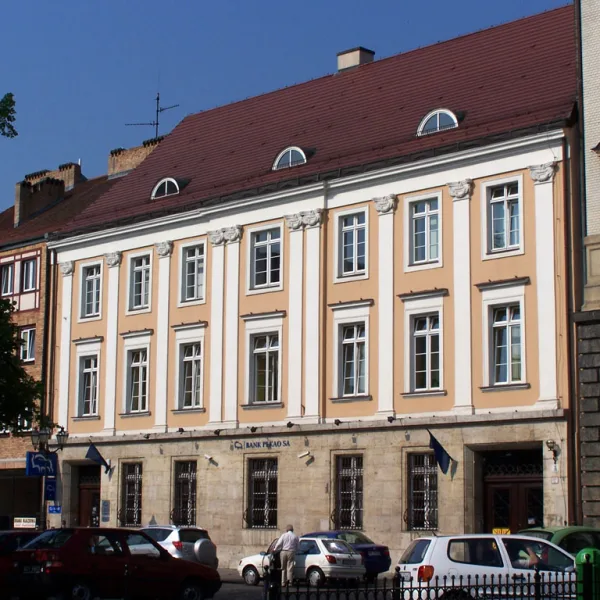
The neighbouring Pałac Joński w Szczecinie (Ionic Palace) has a neoclassical facade with pilasters in the Ionic order, from which it took its name. A townhouse stood here in the 18th century, banks followed, and today the building belongs to the Academy of Art.
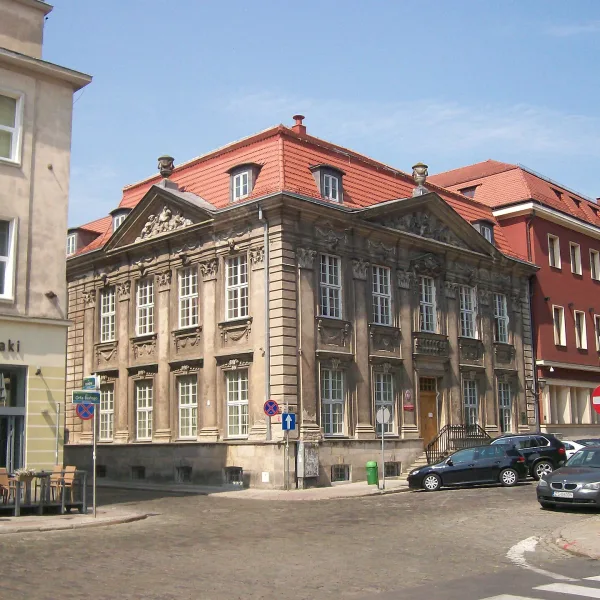
In the corner of the square, towards Staromłyńska 13, stands the Pałac Velthusena (Velthusen Palace). It was built in 1778-1779, served as a wine house and a piano workshop, and since 1963 young musicians have studied in it.
From Żołnierza Polskiego Square along Staromłyńska
The former fortress command, the Pałac pod Głowami w Szczecinie (Palace under the Heads), consists of two neoclassical buildings from the late 18th century, merged in 1889. It is occupied by the Museum of Contemporary Art and the Club of the 13 Muses.
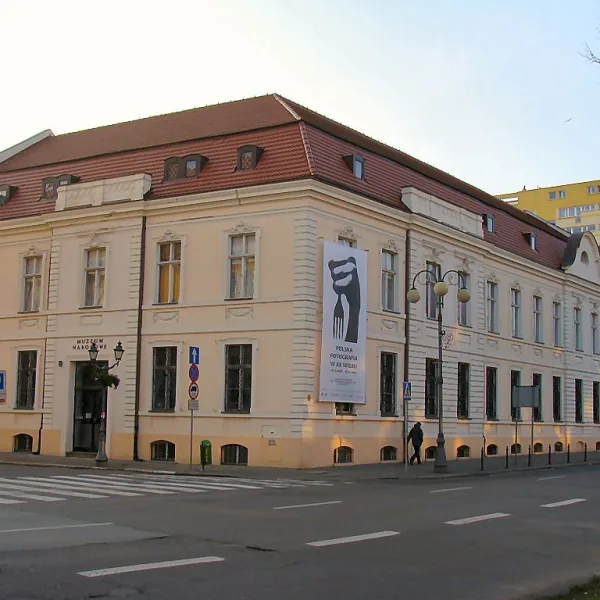
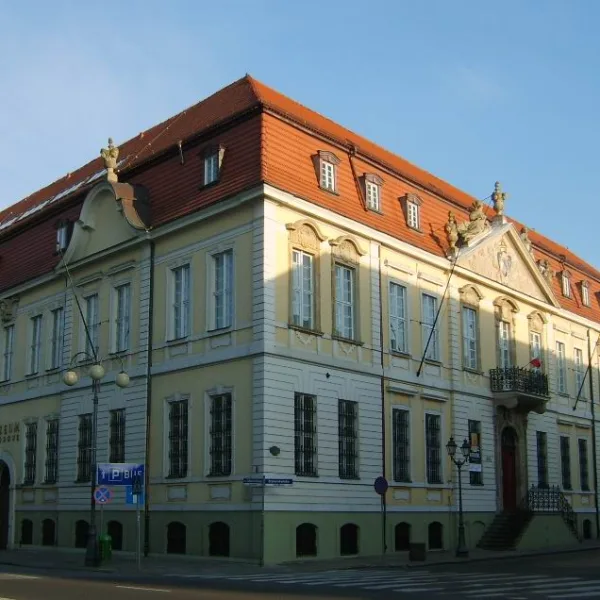
The Baroque Landeshaus, or Pałac Sejmu Stanów Pomorskich (Palace of the Pomeranian Estates' Diet), was built in 1726-1729 at Staromłyńska 27. The Pomeranian estates assembled here, and now a branch of the National Museum works there.
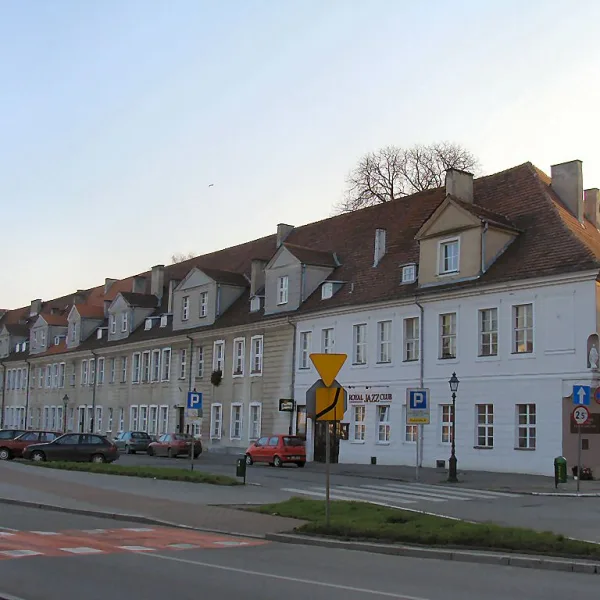
Between these buildings, at Żołnierza Polskiego 6-11 and Mariacka 26, runs a row of houses known as the Domki Profesorskie w Szczecinie (Professors' Houses). They originally belonged to the collegiate complex, were lived in by canons and later teachers of the Pedagogium. Gothic cellars are hidden beneath.
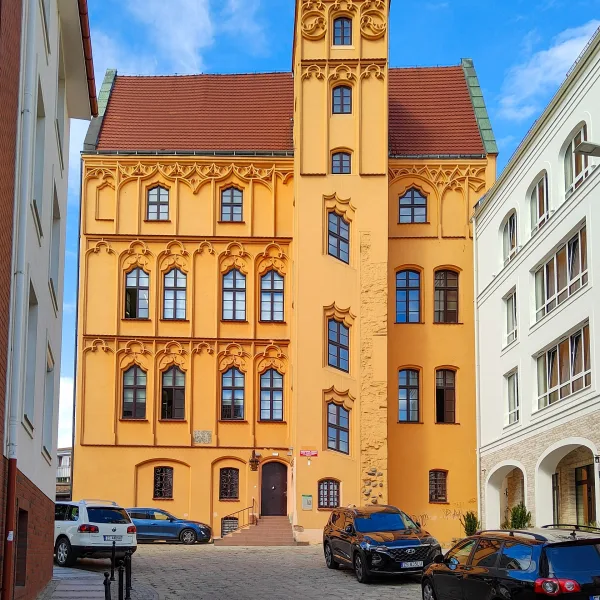
Little burgher architecture of the late Gothic survives in Szczecin, so it is worth looking at the Kamienica Loitzów (Loitz House) at Kurkowa 1. A banking family built it in 1539-1547. An art school works there today, so you see it from the street.
How to plan a walk round the Old Town?
Lead the route from the castle past the Maiden Tower to White Eagle Square and from there to the Chrobry Embankment. Such a loop takes half a day and does not require retracing the same street.
When you have had enough architecture, choose Muzea: Stare Miasto or Teatry i opera: Stare Miasto. Churches are gathered in the category Kościoły i klasztory: Stare Miasto, quieter places in Klimatyczne miejsca: Stare Miasto, and memorials in Cmentarze i pomniki: Stare Miasto. For monuments across the region, see the page Zabytki.
Frequently asked questions
How many hours does the Old Town's heritage need?
Half a day is enough to look at the facades. If you plan to go inside the castle, the town hall or a museum, add a few hours, as each has its own exhibition.
Which Old Town buildings are occupied by museums?
Contemporary art is shown in the Palace under the Heads, a National Museum branch sits in the Landeshaus, and the Old Town Hall holds the city history museum.
Which monuments are better seen from outside?
The palaces Under the Globe, Ionic and Velthusen are occupied by universities and schools, and the Loitz House by a school. They are places for photographing facades, not for touring interiors.
Where can you see remains of the old defences?
The Maiden Tower comes from the Gothic fortifications, and the Royal Gate belonged to the Prussian fortress. Both lie near the castle and Hołdu Pruskiego square, so they link easily into a short walk.

 Historic sites