Things to do in Gumieńce: the Central Cemetery as a park and historic monument, a Barlach sculpture and a Gothic church with a timber-frame tower.
Gumieńce is the south-western part of Szczecin, defined by a vast necropolis founded at the start of the twentieth century. Around it stand an old church and places of remembrance, so this is a district for a quiet, reflective walk rather than for entertainment.
What is there to see at the Central Cemetery?
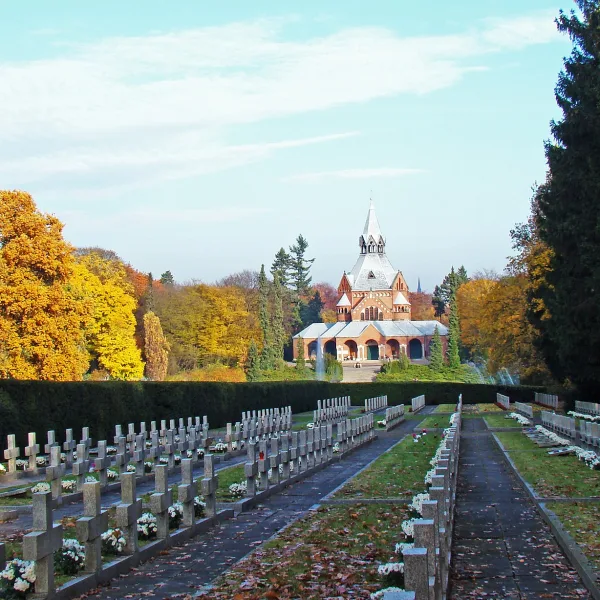
The Central Cemetery is an active necropolis laid out as a park, so visitors walk quietly and with respect for the funerals held here. Its paths and greenery allow you to follow a historic route or a botanical trail.
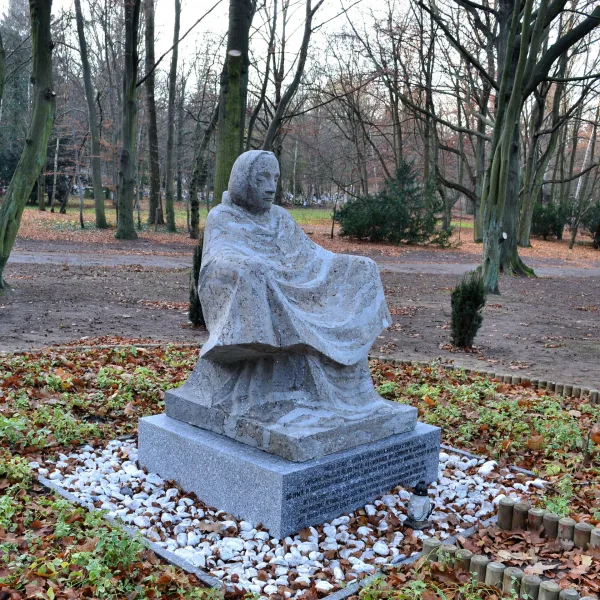
Cmentarz Centralny w Szczecinie (Szczecin Central Cemetery) covers 172.33 hectares and, according to Wikipedia, is the largest cemetery in Poland. It was founded in 1901 to a design by Wilhelm Meyer-Schwartau, and a decree of the President of Poland declared it a historic monument, the first such site in the city. Within it stands Pomnik „Matka Ziemia” (the Mother Earth monument), a grave sculpture by Ernst Barlach. The seated elderly woman with a rough surface was commissioned by the Szczecin timber merchant Richard Biesel as part of a family tomb. The present figure is a copy unveiled in 2011, while the original is in Germany.
What places of remembrance are there in Gumieńce?
Within the Central Cemetery are two memorials, described here factually and separately from the rest of the walk. Both call for quiet and attention.
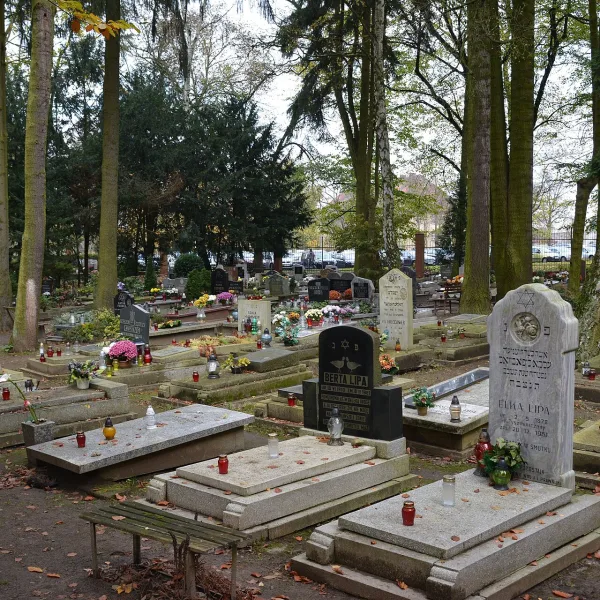
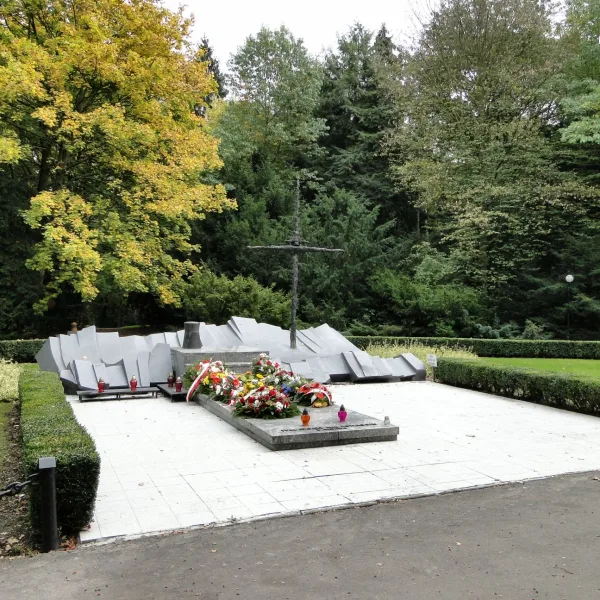
Kwatera żydowska Cmentarza Centralnego w Szczecinie (the Jewish section of the Central Cemetery) is a separate part of the necropolis for followers of Judaism, created in 1962 after the old Jewish cemetery on ulica Ojca Beyzyma was closed. It is the only active Jewish cemetery in West Pomerania. It also holds older graves from 1946-1962, exhumed from the old cemetery. On ulica Okólna, between the thirteenth and fourteenth children's sections, stands Pomnik „Tym, którzy nie powrócili z morza” w Szczecinie (the monument to sailors who never came back from the sea). The memorial stands in for the graves of sailors lost at sea and was opened in 1989 on the initiative of the Szczecin Club of Master Mariners. The design is by the Kraków artists Małgorzata Schubert-Radnicka and Maciej Radnicki.
Which church in Gumieńce is the oldest?
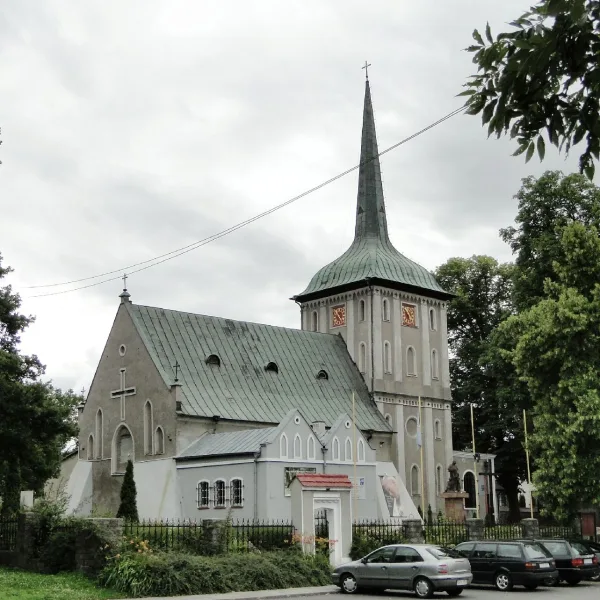
The oldest surviving church is on ulica Lwowska and was built at the end of the fifteenth century. It is a Gothic hall church of stone and brick, with no separate chancel.
Kościół Matki Bożej Różańcowej w Szczecinie (Church of Our Lady of the Rosary) stands on the site of an older timber building. In 1800 the windows were rebuilt, the walls were strengthened with buttresses and a timber-frame tower was added on the west side. The east wall shows a cross-shaped blind niche with a smaller round one above it. The tower holds bells cast in 1513 and 1708. That is what to see in Gumieńce in a nutshell: a vast necropolis, two places of remembrance and one old church.
Frequently asked questions
Is the Central Cemetery free to enter?
Entry to the grounds is free, and the site is treated as a park. Remember that it is an active necropolis and cemetery conduct applies.
How big is the Central Cemetery in Szczecin?
It covers 172.33 hectares and, according to Wikipedia, is the largest cemetery in Poland. It is therefore worth choosing one route, for example the historic route or the botanical trail.
What is the sculpture called Matka Ziemia?
It is a grave sculpture by Ernst Barlach in shell limestone, 146 centimetres high. It was commissioned by the merchant Richard Biesel, and a copy from 2011 stands here today.
What is there to see in Gumieńce besides the cemetery?
Besides the necropolis there is a Gothic church on ulica Lwowska with a timber-frame tower from 1800 and bells from 1513 and 1708. It is the oldest religious building described in this part of the city.

 Parks and nature