Things to do in Żelechowa: the wooded Brodowski Park, a brick cemetery chapel from 1911 and the neo-Baroque town hall of a former municipality.
Żelechowa lies in the northern part of Szczecin, on the edge of the Warszewskie Hills. Most of its sights relate to former cemeteries turned into parks, or to the history of the independent municipality of Züllchow, so it is an area for a quiet, ticket-free walk.
Where in Żelechowa can you walk among greenery?
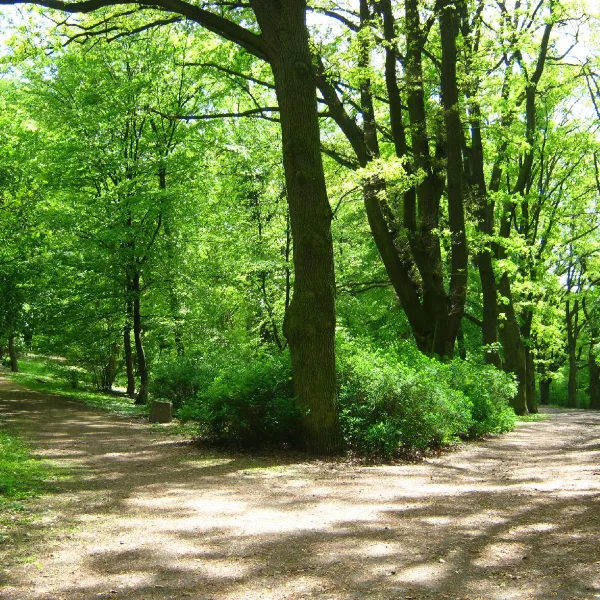
Two parks were created on former cemetery land and both are free. One is large and wooded, the other small, on a hill, with gravestones gathered in a lapidary.
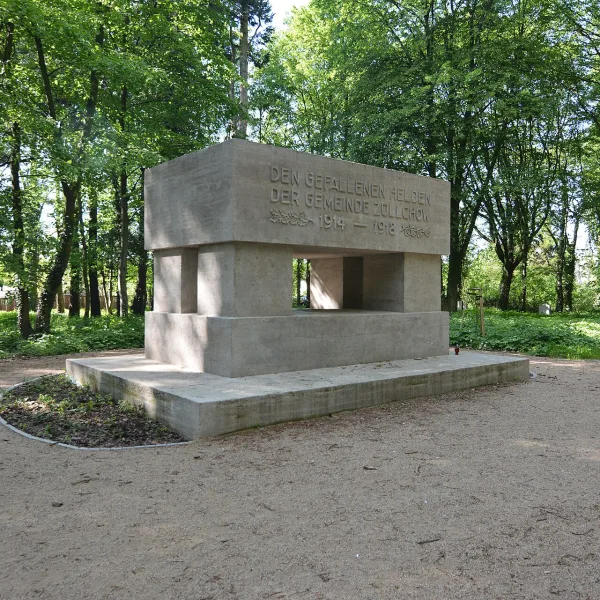
Park Brodowski (Brodowski Park) spreads across the Warszewskie Hills, along ulica Słowicza, and covers between 7.5 and about 10 hectares. It was laid out in the 1970s on the site of the ruined Brodowski Cemetery, and today it has protected monumental trees. The small Cmentarz przy ul. Ostrowskiej w Szczecinie (the cemetery on ulica Ostrowska) is a former Protestant cemetery of 3.31 hectares, founded in 1912. The site became a city park with a lapidary in 2016 and has been entered in the register of monuments since 1978. A memorial to those who fell in 1914-1918 also survives. Visit these places in a contemplative mood, as they recall former burials.
What historic architecture is there in Żelechowa?
The standouts are a cemetery chapel turned into a church and a neo-Baroque town hall from the early twentieth century. Both date from the time when Żelechowa was a separate municipality under the German name Züllchow.
Kościół Matki Bożej Ostrobramskiej w Szczecinie (Church of Our Lady of the Gate of Dawn) on ulica Słowicza is a former Protestant cemetery chapel from 1911, designed by the Szczecin architect Emil Gravert. The plastered brick building stands on a stone foundation, and a small turret with a cross sits on the roof slope. It has served Catholics since 1945. A little further on, at Robotnicza 26, stands Ratusz dawnej gminy Żelechowa w Szczecinie (the town hall of the former Żelechowa municipality), brick-built and neo-Baroque, from 1913-1914. The register of monuments records it under the name „d. ratusz”.
Who was Sophie Tilebein and where is her bench?
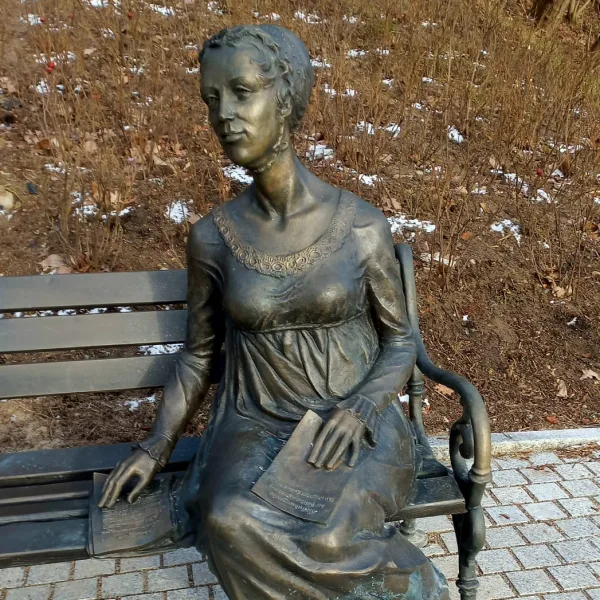
The bench stands at the junction of ulica Robotnicza and ulica Dębogórska, at the edge of a park. It shows a German artist who set up a foundation to help poor girls.
Ławeczka Sophie Caroline Auguste Tilebein w Szczecinie is a life-size bronze sculpture showing its subject in period dress. In one hand she holds a sheet of music, a nod to her talent, and the monument also recalls the Tilebein Stiftung foundation. It was paid for from the civic budget. Together these points make up things to do in Żelechowa: two parks, a church, a town hall and one sculpture.
Frequently asked questions
Are the sights in Żelechowa paid?
Brodowski Park, the cemetery on ulica Ostrowska and the Tilebein bench are marked as free. The church and the town hall are viewed from outside.
Where is the forest in Żelechowa?
Brodowski Park in the Warszewskie Hills on ulica Słowicza has a wooded character. It holds monumental trees.
What is the lapidary on ulica Ostrowska?
It is a place where elements of old gravestones are gathered, in a park created in 2016 on a former Protestant cemetery. The park lies on a small hill of 3.31 hectares.
What was Żelechowa called in the past?
Until 1946 the estate bore the German name Züllchow. The building name „town hall of the former Żelechowa municipality” refers to a separate municipality from those years.

 Parks and nature