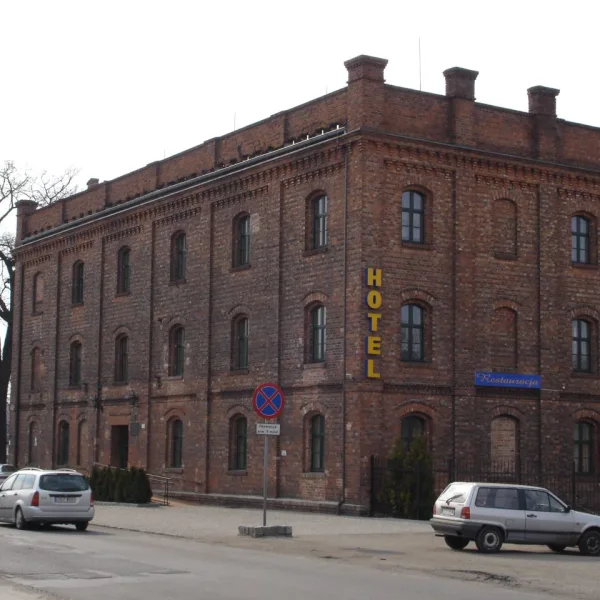
Monuments in Stargard include brick walls with gates and towers, a Gothic town hall, an old granary and a Neo-Romanesque water tower.
Stargard has a compact Old Town that you can walk round in an afternoon, and a few important buildings stand just outside the walls. The list combines the fortifications, the houses around the Old Town Market Square, former industrial buildings and sites on the outskirts, so it helps you plan a route of your own.
Which monuments in Stargard should you see first?
Start with the fortifications, because they give the town its character. Four medieval gates and several brick towers form a ring around the Old Town, and together with the Collegiate Church of St Mary they are protected as a Historic Monument. From the walls it is an easy walk to the Old Town Market Square and the town hall.
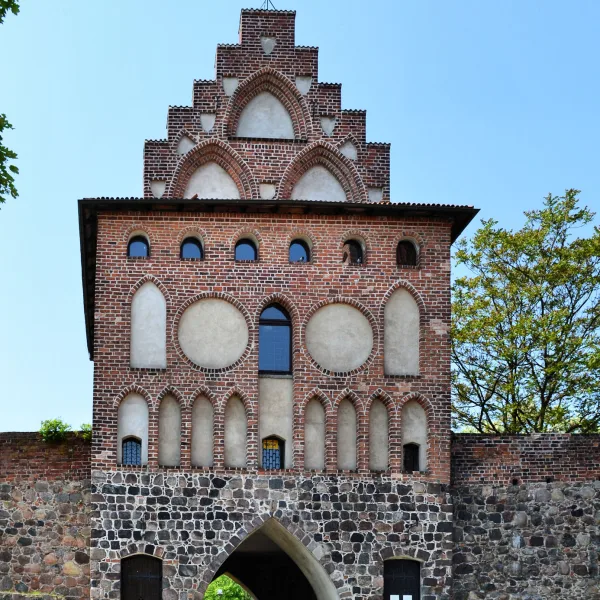
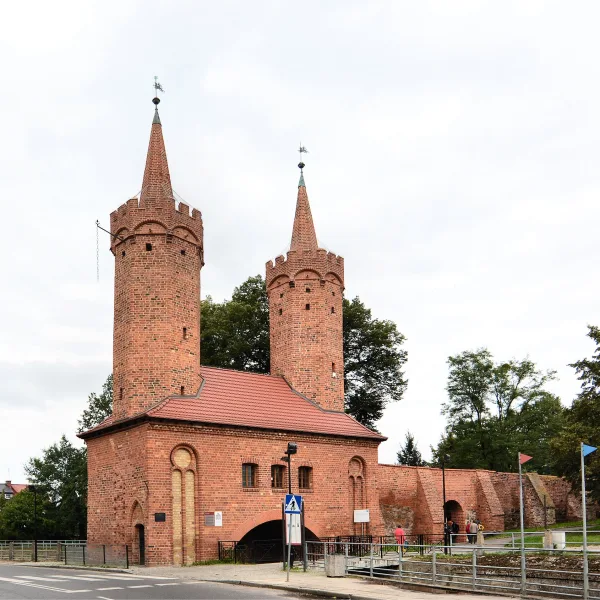
A good starting point is the Brama Pyrzycka w Stargardzie (Pyrzyce Gate in Stargard) at Mieszka I 1a. Its lower part, made of stone, dates from the 13th century, while the three-storey brick upper section was added in 1439. Piastowski Park lies next door, and further sections of the walls run along the green belt. If you want the history of the town in one short walk, this is the place to begin.
The Collegiate Church of St Mary has no separate card in this selection, but its two towers and the legend of the councillors' quarrel are covered in an article about the Collegiate Church in Stargard. It is worth reading before you reach the Market Square, as the church tower can be seen from many parts of town. Other churches are collected in the category Kościoły i klasztory: Stargard.
Which gates and towers make up the Stargard fortifications?
Four town gates and several towers still stand, and each has a different shape and a different use today. Some now serve entirely new purposes, from an art gallery to an archive, so you will mostly see them from the outside.
Gates
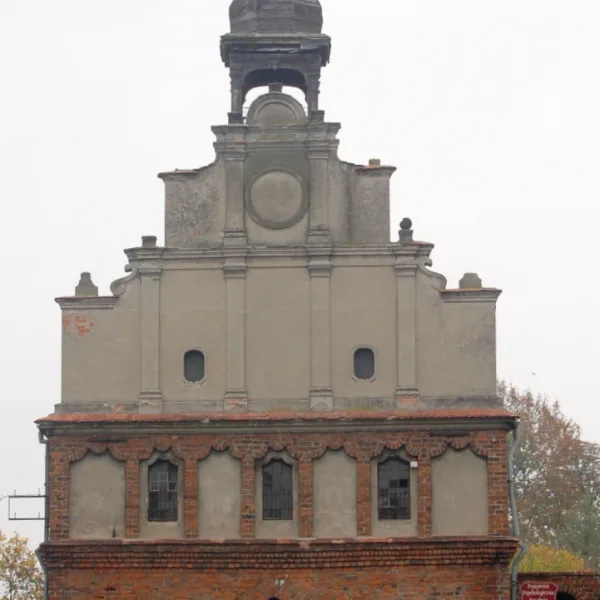
Brama Wałowa (Wałowa Gate) stands in the north-eastern part of the fortifications, at Bolesława Chrobrego 24, on the road towards Maszewo. It is 19.4 m high, was rebuilt after the Second World War and now houses the municipal art gallery. Sources give different dates for its construction, so the exact dating remains uncertain.
Brama Młyńska w Stargardzie (Mill Gate) at Portowa 6 spans the Mill Canal. It is a two-storey structure with two octagonal towers and battlements. Its outline once appeared on the town seals and in the coat of arms. The gate's link to water and to the canal that powered the town is described in an article on the Mill Gate.
Towers
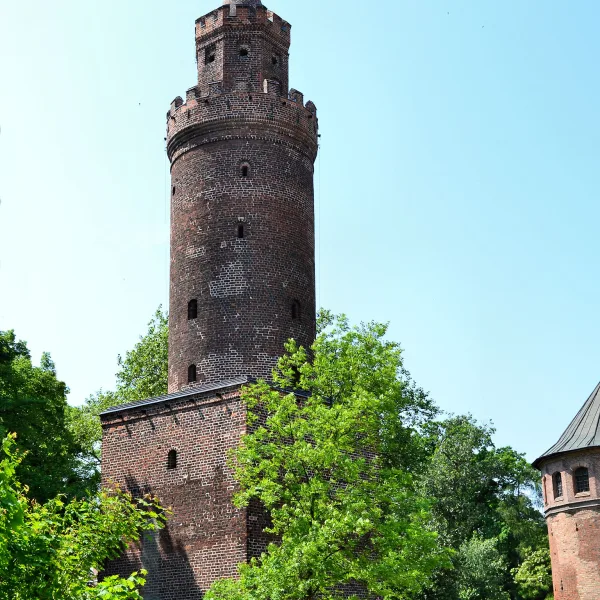
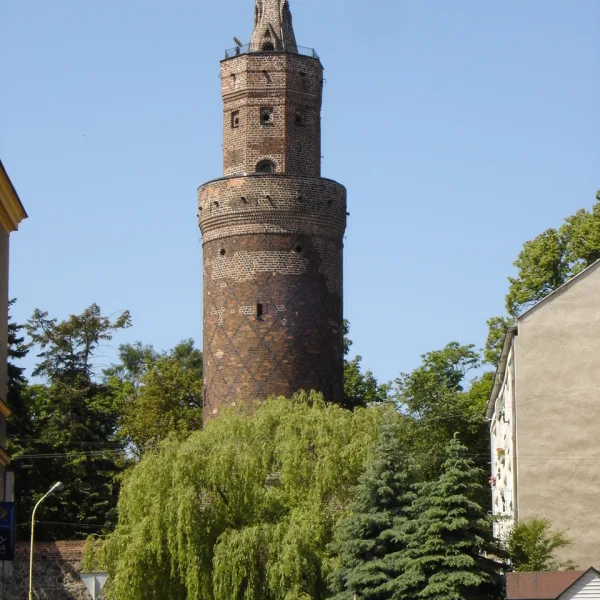
The tallest, Baszta Morze Czerwone (Red Sea Tower), is 34 m high and has three terraces. It stands in the Old Town, at the crossing of Warowna and Władysława Łokietka streets, and dates built in the later 1300s. The object description mentions local tales behind the name.
Baszta Tkaczy (Weavers' Tower), also called the Ice Tower, was built in the mid-15th century and is 31 m high. The facade is decorated with glazed brick laid in a chequerboard, and the top is crowned with battlements and a brick cone. It resembles the Red Sea Tower but is slightly lower.
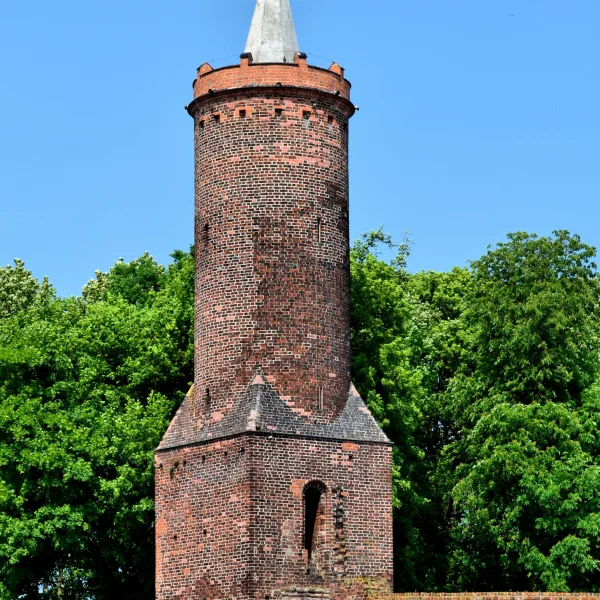
Baszta Białogłówka (Białogłówka Tower) rises above a bend of the River Ina, next to the Wałowa Gate, in the oldest part of the town, on the edge of a former stronghold site. It is about 30 m high, with a white cone on top, and it also lies on the European Route of Brick Gothic. Inside there are six storeys.
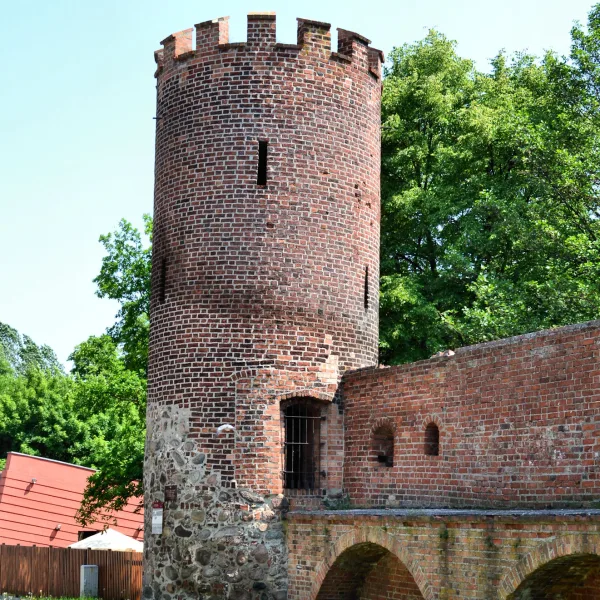
Baszta Jeńców (Prisoners' Tower), also known as the Little Powder Tower or the Smiths' Tower, is round and clearly lower, at 13 m. It stands on Strażnicza street, by the Ina, and has four levels with firing slits. It is a good example of what the smaller elements of the fortifications looked like.
What is there to see around the Old Town Market Square?
Around the Square stand buildings that were rebuilt after wartime destruction, so they are easy to mistake for newer ones. Look closely at their Gothic and Baroque details. For a wider comparison with other towns in the region, read the article on town halls in the western part of the region.
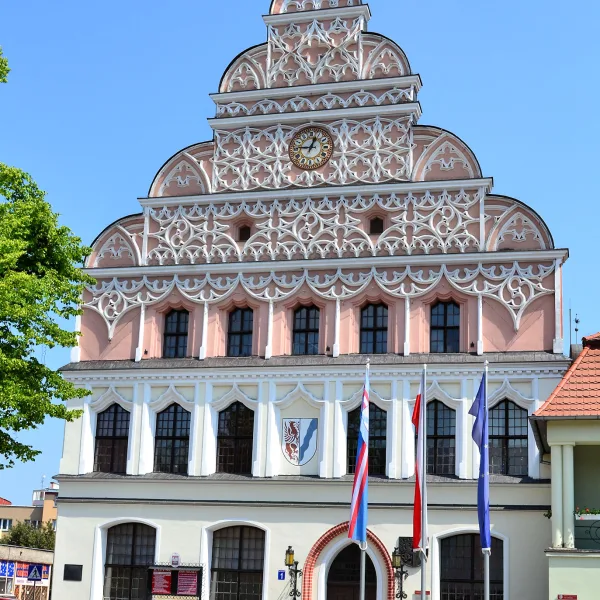
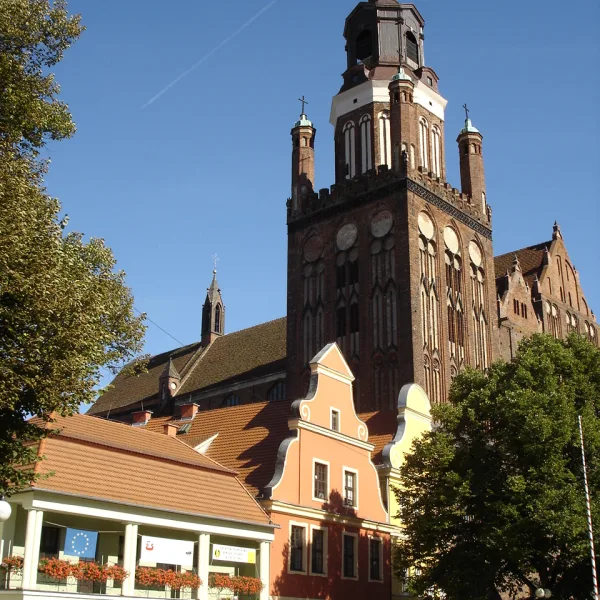
Ratusz w Stargardzie (Stargard Town Hall) at Rynek Staromiejski 1 is a Gothic brick hall dating from the late 1300s, reconstructed between 1948 and 1961. The Town Council still sits there, and the building has a clock with a noon bugle call. On the same spot there once stood the Merchants' House, a single-storey hall from the 13th century.
Next door, at Rynek Staromiejski 3, stands the Odwach w Stargardzie Szczecińskim (Guardhouse). This early 18th-century Baroque guardroom has arcades and a mansard roof. A museum now occupies it together with the adjoining house, so it also suits bad weather.
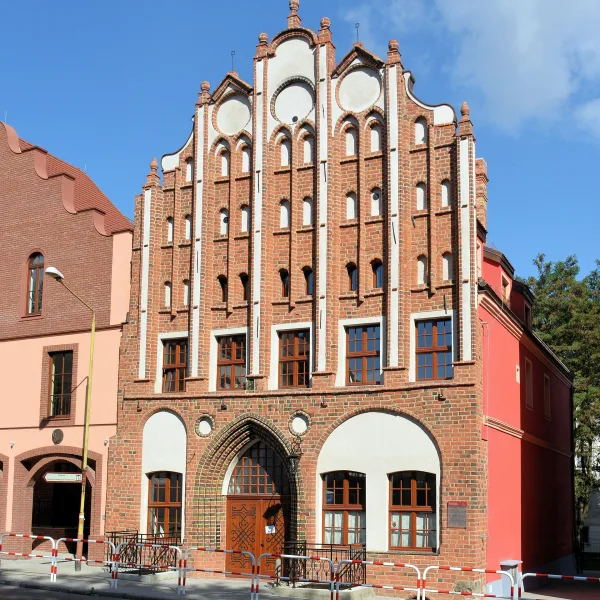
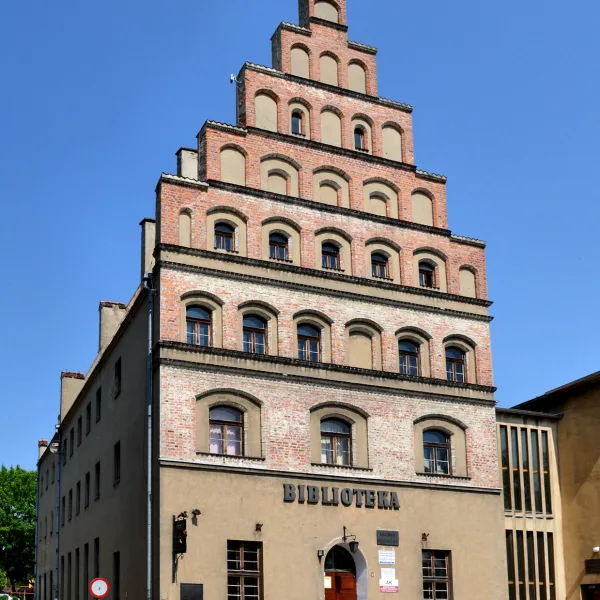
Dom Protzena (Protzen House), Kazimierza Wielkiego 13, is a Gothic burgher house of the early 1400s next to the east side of the collegiate church, ranked among Poland's finest, and used today by a music school. A similar townhouse is Dom Rohledera (Rohleder House), Mieszka I 1, now the seat of the Stargard Library. Its stepped gable is typical of Hanseatic towns, and the house was restored in 1973 after wartime damage. For the Hanseatic thread of the town, read the article on the Hanse in West Pomerania.
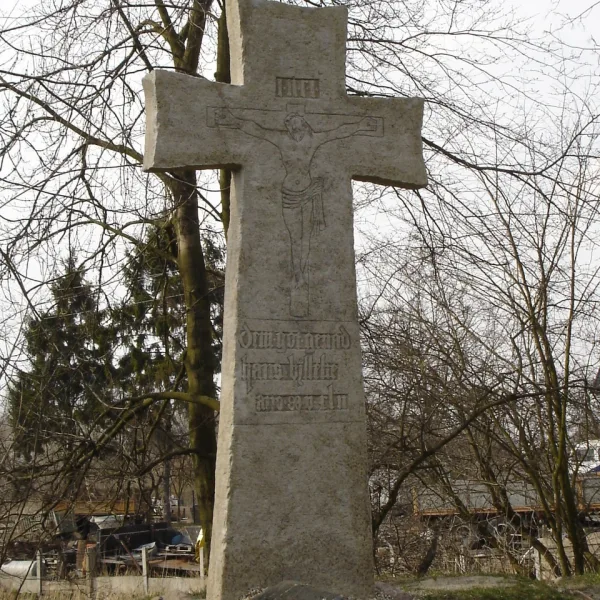
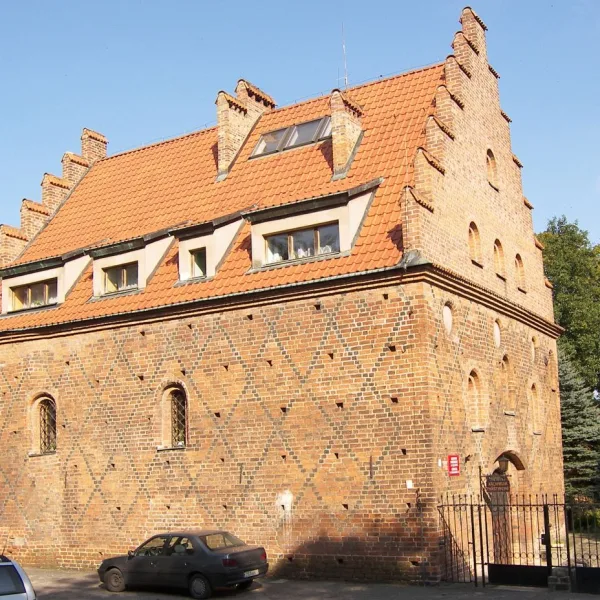
Arsenał w Stargardzie (Arsenal) at Basztowa 2 is a Gothic brick armoury raised around 1500 and reconstructed in the mid-1970s. Rows of dark-brick diamonds run across the walls, as on the nearby Red Sea Tower. The State Archive works inside. Nearby is also the Krzyż pokutny w Stargardzie Szczecińskim (Penitential Cross) dated 1542, cut from one piece of limestone and 3.77 m high.
Which industrial heritage sites are worth seeing in Stargard?
Stargard stood by the water and on the grain route, which shows in its buildings: the granary, the mill and the water tower tell of trade, production and supply. All three have new uses today but have kept their shape.
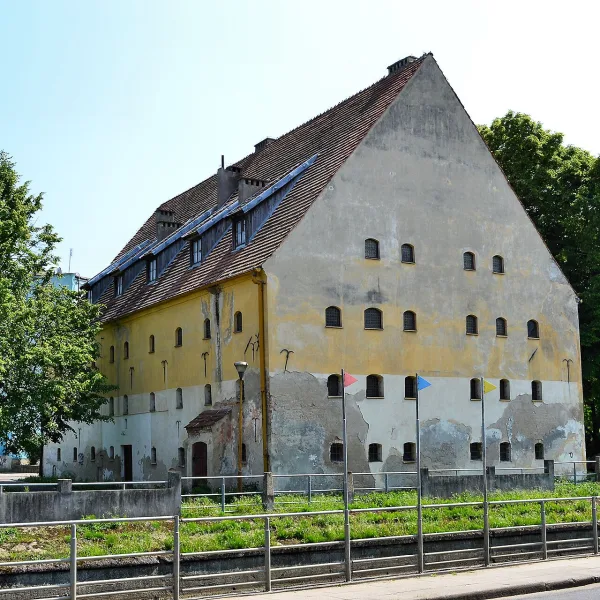
Spichlerz w Stargardzie (Granary) at Spichrzowa 1 has stood beside the Młynówka since 1685. Wikipedia calls it the oldest of four such granaries in West Pomerania. A restaurant operates there now, and grain from around Stargard and Pyrzyce once left from this spot on the Ina.
Mały Młyn w Stargardzie Szczecińskim (Small Mill) at Gdańska 5 was put up in 1894 in red brick, has two floors and sits on the Krąpiel canal, its source of power. Grinding continued until 1999, and guests now stay in it as a hotel.
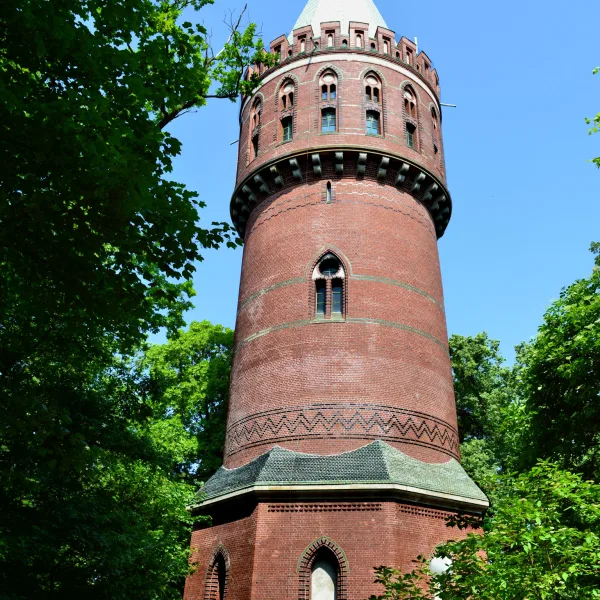
Wieża ciśnień w Stargardzie Szczecińskim (Water Tower) stands in Chrobry Park, outside the medieval walls. It was built in 1896-1897 as a Neo-Romanesque structure 65 m high, with a tank for 500 m³. The chequerboard on its facade echoes the nearby Red Sea Tower, which is easy to spot in photos. The greenery around it is covered in the piece on Stargard's parks, while the category Parki i przyroda: Stargard lists the green spaces.
Which monuments lie outside the Old Town?
Three places are worth a look beyond the walls: Panorama Park, the junction by the 15th Meridian roundabout and the Giżynek estate in the west of town. The first two lie close to the main routes, while the third needs a separate trip.
Dom Strzelecki (Shooting House) at Ochronna 9, also known as the Panorama Palace, is a neoclassical complex of three buildings from 1861, set on the edge of Panorama Park. Until 1945 it was run by the Marksmen's Fraternity, and today the restored building is used for balls and banquets.
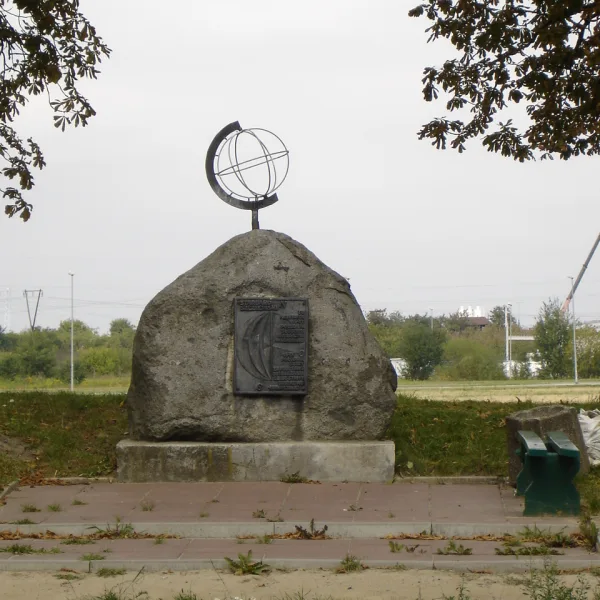
Pomnik 15. Południk (15th Meridian Monument) stands on Szczecińska street, near the roundabout of the same name. It is an interwar boulder with a plaque marking Stargard's position on the 15th degree of east longitude. The object description points out that the real meridian runs about 200 metres from the monument.
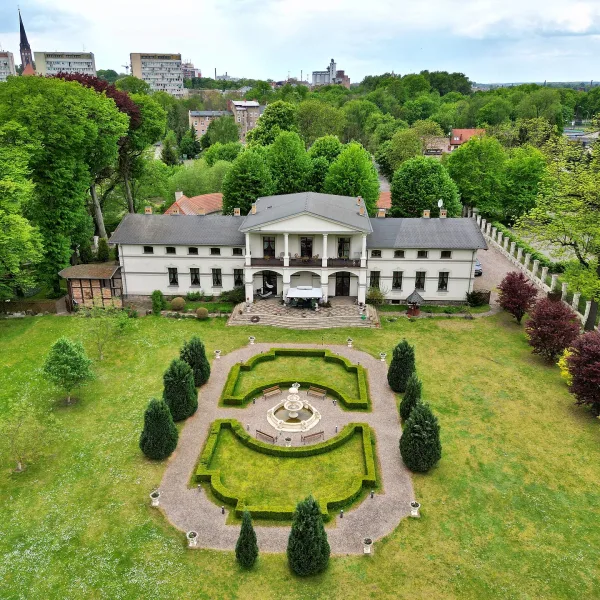
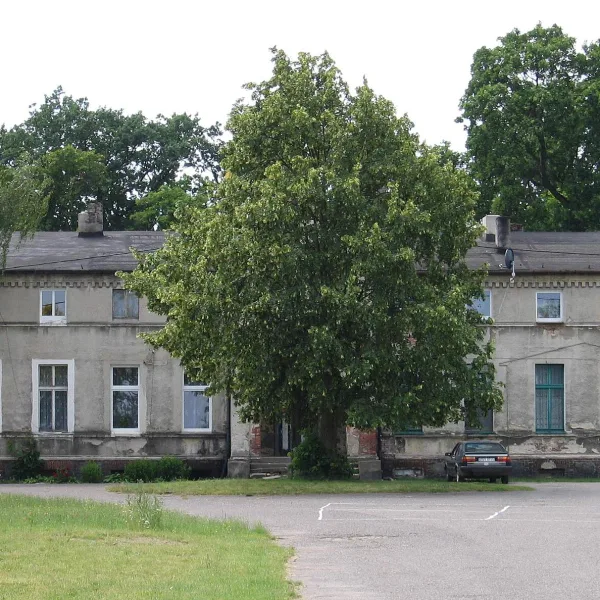
Pałac w Giżynku (Palace in Giżynek) stands at Giżynek 6. A brick Neo-Gothic palace of the 19th century, it is listed in the register of monuments. It suits visitors who like less obvious places.
How to plan a walk round the monuments of Stargard?
The simplest option is a loop round the Old Town: the Pyrzyce Gate, the walls and towers, the Market Square, the arsenal and the granary. For most visitors that fills half a day, and another half day goes on the parks and the sites outside the walls.
A ready-made route with a plan for bad weather is described in the article Weekend in Stargard. If you are also interested in the town's museums, see the category Muzea: Stargard. A wider list of monuments across the region is on the page Zabytki, and the whole town is covered under Stargard.
Frequently asked questions
How many hours should you plan for Stargard's heritage?
The Old Town with its gates, towers and Market Square takes half a day of relaxed walking. Sites outside the walls, such as the water tower, the Shooting House or the palace in Giżynek, add a few more hours, especially if you travel between them.
Which Stargard monuments belong to the Historic Monument?
According to the object descriptions, the Historic Monument covers the Collegiate Church of St Mary together with the town's defensive walls. That means the belt of gates and towers, including the Mill Gate, the Pyrzyce Gate, the Białogłówka Tower and the Red Sea Tower.
Which Stargard monuments can you only see from outside?
The arsenal houses the State Archive and the Protzen House a music school, so they are usually seen from the street. The Wałowa Gate holds an art gallery and the granary a restaurant, though the entry rules of each site are worth checking separately.
Where can you see former industrial buildings in Stargard?
Visit the granary on Spichrzowa street, the Small Mill on Gdańska street and the water tower in Chrobry Park. The first two stand by the water, and the third lies outside the medieval walls.

 Historic sites