Townhouses in West Pomerania: the Loitz House and Art Nouveau buildings by Plac Grunwaldzki in Szczecin, plus Gothic houses in Stargard and Darłowo.
Nine historic town houses, from late Gothic to Art Nouveau, to see on a walk. Some now serve as schools or libraries, so they are usually viewed from outside, on the way between neighbouring addresses.
Which townhouses in Szczecin to see first?
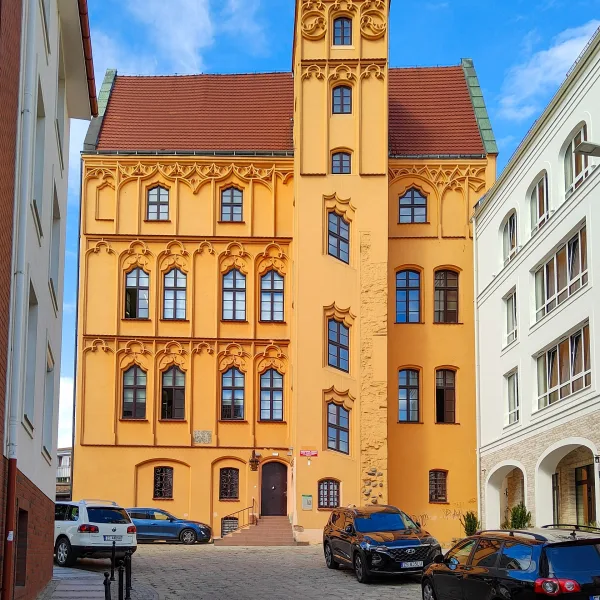
Start with Kamienica Loitzów (Loitz House) at ul. Kurkowa 1: a late Gothic building put up in the mid-16th century as the home of a banking family, now used by an art school. Then head to the centre, where 19th and early 20th century buildings stand. Every address in the city is gathered on the page about townhouses in Szczecin.
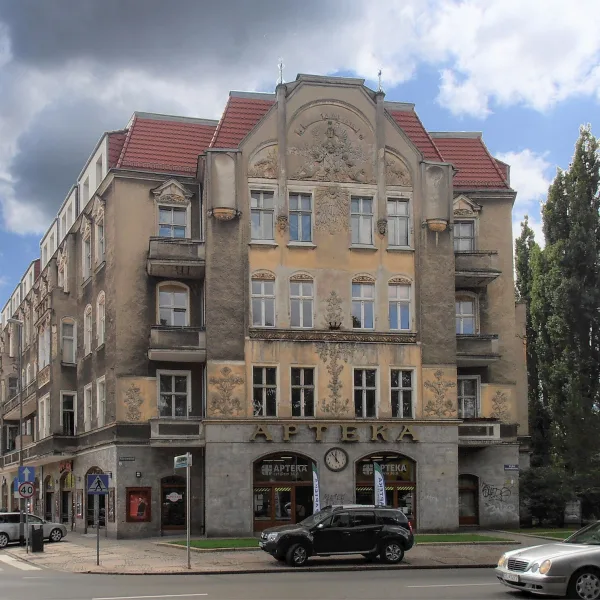
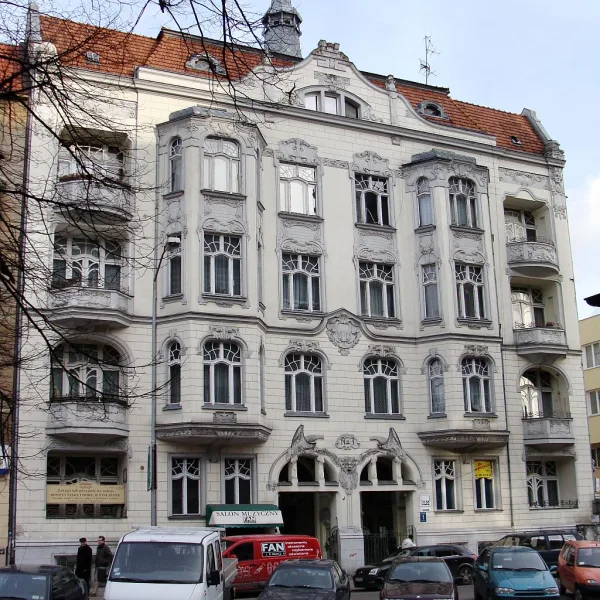
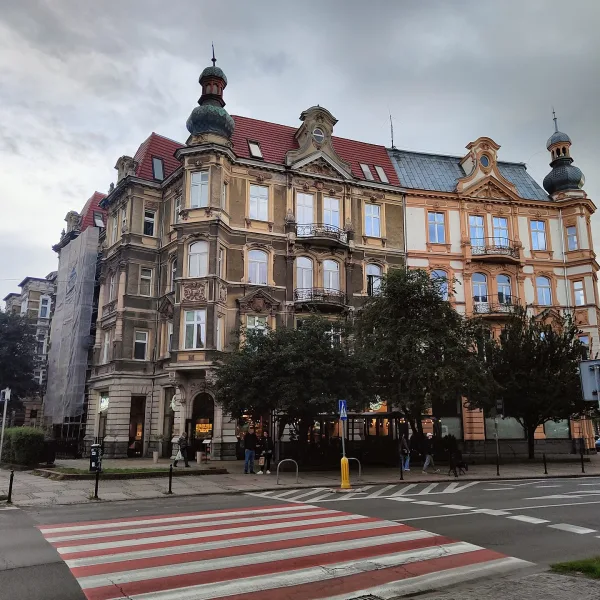
Two townhouses stand by Plac Grunwaldzki. Kamienica Augusta Mintza (August Mintz Townhouse) from 1898, stands on the corner by the square, and its ground floor houses a pharmacy with period furnishings. Next door, at ul. Śląska 38, is Kamienica Wilhelma Gramtza (Wilhelm Gramtz Townhouse) from the early 1890s: putti figures sit above the gate, and a corner oriel crowns the building.
Art Nouveau and pre-war buildings in central Szczecin
Few pre-war buildings survive in the very centre, and the handful that do stand out by their detail. That is why the townhouses are best seen as a route from address to address.
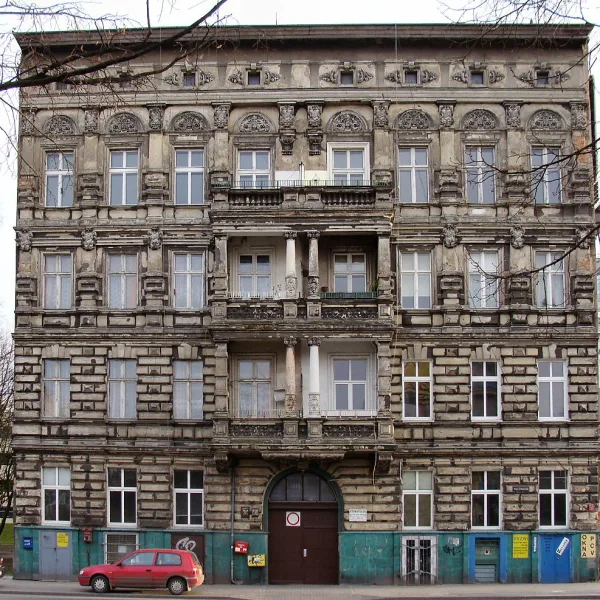
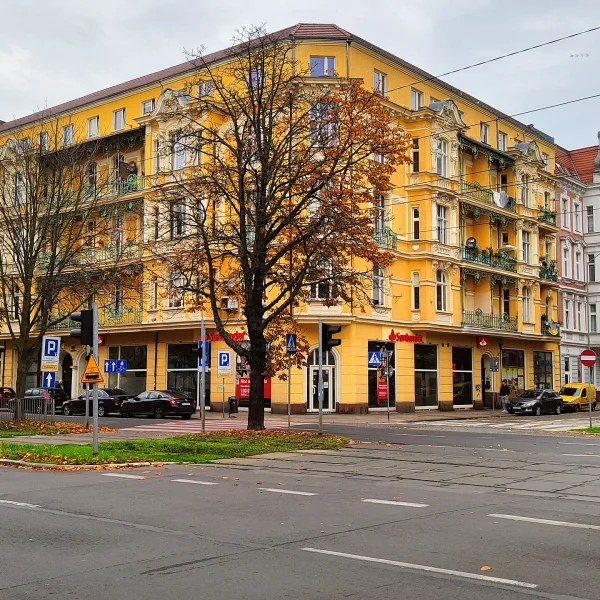
Kamienica przy ul. św. Wojciecha 1 is an Art Nouveau house of the early 1900s, with a courtyard, a rear wing and a fountain inside. Piłsudskiego 7 has a facade completed in 1897, with oriels and female figures carved on the third floor, and after the war became the only house left standing on that side of the street. Malczewskiego 34, nicknamed the Sandwich (Kanapka), built on a U-shaped plan, is the only pre-war townhouse left in its block and has been entered in the register of monuments.
Gothic townhouses of Stargard and Darłowo
Outside Szczecin, townhouses are former homes of wealthy merchants and shipowners, often rebuilt after the destruction of 1945.
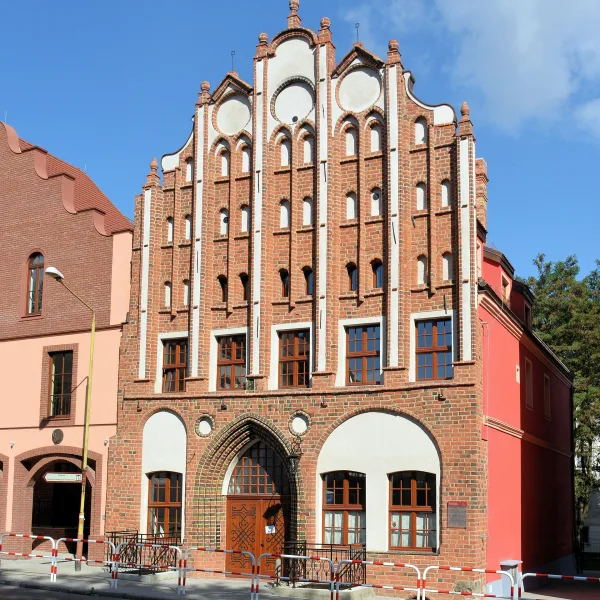
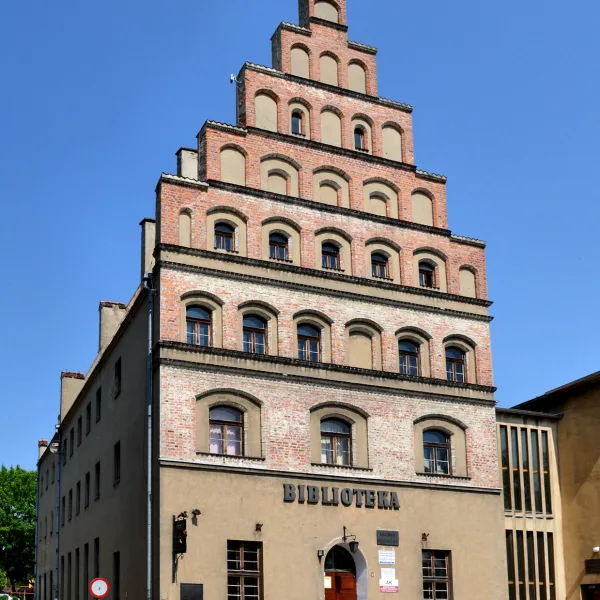
In Stargard two houses stand by the collegiate church. Dom Protzena (Protzen House) at ul. Kazimierza Wielkiego 13 is a Gothic burgher house from before the mid-15th century, now occupied by a music school. Dom Rohledera (Rohleder House) at ul. Mieszka I 1 has a stepped gable characteristic of Hanseatic towns and holds the Stargard Library, so you can go inside.
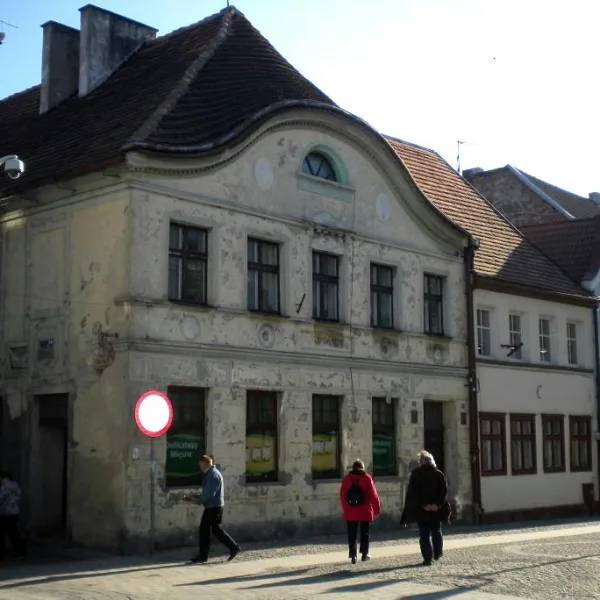
In Darłowo, Kamienica Hemptenmacherów (Hemptenmacher Townhouse) at ul. Powstańców Warszawskich 51 has a plaque with a cog ship on its side wall because it belonged to a family of shipowners, and its gable is decorated with reliefs. It stands right by Plac Kościuszki.
How to plan a townhouse walk
The easiest way is to combine buildings from one town, because the addresses lie close together. In Szczecin that means a route from the Old Town, where the Loitz House stands, to Plac Grunwaldzki with the Mintz and Gramtz townhouses and on to Piłsudskiego 7.
Most of these buildings are working houses, so you view them from outside, and interiors are open only where an institution operates, such as the pharmacy at Mintz or the library in the Rohleder House. Bring a camera, because the details are the draw: oriels, putti, gables and sculptures.
Frequently asked questions
Which Szczecin townhouse is worth seeing?
The Loitz House at ul. Kurkowa 1, one of the few late Gothic buildings preserved in the city, and the townhouses by Plac Grunwaldzki.
Where is the Art Nouveau townhouse in Szczecin?
At ul. św. Wojciecha 1, where behind the gate lie a courtyard with a fountain and a rear wing.
Can you go inside the townhouses?
Some of them. The Mintz townhouse has a pharmacy with period furnishings, and the Rohleder House in Stargard holds a library. The Loitz House is a school, so it is best admired from the street.
Where to find Gothic townhouses outside Szczecin?
In Stargard, by the collegiate church (Protzen House and Rohleder House), and in Darłowo, where the Hemptenmacher Townhouse stands.

 Historic sites