Historic sites in West Pomerania: city gates and a ducal castle in Szczecin, the towers of Stargard, Kołobrzeg town hall and palaces in the countryside.
This is a guide for anyone who wants to see the region's historic architecture and is not sure where to begin. There are more than three hundred sites, from Gothic fortifications and town halls to castles and manor houses that are easiest to reach by car. Most of them are in Szczecin, but Stargard and a handful of small towns along the Rega and the Parsęta are just as rewarding.
Which historic sites in West Pomerania should you see first?
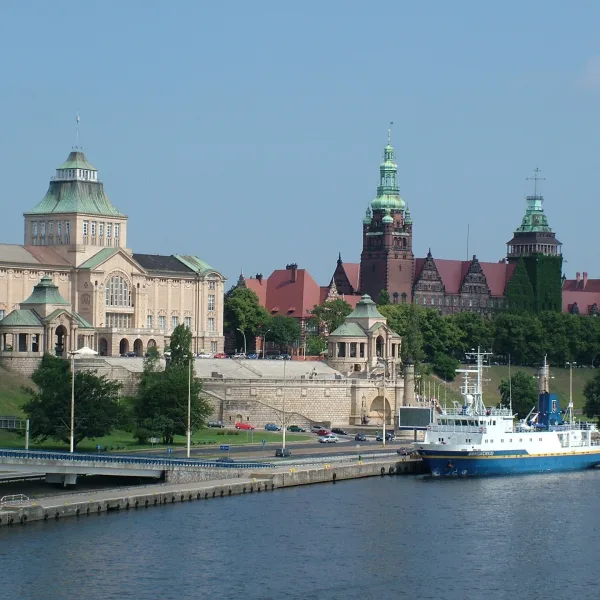
The simplest start is Szczecin and its riverside skyline: the Castle of the Pomeranian Dukes, the Wały Chrobrego (Chrobry Embankment) and the Old Town Hall. After that, head to Stargard, where the walls and towers form a coherent ensemble, and then on to Kołobrzeg, Trzebiatów or the island of Wolin.
If you have one day, pick a single town and walk around it. With a weekend, you can combine Szczecin with Stargard and spend the second day on the coast. Country palaces and castles are best left for a car trip, because they lie far apart and you can rarely go inside.
Which historic sites in Szczecin are worth seeing in the Old Town and along the Oder?
The Old Town and the Oder embankment hold most of the key historic sites in Szczecin, all within walking distance of each other. Half a day is enough to take in the castle, the town hall, two city gates and the terrace above the river.
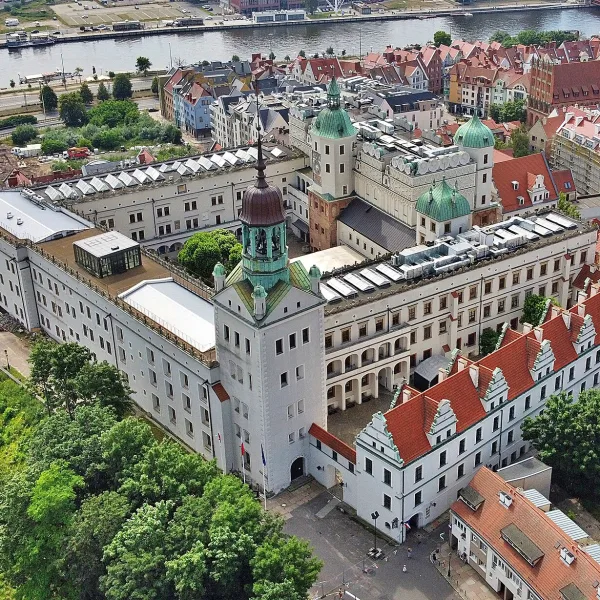
A good starting point is the Castle of the Pomeranian Dukes at ulica Korsarzy 34. It stands on Castle Hill above the Oder and was the seat of the Griffin dynasty. Inside there is a ducal crypt and a viewing tower, and the castle also houses cultural institutions. At the foot of the hill, at ulica Panieńska 47, stands the Maiden Tower (Baszta Panieńska), also called the Tower of Seven Cloaks. It is a Gothic remnant of the 14th-century fortifications, reconstructed in 1964.
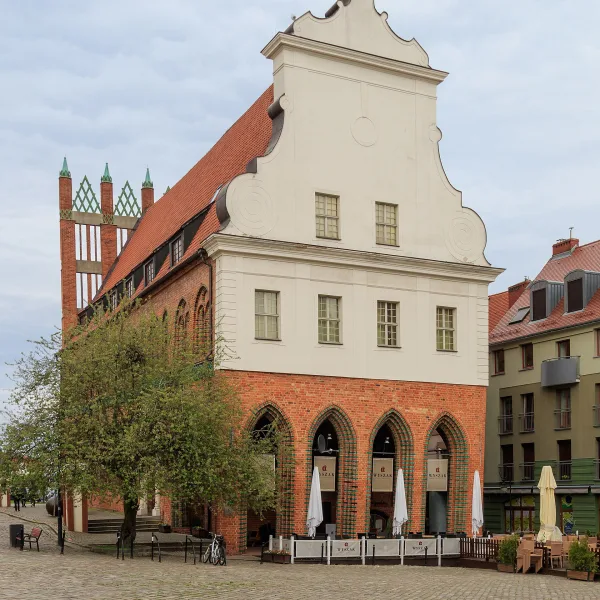
A little further on, by Rynek Sienny, rises the Old Town Hall, a Gothic building from the 15th century rebuilt in 1972-1975. It now houses the Museum of the History of Szczecin, so you can visit it inside as well.
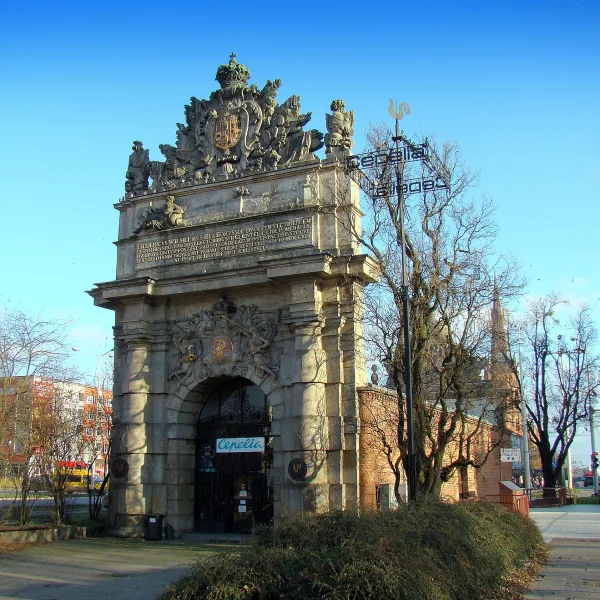
Two gates of the former Prussian fortress show what the city looked like in the 18th century. The King's Gate (Brama Królewska) on plac Hołdu Pruskiego was built in 1725-1728 and has gables with sculptures of Mars and Hercules. The Port Gate (Brama Portowa), formerly the Berlin Gate, stands on the square of the same name. Look for the Latin inscription, the Prussian coat of arms and the panorama of the city in the attic.
Chrobry Embankment and the buildings above the river
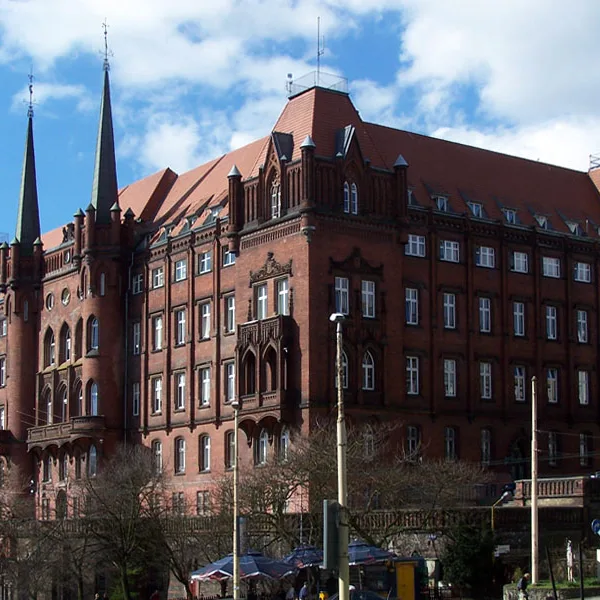
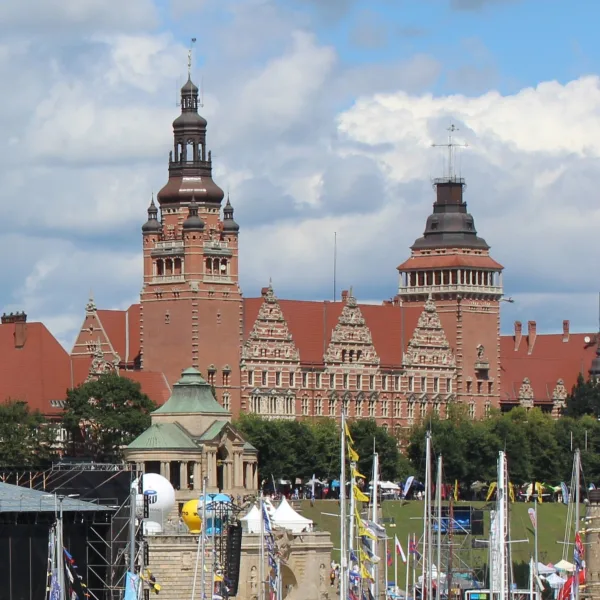
The Chrobry Embankment is a viewing terrace about 500 metres long, built in 1902-1921 together with the buildings of a museum, the voivodeship office and a maritime university. From the terrace you look out over the Oder and the riverside panorama. At Wały Chrobrego 4 you will find the Voivodeship Office building, a complex of three connected buildings from 1906-1911 with a 72-metre tower and a figure of a sailor.
What can you see in Szczecin beyond the Old Town?
Outside the Old Town, the historic sites of Szczecin have a different character: neo-Gothic, Art Nouveau tenements, former government buildings and schools. They deserve a separate walk through the Centrum and Nowe Miasto districts.
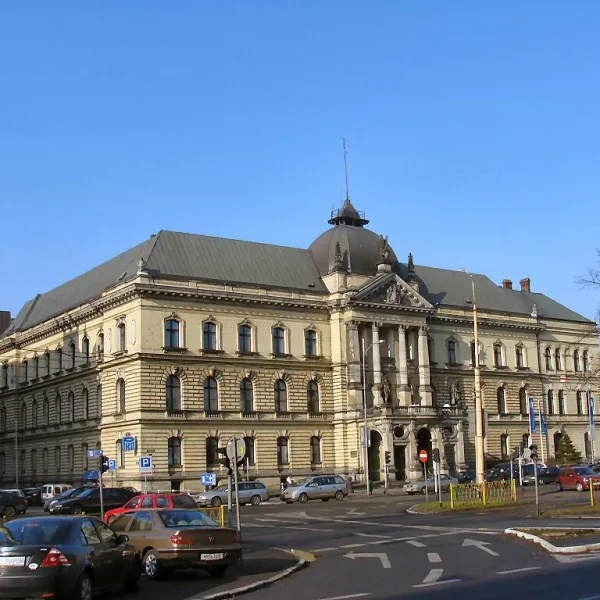
On plac Batorego stands the Red Town Hall (Czerwony Ratusz), a neo-Gothic building from 1875-1879 named after its brick facade. It now holds offices of state institutions, so you view it from outside. The same goes for the State Archive at ulica św. Wojciecha 13: the brick building of the former Prussian archive, dating from 1901, still serves its original purpose.
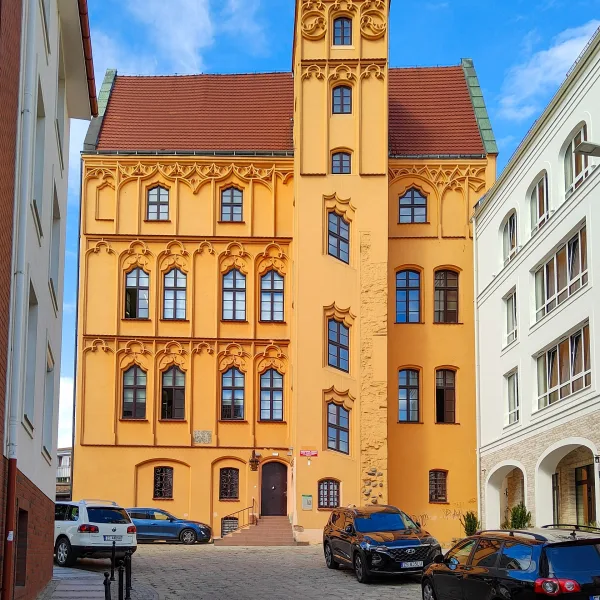
Lovers of tenement houses will find two good examples. The tenement at Malczewskiego 34, built in 1885-1888, is laid out in the shape of a U and is the only pre-war building left in its block. The tenement at Piłsudskiego 7 from 1897 is the only surviving building on the eastern side of that street, with oriel windows and sculptures of women on the third floor. The Loitz House (Kamienica Loitzów) at ulica Kurkowa 1 is a late Gothic townhouse of a banking family, built in 1539-1547 and now home to an art school.
Palaces around plac Orła Białego and Aleja Niepodległości
Several former palaces now serve educational purposes. The Palace Under the Globe (Pałac Pod Globusem) at plac Orła Białego 2 is a neo-Baroque building from 1890-1891 topped with a sculpture of a globe, and it houses the Academy of Art. Nearby stands the Velthusen Palace from 1778-1779, a former wine merchant's house, and since 1963 a music school. The third, the Palace of the Pomeranian Provincial Assembly at Aleja Niepodległości 40, is neo-Baroque from 1893-1895 and now houses the Music Faculty of the Academy of Art.
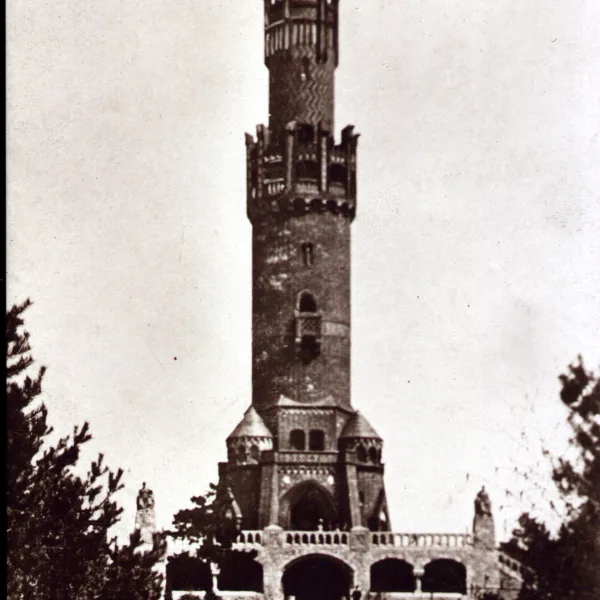
A separate trip leads to the Arkona Forest. The Quistorp Tower (Wieża Quistorpa) is the ruin of a viewing tower from 1900-1904. The tower itself is gone and you cannot climb it, but fragments of the walls still stand among the trees.
What historic sites does Stargard have, and why go there?
Stargard has a good dozen historic sites in this list and is the best place outside Szczecin for a walk along medieval walls. The towers and gates are only minutes apart, and some belong to a national monument of history.
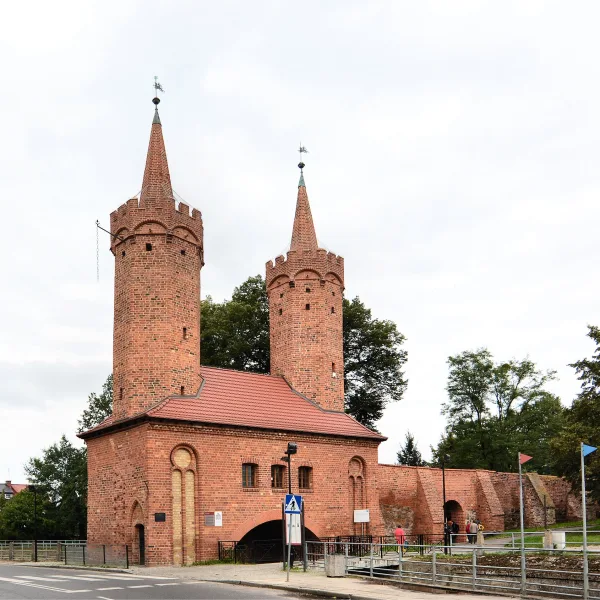
Start at the Mill Gate (Brama Młyńska) at ulica Portowa 6, one of four medieval city gates, standing over the Mill Canal. Then walk to the Białogłówka Tower from the first half of the 15th century. It stands by the Ina, is about 30 metres high and is topped by a white cone. Taller is the Morze Czerwone Tower: 34 metres, three terraces, second half of the 14th century. Only slightly lower, the Weavers' Tower (Baszta Tkaczy), also called the Ice Tower, is 31 metres tall and dates from the mid-15th century.
The round Prisoners' Tower (Baszta Jeńców), also known as the Small Powder Tower or the Smiths' Tower, was built around 1500 in the southern part of the fortifications. In the same area, at ulica Basztowa 2, stands the Arsenal, a Gothic building from around 1500, rebuilt in 1974-1977 and now home to an archive. For more on the town's history, read the article on Stargard after 1945. The full list is on a separate page: historic sites in Stargard.
Where can you find castles and palaces outside Szczecin?
Castles and palaces in the region usually stand in villages and small towns, and access varies: some are hotels, some are cultural centres and some wait for restoration. Before you set out, check whether you can get a close look.
Castles in towns and villages
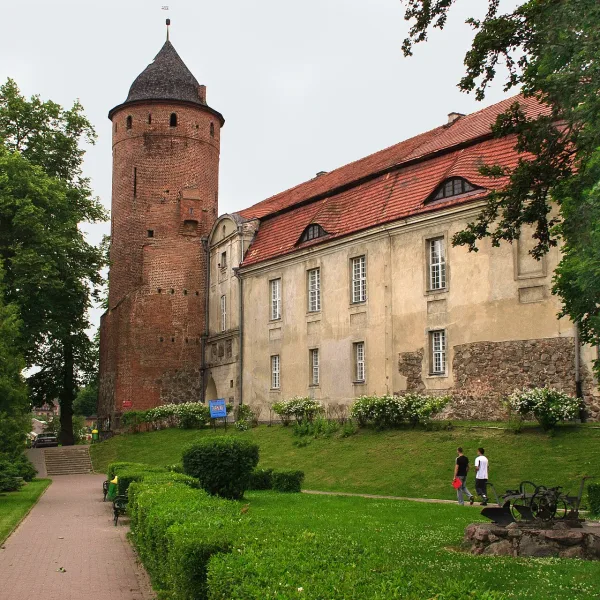
The castle in Świdwin is a Gothic stronghold on the Rega from the 13th and 14th centuries, rebuilt after a fire in 1962-1968. The castle in Tuczno stands on a steep hill on the isthmus between two lakes. It was rebuilt in 1966-1976 and is now a creative retreat with a hotel and restaurant. The Castle of the Pomeranian Dukes in Szczecinek was the medieval seat of ducal governors by Lake Trzesiecko. Today it is a conference centre, so it is best seen from the park and from the lake.
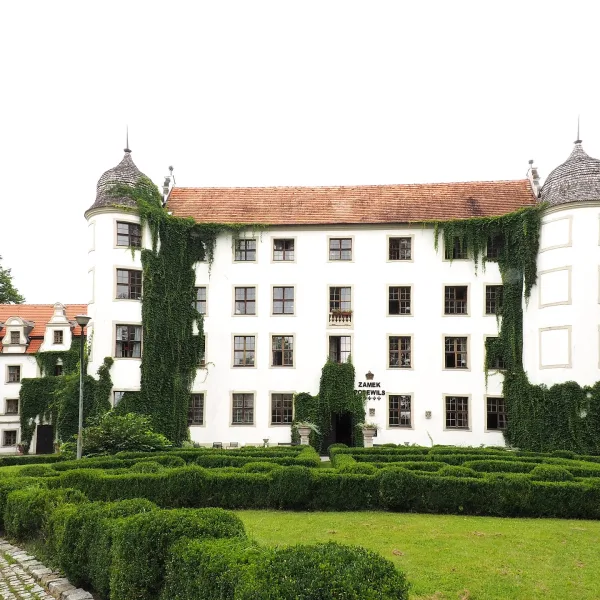
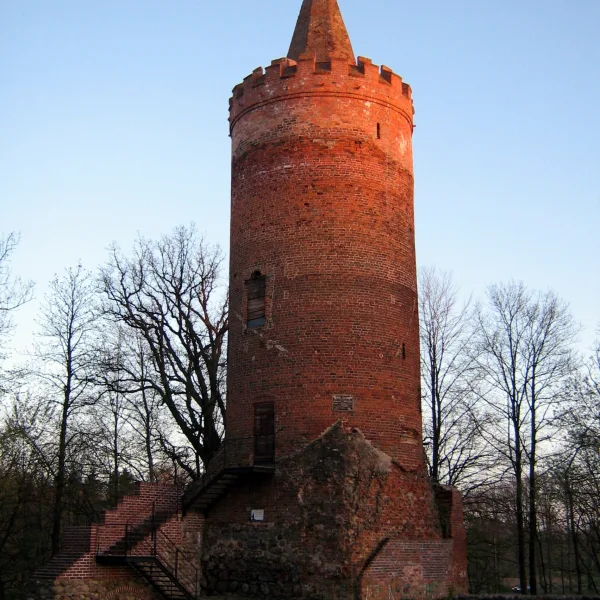
The castle in Swobnica from 1377-1382 is worth a visit for its Knights Hospitaller history; since 2011 it has belonged to the municipality of Banie and has a renovated roof and tower. The castle in Krąg on Lake Zamkowe was the residence of the Podewils family and is now a hotel, and visits need to be arranged with the owner. The same applies to the castle in Pęzino, a Gothic-Renaissance building in private hands, open by arrangement and on open days. The Castle Tower in Golczewo, the only surviving part of the castle of the Kamień bishops from the 14th century, is sometimes open in summer.
Palaces best seen from the outside
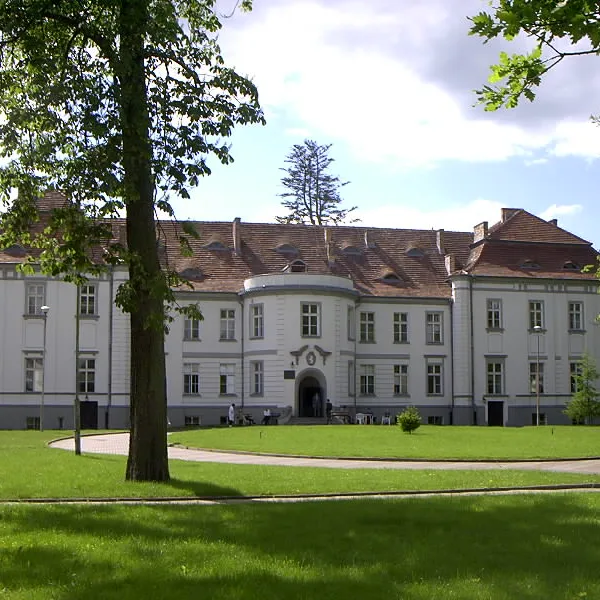
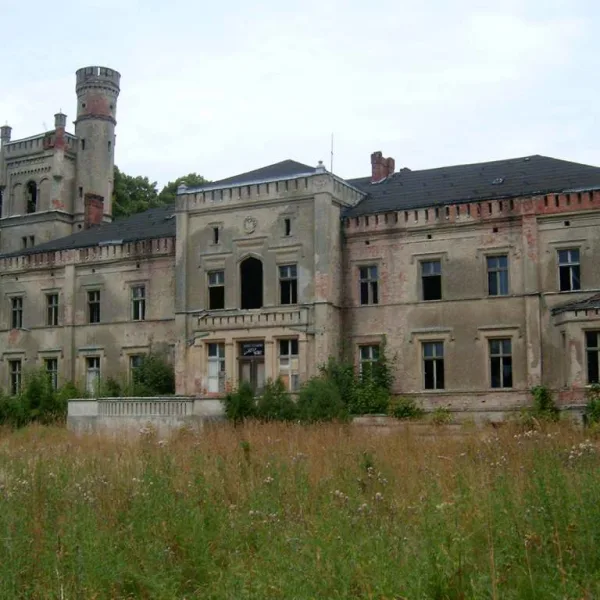
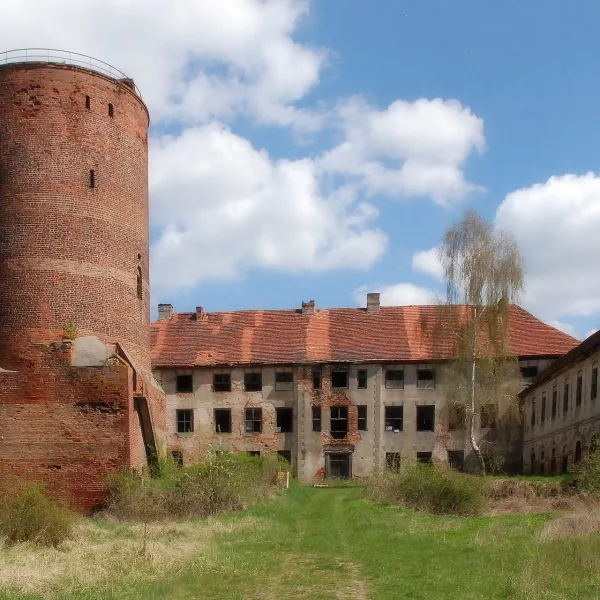
The palace in Dolsk is a neo-Gothic residence in the English style by a lake, rebuilt in 1828. After a fire in 1967 it stood as a ruin and has been under reconstruction since the 1990s. The palace in Lubiechowo from 1835 has octagonal corner towers and an English park of 11 hectares. The palace in Dreżewo, with the von Bonin coat of arms on its projecting bay, is falling into ruin, while the palace in Parsowo from the late 18th century, once the seat of the von Gerlach family, now serves as a social care home. The palace in Żytelkowo near Białogard has a mansard roof and stands in a park by the Liśnica river.
Which historic sites should you visit by the sea and in small towns?
Historic sites in coastal and small towns go well with a day at the beach, because they lie close to the centre. Many are towers and gates built into old walls.
In Kołobrzeg, see the town hall at Armii Krajowej 12, a neo-Gothic building of light red brick begun in 1829 to a design by Karl Friedrich Schinkel. Nearby is the Fuse Tower (Baszta Lontowa), the only fully preserved element of the town's medieval walls. In Świnoujście, Fort Gerhard from 1848-1859 is one of the best preserved Prussian coastal artillery forts. It houses a museum and you get there by boat. You will find the town on the page historic sites in Świnoujście, and Kołobrzeg on historic sites in Kołobrzeg.
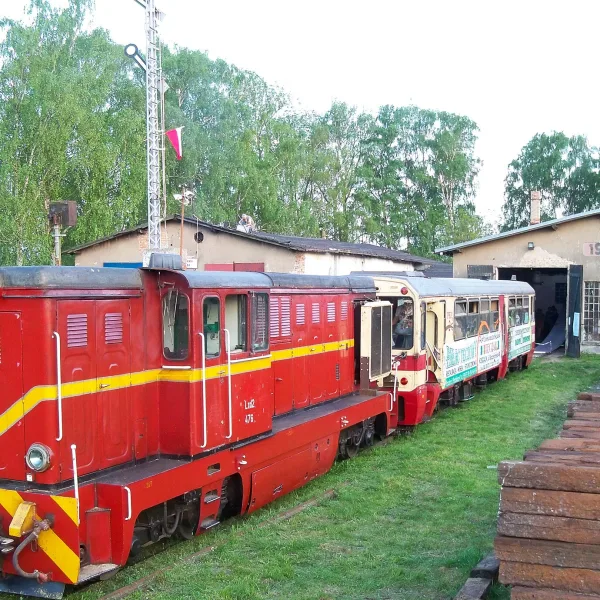
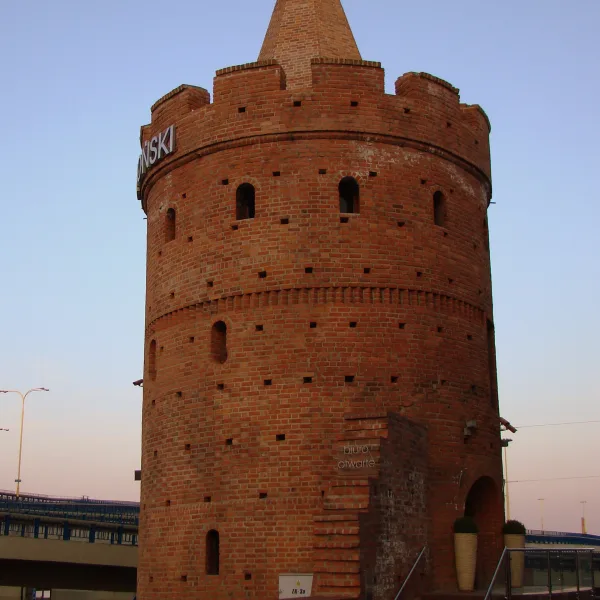
In Trzebiatów stands the Kaszana Tower, a cylindrical brick tower 21 metres high with a dungeon on the ground floor, open in the summer holiday period. Its name comes from a legend about a bowl of hot porridge. In Gryfice the Stone Gate from the 14th century has a clock with a bugle call and guest rooms. The narrow-gauge railway in Koszalin, with a 750 mm gauge, runs seasonally via Manowo to Rosnowo. Good background for such a trip is the article on Kamień Pomorski or on Wolin.
Which historic sites can you enter, and which can you only view from outside?
Most palaces and tenements in the region are viewed from the street, because they house schools, offices or private owners. Interiors are easy to enter at the castle in Szczecin, the Old Town Hall and Fort Gerhard, where museums and exhibitions operate.
- From outside: the Red Town Hall, the State Archive, the Loitz House, the Velthusen Palace, and the palaces in Dolsk, Dreżewo, Lubiechowo and Parsowo.
- By arrangement: the castles in Krąg and Pęzino.
- Seasonally: the Kaszana Tower in Trzebiatów, the Castle Tower in Golczewo and the Koszalin narrow-gauge railway.
If guided tours of interiors matter to you, also look at the sections Museums and Churches and monasteries. For industrial heritage, there is an article on water towers, bridges and railways, and medieval architecture is covered in the text on granite churches of the 13th century.
How do you plan a route through the region's historic sites?
Plan the route by town rather than by category: in one place you see gates, towers and a town hall without long drives. Only then add single sites along the way.
For the Old Town in Szczecin, see the page historic sites in the Old Town. For the centre and its streets of tenements, the lists historic sites in Centrum and historic sites in Pogodno are useful. Szczecin also has a separate list: historic sites in Szczecin. For trips outside the city, use the pages for Goleniów, Gryfice and Trzebiatów. Green spaces near historic sites are covered in the Parks and nature section, and the wartime history of the region is covered in the Places of remembrance section.
Frequently asked questions
Where should you start exploring historic sites in Szczecin?
On Castle Hill: the Castle of the Pomeranian Dukes, the Maiden Tower and the Old Town Hall are close together. From there it is easy to walk to the Chrobry Embankment and the King's Gate.
Which towers in Stargard are the tallest?
Of the towers, the Morze Czerwone Tower makes the greatest impression: it is 34 metres high and has three terraces. The Weavers' Tower is only slightly lower at 31 metres, and the Białogłówka Tower is about 30 metres.
Can you enter every castle?
No. You can go into the castle in Szczecin without any arrangement, but the castles in Krąg and Pęzino are visited by agreement with the owner, and the Castle Tower in Golczewo is sometimes open in summer. Check the rules before you go.
Which historic sites can you visit by the sea?
In Kołobrzeg the town hall and the Fuse Tower, and in Świnoujście Fort Gerhard, which you reach by boat. In Trzebiatów and Gryfice you will see towers and gates from the 14th century.
Which palaces in the region can be seen only from the outside?
Among others the palaces in Dolsk, Dreżewo, Lubiechowo, Parsowo and Żytelkowo. Some of them serve other purposes today, while others stand in ruin or under reconstruction.

 Historic sites