Churches and monasteries in West Pomerania: over 800 places of worship, from the Gothic giants of Stargard and Chojna to Kołbacz abbey and a clifftop ruin.
This is the largest category in the region, because the towns and villages of West Pomerania have kept a great deal of medieval brick and granite. Here is help with choosing a few stops for a route: huge town hall churches, monasteries, Orthodox and Greek Catholic churches in former chapels, and village churches. The churches of Szczecin itself have their own separate listing.
Which churches in West Pomerania should you see first?
Start with five great buildings: the cathedral in Szczecin, the collegiate church in Stargard, the co-cathedral in Kamień Pomorski, the basilica in Kołobrzeg and St Mary's in Chojna. Each shows a different side of brick Gothic, and together they give a good picture of the region before you set off for the small towns and villages.
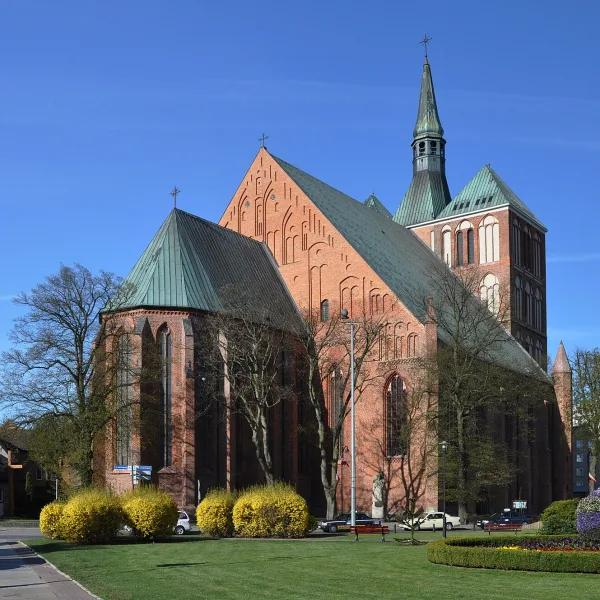
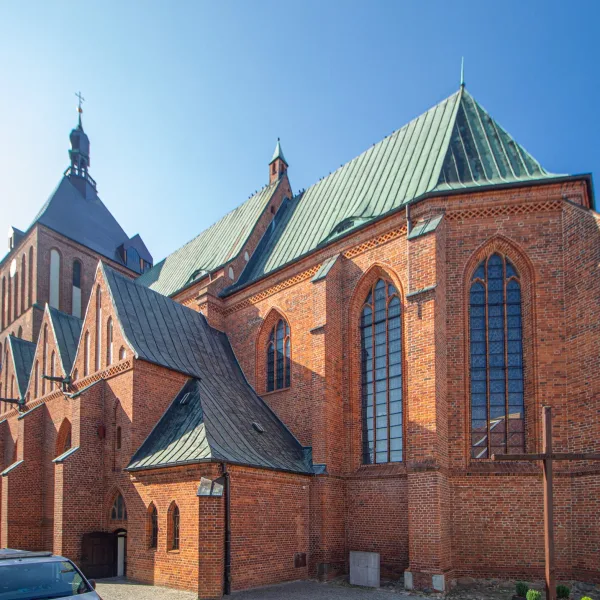
Konkatedra św. Jana Chrzciciela w Kamieniu Pomorskim (Co-Cathedral of St John the Baptist) is a Romanesque and Gothic basilica, once the cathedral of the Kamień bishopric, and with its neighbouring buildings a Monument of History. It keeps baroque organs from the 17th century, and an organ music festival has been held here since the 1960s. Wikipedia calls it the oldest religious building in the region.
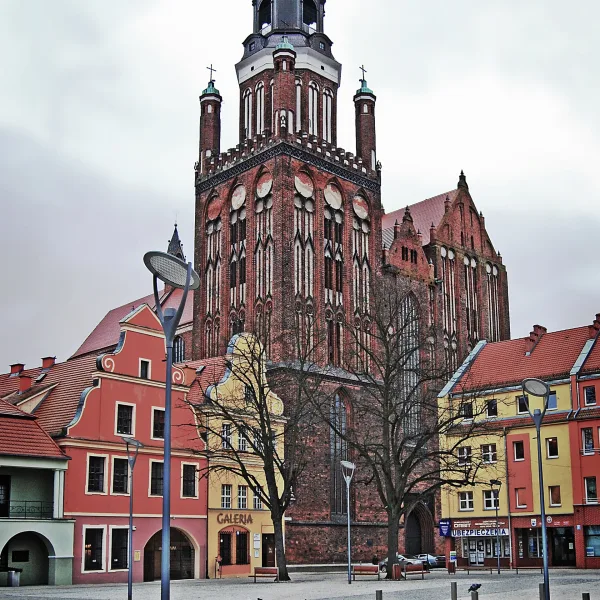
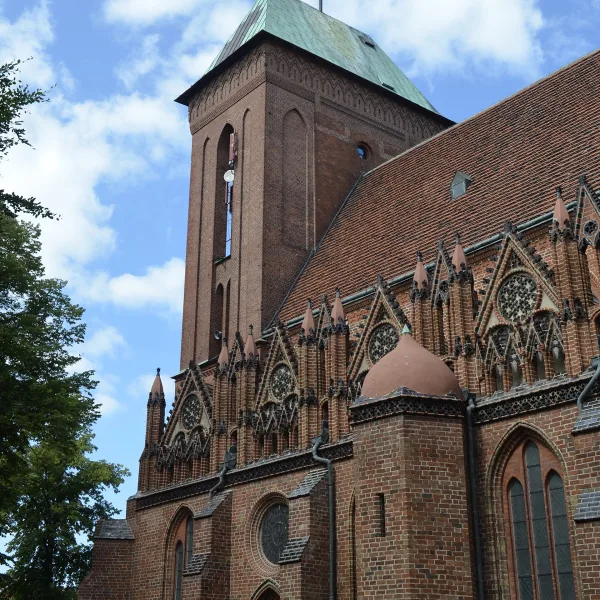
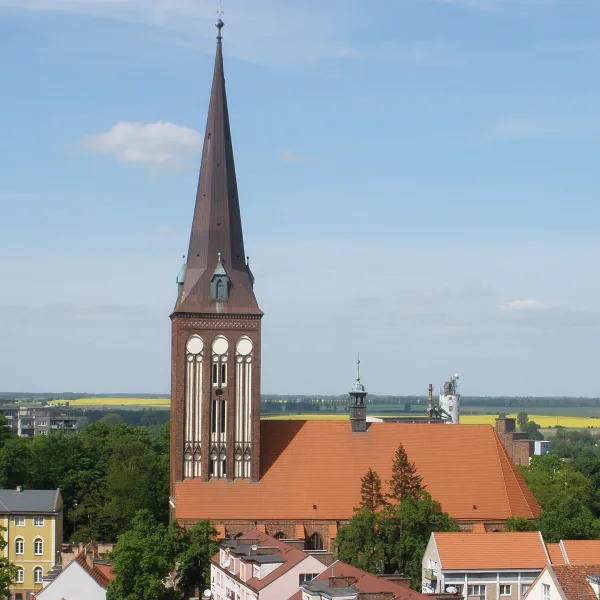
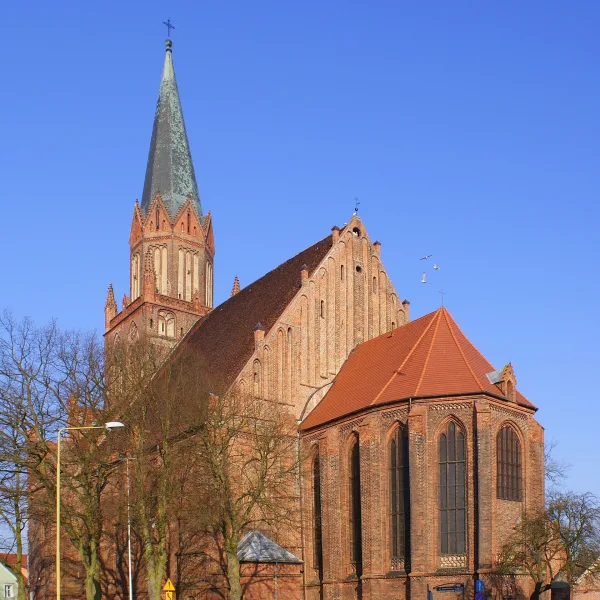
In Stargard, the Collegiate Church of Our Lady, Queen of the World closes the eastern frontage of the Old Market Square and can be seen from every road into town. The story of its two unequal towers is told in the article on the collegiate church and the legend of the jealous councillors. The next section covers two more large hall churches in Szczecin and Kołobrzeg.
Cathedrals and co-cathedrals: Szczecin, Koszalin, Kołobrzeg
Three large towns in the region have Gothic churches of cathedral rank. Szczecin is the seat of the Szczecin-Kamień archdiocese, while Koszalin and Kołobrzeg share one diocese, whose churches gained their present status in 1972. Each has different furnishings, which are worth reading about before you visit.
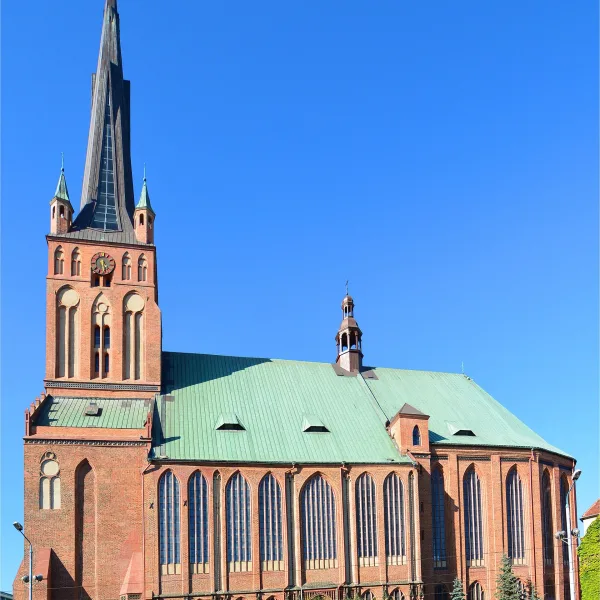
In Szczecin, the Cathedral Basilica of St James the Apostle is a Gothic hall church in the Old Town. Its spire rises beyond 110 metres and has viewing points. Inside stand altarpieces rescued from ruined churches across the province. The Co-Cathedral Basilica of the Assumption in Kołobrzeg has five aisles, and its treasures are 14th-century works: a seven-branched candlestick, a font and the chapter stalls.
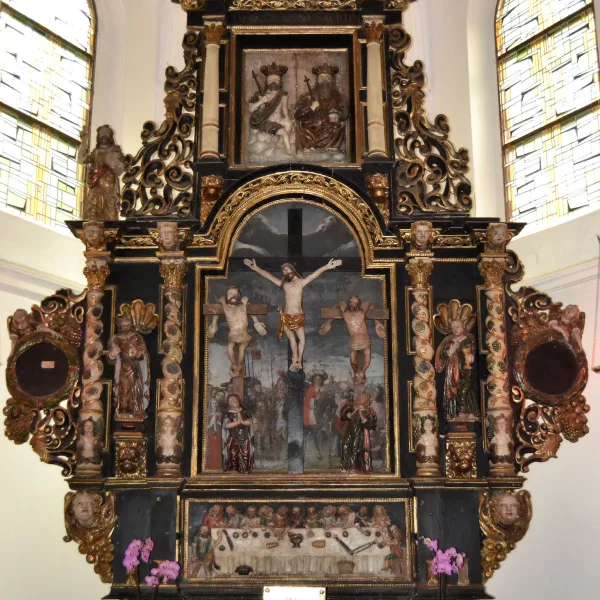
The Cathedral of the Immaculate Conception in Koszalin was built in 1300-1333 as a parish church and served Protestants for four centuries. Look out for the Gothic crucifix and the recreated altarpiece from the early 16th century.
The tallest towers: where to go for a town skyline?
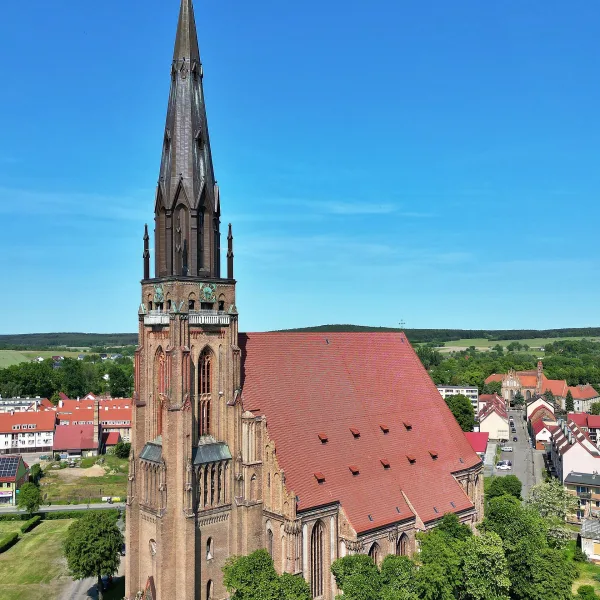
The tall towers of Gothic parish churches shaped the skylines of Pomeranian towns for centuries and can still be seen from far away. The tallest here belongs to the Szczecin cathedral, but four others stand in much smaller places and make just as strong an impression, because they rise above low-rise streets.
Which churches in Szczecin are worth seeing besides the cathedral?
Several dozen churches in the city are covered, with their own listing under Churches and monasteries: Szczecin. Besides the cathedral, it is worth seeing a small Gothic church in the Old Town, a neo-Gothic basilica in the centre, a modern Orthodox church and the church in Skolwin to the north.
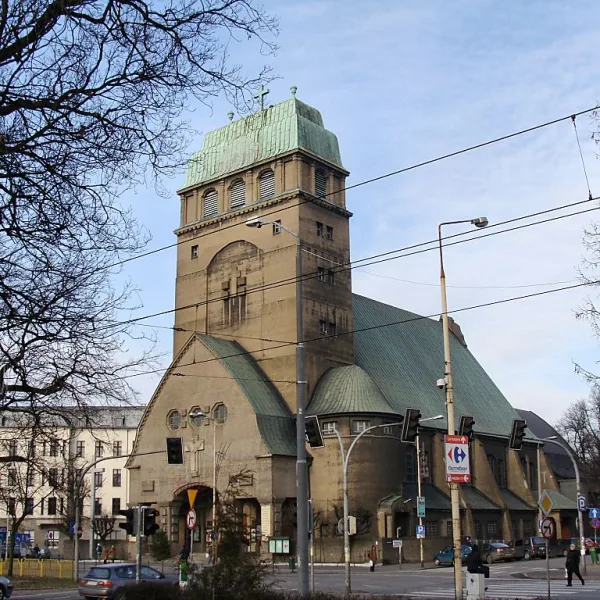
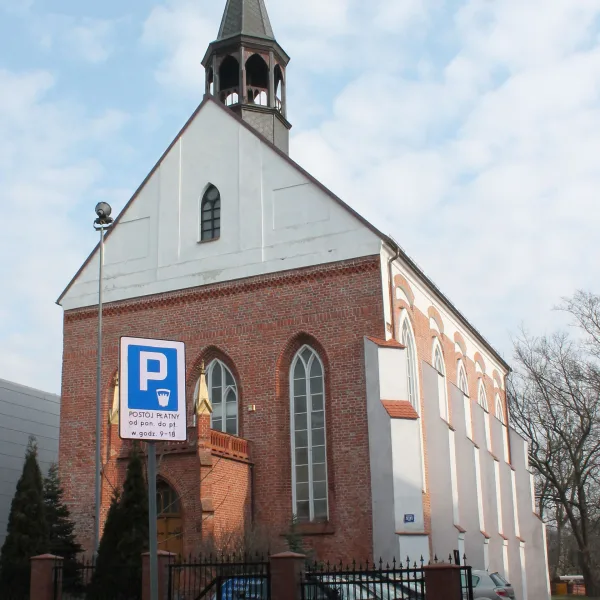
St Peter and St Paul's Church belongs to the European Route of Brick Gothic and has a painted ceiling from 1703; since 1946 it has been a Polish Catholic parish. The Basilica of St John the Baptist, put up at the end of the 19th century where Bogurodzicy and Kaszubska streets meet, was the first Catholic church in the city since the arrival of Lutheranism. Christ the King Church stands in Skolwin and dates from the rebuilding after the Thirty Years' War, with a baroque organ gallery.
Which monasteries and abbeys have survived in the region?
What remains of West Pomerania's monasteries is usually a fragment: a church, one wing or stabilised walls. That is why it helps to know what has survived before you go. The most valuable complex stands at Kołbacz near Szczecin, while Cistercian nuns, Dominicans and Augustinians left their mark in Cedynia, Myślibórz and Police.
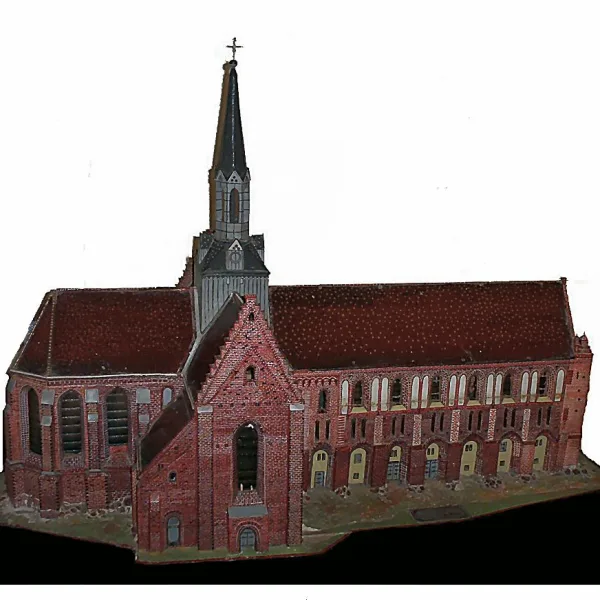
The Cistercian Abbey in Kołbacz on the River Płonia, founded by monks from Esrum in Denmark, has been a Monument of History since 2014 and is among the finer examples of brick Gothic in the region. The Cistercian Nunnery in Cedynia burned down in 1945; after rebuilding, its west wing holds a hotel and restaurant, so you can also stay the night.
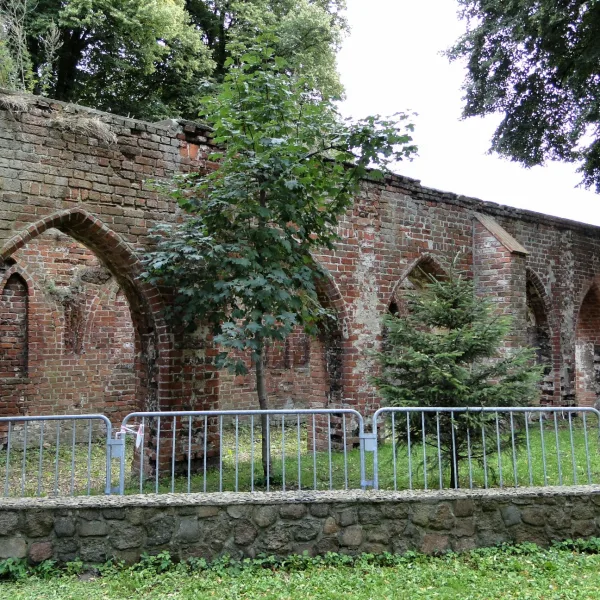
The Dominican Monastery in Myślibórz was the order's only house in the Neumark; its surviving parts now hold an arts centre and a library. At Police-Jasienica, on the River Gunica, you see the low walls left by Augustinians brought here in 1331: the Augustinian Monastery is preserved as a stabilised ruin.
Where can you see Orthodox and Greek Catholic churches in West Pomerania?
Orthodox and Greek Catholic parishes here often took over former Protestant churches and hospital or cemetery chapels, so these buildings usually combine a Gothic or neo-Gothic exterior with an Eastern interior and iconostasis. Only a few were newly built, and those tend to be bolder architecturally.
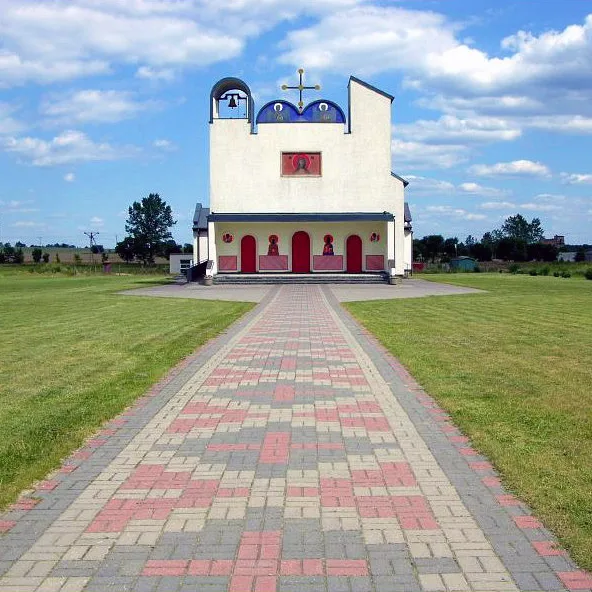
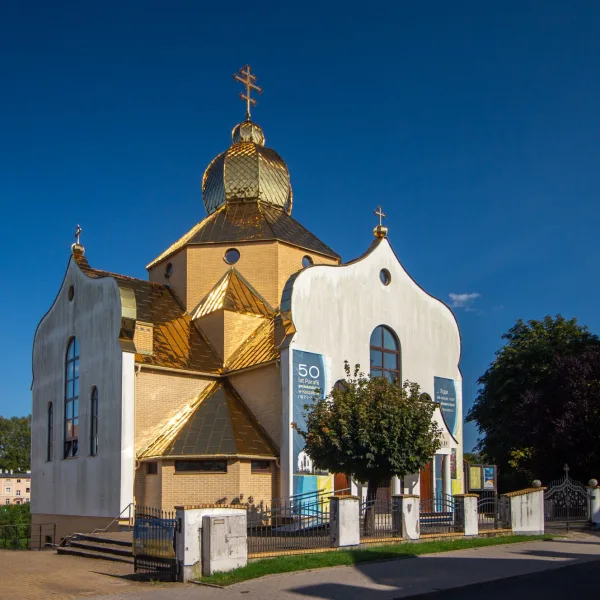
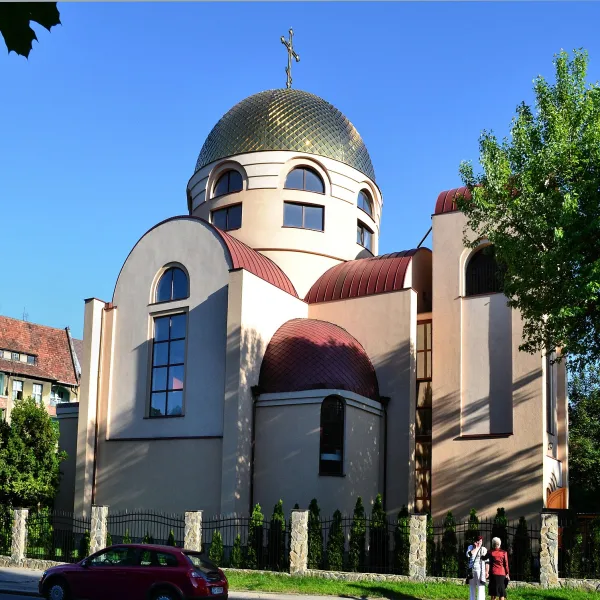
Among the new buildings, the Church of the Nativity of the Mother of God in Biały Bór stands out, a postmodern work by Jerzy Nowosielski and Bogdan Kotarba, added to the heritage register in 2019. St Nicholas Orthodox Church in Szczecin, an Orthodox co-cathedral in Byzantine style, stands near Chrobry Embankment. Koszalin's Greek Catholic co-cathedral, the Church of the Dormition, was built of brick at the start of the 21st century.
The stories of adaptation are often more interesting. Holy Trinity Orthodox Church in Szczecinek occupies a former synagogue of 1824, which survived the war thanks to its out-of-the-way position. Koszalin's Orthodox Church of the Dormition is in the former castle church on Mickiewicza Street. In Stargard, the Church of the Holy Apostles Peter and Paul stands just in front of St John's Gate, in a brick church built for Reformed Protestants. In Barlinek the 19th-century iconostasis was brought by settlers from Kijowiec, and Holy Trinity in Wałcz was set up in a Protestant cemetery chapel.
Gothic hospital and cemetery chapels: what should you know?
Chapels were usually built outside the walls, beside hospitals for the poor and sick or in cemeteries. Three stand in Trzebiatów alone, with others in Gryfice and Koszalin. They are small buildings, easy to see while exploring the market square and the main parish church.
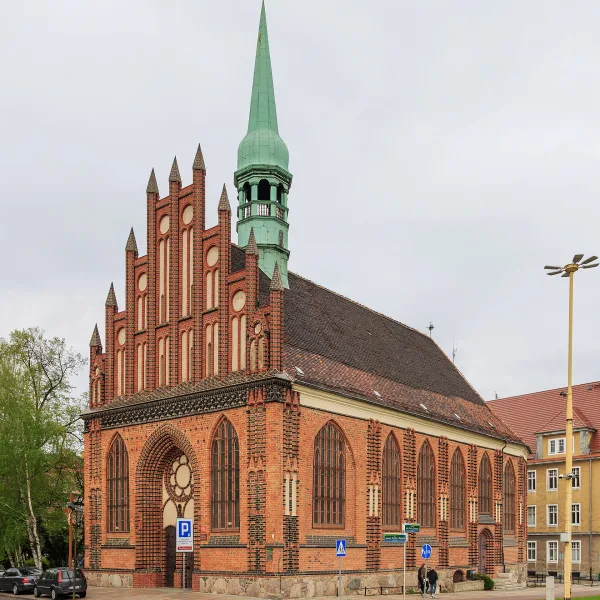
In Koszalin, St Gertrude's Chapel has an octagonal plan referring to the Holy Sepulchre in Jerusalem; today it serves Lutherans. The Chapel of the Holy Spirit in Trzebiatów hosted the Pomeranian diet of 1534 and has been an Orthodox church since the mid-20th century. St George's Chapel in Gryfice stands on the site of a leper hospital chapel and houses a collection of stone fragments.
Village churches and ruins: where to leave the main road?
The oldest churches in the region are often tucked away in villages. They have thick walls of boulders, modest towers and furnishings gathered from different periods. It is also worth planning a stop on the coast at Trzęsacz, where a single wall remains. This section helps you pick a few such places for a drive.
The church ruins in Trzęsacz are the south wall of a Gothic building that once stood about two kilometres from the shore; the sea undercut the cliff for centuries. At the late 13th-century St Nicholas Collegiate Church in Wolin only the walls, pillars and tower were left after the war, and the building became a working parish church again around the turn of the 21st century.
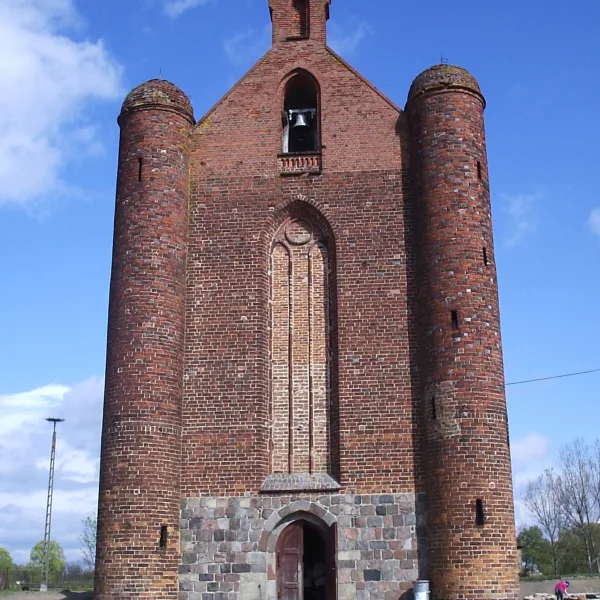
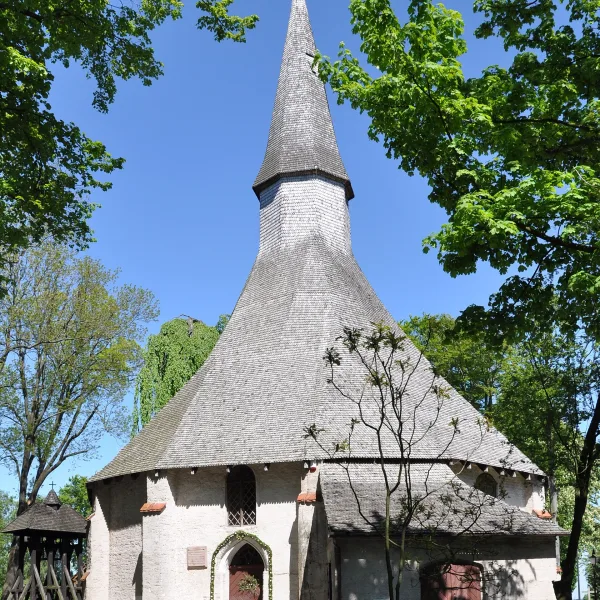
Christ the King Church in Gosław dates from the 13th century and ranks among the oldest in Pomerania. Christ the King Church in Recz combines star vaulting with an ornate early 17th-century altarpiece, and Dolice has a Renaissance building of fieldstone. Two overviews help with a route: the articles on 13th-century granite churches and on half-timbered churches, from Świerzno to Dołgie.
How can you combine churches with a town visit?
The handiest plan is a town with several churches within walking distance, plus its market square, walls or gates. Several towns have their own listings, so it is easy to see how much there is to visit. Outside Szczecin, Stargard, Koszalin and Trzebiatów have the most addresses.
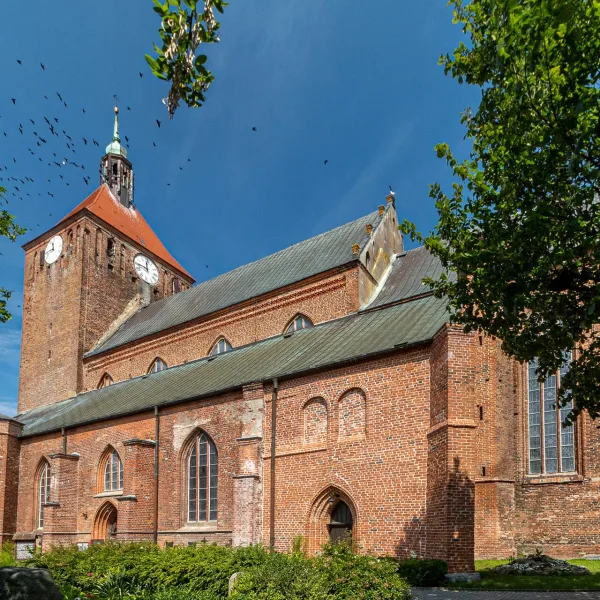
In Darłowo the sarcophagi of the Pomeranian dukes draw the eye: St Mary's Church in Darłowo pairs well with the rest of the old town, as described in the article on Darłowo, the High Gate and the Hemptenmacher house. Secular buildings from the same periods are in the Historic sites category.
Frequently asked questions
What is the oldest church in West Pomerania?
Wikipedia calls the co-cathedral in Kamień Pomorski the oldest religious building in the region. It also counts the village church in Gosław, built in the third quarter of the 13th century, among the oldest in Pomerania.
Which church tower in the region is the tallest?
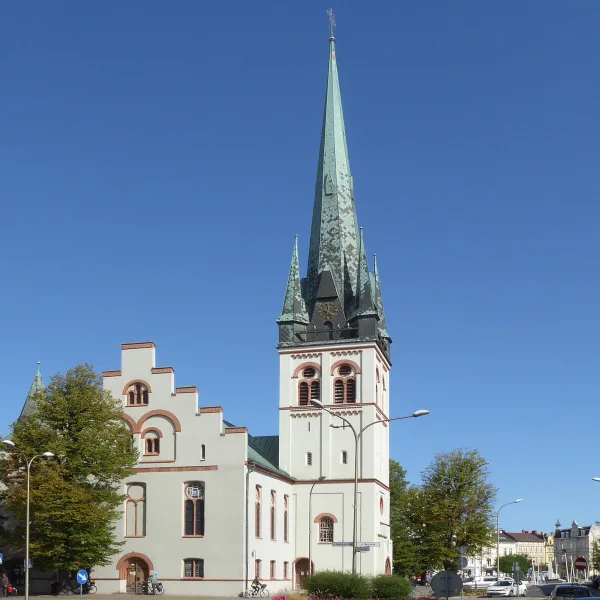
The spire of Szczecin cathedral rises beyond 110 metres. The neo-Gothic tower of St Mary's in Chojna also tops a hundred metres, and the tower of St John's in Stargard comes close to that height.
Which monasteries can you visit in West Pomerania?
The most valuable complex is the former Cistercian abbey at Kołbacz, a Monument of History. In Cedynia the former nunnery houses a hotel and restaurant, and in Myślibórz the Dominicans left a church and a wing now used by an arts centre.
Why does the church in Trzęsacz stand on a cliff?
The sea undercut the shore for centuries, and St Nicholas's Church, once in the middle of the village, eventually ended up on the edge. Its south wall remains, now secured, with a museum nearby telling the story.
Are there Orthodox churches worth seeing in West Pomerania?
Yes. Jerzy Nowosielski's church in Biały Bór is a modern example, and there is an Orthodox co-cathedral in Szczecin. In Szczecinek a church occupies a former synagogue, and in Trzebiatów a Gothic hospital chapel.

 Churches and monasteries