Churches and monasteries in Szczecin: St James' Cathedral, Gothic churches of the Old Town, Neo-Gothic buildings and modernist landmarks.
For some visitors these are places of prayer, for others a survey of styles from medieval brick to 20th-century reinforced concrete. Szczecin's churches are scattered across the whole city, from the Old Town to Krzekowo and Klęskowo, and many were first built for Protestant congregations and only taken over by Catholics after 1945.
Which churches in Szczecin should you see first?
Open your visit with St James' Cathedral Basilica in the Old Town, then visit the Church of St John the Evangelist and the Basilica of St John the Baptist in the centre. That way you see both Gothic and Neo-Gothic, and the route fits into one day.
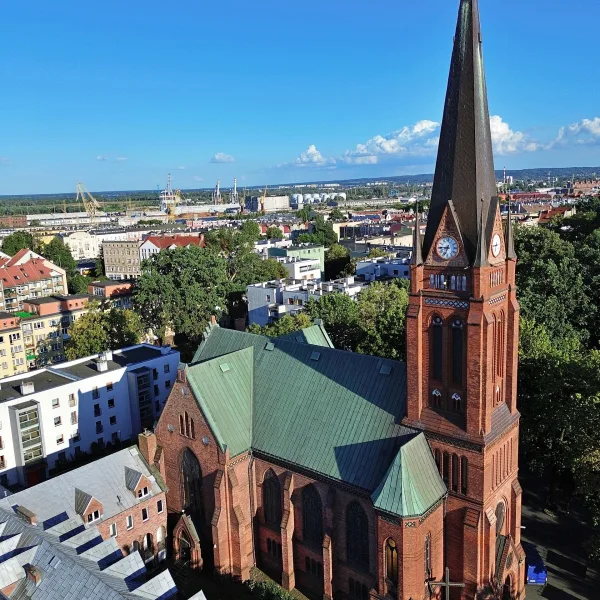
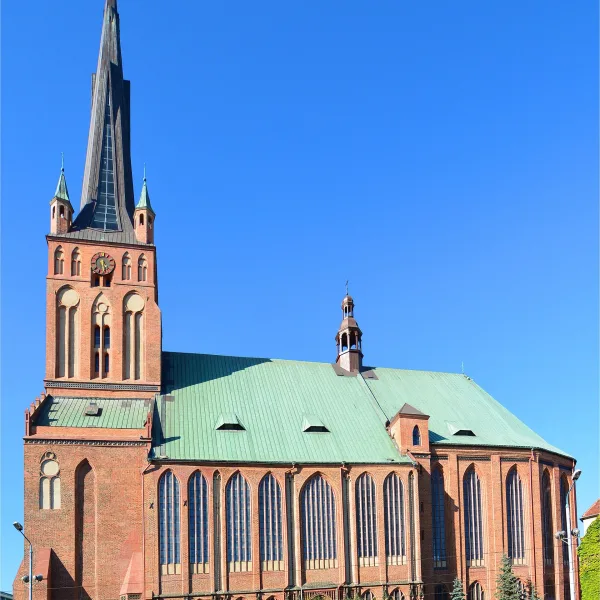
The cathedral is the main church of Szczecin and of the Szczecin-Kamień archdiocese: a Gothic brick hall church whose tower helmet is 110.18 metres high, with Gothic altars. The Basilica of St John the Baptist is a Neo-Gothic hall church built in 1888-1890 on the plan of a Latin cross, with the title of minor basilica and the status of a Marian shrine since 2008.
Where to find Gothic churches in Szczecin
Most Gothic architecture stands in the Old Town, but medieval walls also survive in districts that used to be separate villages and towns. A short trip out of the centre brings you to churches that are several centuries old.
The Old Town
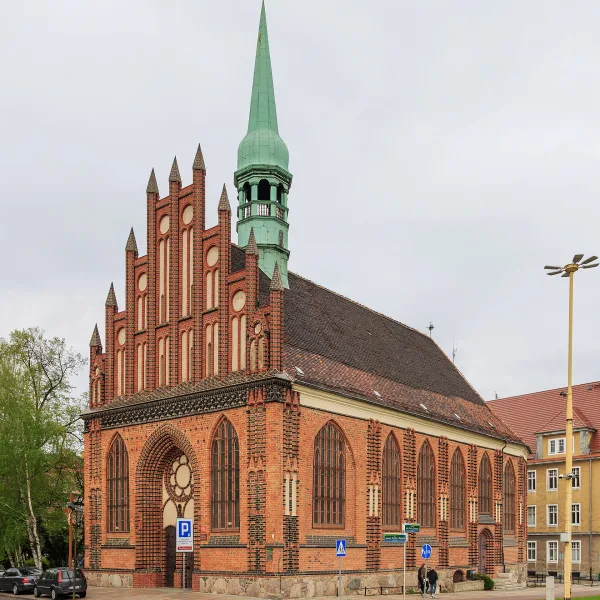
Besides the cathedral there are two smaller brick churches. The Church of St John the Evangelist at ulica Świętego Ducha 9 is all that remains of a former Franciscan monastery, with wall paintings from the 15th and 16th centuries. The Church of St Peter and St Paul on the square of the same name is a small Gothic building with a painted ceiling of 1703.
Former villages and towns within Szczecin
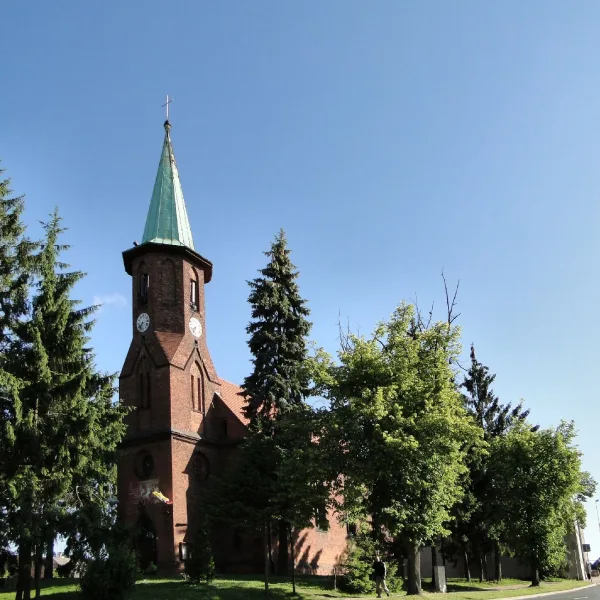
In Krzekowo, at Żołnierska 1a, stands the Church of the Holy Trinity dating from 1261, rebuilt in 1729, with a Baroque altar and painted decoration on the ceiling. In Pomorzany, on a slope, stands the Church of St Maximilian Maria Kolbe, one of the oldest churches in the city, rebuilt after the war and consecrated in 1973.
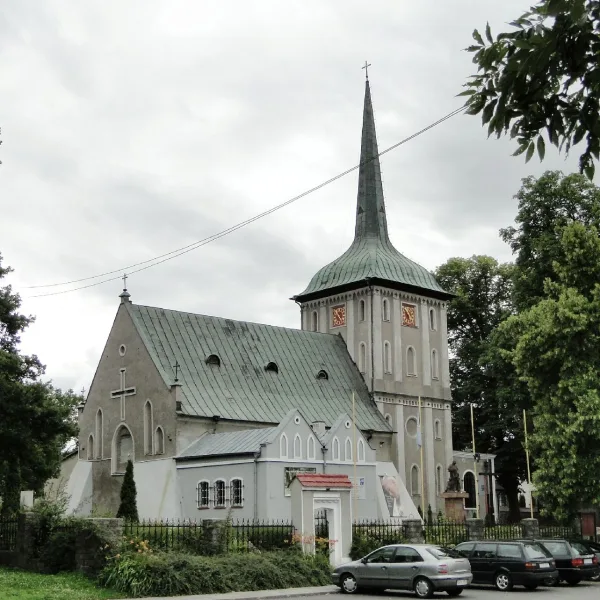
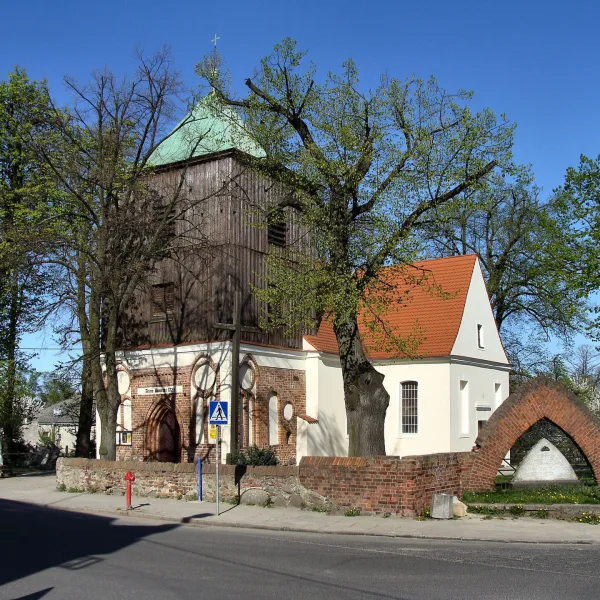
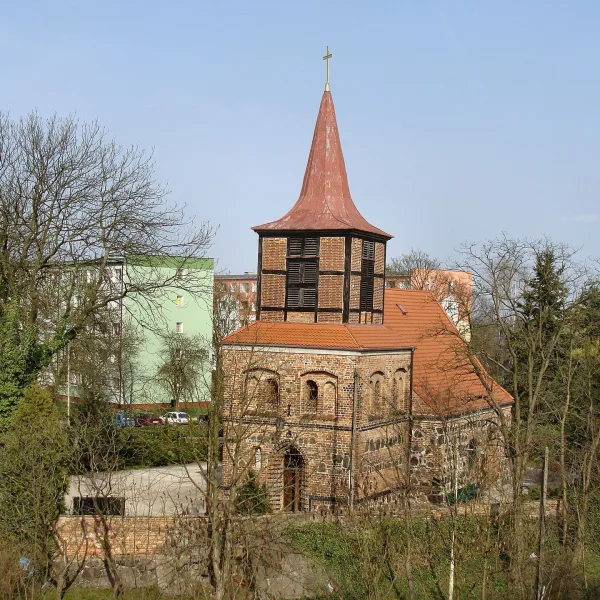
In Dąbie, on Plac Kościelny 4, you will find the Church of the Immaculate Conception of the Blessed Virgin Mary, a Gothic three-aisled hall with a tower 75.6 metres high and Neo-Gothic furnishings from the 1860s. In Gumieńce see the Church of Our Lady of the Rosary, from the end of the 15th century, with a half-timbered tower of 1800. In Stołczyn stands the Church of the Immaculate Heart of the Blessed Virgin Mary with a Baroque altar of 1727, and in Klęskowo a granite Church of St Stanislaus the Bishop and Martyr from the 15th century, rebuilt in 1976-1979 and extended with a new nave after 1995.
Which Szczecin churches were built for Protestants?
Many Neo-Gothic and modernist churches in Szczecin were built as Protestant ones and became Catholic after the war. Keep that in mind when sightseeing: behind today's patron saint there is often an old German name.
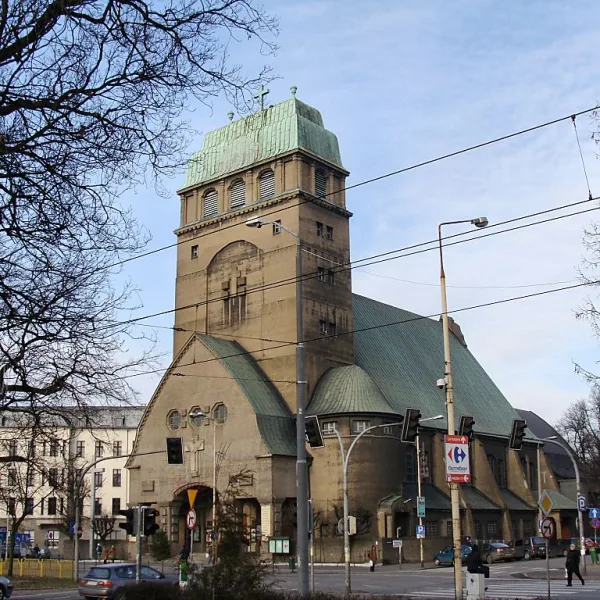
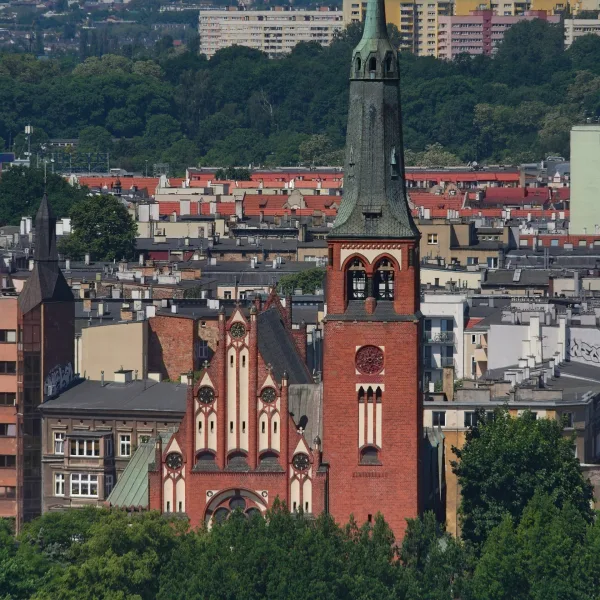
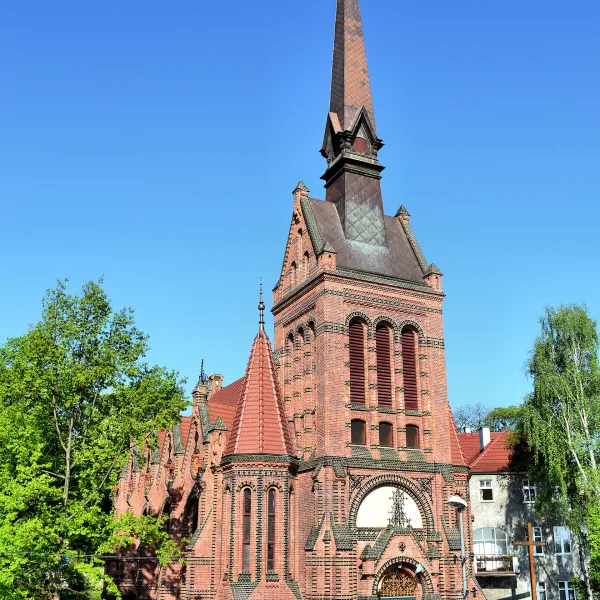
Two such buildings stand side by side at Plac Zwycięstwa. The Church of St Adalbert is a Neo-Gothic garrison church of 1906-1909, topped by a tower of 65.5 metres, formerly the Bugenhagen church. Next to it stands the Church of the Sacred Heart of Jesus, built of reinforced concrete in 1913-1919, a former Protestant garrison church and today a shrine.
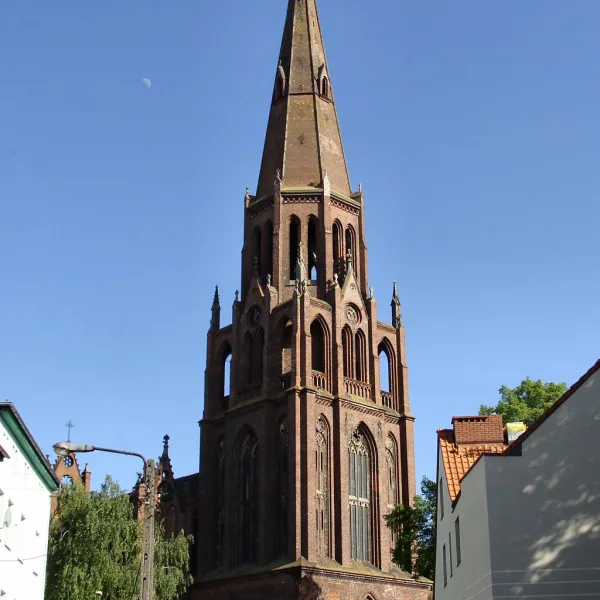
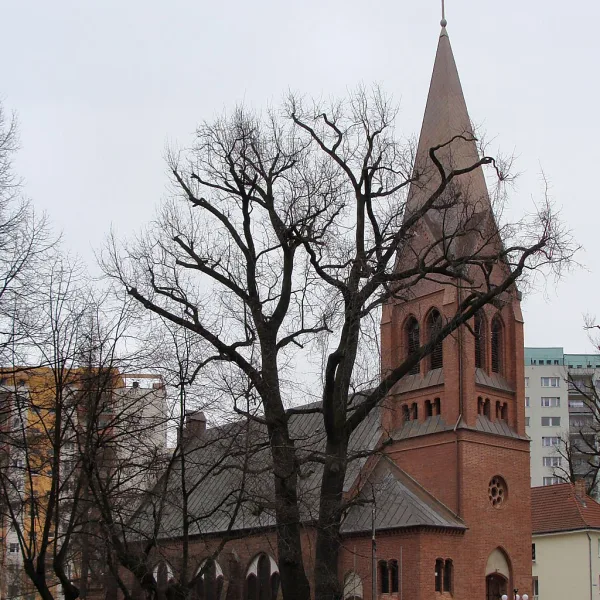
Similar histories belong to the Church of St Casimir on Broniewskiego from 1888-1889, Catholic since 1957, the Church of St Stanislaus Kostka on Plac Matki Teresy z Kalkuty from 1890, built as the Friedenskirche, the Church of St Joseph in Pomorzany in dark clinker brick of 1890-1893 and the Church of the Holy Spirit in Zdroje of 1893 with an organ from 1862. The Neo-Gothic Church of St Anthony of Padua in Warszewo, from 1874, has a tower turning into an octagon and stained glass by Wiktor Ostrzołek.
In Podjuchy, at Niklowa 1, stands the Church of Saints Peter and Paul the Apostles of 1875-1876 with its pre-war gallery and organ case preserved. On Łasztownia the Church of the Holy Trinity of 1894-1896, designed by Wilhelm Meyer-Schwartau, has been Protestant since 1959.
What modern and modernist churches are there in Szczecin?
Modernist churches of the 1930s are a chapter of their own in Szczecin's sacred architecture. They were built for Protestants and now serve Catholics, so at each one it is worth checking which era it comes from.
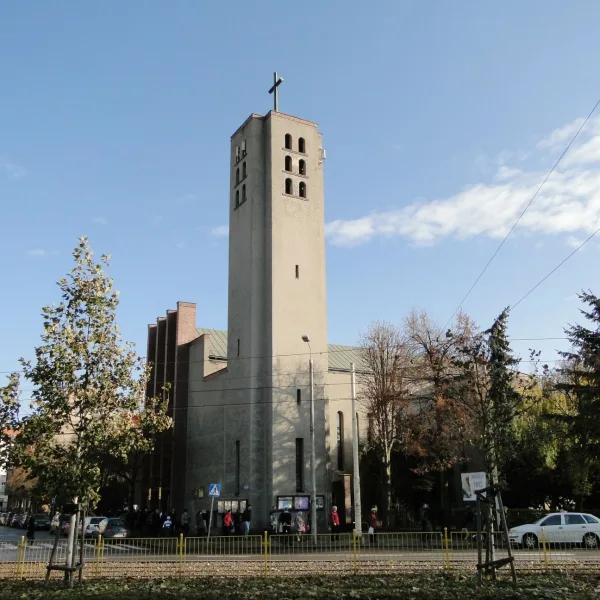
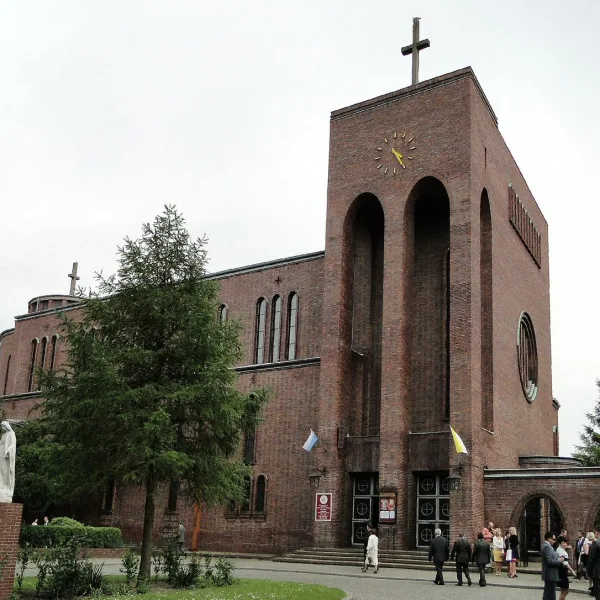
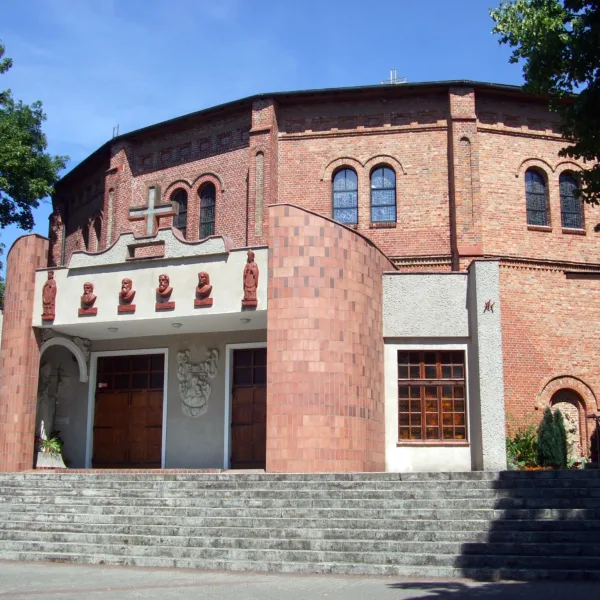
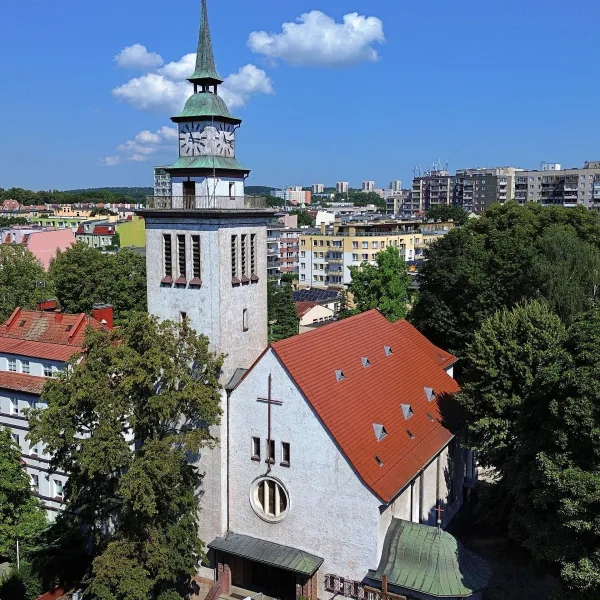
The Church of the Most Holy Saviour at Słowackiego 1a in Niebuszewo-Bolinko was built in 1936 as the Heilandskirche and is a listed monument. The Church of St Andrew Bobola in Turzyn, from 1932-1933, is a shrine today. The Church of the Holy Family on Królowej Korony Polskiej, designed by Adolf Thesmacher, was built in 1929-1931.
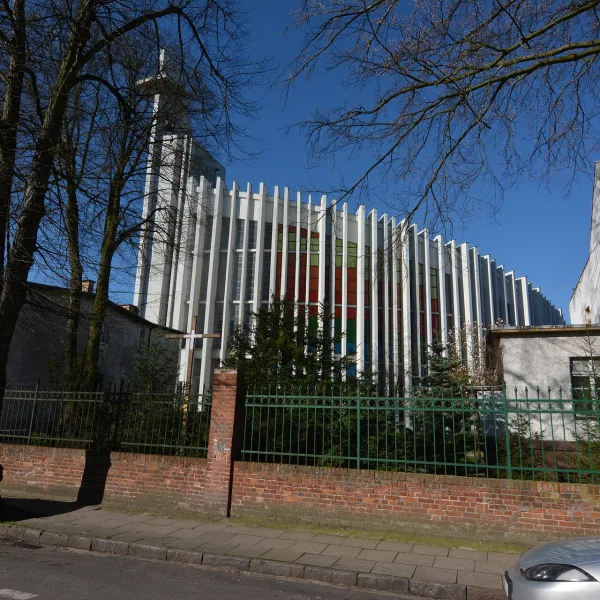
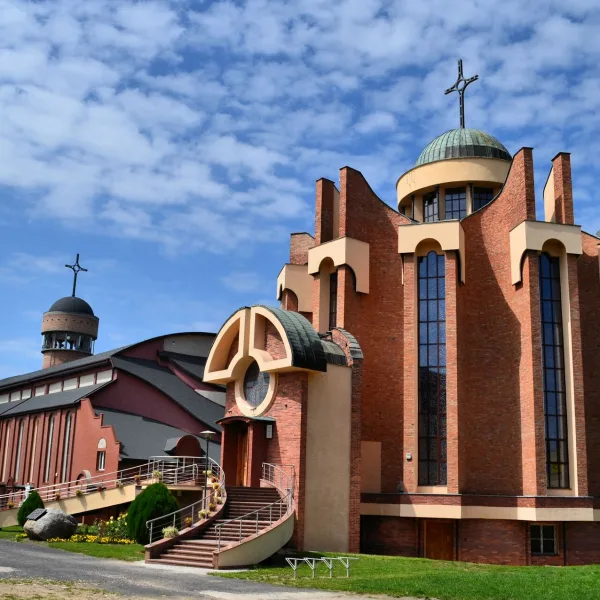
In Pogodno stands the Church of the Holy Cross, made of two connected churches: the old chapel of 1930 and a new one with an amphitheatre layout and a suspended ceiling. Contemporary buildings include the Church of Divine Mercy on the Książąt Pomorskich estate with a nave for around 2,000 people and the Shrine of Our Lady of Fátima on the Słoneczne estate.
Where to find Orthodox churches and unusual places of worship in Szczecin
There are two Orthodox churches, a church in a former water tower and the ruin of a Gothic church. This is a good choice if you have already seen the classic churches.
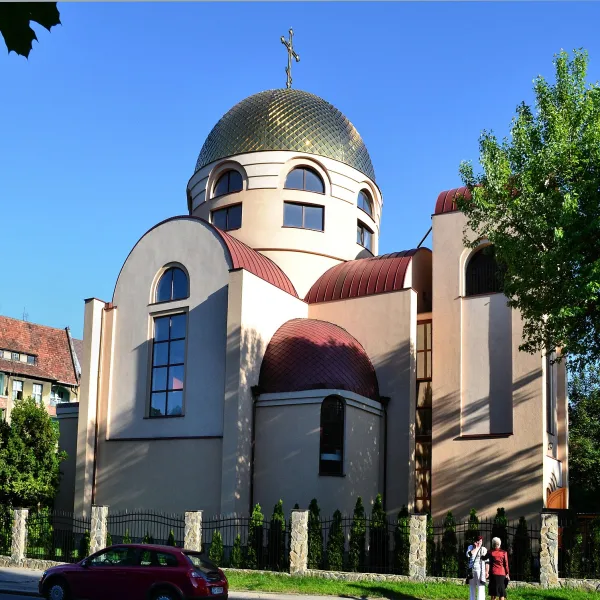
The Orthodox Church of St Nicholas is a co-cathedral of 2011, Byzantine in style and laid out as a Greek cross, near Chrobry Embankment. The Church of the Protection of the Mother of God at Mickiewicza 43 in Łękno is a working Greek Catholic church in a building from the 1920s.
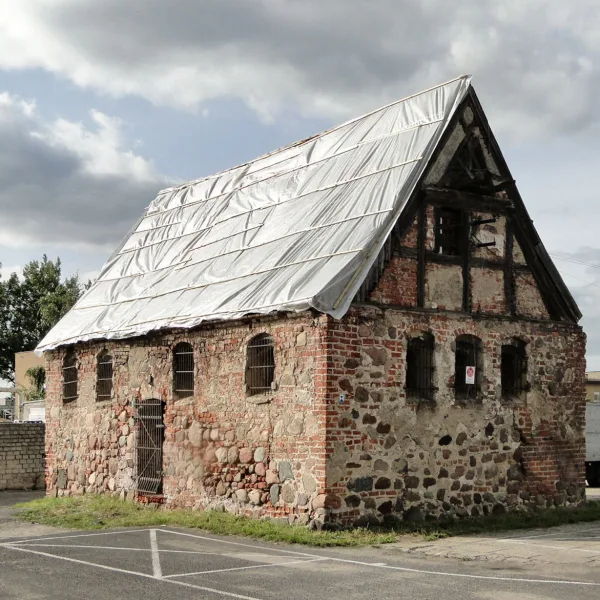
The Church of Our Lady of Jasna Góra at Orawska 3 is a Neo-Romanesque water tower of 1863-1865 on a sixteen-sided plan. The half-timbered Church of the Holy Family in Płonia stands beside a former cemetery with the lime tree of St Otto. In Śmierdnica lies the ruin of St Nicholas' Church, what is left of a 15th-century Gothic church destroyed in the Second World War.
How to visit churches, and what else to look for in the region
Most of these are working parishes, so plan the visit around services and keep quiet inside. St Catherine's Church in Świerczewo has been unused for years and its renovation began in 2024, so you may see it only from outside.
Other buildings of the city are in the categories Historic sites: Szczecin and Cemeteries and monuments: Szczecin. For an overview of other places see the page about things to do in Szczecin, and the whole voivodeship's churches have a category of their own: Churches and monasteries. Outside the city, read the articles on half-timbered churches and 13th-century granite churches, and about the Collegiate Church of St Mary in Stargard.
Frequently asked questions
Which church in Szczecin is the oldest?
Among the churches described here the earliest date belongs to the Church of the Holy Trinity in Krzekowo, which goes back to 1261. The Church of St Maximilian Maria Kolbe in Pomorzany is also counted among the oldest in the city.
Which church in Szczecin has the tallest tower?
The tower helmet of St James' Cathedral is 110.18 metres high. The tower of the church in Dąbie measures 75.6 metres, and that of St Adalbert's Church 65.5 metres.
Are there Orthodox churches in Szczecin?
Yes. The Orthodox Church of St Nicholas near Chrobry Embankment is a co-cathedral of 2011, and in Łękno there is a Greek Catholic church dedicated to the Protection of the Mother of God (Cerkiew Opieki Najświętszej Bogurodzicy).
Which churches in Szczecin are the most unusual?
The Church of Our Lady of Jasna Góra occupies a former water tower, and the Church of the Holy Cross in Pogodno has an amphitheatre layout and a suspended ceiling. The ruin of St Nicholas' Church in Śmierdnica is a church destroyed by war.
Where to see modernist churches in Szczecin?
In Niebuszewo-Bolinko, Turzyn, Śródmieście-Północ and Pogodno: the churches of the Most Holy Saviour, St Andrew Bobola, the Holy Family and the Holy Cross.

 Churches and monasteries