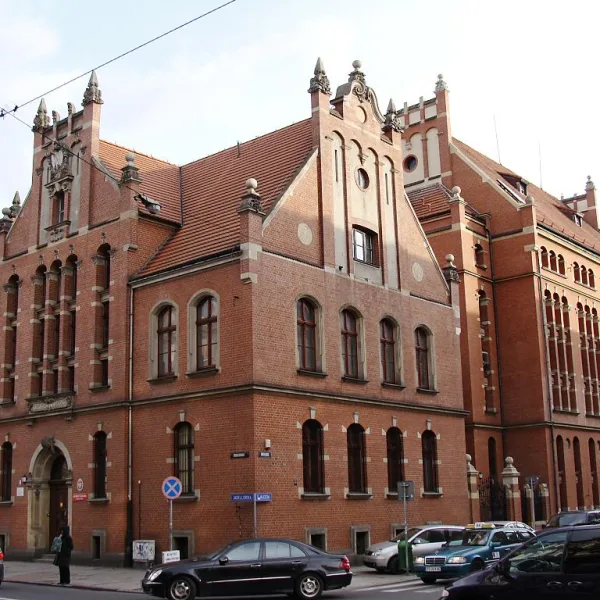
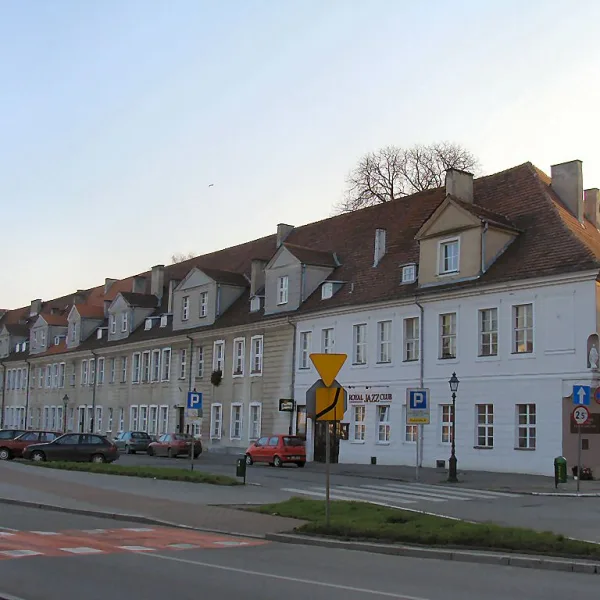
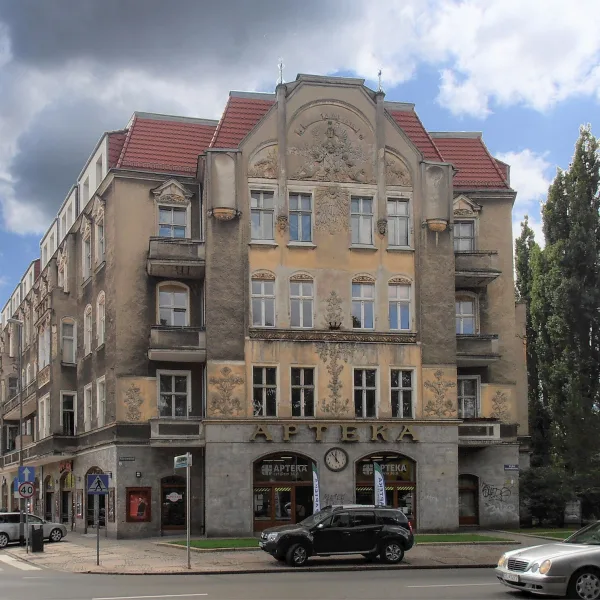
Architecture in Szczecin means Gothic gates, palaces around White Eagle Square and Art Nouveau tenements: several dozen addresses you can see on foot.
Szczecin keeps the layout of a city shaped by several eras, from medieval brick to the modernism of the 1930s. This selection gathers buildings that deserve attention from the street or from inside. The regional list of architecture attractions is much wider; here the scope is a single city, and within the wider overview of attractions in Szczecin it is one of several ways in.
What is the best first stop for architecture in Szczecin?
Begin around Chrobry Embankment and Castle Hill: this is where the buildings that most strongly define the skyline from the Oder side gather. The route takes two to three hours if you do not go inside.
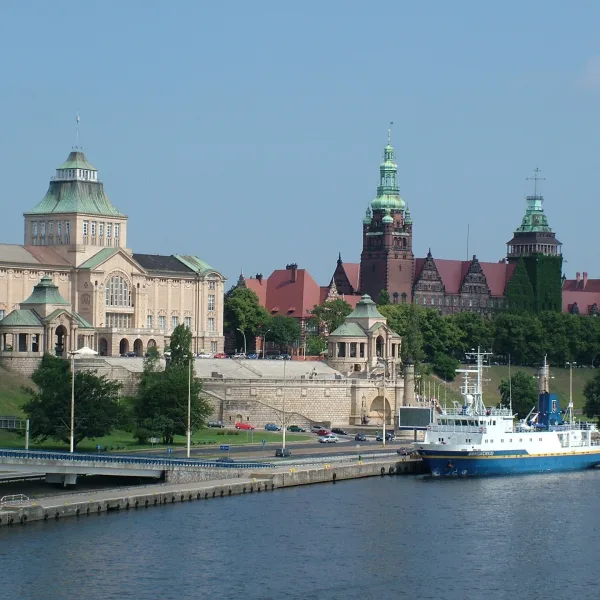
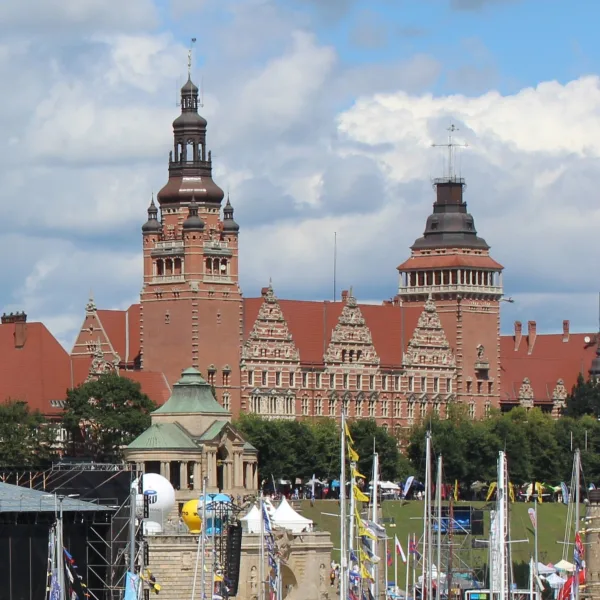
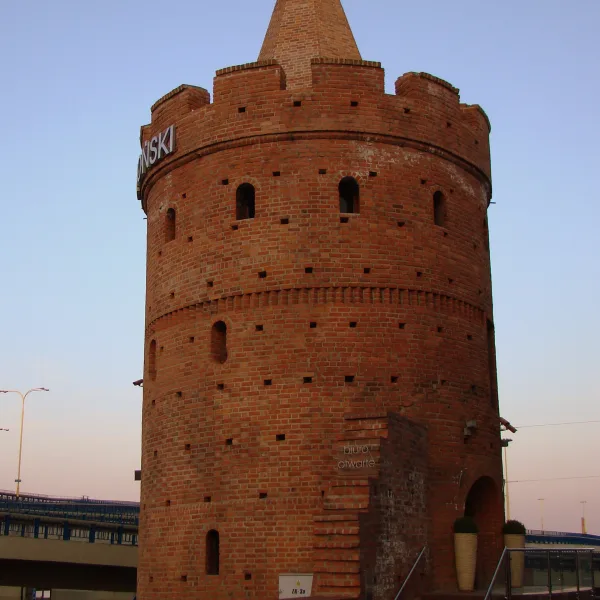
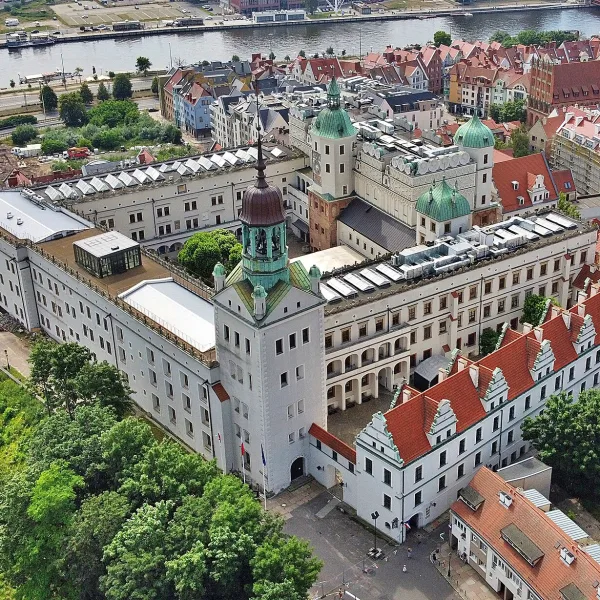
Wały Chrobrego (Chrobry Embankment) is a riverside terrace framed in the early 20th century by grand public buildings. Among them are the museum's main hall and the Budynek Urzędu Wojewódzkiego w Szczecinie (Voivodeship Office), three joined blocks raised for the Prussian Szczecin Regency and topped with a 72-metre tower. Close by lies the Zamek Książąt Pomorskich w Szczecinie (Ducal Castle), a Renaissance residence of the Griffin dynasty that was reconstructed after wartime ruin, and next to it the Baszta Panieńska (Maiden Tower), one of the symbols of the city.
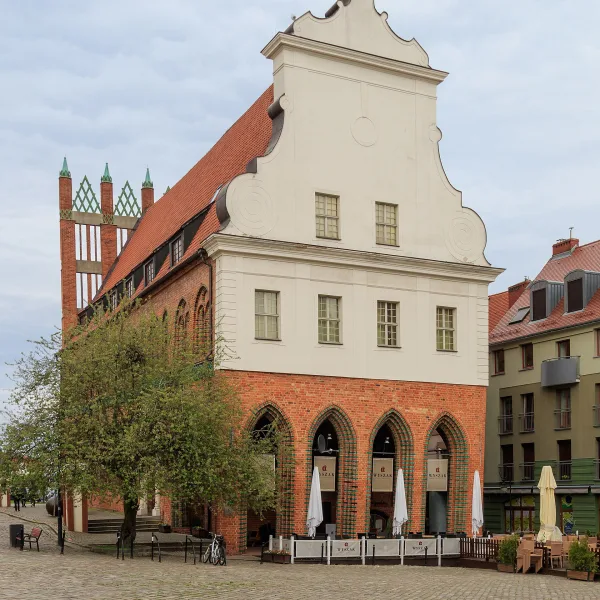
To add medieval brick to your plan, look at the Ratusz Staromiejski w Szczecinie (Old Town Hall). The building on Sienny Square was raised from rubble in the 1970s and today holds the city museum.
Where do you find the city gates of Szczecin?
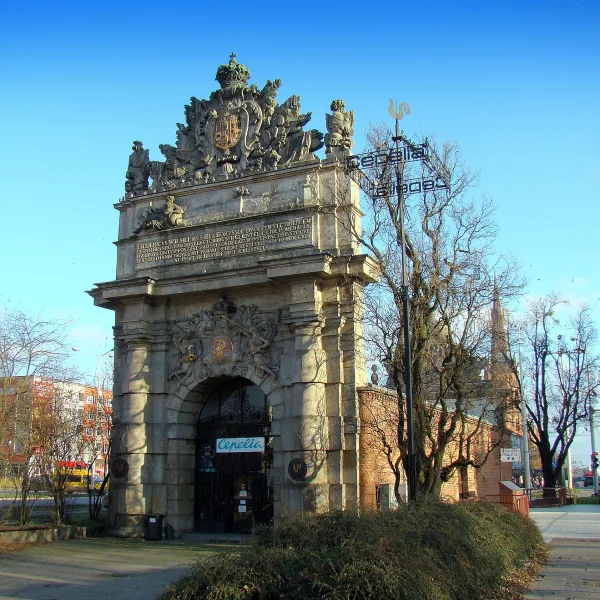
The two largest gates stand at opposite ends of the old route: the Brama Królewska w Szczecinie (Royal Gate) by Prussian Homage Square and the Brama Portowa w Szczecinie (Port Gate) on the square of the same name. Both are Baroque in character.
The Royal Gate is an early 18th century work, and its gables carry Mars and Hercules by Bartholomé Damart. The Port Gate, once the Berlin Gate, bears a Latin inscription and the Prussian coat of arms, and a panorama of the city was placed in its attic. It is best to see them on the same day, because only a walk through the New Town and the Old Town separates them, and you pass more historic facades on the way.
Beside the Port Gate stands Posejdon Center: the site once held a department store with the UFA Palast cinema, and today offices sit behind a facade with a green wall. It shows well how generations of buildings overlap at a single junction.
Which palaces in Szczecin are worth a closer look?
The palaces gather near White Eagle Square, so four of them fit into one walk: Under the Globe, Ionic, Velthusen and Under the Heads. Each represents a different period, from Baroque to neo-Baroque.
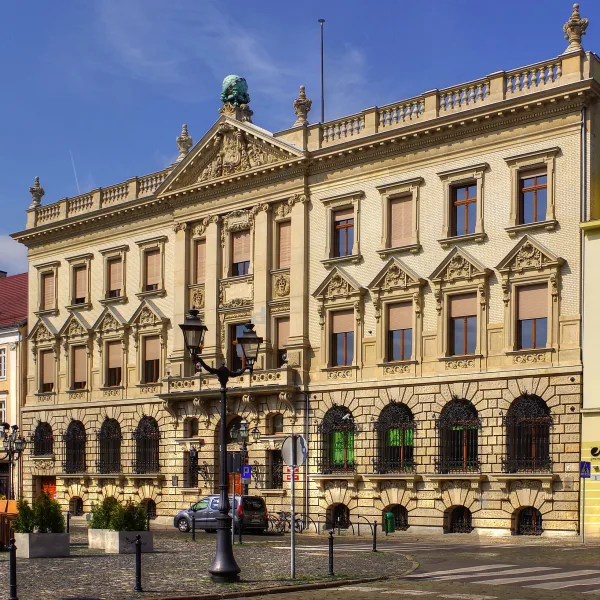
Pałac Pod Globusem w Szczecinie is a neo-Baroque pile from the 1890s. It stands where the Grumbkow residence used to be, and the Academy of Art uses it today. Beside it you find the Pałac Joński w Szczecinie, a Neoclassical house of former banks that has also belonged to the academy since 2021. The Pałac Velthusena on Staromłyńska Street began as a winery, later turned out pianos, and has been a music school since 1963.
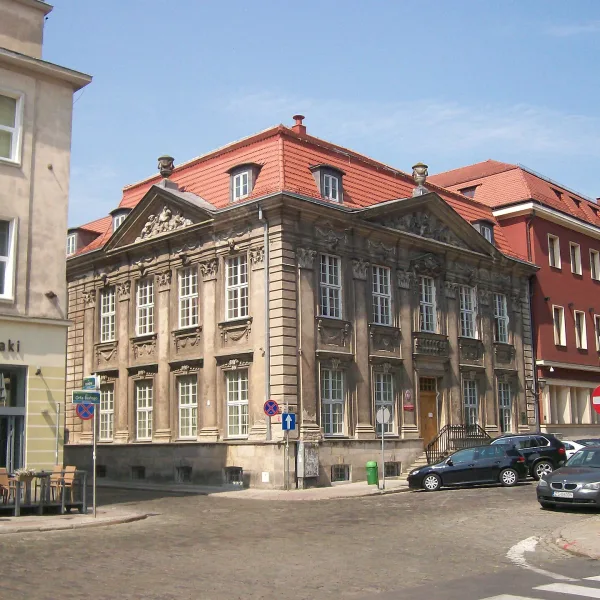
Pałac pod Głowami w Szczecinie on Żołnierza Polskiego Square is a Neoclassical former fortress commandant's seat, home today to the Museum of Contemporary Art. Complete the walk with the Pałac Sejmu Stanów Pomorskich, a Baroque building from the early 18th century where one of the National Museum branches now works. Not far away you find the Domki Profesorskie w Szczecinie (Professors' Houses), a terrace of houses once lived in by canons and professors, with Gothic cellars underneath.
What do Szczecin's tenement houses look like and where are they?
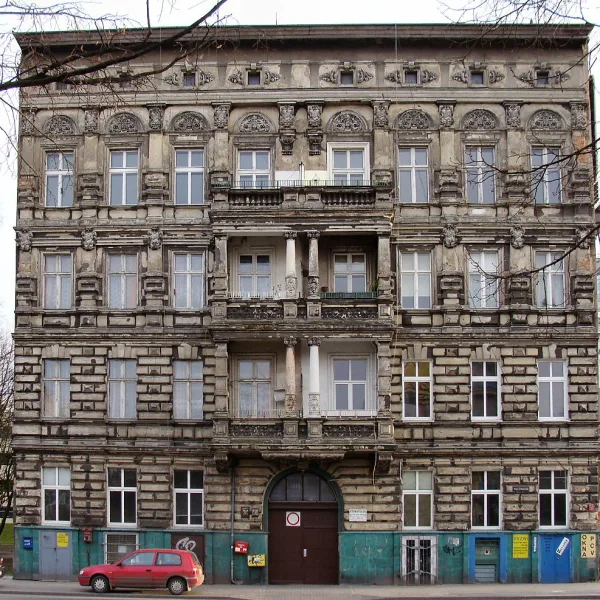
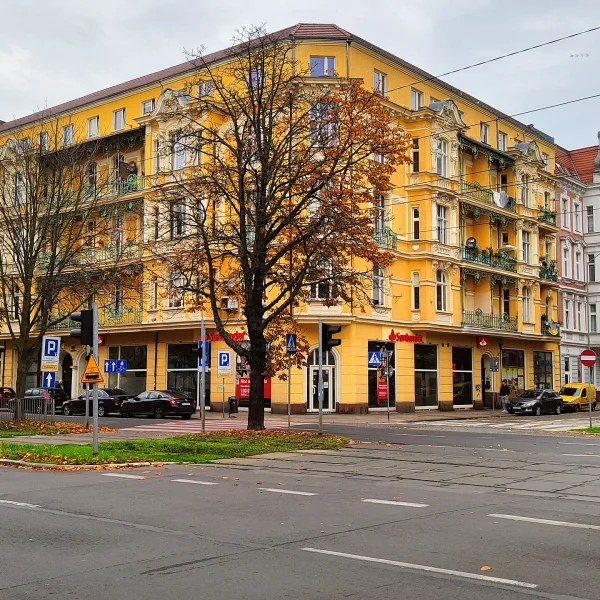
The most interesting tenements stand in Centrum, around Grunwald Square and two or three neighbouring streets, so it makes sense to walk them in a single outing. Most were built around 1900.
Kamienica Wilhelma Gramtza at Śląska 38 stands out for the putti over its gateway and a corner bay crowned with a spire. Nearby is the Kamienica Augusta Mintza w Szczecinie, where a pharmacy has worked since 1900 with the fittings of its old dispensing room intact. Kamienica przy ul. św. Wojciecha 1 is an Art Nouveau house designed by Friedrich Liebergesell, which also has a rear wing, a courtyard and a fountain.
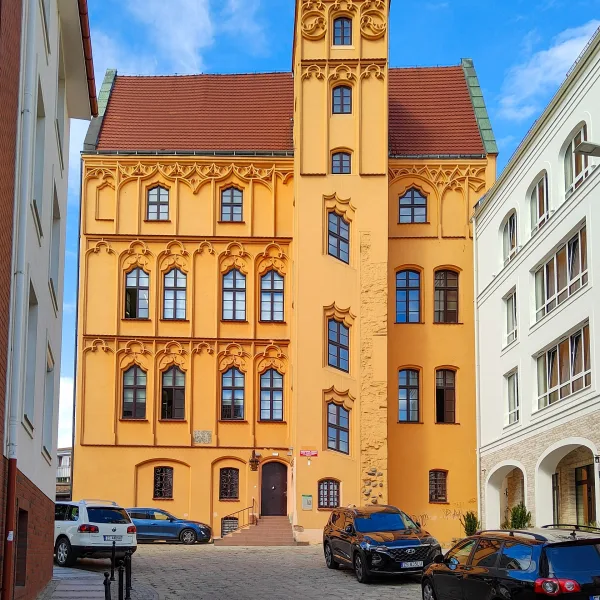
Two more houses show how little survived the war. Malczewskiego 34 is a U-shaped building, the only pre-war one in its block, listed as a monument in 2004. Piłsudskiego 7 w Szczecinie, designed by Georg Sommenstuhl in 1897, is the only building still standing on the eastern side of its street. The oldest of the group is the Kamienica Loitzów (Loitz House) at Kurkowa 1, a 16th century banker's house in late Gothic style, now taken over by an art school.
Which brick public buildings set Szczecin apart?
Brick public buildings from the Prussian period form a thread of their own: town hall, post offices, archive and university. Many still do their old job, so you look at them from outside, though sometimes you can also go in.
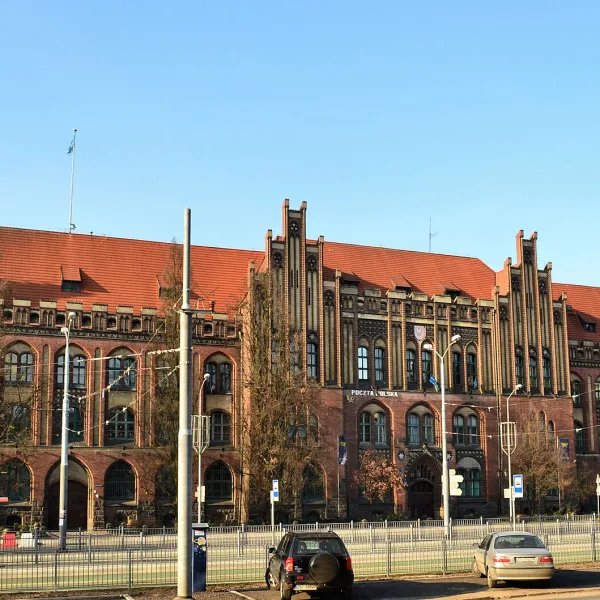
The Czerwony Ratusz (Red Town Hall) on Batory Square is a neo-Gothic brick building, the former seat of the city authorities from 1875-1879. Two post offices show another side: the Gmach poczty przy alei Niepodległości 41/42 w Szczecinie with two huge portals and a piece of track in its courtyard, and Poczta nr 2 w Szczecinie on Dworcowa Street, in German Neo-Renaissance style and still working as a post office.
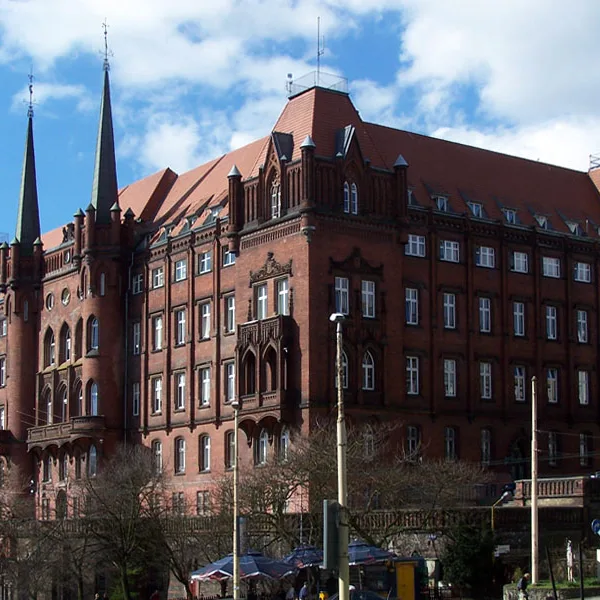
The Archiwum Państwowe w Szczecinie at św. Wojciecha 13 occupies the former Prussian Staatsarchiv of 1901 and has been on the register of monuments since 1980. Turzyn has the Gmach Wydziału Elektrycznego ZUT w Szczecinie, an Art Nouveau block that began as a school of mechanical engineering.
Which churches in Szczecin matter for architecture?
The churches of Szczecin offer nearly a full cross-section of styles: Gothic, Neo-Gothic, rural half-timbering, even reinforced concrete and modernism. Most stand in the Old Town and Centrum, but a few are worth finding on the outskirts.
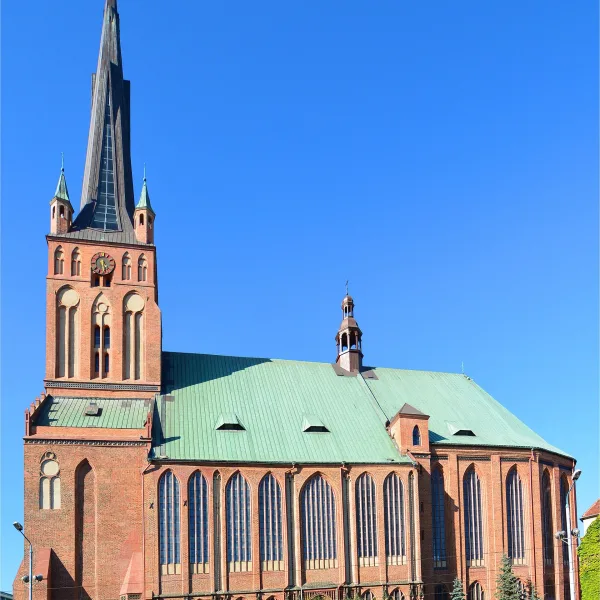
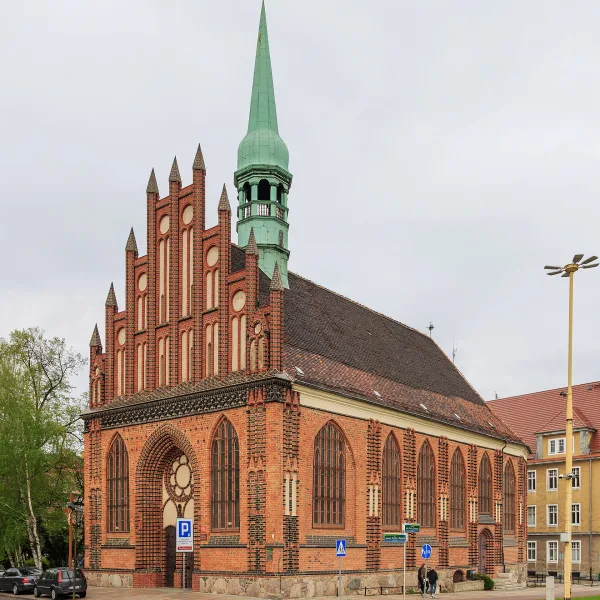
Gothic is represented by the Bazylika Archikatedralna św. Jakuba Apostoła w Szczecinie, a brick hall with a tower of over 110 metres, and by the small Kościół św. Piotra i św. Pawła w Szczecinie with a ceiling covered by a painting from the early 18th century. The same era produced the hall in Dąbie, the Kościół Niepokalanego Poczęcia Najświętszej Maryi Panny w Szczecinie Dąbiu, with a tower of 75.6 metres.
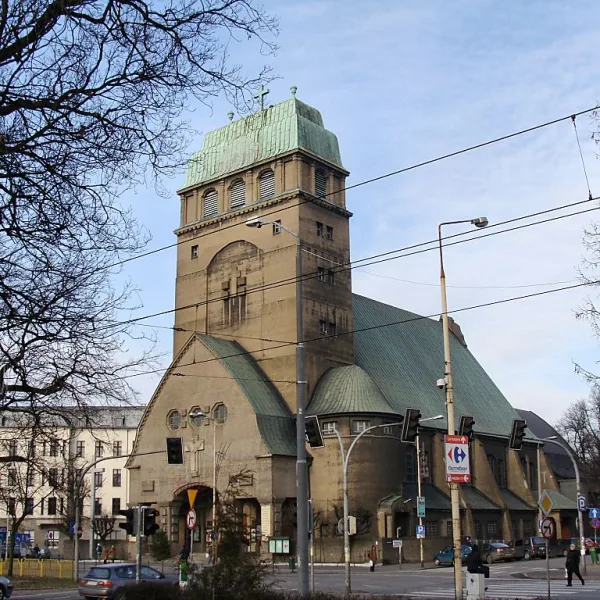
Neo-Gothic is the Bazylika św. Jana Chrzciciela w Szczecinie of the late 19th century, while concrete and modernism give two separate examples. The Kościół Najświętszego Serca Pana Jezusa w Szczecinie on Victory Square is a former Protestant garrison church made of reinforced concrete. The Kościół Najświętszego Zbawiciela w Szczecinie of 1936 was built for Protestants and today belongs to Catholics.
Outside the centre look for unusual forms. The Kościół Matki Bożej Jasnogórskiej w Szczecinie in Pomorzany was once a Neo-Romanesque water tower, built with sixteen sides. The Kościół Najświętszej Rodziny w Szczecinie in Płonia is a half-timbered church of the 19th century with an 18th century tower and a former graveyard where St Otto's lime tree grows. In Osów lies the Kościół Matki Bożej Bolesnej w Szczecinie, and in Żelechowa the Kościół Matki Bożej Ostrobramskiej w Szczecinie, a brick cemetery chapel from 1911.
What else to see: sculptures, fountains and bridges?
Besides buildings, the selection includes a few objects that enrich public space: a fountain, a sculpture and a bridge. They complement the architectural routes well, because they stand on the same squares.
The Fontanna Orła Białego w Szczecinie (White Eagle Fountain) is the oldest surviving Baroque fountain of the city, from 1729-1732, and also the first element of the municipal water supply. Herkules walczący z centaurem of 1916 is a sandstone sculpture standing on the terrace outside the National Museum. The Most Długi w Szczecinie (Long Bridge) links Centrum with Łasztownia over the West Oder and was rebuilt in 1959 after wartime damage.
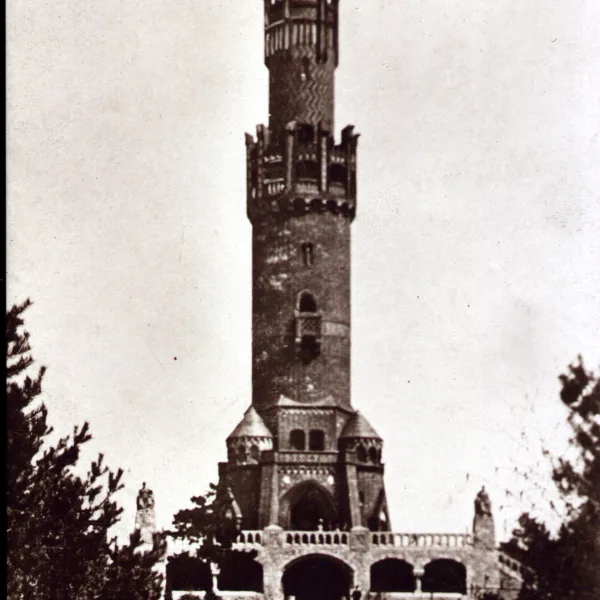
In Osów, in the Arkoński Wood, stands the Wieża Quistorpa: the ruin of a former lookout tower from the early 20th century, destroyed during the Second World War.
How to plan an architecture walk in Szczecin?
It is best to split the city into three areas: the Old Town with Chrobry Embankment, Centrum around Grunwald Square, and the New Town by the Port Gate. The Old Town holds the biggest share of these addresses (several dozen), with Centrum next.
Begin at Chrobry Embankment and descend to White Eagle Square, where three palaces and a fountain meet. Then walk on to Prussian Homage Square and the Royal Gate. Leave Centrum for the next day: the tenements by Grunwald Square, St John the Baptist's basilica and the post office on Niepodległości Avenue. The third area, the New Town, gives a short route of four addresses: the Port Gate, Posejdon Center, the Red Town Hall on Batory Square and Post Office No. 2 on Dworcowa Street. The Long Bridge can be crossed on the way to Łasztownia. Outlying districts such as Osów, Żelechowa or Płonia suit trips by bike or public transport, because distances are longer, but you get quieter streets and fewer tourists.
Frequently asked questions
Can you see the architecture of Szczecin in one day?
The key part, yes: Chrobry Embankment, the castle, the Royal Gate and White Eagle Square lie close together. Spread the full list, with tenements in Centrum and churches on the outskirts, over two days.
Where are the most interesting tenement houses in Szczecin?
In Centrum, around Grunwald Square and on Śląska, św. Wojciecha, Piłsudskiego and Malczewskiego streets. The older, late Gothic Loitz House stands on Kurkowa Street in the Old Town.
What are the strangest churches in Szczecin?
In Pomorzany, Our Lady of Jasna Góra fills a 19th century water tower, while in Płonia the Holy Family church has a half-timbered frame. Most Holy Saviour represents the modernism of the 1930s.
Can you enter all of these buildings?
No, some are now seats of schools, universities, offices and the archive, so you view them from outside. Museums, churches and some tenements are easier to enter, yet read the visiting rules first.
Where to begin if you like the Baroque?
At the Royal Gate and the Port Gate, then the White Eagle Fountain, with the Pomeranian Estates' Diet palace to follow. This area holds the most Baroque buildings on a single route.

 Historic sites