Things to do in Stargard: dozens of places, from the Collegiate Church of St Mary and four town gates to towers, parks and museums.
Stargard is a town on the Ina river with one of the best preserved sets of medieval walls in Poland, so most sights lie on a walking route around the Old Town. A day can be built from the market square and museums, through towers and churches, to parks, rainy-day options and quieter corners outside the walls.
What should you see in Stargard on a first visit?
One day is enough for the Old Town: the Old Town Market Square with its collegiate church, town hall and guardhouse, a few towers and a gate over the canal. Everything lies within a short walk, and the route is easy to shorten or extend by adding a museum or a park. A fuller plan is set out in the article on a weekend in Stargard, with walls, towers, museums and parks.
The Old Town Market Square and its monuments
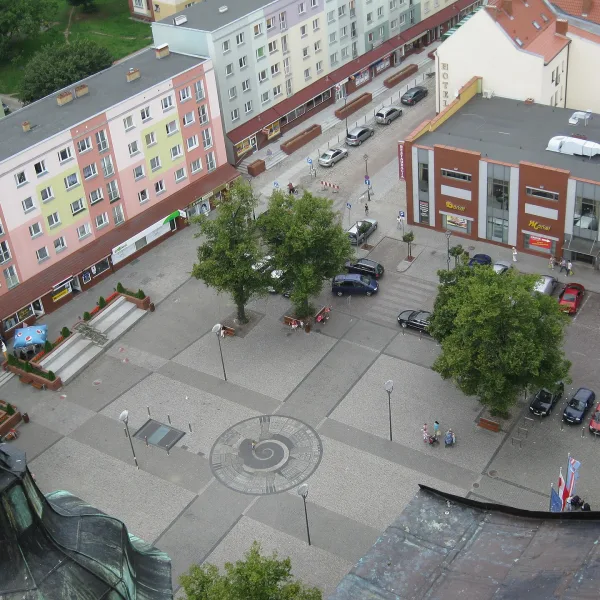
The Rynek Staromiejski w Stargardzie (Old Town Market Square) has been the centre of town since the middle of the 13th century and holds the largest cluster of monuments. The eastern frontage consists of the town hall from the end of the 14th century, rebuilt after the war in 1948-1961, and the guardhouse, a baroque sentry building from the early 18th century, now joined to the neighbouring house and used as a museum. It is worth returning to the square at midday, because the town hall has a clock and plays a bugle call at twelve.
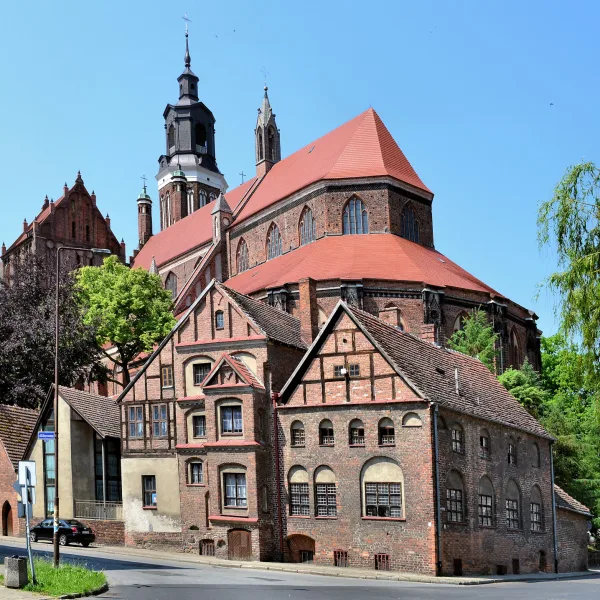
The square is dominated by the Collegiate Church of the Blessed Virgin Mary, Queen of the World, a Gothic brick basilica with a tower about eighty-three metres high. Its silhouette greets you on every approach to Stargard, and locals sometimes wrongly call it a cathedral. Together with the defensive walls, the church forms a national Historic Monument. The legend of the two towers and the councillors' jealousy is told in the article on the Collegiate Church of St Mary.
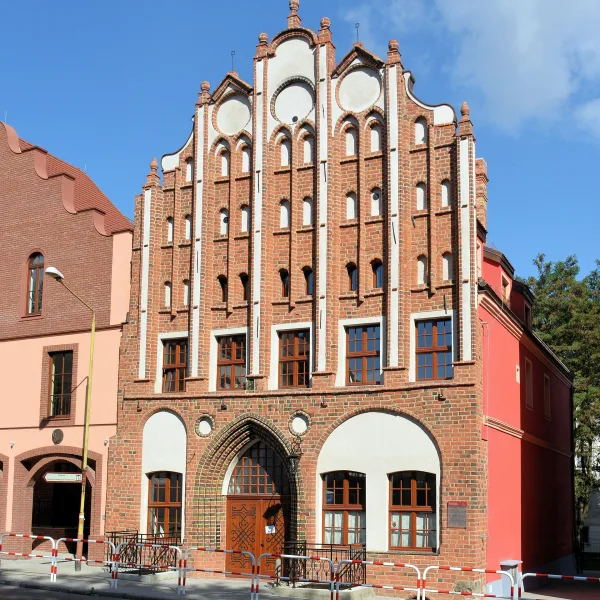
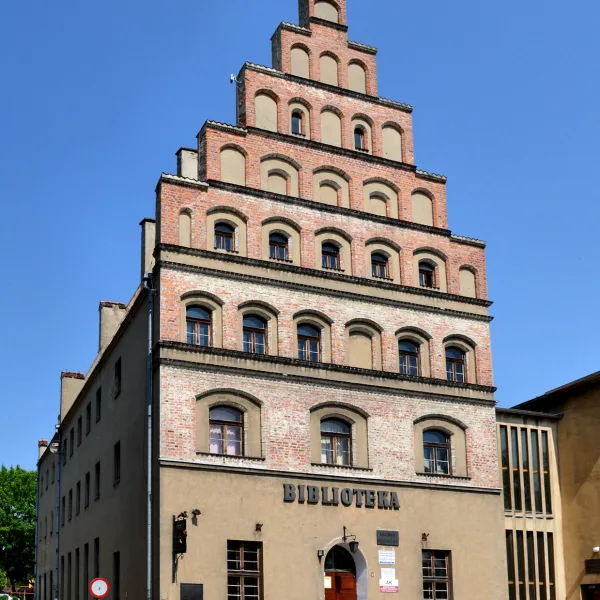
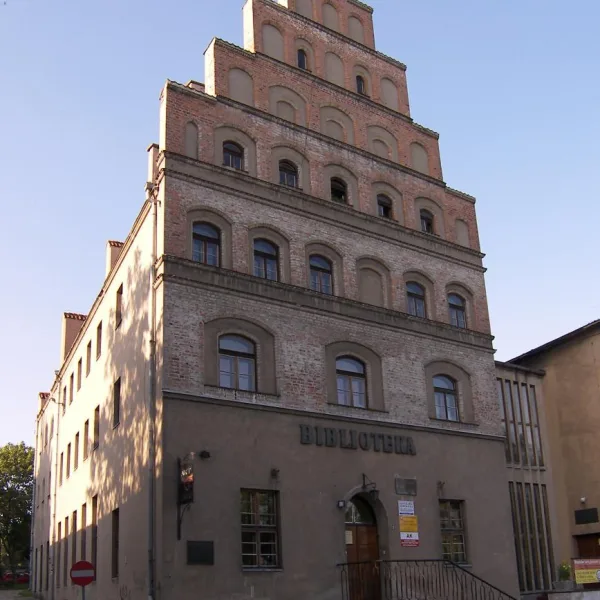
Two Gothic townhouses stand by the church. Dom Protzena (Protzen House) at Kazimierza Wielkiego 13 goes back to the early 1400s and is counted among the best Gothic townhouses in Poland; today it houses a music school. Dom Rohledera (Rohleder House) at Mieszka I 1 has a stepped gable typical of Hanseatic towns and is the seat of the town library.
Which towers and gates in Stargard should you walk first?
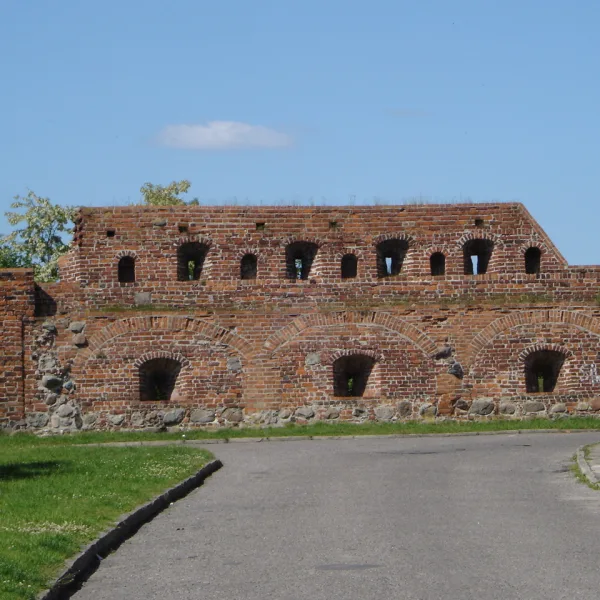
The best start is the walls, because they give the town its character. The defensive walls of Stargard survive for more than a kilometre, and in 2010 they were listed together with the collegiate church as a Historic Monument. Four medieval gates and four towers can be joined into one loop around the Old Town, with stops by the Ina.
The town gates
The Mill Gate (Brama Młyńska) stands over the Mill Canal on Portowa street, with two octagonal towers and battlements, and its image once appeared on the town seals. The canal that powered the town is the subject of the article on the Mill Gate. The Pyrzyce Gate (Brama Pyrzycka), found on Mieszka I street, has a stone base from the 13th century and a brick upper part from 1439, and a museum opened inside it in 1960. The Brama Wałowa (Rampart Gate) on Bolesława Chrobrego street is 19.4 metres high, was rebuilt after the war and now houses an art gallery.
Towers by the Ina
The Morze Czerwone Tower is a Gothic structure from the second half of the 14th century, thirty-four metres high, with three terraces; it stands where Warowna and Władysława Łokietka streets meet. The Weavers' Tower (Baszta Tkaczy), also called the Ice Tower, is slightly lower and is topped with battlements and a brick cone. The Białogłówka Tower dating to the early 15th century rises on a bend of the Ina next to the Rampart Gate and has a white conical roof. The smallest, the Prisoners' Tower (Baszta Jeńców), is round, built of stone and brick, and stands in the southern part of the fortifications on Strażnicza street.
Two more places fit this route: the Arsenal in Stargard, a Gothic building from about 1500 on Basztowa street, now an archive, and the Basteja Museum, the only fully preserved one of the town's three bastions. The insides of both buildings are for rainy days.
Which churches and Orthodox churches can you visit in Stargard?
Stargard has many places of worship, from Gothic churches within the walls to neo-Gothic buildings of the 19th century and large post-war churches. The oldest stand in the Old Town and the younger ones outside it, so they can be visited on separate walks. All of them are gathered under churches and monasteries in Stargard, and their architecture can be admired even without going inside.
Gothic within the walls
The Church of St John in Stargard is a late Gothic brick hall church linked to the local commandery of the Knights Hospitaller. Its tower, with a helmet from 1892, is ninety-nine metres high, and the church holds the largest medieval bell in West Pomerania. The collegiate church described above completes this pair: both churches can be seen from many streets and are easy to combine in one walk.
Nineteenth-century and later churches
The Holy Spirit Church in Stargard on Plac Świętego Ducha is a neo-Gothic building from 1874-1877 with a square tower more than fifty metres high, stained glass and an organ by the Stockmann firm; it stands outside the old walls. The Holy Cross Church in Stargard in the Kluczewo district is much older: it was built of fieldstone and brick around the year 1400, and its tower is decorated with blind arcading. The Church of Divine Mercy in Stargard on the Osiedle Zachód estate is the largest new church built in town after the Second World War, with an upper and a lower church.
Orthodox churches and a Polish Catholic church
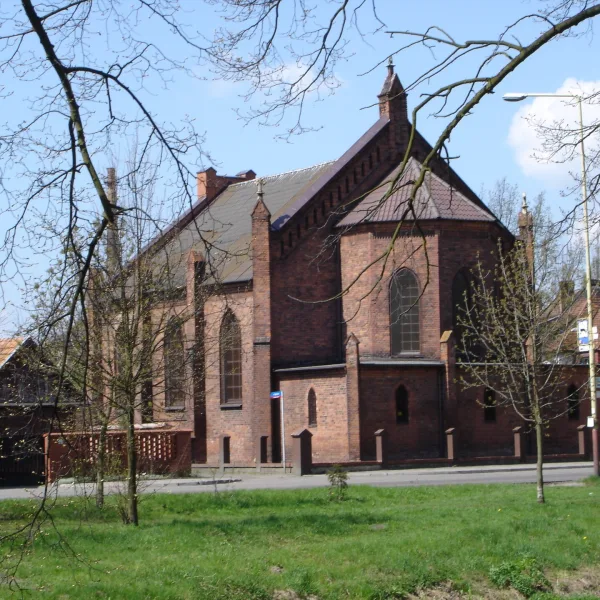
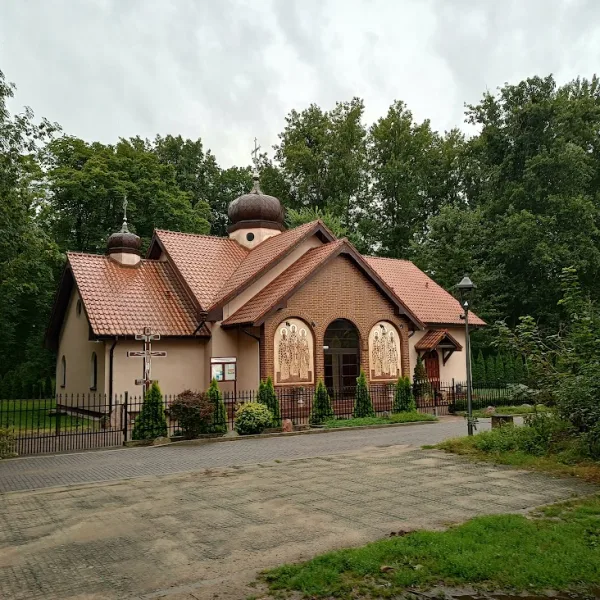
Stargard has two Orthodox churches with different histories. The Orthodox Church of Saints Peter and Paul in Stargard is a former Evangelical Reformed church from 1889-1890 and has been a parish Orthodox church since 1953. The Greek Catholic church of St Josaphat the Martyr on Młyńska street belongs to the Greek Catholic parish; it was built from 2007 and consecrated in 2015. The neo-Gothic Church of the Transfiguration in Stargard on Nadbrzeżna street is now Polish Catholic.
Where should you go for a walk among Stargard's parks?
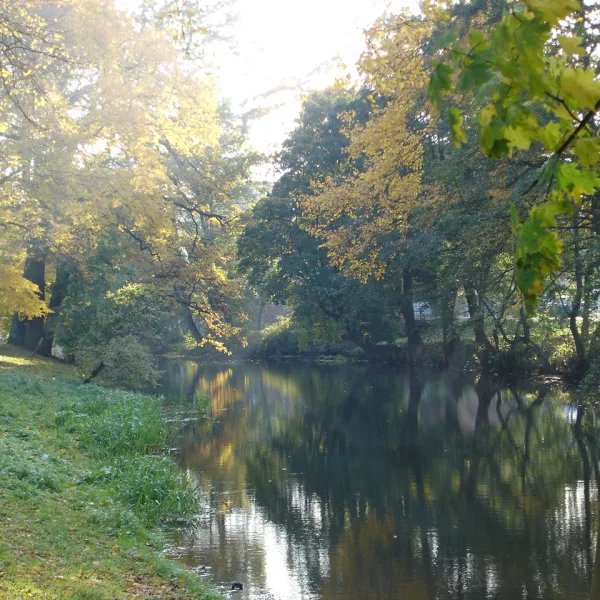
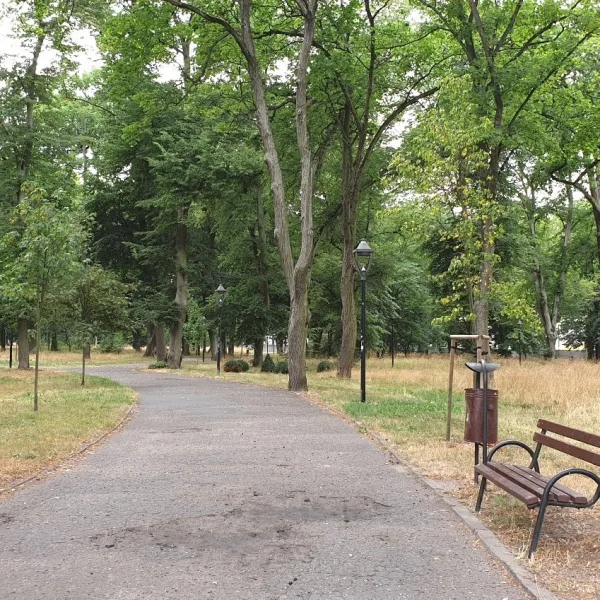
For a green walk, the best area is around the Old Town, because the parks lie right by the walls, on the Ina or on former ramparts. Short breaks between monuments can therefore be spent under the trees. All parks are gathered under parks in Stargard, and they are described in the article on the parks of Stargard: the Castle, Piast, Panorama and others.
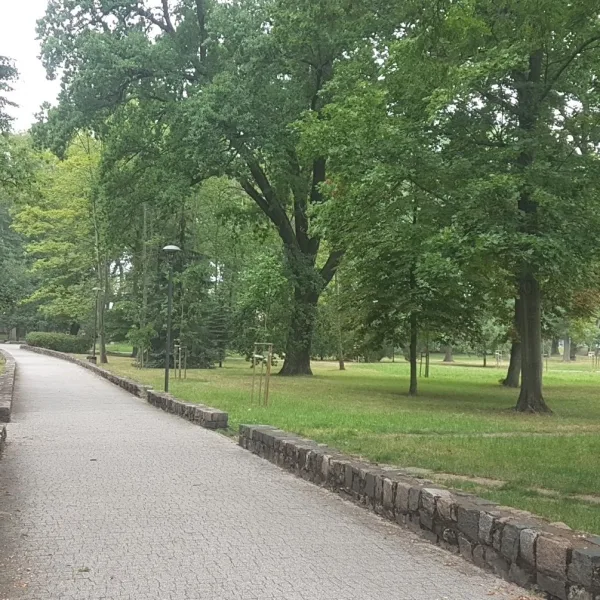
The Bolesław Chrobry Park is the oldest and largest city park, stretched over the former ramparts to the north and west of the Old Town, with old trees and the Nightingale Avenue. The Jagiellonian Park lies on the Ina within the town's promenade parks and has two natural monuments, a pedunculate oak and a white willow. The 3 May Park covers almost five hectares in the centre of town, on the site of a former cemetery, and is planted with oaks, lindens and elms.
In Chrobry Park stands the water tower in Stargard, a neo-Romanesque structure from 1896-1897, sixty-five metres high, with brick decoration. At the edge of Panorama Park stands the Dom Strzelecki (Marksmen's House), a neo-classical house of the shooting fraternity from 1861, now a venue for balls and banquets. Free parks and squares are also gathered under free places in Stargard.
What can you visit in Stargard when it rains?
On a rainy day the town offers at least four museums and cultural institutions, plus children's play halls and entertainment venues. The list Stargard in the rain gathers these places in one spot, and what they share is that most of the time is spent indoors.
Museums and the library
The Archaeological and Historical Museum in Stargard occupies baroque townhouses and the guardhouse at Rynek Staromiejski 2-4, and its branch is the Basteja. The museum also takes care of the Pyrzyce Gate as well as the Morze Czerwone Tower. The Basteja Museum presents a multimedia exhibition on the history of the town in a rebuilt structure from the 16th century. The Stargard Science Centre Filary in a renovated townhouse at Chrobrego 21 combines the history of the town with science and technology on successive floors. All museums are gathered under museums in Stargard.
A quieter option is the Książnica Stargardzka, the town library in a historic townhouse from the 15th and 16th centuries, which hosts meetings and exhibitions. It is a good place for a pause on a walk around the market square.
Indoors with children
The Kinderland play hall in Stargard is open all year and has a climbing tower, slides, trampolines and separate zones for younger and older children. Playhouse Stargard at Struga 3 is an entertainment centre with airsoft ranges, VR games, retro arcade machines and a parrot house. Both places are also tagged as ideas for families, and the list of rainy-day places works with children too.
What is there to see in Stargard beyond the walls: granaries, mills and stones?
Beyond the walls are a few less obvious spots that complete a day well. Technical monuments in Stargard are two buildings by the water and a water tower in a park, and there are also puzzling stone monuments.
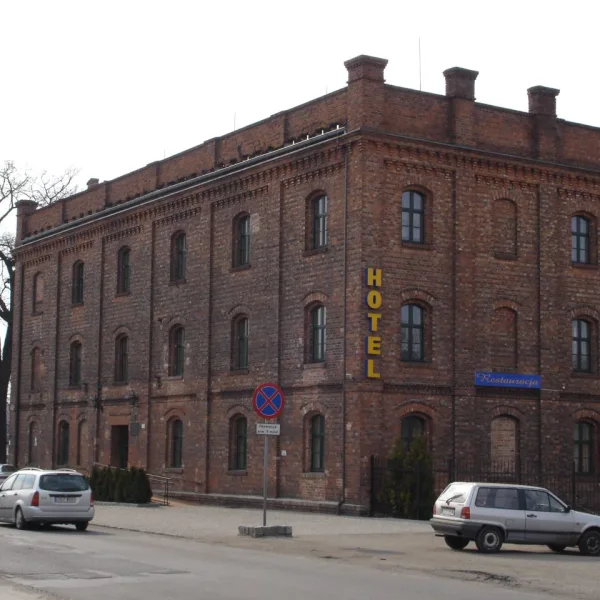
The granary in Stargard at Spichrzowa 1 was built of brick in 1685 on the Młynówka and, according to Wikipedia, is the oldest of the four such buildings in West Pomerania. Today it holds a restaurant. The Mały Młyn (Little Mill) at Gdańska 5 is a two-storey brick building from 1894 on the Krąpiel canal, in use until 1999 and now a hotel. The town's past as a grain trading centre is told in the article on the Hanseatic League in the towns of West Pomerania.
The penance cross in Stargard from 1542 was carved from a single block of limestone and, according to Wikipedia, is the largest penance cross in Europe. The 15th Meridian Monument on Szczecińska street, an interwar erratic boulder, marks the town's position at the fifteenth degree of east longitude. If you like technical monuments and old townhouses, open the list architecture in Stargard or monuments in Stargard.
What memorial sites and cemeteries are there in Stargard?
Stargard has places connected with the memory of the victims of both world wars and of the former Jewish community. They call for quiet and calm, which is why they are described separately and plainly.
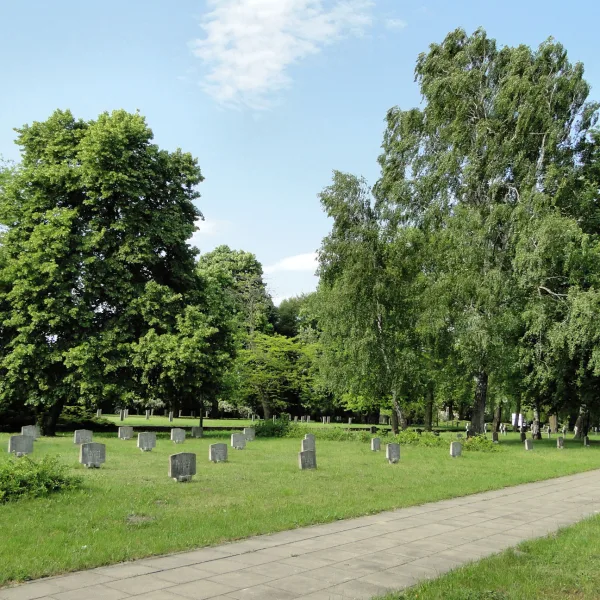
The Jewish cemetery in Stargard dates from the 1700s, when it was laid out on a hill once used for executions, and it was devastated in 1938. Surviving matzevot stand today at the municipal cemetery and are kept at the museum. The war cemetery in Stargard on Reymonta street was founded in 1914 as a burial place for prisoners of war and holds graves of prisoners from both world wars. The Old Municipal Cemetery in Stargard, founded in 1910, is the largest and oldest active necropolis in town; it includes a plot of sappers who died clearing mines in the town in 1945.
Frequently asked questions
What should you see in Stargard in one day?
The Old Town is enough: the Old Town Market Square with the collegiate church, town hall and guardhouse, then a loop along the walls with the Morze Czerwone, Weavers' and Białogłówka towers and the Mill Gate. The day can end in Chrobry Park or in a museum.
Which attractions in Stargard are free?
Mostly the parks, namely Bolesław Chrobry Park, 3 May Park and Jagiellonian Park, together with monuments viewed from outside: the walls, towers and gates. The full list is available in the category of free places.
Where should you go in Stargard on a rainy day?
To the museums: the Archaeological and Historical Museum, the Basteja and the Filary Science Centre. With children, the Kinderland play hall or Playhouse Stargard are good choices.
Is Stargard suitable for a weekend?
Yes, a route along the walls, museums and parks fills two days of unhurried sightseeing. The article on a weekend in Stargard sets out a detailed plan, and the text on the town halls of the western part of the region compares the region's town halls.
What events are there in Stargard?
Concerts, plays and other events are gathered in the calendar events in Stargard, where you can filter them by day and type.

 Churches and monasteries