Palaces in West Pomerania number well over a hundred and fifty, from the Palace Under the Globe in Szczecin to village manors and lakeside ruins.
They suit travellers who like architecture without the crowds: a few stand in towns, but most sit in small villages, in parks and by the water. Some can be seen only from outside, while others now house universities, schools and institutes, so it helps to know what to expect before setting out.
Where to begin a palace tour of West Pomerania?
A convenient start is Szczecin, where the palaces are within reach of public transport and a short walk, and two of them belong to the Academy of Art. After that, head into the countryside, where residences stand alone, usually with a park and a former farm estate.
To see several periods in one trip, pick one building from each group: the baroque complex in Świerzno, the neo-Gothic palace in Białowąs, the classicist one in Małkocin and the ruin in Juchowo. All these addresses are marked as suitable for a solo outing.
Which palaces can you visit in Szczecin?
The city has two late 19th-century buildings, both neo-baroque and both now tied to the Academy of Art. Both lie close to the middle of town, so one day is enough for them. More Szczecin addresses are collected under Palaces: Szczecin.
Palace Under the Globe in Szczecin (Pałac Pod Globusem) stands at plac Orła Białego 2 in the Old Town. It was built in 1890-1891 as an insurance company office and takes its name from the sculpture of a globe on the roof. Earlier the site held the baroque residence of Grumbkow from 1723-1725, designed by Peter de Montarque.
Palace of the Pomeranian Landschaft (Pałac Ziemstwa Pomorskiego) is in Centrum, at Aleja Niepodległości 40. It was built in 1893-1895 for the Pomeranian Landschaft society and today it is home to the Academy of Art's Music Faculty. It is a good extra stop on a walk through the city centre.
Where can you find baroque residences?
Baroque in the region means mostly the 18th century and noble families who built seats close to their own estates. The best preserved layout around a courtyard is the complex in Świerzno, while elsewhere the style survives in rebuilt or damaged form.
Świerzno Manor Complex at Pałacowa 6B was built in 1718-1730 for Major General Bogusław Bodo von Flemming. It is laid out in a horseshoe around a courtyard, with a half-timbered manor, a ballroom with polychrome paintings and a park with a French garden.
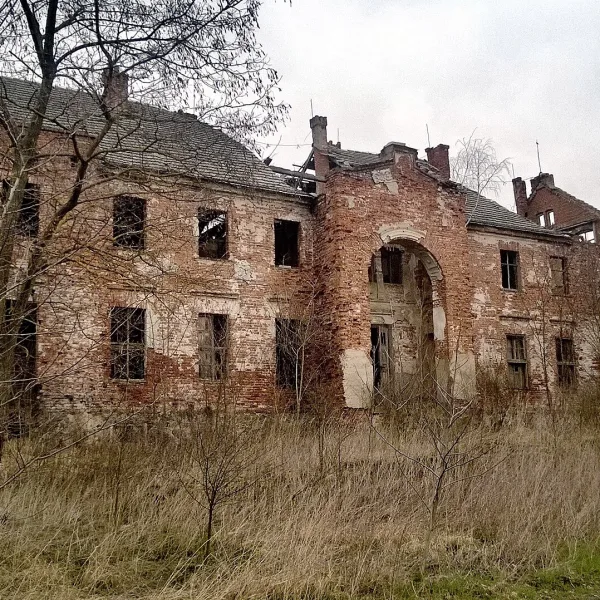
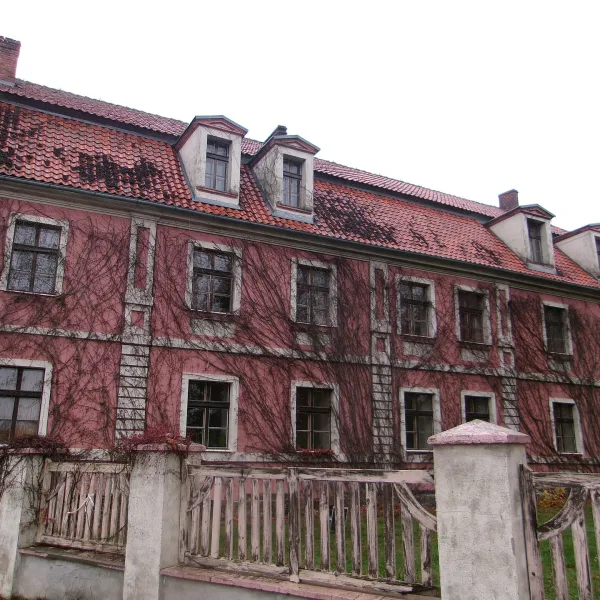
Palace in Stolec, in the gmina of Dobra (Szczecińska), was built after 1721 for the von Ramin family on a rectangular plan of 35 by 11.3 metres. It has an arcade and a balcony on the axis of the facade, but it stands abandoned and in poor condition, so treat it as a place to view from outside.
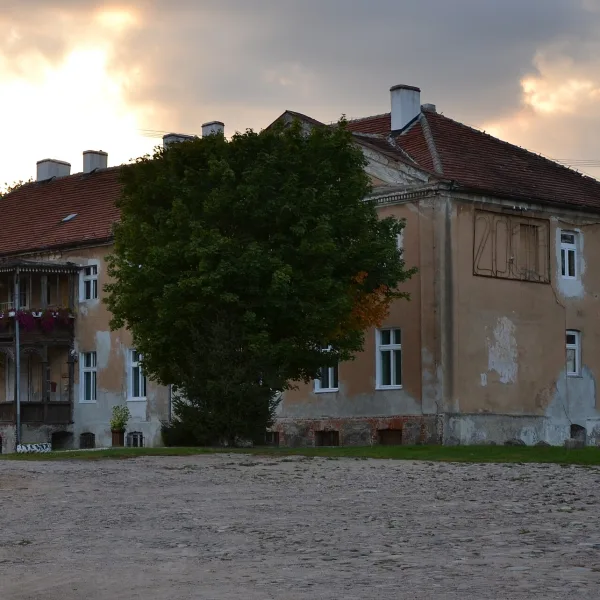
Baroque roots also belong to Manor House in Strzmiele, a complex in the gmina of Radowo Małe. It stands on the site of the Borcke family castle from around 1400, on a small rise in the Rega valley. The baroque palace was rebuilt in the 18th and 19th centuries, and there are pavilions and a park beside it.
Which palaces are ruins, and how do you see them?
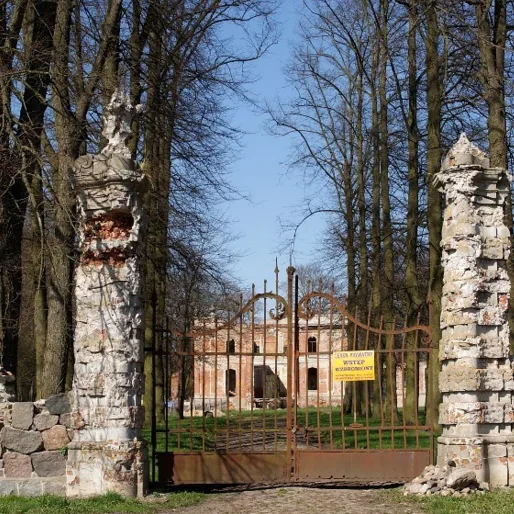
Ruins form a separate group. There is usually nothing to visit inside, but they have the most atmosphere and often lie in overgrown parks. Do not plan to enter the building; expect a walk around the walls and through the park, keeping a safe distance from the masonry.
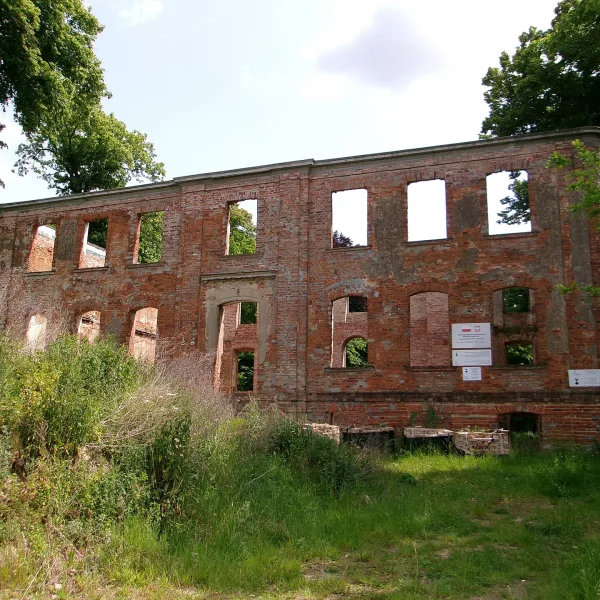
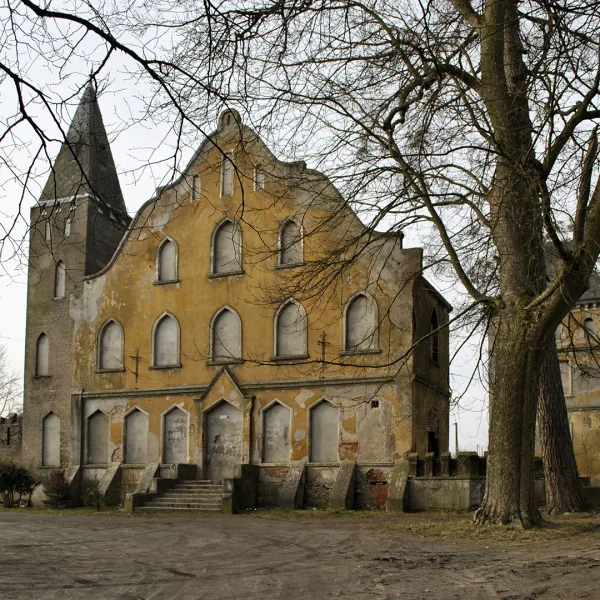
Palace in Juchowo is the ruin of an eclectic residence from 1874, built on the foundations of an 18th-century manor. The von Kleist and Dennig families lived here, and the park lies by a lake. The palace gained a place in the monument register only in 2024, the park as early as 1979.
Palace in Dolsk is an English-style neo-Gothic residence standing in a park clearing near the southern shore of Lake Dolsk, in the gmina of Dębno. It was rebuilt in 1828, became a ruin after a fire in 1967, and slowly rebuilt since the 1990s. Access is from outside.
The same group includes Palace in Gądno, a classicist residence of Friedrich von Mülheim from the 1830s and 1840s, and Palace in Lesięcin, the ruin of a Borcke residence from 1853 in a park of 5.5 hectares with natural monuments. Both are viewed from outside. Manor House in Piaski Wielkie comes close to a ruin as well: the single-storey building from 1931 stands right by Lake Piaski, was a hotel until 2009 and is now devastated.
Where are the neo-Gothic palaces with towers?
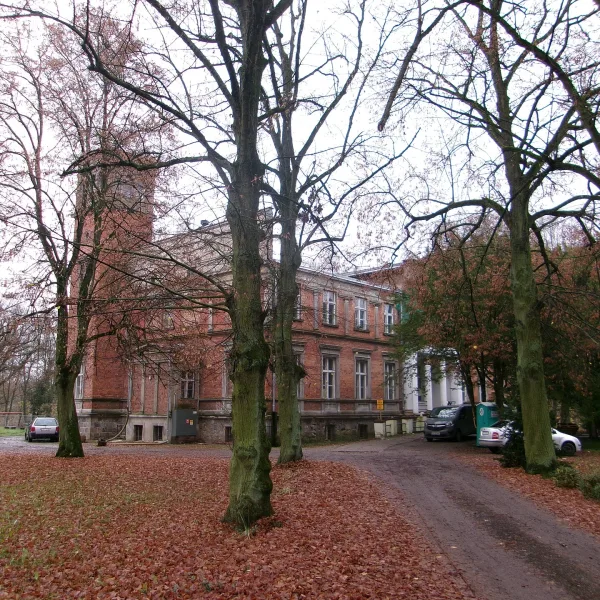
Neo-Gothic here mostly means the second half of the 19th century: red brick, towers and landscape parks. If you like silhouettes with a turret or an octagonal tower, you have to visit several villages in different counties, because none lies close to another.
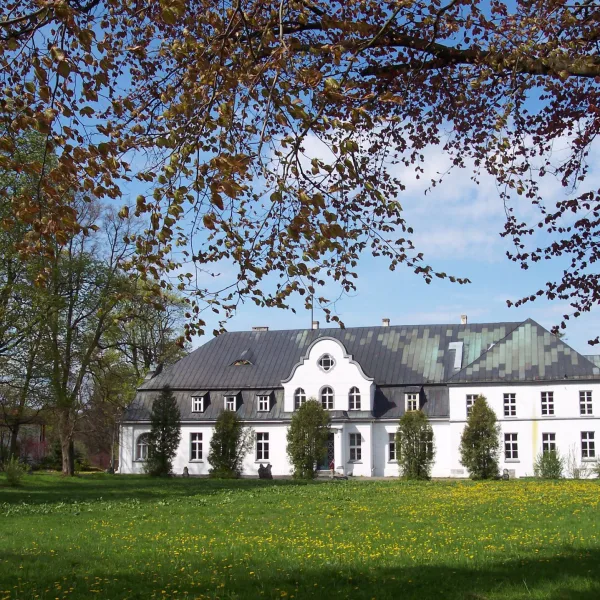
Palace in Podwilcze in the gmina of Białogard is a neo-Gothic residence on an L-shaped plan, rebuilt in 1890-1895 on older foundations. Its register entry dates from 1954 and is surrounded by a historic park. Palace in Białowąs near Barwice dates from the second half of the 19th century and forms, together with a landscape park and natural monuments, a complex entered in the register in 1979.
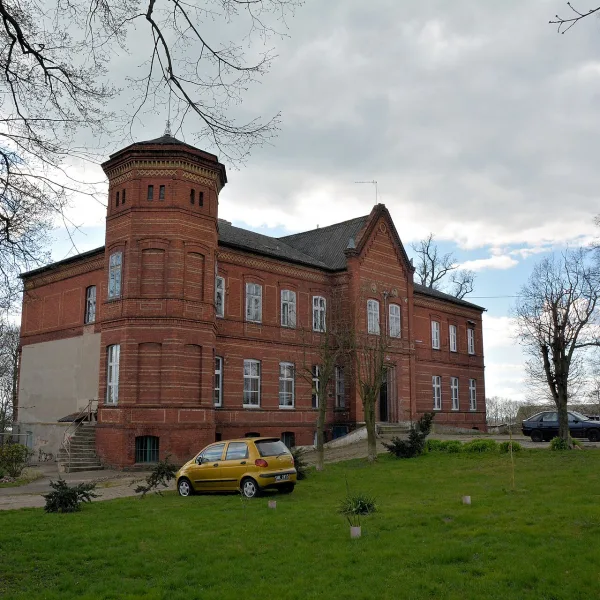
Palace in Leśno Górne in the gmina of Police was built by Hermann Schoeffler of rendered red brick. It has three storeys and a tower, and although restored it remains privately owned. Palace in Lubiatowo from 1890 has a corner octagonal tower and a central projection, with a brick dovecote next to it. The former school has been turned into flats.
Manor House in Czernice, built in 1913 in the gmina of Pyrzyce and once a children's home, has two towers on the garden side: a lower cylindrical one and a taller four-sided one. Palace in Lubień Górny on the Rega, in the gmina of Resko, is a brick building entered in the register together with its park.
Which classicist palaces stand in parks?
Classicism and neo-classicism form the largest group: plain volumes, columns, pilasters and porticoes, mostly of brick. They usually come with a park of several hectares, so even when the interior is closed it is worth coming for a walk.
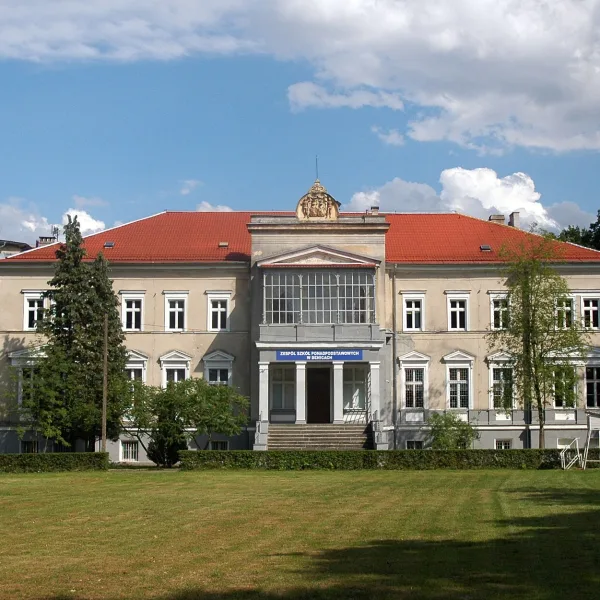
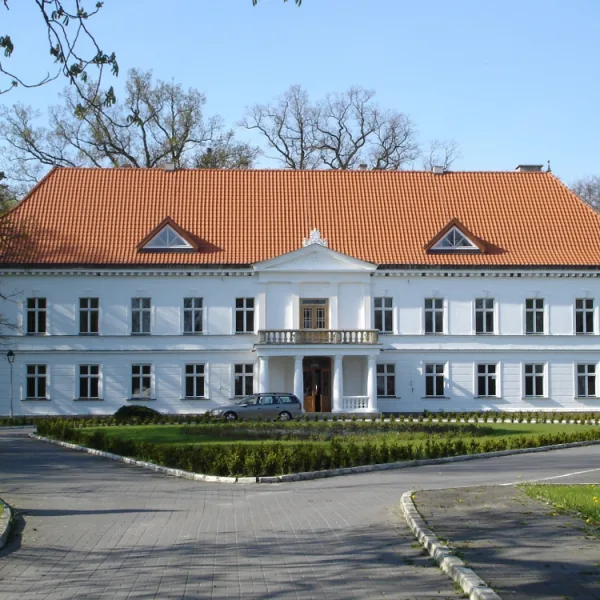
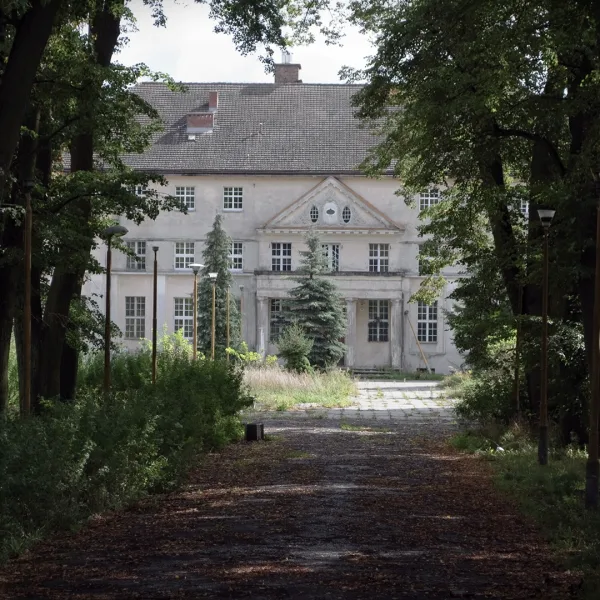
Palace in Benice is a neo-classical seat of the Flemming family, begun in 1867. The brick building covers 1,530 square metres, with a veranda, a portico and an eight-hectare park, and today it houses a school. Palace in Nowe Bielice at Parkowa 22 dates from the end of the 18th century and was rebuilt in 1863-1870 by Friedrich Ladewig. It has a portico and now serves as a social care home.
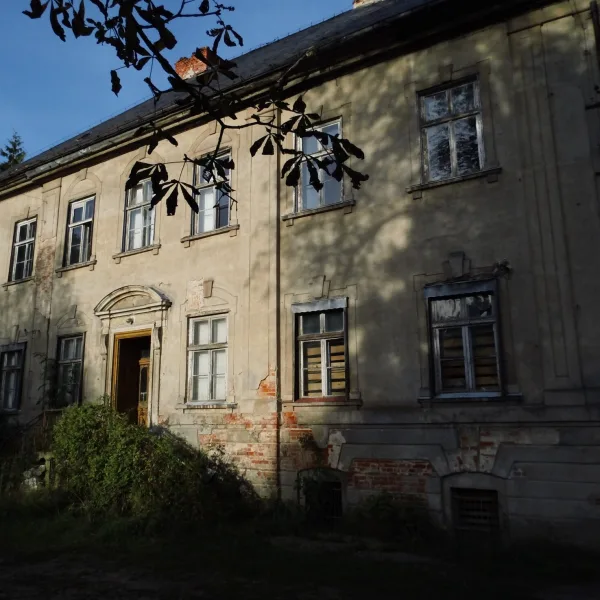
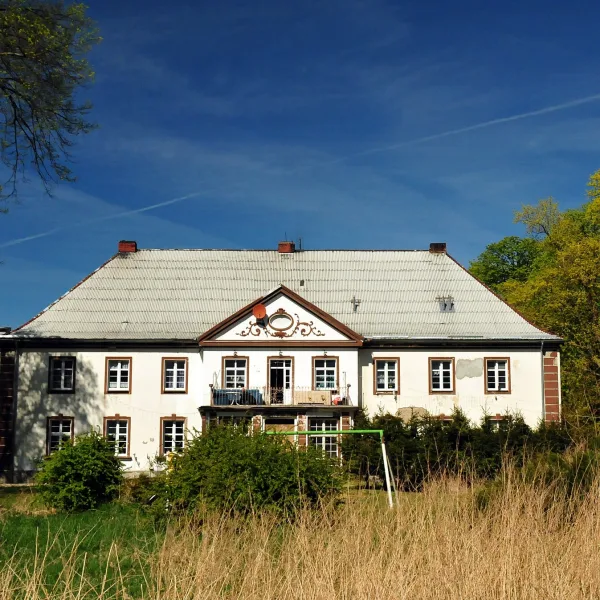
Palace in Małkocin, seven kilometres north of Stargard, has a ballroom and a park of 5 hectares. Palace in Mielęcin at Główna 72 has a four-sided tower, a lime avenue and a park with a pond. Palace in Dobropole stands by Lake Dobropolskie and its facade is decorated with pilasters; the park covers about 4 hectares.
The group also includes Palace in Jagów, a two-storey late baroque manor palace with a 19th-century park, Palace in Klępnica near Łobez with a garden projection and Ionic capitals, and Palace in Gogolice from 1841, part of a complex with a stable and a cowshed. Palace in Garbno, L-shaped, now holds flats, and Palace in Lubiechów Górny stands in the gmina of Cedynia.
Where do palaces now serve as schools, institutes and universities?
Many residences survived because they received a new function. That is good news for the monument and a limit for the visitor: interiors are often closed and the grounds belong to someone. Before a visit, check online whether you may enter the grounds, and when in doubt view the building from the road.
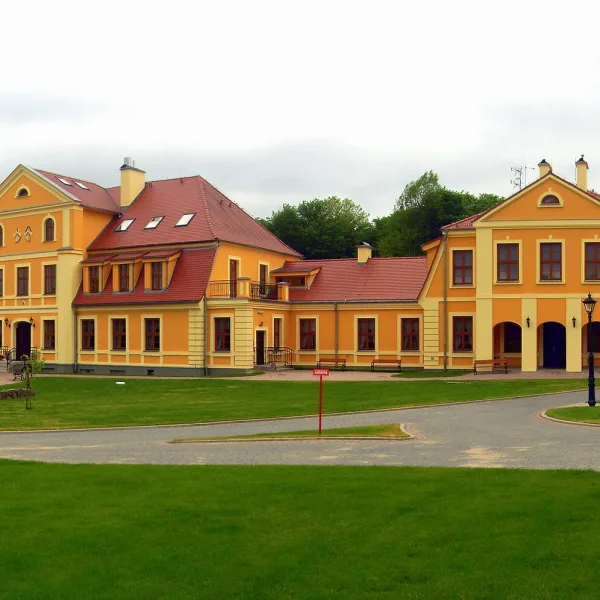
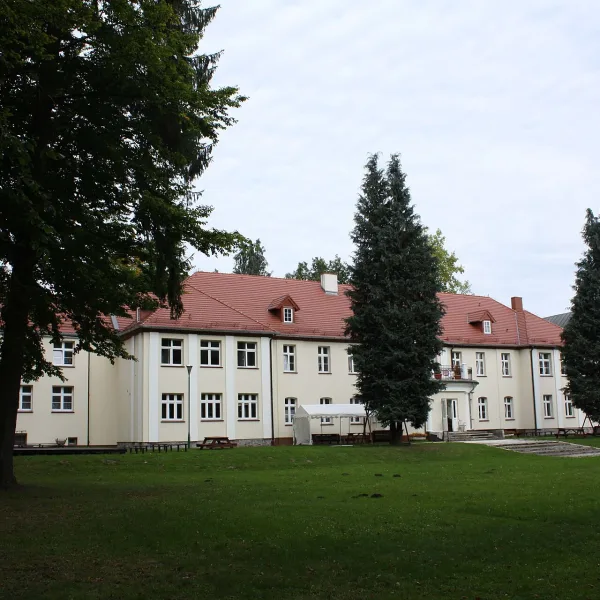
Manor House in Kulice was built around 1848 by Bernhard von Bismarck. From 1995 it was a conference centre, and today it is the International Centre for Interdisciplinary Research of the University of Szczecin. Palace in Smolnica from 1880-1883 stands on the site of a burnt manor of the von der Marwitz family and keeps the stucco of the former ballroom and a historic park. Today it houses a youth facility.
Manor House in Wolin stands in the courtyard of the town hall at Zamkowa 23a. The manor, dating from around 1800, was built by the von Below family on the site of a medieval castle of the Pomeranian dukes, and a renovation was completed in 2012. Manor House in Dargomyśl is a municipal residential building, but it is worth visiting for the park with its monumental oaks.
Where can you trace the Bismarcks and other noble families?
Palaces here are tied to the names of the gentry who managed the estates of Pomerania for centuries. Two places in the gmina of Nowogard are linked to the Bismarck family and fit well into a single trip.
Besides Kulice, there is Palace in Konarzewo, the former Kniephof, where Otto von Bismarck spent his youth. The palace complex lies in a settlement belonging to the village of Żabówko, and the palace itself comes from the closing decades of the 18th century and was remodelled in 1869.
The Flemming and Borcke families appear here many times. The Flemmings built the palace in Benice, the complex in Świerzno and the manor in Piaski Wielkie, while the Borckes resided in Lesięcin and Strzmiele. Palace in Czerników from 1850, with a rococo salon and a 5.6-hectare park by Lake Czernikowskie, was built by Friedrich Wilhelm von Wedel.
How to plan a trip around several palaces?
Distances between palaces are large, so group them by gmina. In Radowo Małe, Dargomyśl and Strzmiele lie close together, in Trzcińsko-Zdrój there are Dobropole and Gogolice, and in Nowogard Kulice and Konarzewo. On the island of Wolin one day is enough for the manor in Wolin and the bishop's palace in Kamień Pomorski.
Bishop's Palace in Kamień Pomorski stands at plac Katedralny 7, beside the co-cathedral dedicated to John the Baptist. It is a late Gothic manor of the former bishop's curia, rebuilt in 1568 in Renaissance style and entered in the register of monuments. Palace in Mosty in the gmina of Goleniów, built in 1910-1928, has an English park and an avenue of copper beeches, and the architect Paweł Korff supervised its construction.
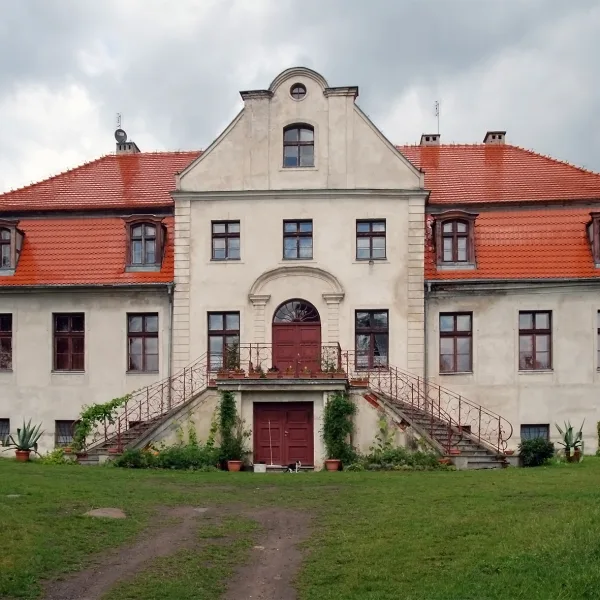
A few more addresses suit a day for lovers of small places: Palace in Nacław with a coat-of-arms cartouche over the entrance, Palace in Lisowo with a corner tower and a farm estate, and Palace in Dargosław with a ceremonial courtyard. Palace in Rymań stands at Koszalińska 2, Palace in Gadom by provincial road no. 108, and Palace in Krąpiel has a neo-Renaissance body with a cylindrical tower and an onion-shaped dome.
The whole region is gathered on the Palaces page.
Frequently asked questions
How many palaces are there in West Pomerania?
The region has well over a hundred and fifty objects, including palaces, manors and manor complexes. Four of them stand in Szczecin, the rest in many villages and small towns.
Which palaces in Szczecin are worth seeing?
The Palace Under the Globe at plac Orła Białego 2 and the Palace of the Pomeranian Landschaft at Aleja Niepodległości 40. Both are neo-baroque buildings of the late 19th century, now linked with the Academy of Art.
Can you go inside the palaces?
Not always. Some buildings are ruins or private homes, and others serve as schools, institutes or social care homes. In such places you usually view them from outside and from the park, if the grounds are open.
Which palace is linked with Otto von Bismarck?
The palace in Konarzewo, the former Kniephof in the gmina of Nowogard. Bismarck spent his youth there. Close by is also the manor in Kulice, built by Bernhard von Bismarck.
Where on the island of Wolin is a manor on the site of a medieval castle?
The manor in Wolin at Zamkowa 23a stands in the courtyard of the town hall, on the site of the castle of the Pomeranian dukes. It was renovated, with works completed in 2012.

 Historic sites