Architecture in West Pomerania means over a thousand buildings: brick Gothic, the gates of Szczecin, town halls, palaces, castles and a ruin on a cliff.
The region lies off the main tourist routes, yet it has one of the most interesting sets of brick architecture in the country. This overview is for people who want to see particular buildings rather than just towns: to compare two towers, step under a Baroque gate, look at a town hall designed by Schinkel or visit a former Cistercian monastery. The entries are sorted by kind of building, because that logic makes planning a route easier.
What architecture can you see in West Pomerania?
Two groups dominate the list. Churches and monasteries number several hundred entries, historic buildings, meaning gates, town halls, tenements and castles, over three hundred. The rest are a dozen or so atmospheric places and museums in historic buildings. Among styles brick Gothic leads, followed by Baroque, neo-Gothic and neo-Baroque, with Renaissance and Classicism in smaller numbers.
Geographically the clustering is clear. Most buildings stand in Szczecin, where the Old Town and the Centre count most, then in Stargard, followed by Świnoujście, Trzebiatów, Kołobrzeg, Koszalin, Goleniów and Chojna. Choosing a route starts with the question whether you want one town or a journey through several. For one town there are separate listings: architecture in Szczecin and architecture in Stargard.
Where do you find brick Gothic?
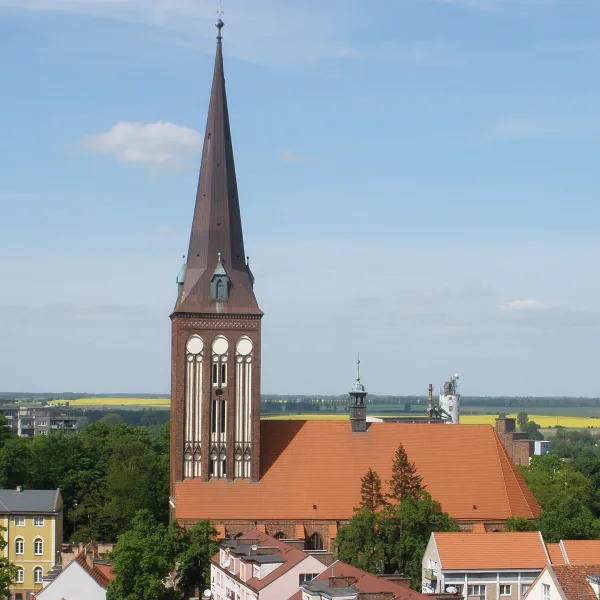
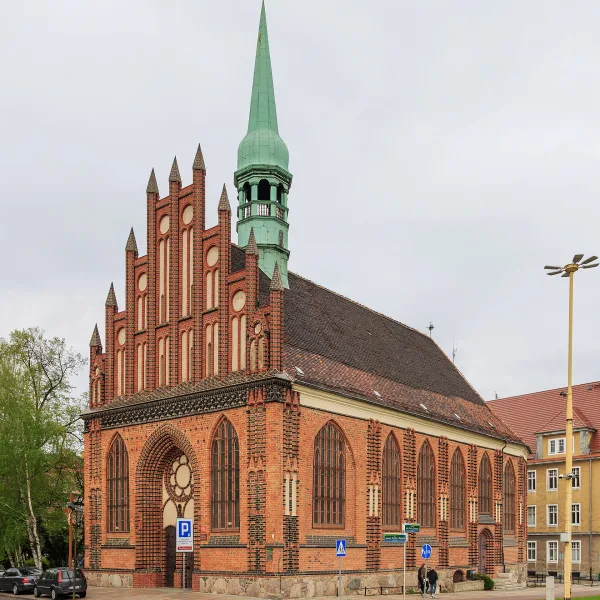
The best examples are the great town churches. The biggest Szczecin example is the Archcathedral of St James, a Gothic hall whose spire climbs past a hundred and ten metres, holding Gothic altars moved from destroyed churches of the region. Small but notable, the church of St Peter and St Paul forms part of the European Route of Brick Gothic, and its interior is known for a ceiling painting dated 1703.
In Stargard two churches invite comparison. The Collegiate Church of St Mary closes the eastern side of the Old Market Square from the south, and its north tower is among the tallest in the voivodeship. The church of St John is a late Gothic hall with a tower ninety-nine metres high and the largest medieval bell of West Pomerania, whose history runs through the local commandery of the Order of St John.
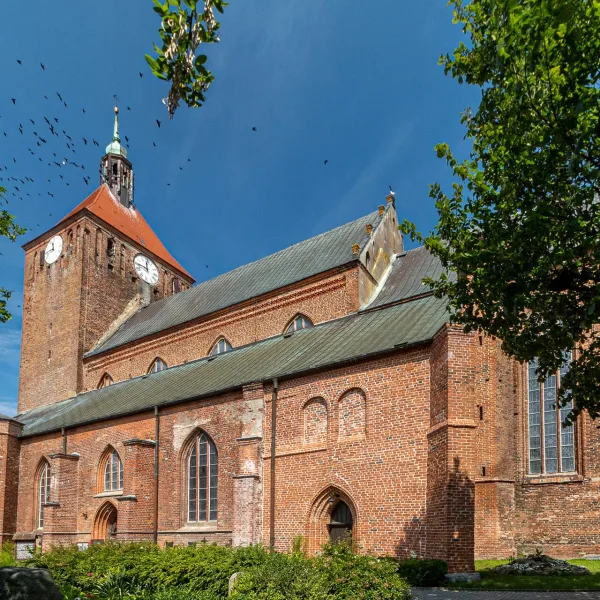
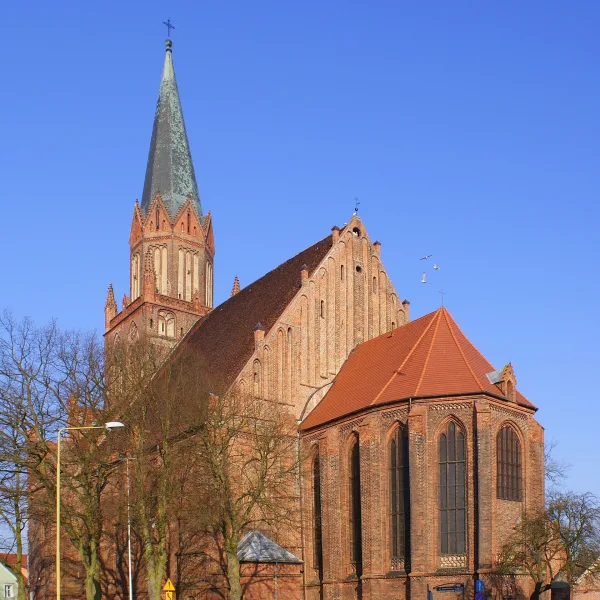
On the coast, Gothic stands in the co-cathedral basilica in Kołobrzeg, a five-aisle hall with a candelabrum of 1327 and a font of 1355, in the cathedral in Koszalin, raised in 1300-1333, and in St Mary's church in Darłowo with the sarcophagi of Pomeranian dukes. Inland, St Mary's church in Chojna draws the eye, one of the largest Gothic churches in Poland, built in 1389-1407 from glazed brick. Trzebiatów offers the church of the Motherhood of the Virgin Mary, with a ninety-metre tower and a bell cast in 1399, and in Gryfice the church of the Assumption kept its Baroque interior fittings.
Very old, too, is the church in Kamień Pomorski, a Romanesque-Gothic basilica and former cathedral of the Kamień bishopric, with Baroque organs of 1669. Of the younger churches, the Basilica of St John the Baptist (1888-1890) is a neo-Gothic hall laid out as a Latin cross.
Where can you see gates, towers and remains of fortifications?
Szczecin kept two gates of the former Prussian fortress. The King's Gate of 1725-1728 carries gables with sculptures of Mars and Hercules, and the Port Gate, once the Berlin Gate, is crowned with a Latin text, a Prussian coat of arms and a view of the city. They are not far apart, so one walk takes in both.
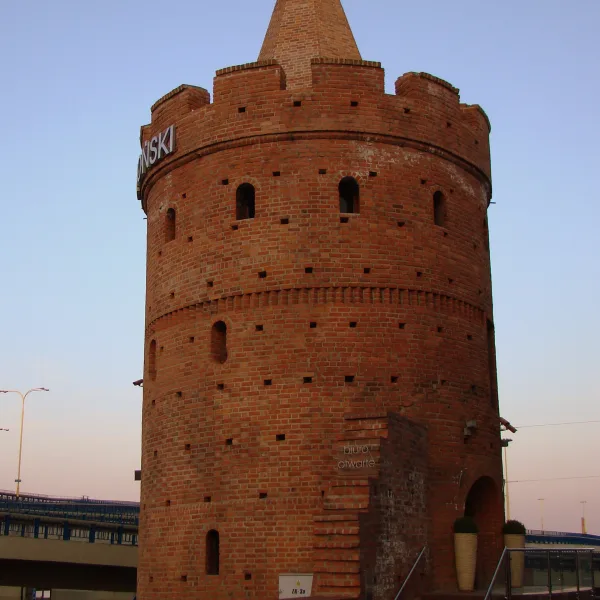
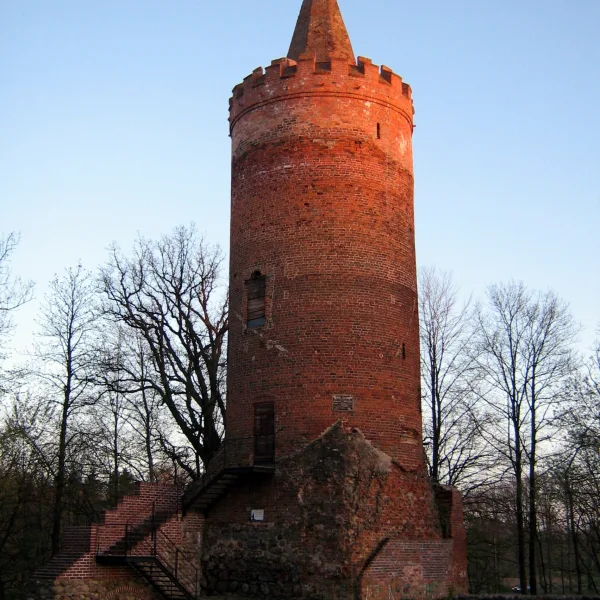
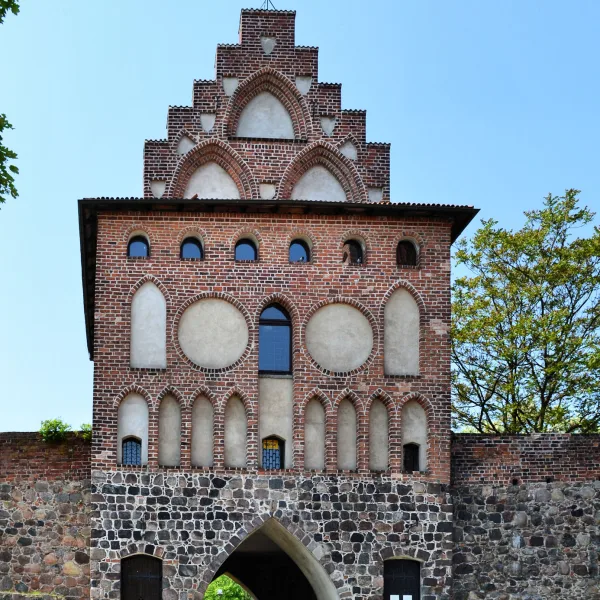
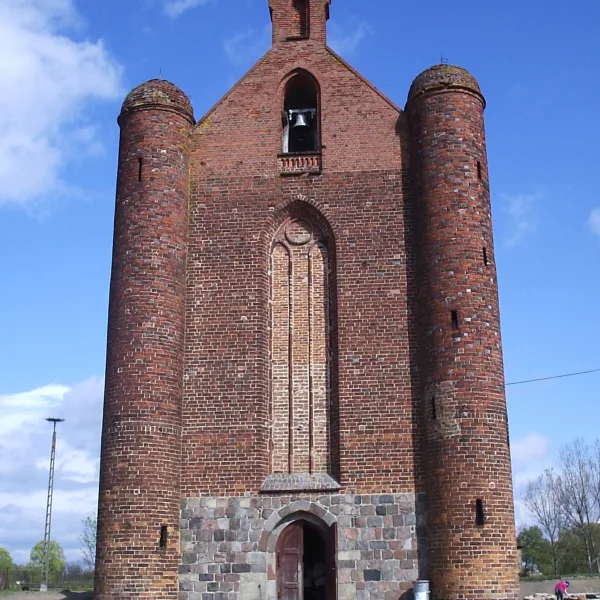
Medieval defences are represented by the Maiden Tower on Panieńska street. The walls of old Szczecin were over two and a half kilometres long, six hundred and ten metres of them along the Oder, with four main gates and a few dozen towers, and the tower takes its name from the Maiden Gate of 1307. In Stargard a similar role falls to the Mill Gate over the Mill Canal: two storeys, two octagonal turrets and crenellation, it forms part of the historic monument together with the collegiate church and the walls.
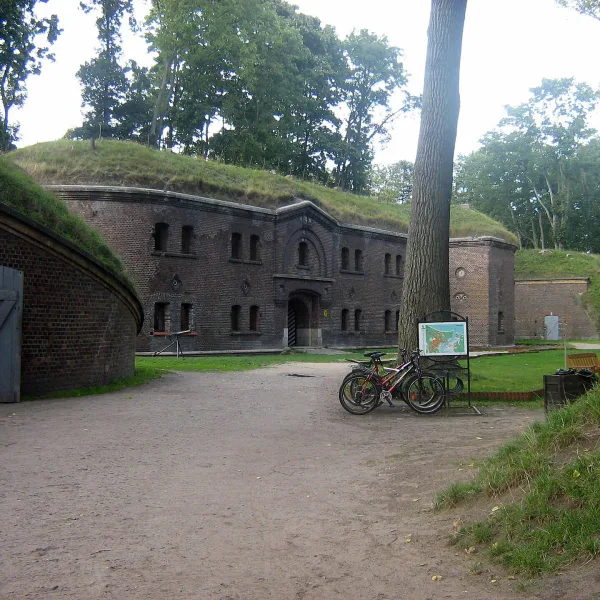
Fortifications of a later date include Fort Gerhard in Świnoujście, a Prussian coastal fort of 1848-1859, reached today by boat.
Which town halls deserve a look?
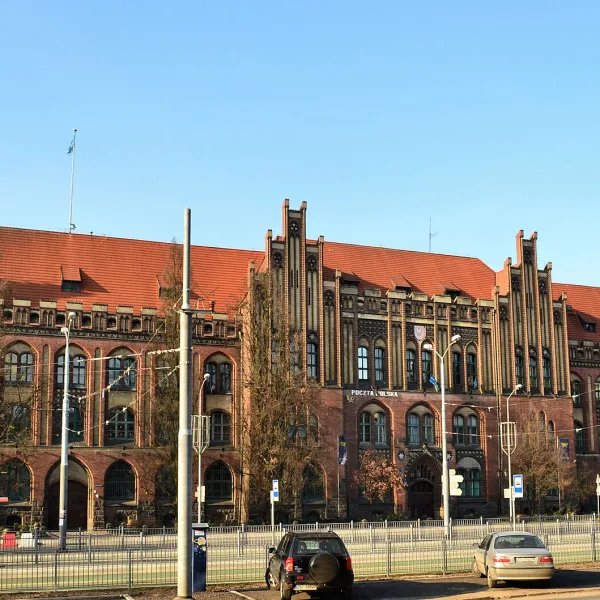
The town halls of the region span three eras. The Old Town Hall in Szczecin dates from the fifteenth century and was rebuilt in 1972-1975, and today it houses the Szczecin History Museum. The Red Town Hall, a former city hall on Plac Batorego, was put up in 1875-1879 in neo-Gothic style and owes its nickname to red brick.
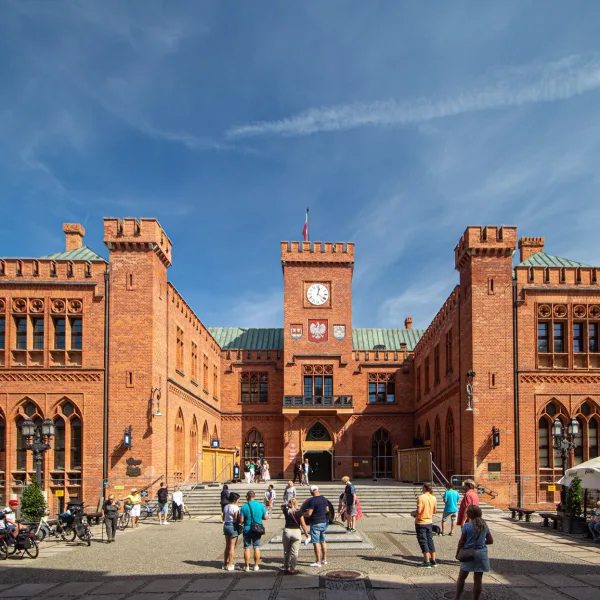
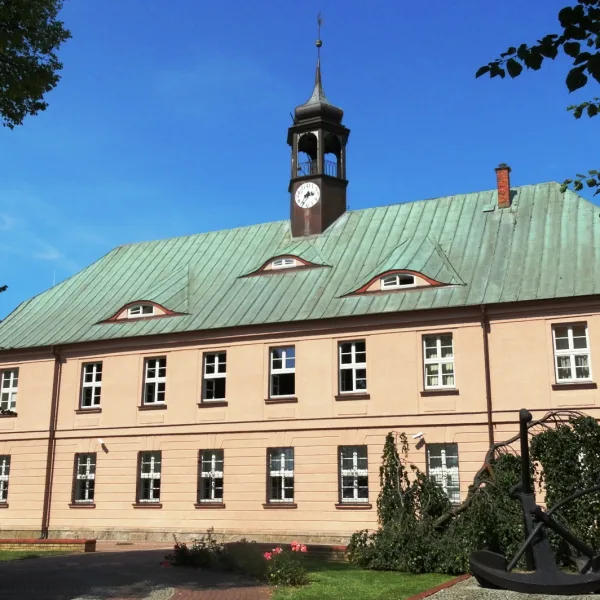
The best known is the town hall in Kołobrzeg: a neo-Gothic block of light red brick designed by Karl Friedrich Schinkel, whose construction began in 1829 on the site of a medieval hall destroyed in 1807. It stands in the middle of the Old Town square and makes a good starting point for a walk. The Sea Fisheries Museum in Świnoujście is housed in the former town hall of 1806, so a visit to the exhibition also gives a look at the building.
Which tenements and palaces should you know in Szczecin?
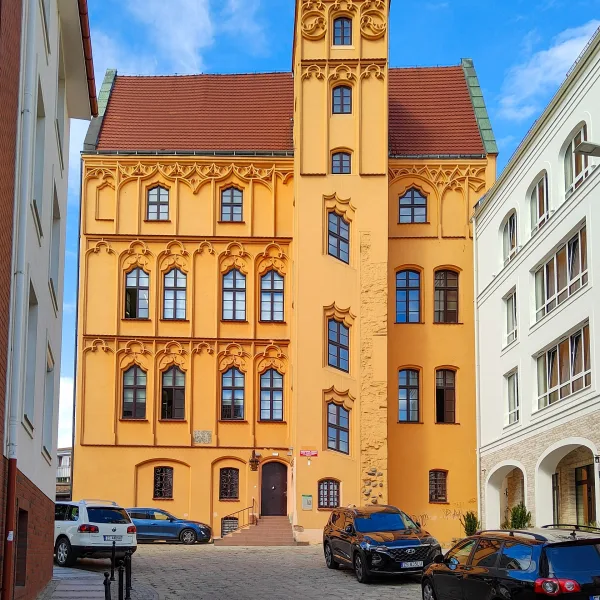
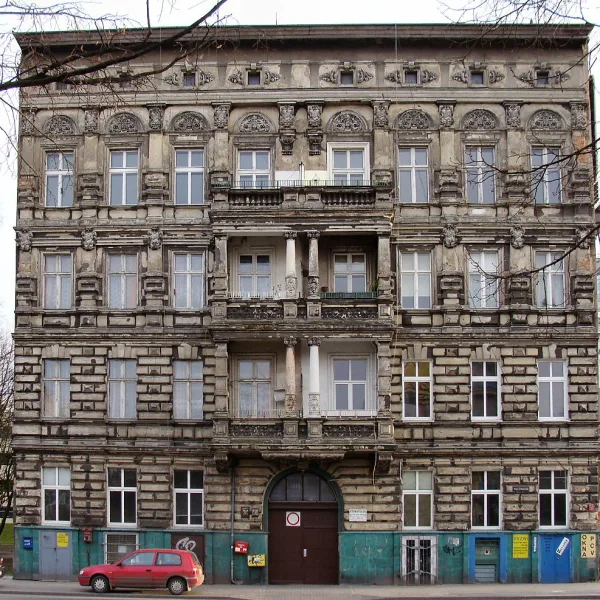
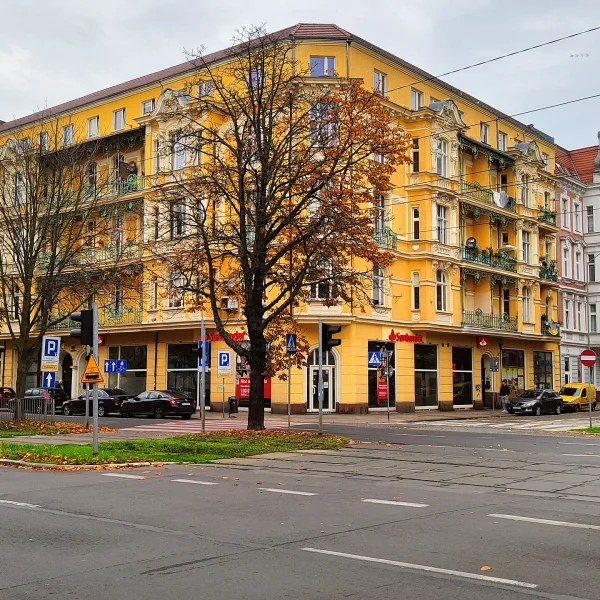
Szczecin kept few tenements from the period, which is why single buildings count twice. The Loitz House on Kurkowa street, raised in 1539-1547 for a banking family, is late Gothic, and it houses an art school, so it is viewed from outside. The tenement at Malczewskiego 34, nicknamed the Sandwich, went up between 1885 and 1888 with a U-shaped layout, and it alone of the prewar houses has lasted in its block. It was entered in the monument register in 2004. The tenement at Piłsudskiego 7 of 1897, designed by Georg Sommenstuhl, has oriel windows and sculptures of women on its facade.
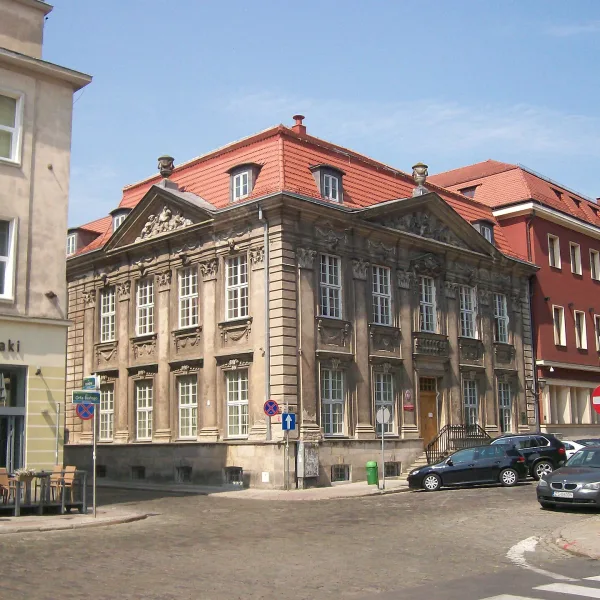
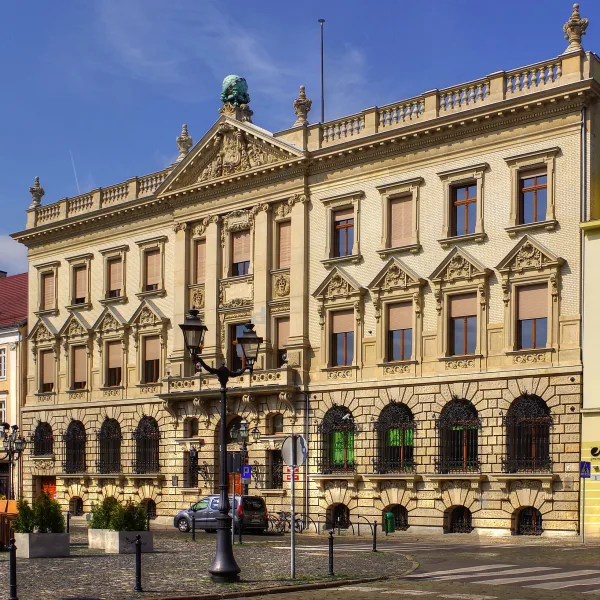
Among palaces the best known is the Globe Palace on Plac Orła Białego, a neo-Baroque building of 1890-1891 with a globe on top, built as the office of an insurance company. Today the Academy of Art works there. Nearby on that square rises the Velthusen Palace, put up in 1778-1779 as a wine merchant's and piano maker's premises, which has trained musicians since 1963.
The ensemble of buildings on the Oder consists of Wały Chrobrego, a terrace about five hundred metres long built in 1902-1921, the National Museum and the Provincial Office building of 1906-1911 with a tower seventy-two metres tall. That skyline is seen best from the bridges. The National Museum alone, with four branches in the city centre, can fill half a day, so allow generous time for this stretch.
Which castles and towers can you visit?
There are a few dozen castles on the list. In Szczecin stands the Castle of the Pomeranian Dukes, a Renaissance seat of the Griffins with a ducal crypt and a viewing tower. The ducal castle in Darłowo is a Gothic fortress built on a man-made island, ringed by the Wieprza river and the Mill Canal. It has housed a museum since 1930, where exhibitions cover Eastern art, sculpture and a historic map of Pomerania.
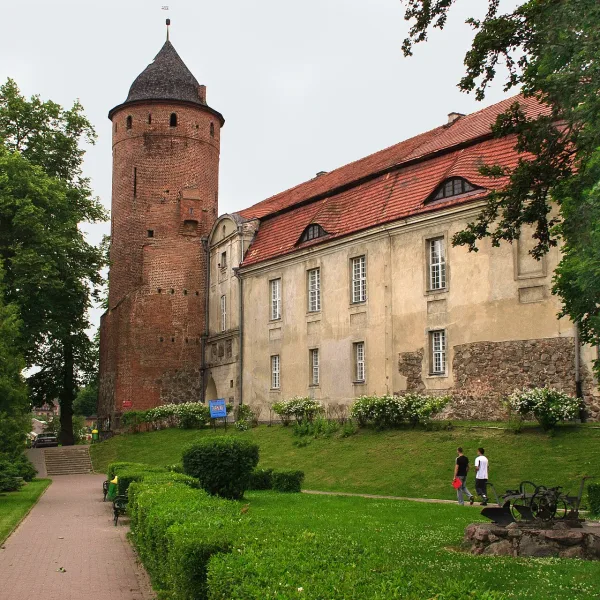
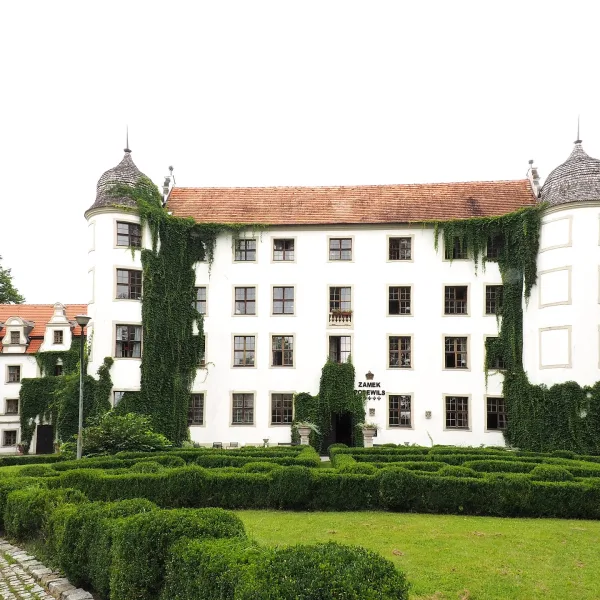
Anyone who prefers less visited places can choose the Hospitaller castle in Swobnica of 1377-1382, owned by the municipality of Banie since 2011, or the castle in Krąg by Lake Zamkowe, a former residence of the Podewils family, today a hotel, where a visit must be agreed with the owner. In Golczewo only the castle tower survives, from the fourteenth century, the sole remnant of the castle of the Kamień bishops, open in summer.
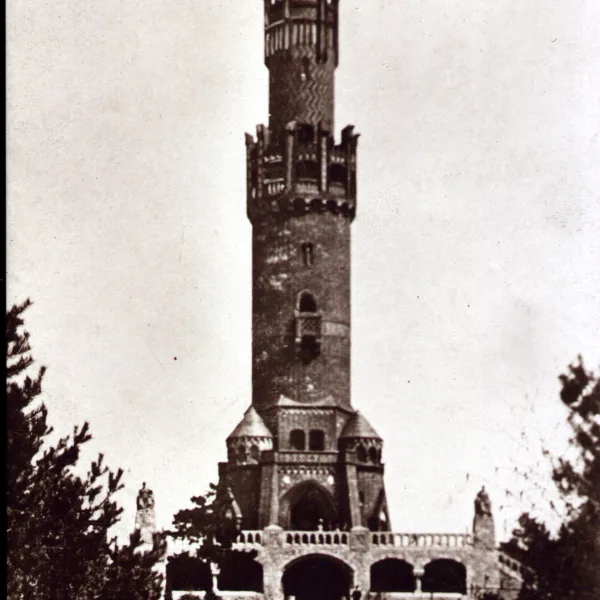
The list includes ruins, too. The palace in Dreżewo is a neo-Gothic residence falling into ruin, viewed from outside only, and the Quistorp Tower in the Arkonka Forest is the overgrown remains of a structure of 1900-1904, as the tower itself is gone.
What else is worth seeing: monasteries, Orthodox churches and ruins by the sea?
The Cistercian abbey in Kołbacz is a former monastery on the Płonia river, extended from the thirteenth to the sixteenth century. The complex was declared a historic monument in 2014, and descriptions rank it among the more valuable brick Gothic sites of the region. By the sea lie the ruins of the church in Trzęsacz: a south wall twelve metres long and six high, standing on the edge of a cliff that the sea has eaten away for centuries.
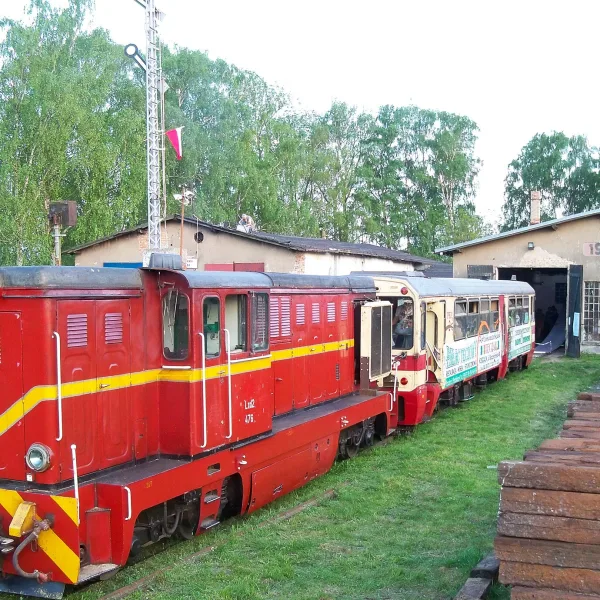
Quite different in character is the church in Biały Bór, a postmodern Greek Catholic building of the 1990s, designed by Jerzy Nowosielski with Bogdan Kotarba and entered in the monument register in 2019. A piece of technical heritage is the Koszalin Narrow-Gauge Railway, with a track gauge of seven hundred and fifty millimetres and seasonal rides.
How should you string the buildings into a route?
The simplest plan is one town as a base. Szczecin repays a full day in the Old Town, taking in the embankment, the castle, the tower, the gates and the archcathedral. A second day can go to Stargard, where two churches, a gate and the walls lie within walking distance, and the town has its own list, architecture in Stargard.
On the coast a trip to Kołobrzeg works well, since it keeps the town hall and the basilica close together, and then on to Darłowo and Koszalin. Listings for the other towns: Kołobrzeg, Koszalin, Świnoujście, Trzebiatów, Goleniów and Chojna. The interiors of many churches are open only outside services, so part of the plan is worth checking before you travel.
Frequently asked questions
Where in West Pomerania is there the most architecture?
In Szczecin, which has a few dozen entries tagged Architecture, most of them in the Old Town and the Centre. Stargard comes next, then the coastal towns and Chojna.
Which style dominates the region?
Brick Gothic, seen in churches, gates and town halls. Beside it come Baroque, neo-Gothic, neo-Baroque and Renaissance.
Which buildings can be visited inside?
Many churches, museums in historic buildings and castles open to visitors. The Loitz House and the Velthusen Palace serve schools, so they are seen from outside, and the palace in Dreżewo is a ruin.
Is there anything in Szczecin outside the Old Town?
Yes, the New Town holds the Port Gate and the Red Town Hall, and the Centre the Basilica of St John the Baptist and the tenements on Malczewskiego and Piłsudskiego streets.
How do you tour architecture when it rains?
Pick churches, museums in historic buildings such as the National Museum or the Sea Fisheries Museum, and the museum inside the castle at Darłowo. Some dozen entries on this list are tagged for rainy days.

 Historic sites