Things to do in Szczecin and West Pomerania: over 1,500 places, from the Gothic Cathedral of St James to the Baltic piers and lighthouses.
The whole region is covered here: Szczecin and its districts, the coast from Świnoujście to Jarosławiec, the lake districts, the forests and the small towns with brick Gothic churches. On a first visit, start with the Old Town and the Oder riverside. If you already know Szczecin, skip ahead to the lakes, lighthouses and cycle routes.
What to see in Szczecin on a first visit?
Most of the city's listings sit in the Old Town (Stare Miasto) and the neighbouring central districts, so that is where to spend your first day. Within a short walk you will find a Gothic cathedral, a medieval tower, two baroque fortress gates and the largest museum in the region. In the evening you can head to the philharmonic hall or cross the Oder to Łasztownia island.
Old Town: from the tower to the cathedral
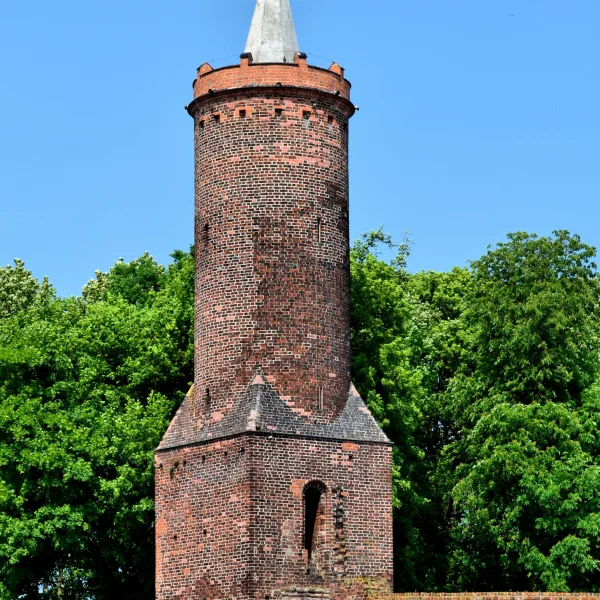
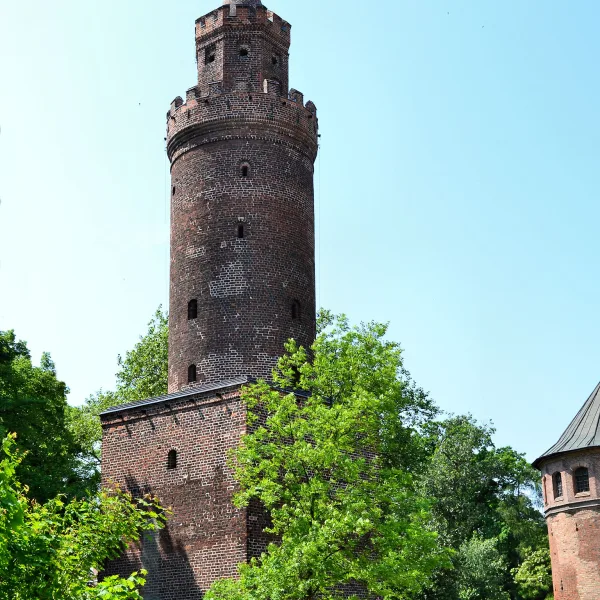
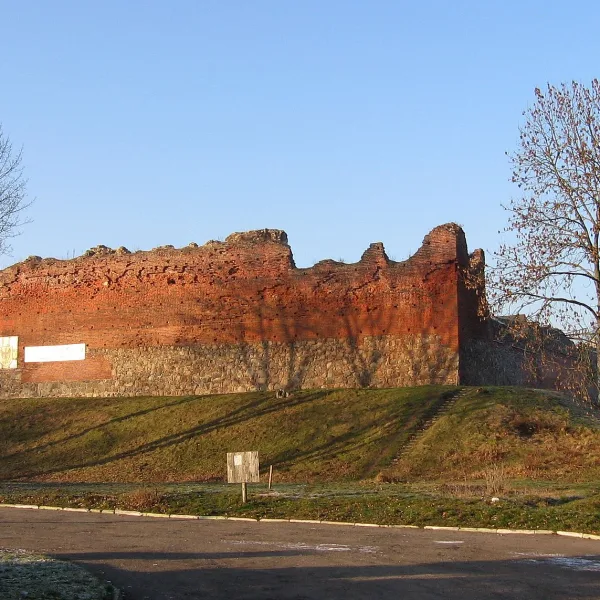
Baszta Panieńska (Maiden's Tower) on Panieńska Street, also called the Tower of Seven Cloaks, is a remnant of the 14th-century Gothic walls, rebuilt in the 1960s. It stands just below the Pomeranian Dukes' Castle, close to the river, and gives a good idea of how the old town defences looked. A few streets away rises the Bazylika Archikatedralna św. Jakuba Apostoła w Szczecinie (Cathedral Basilica of St James the Apostle): a brick hall church whose tower reaches more than 110 metres, with viewing points set into the spire. Inside are Gothic altarpieces brought from ruined churches across the region and twelve side chapels.
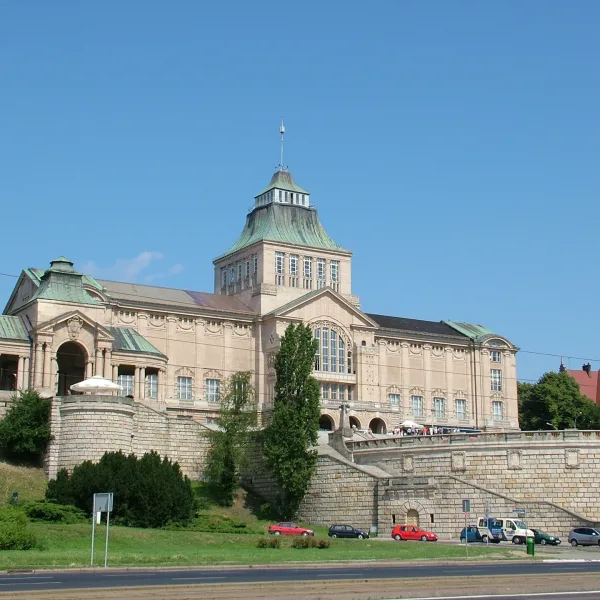
The main building of the National Museum in Szczecin (Muzeum Narodowe) stands on Wały Chrobrego (Chrobry Embankment); the museum also runs four branches in the centre and an exhibition in Gryfice. The collections range from archaeology and medieval sculpture to African and contemporary art, which makes it a good choice for a grey day. On Podgórna Street you will find Książnica Pomorska im. Stanisława Staszica w Szczecinie (Pomeranian Library), the largest library in West Pomerania, with a regional studies reading room in two pre-war buildings joined by a link.
Prussian fortress gates and star-shaped squares
Two baroque gates from the 1720s survive from the old fortress. Brama Królewska (King's Gate) on Hołdu Pruskiego Square has gables with figures of Mars and Hercules, while Brama Portowa (Harbour Gate), once known as the Berlin Gate, shows the city in relief on its attic, topped by Prussia's arms and words in Latin. Both were designed by the Dutch fortification engineer Gerhard Cornelius van Wallrawe.
From the Harbour Gate it is an easy walk to Szczecin's star-shaped squares in the Centrum neighbourhood. Plac Grunwaldzki (Grunwald Square) is the largest: eight carriageways meet here, and its geometry became the emblem of the city's European Capital of Culture bid. Five streets radiate from Plac Szarych Szeregów, the former Arndtplatz, including Aleja Wojska Polskiego and Aleja Piastów, lined with late 19th-century tenement houses. On the corner of Bogurodzicy and Kaszubska streets stands the neo-Gothic Basilica of St John the Baptist, the first Catholic church built in the city after the Reformation.
Śródmieście-Północ and Łasztownia
In the Śródmieście-Północ district stands the white building of the Mieczysław Karłowicz Philharmonic, built on the site of the pre-war Konzerthaus, with a symphony hall and a chamber hall. A little further on lie the Jasne Błonia lawns, a green laid out in the 1920s with more than two hundred plane trees, ideal for a stroll between a concert and dinner. On Łasztownia, across the Oder, the Maritime Science Centre (Morskie Centrum Nauki) occupies a building shaped like a ship's hull: over two hundred hands-on exhibits, a planetarium and a viewing terrace.
Where to go in Szczecin when it rains?
More than 150 places in the region are tagged as good for a rainy day, mostly museums, libraries and stages. In the city itself the simplest plan joins two addresses: the National Museum on Chrobry Embankment and the Maritime Science Centre on Łasztownia are separated only by the river. Children who love vehicles will prefer a trip to Niebuszewo-Bolinko.
There, in a former tram depot on Niemierzyńska Street, the Museum of Technology and Transport shows a collection of Szczecin-made vehicles and runs a road safety science centre where you can sit in the cab of a tram simulator. More indoor options for young visitors are gathered in the For kids category, and every exhibition in the province in the Museums category. For the evening there are the stages in Theatres and opera and the pools and water parks in Aquaparks and pools.
Water and greenery within Szczecin
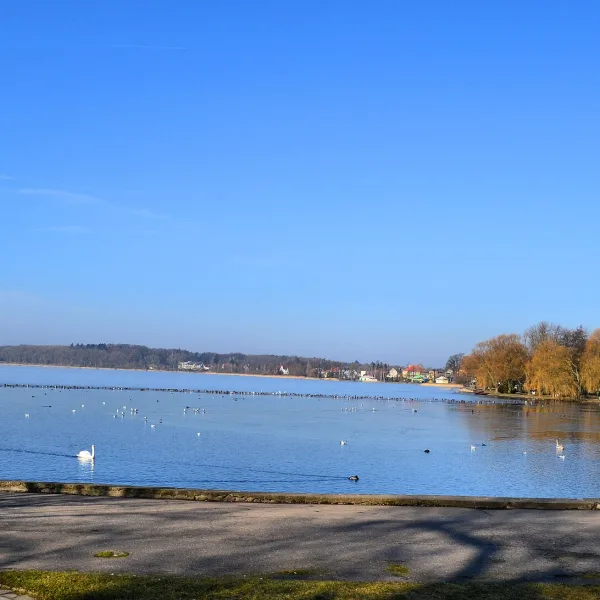
Szczecin sits on the Oder, and almost a fifth of its area is taken up by a lake. Dąbie lies where the Lower Oder forms a delta and ranks as the fourth largest lake in Poland, with a shipping channel for seagoing vessels, marinas and more than a dozen islands. Sailors and kayakers head here first; walkers come for the shoreline views across open water.
In Gumieńce lies Cmentarz Centralny w Szczecinie (Central Cemetery), a working cemetery laid out as a park in 1901 and listed as a Monument of History. It has a historical trail and a botanical path, but it is visited with respect for a place where funerals still take place. Other green spaces in the city and the region are in the Parks and nature category.
What to see on the coast: Świnoujście, Międzyzdroje, Kołobrzeg
The West Pomeranian coast is above all about piers, lighthouses and spa parks. Each of the three largest resorts has its own character: Świnoujście revolves around the port and canals, Międzyzdroje around its beach on Wolin island, and Kołobrzeg around its spa quarter with a Gothic basilica in the centre.
In Świnoujście, start with the Park Zdrojowy w Świnoujściu (Spa Park), laid out in the 1820s on a former sandbank, with around sixty species of trees. On Plac Rybaka, in a neoclassical town hall from the early 19th century, is the Museum of Sea Fishing: Baltic wildlife, amber, fishing gear and ship models. The south of the town is crossed by Kanał Piastowski (Piast Canal), dug through Usedom in the 19th century, which carries ships between the Świna and the Szczecin Lagoon.
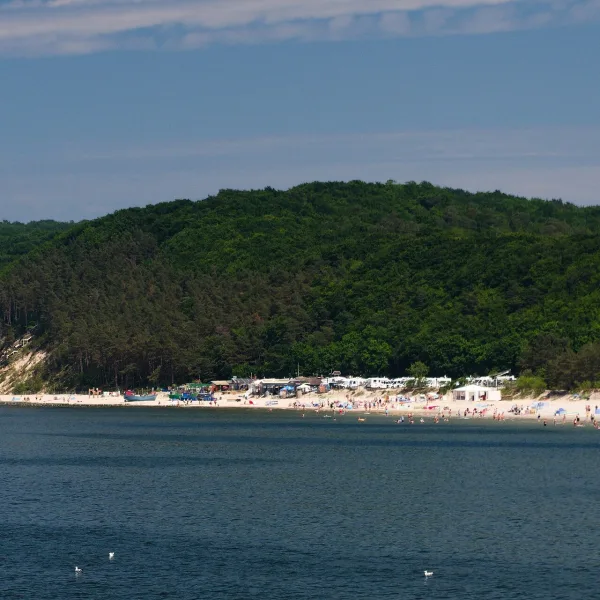
The Międzyzdroje pier runs almost four hundred metres out into the Pomeranian Bay; two white towers left from the old wooden pier stand at the entrance, and excursion boats leave from the end. The Kołobrzeg pier is shorter, has a two-level head and stands at the end of Mickiewicza Street next to the spa park. In the centre of Kołobrzeg rises the Co-Cathedral Basilica of the Assumption, a five-aisled hall church with a Gothic seven-branched candelabrum and a 14th-century font.
Lighthouses you can climb
East of Kołobrzeg, three lighthouses are open to visitors. Gąski lighthouse has a terrace at the top of 190 granite steps, with a view of the coast from Sarbinowo to Unieście. Latarnia Morska Darłowo in Darłówko is a low brick building by the mouth of the Wieprza, quite unlike a classic tower. Latarnia Morska Jarosławiec stands in the middle of the village, and its light has shone since the first half of the 19th century. Other lighthouses, harbours and canals are collected in the Lighthouses and harbours category.
Between Mielno and Unieście lies Jamno, a coastal lake separated from the sea by a spit, with sailing marinas and boat trips. It makes a good alternative to the beach on a windy day.
Lakes, rivers and forests inland
The Drawsko and Ińsko lake districts and the Pyrzyce Plain are the second, less familiar face of the province. The Lakes category lists dozens of bodies of water, from deep glacial troughs with islands to shallow lakes on the plain, and most of them are free to visit.
Drawsko, in the Czaplinek municipality, is the largest lake in the Drawsko Lake District and the second deepest in Poland after Hańcza, with twelve islands and bases for sailors, divers and anglers. The lake is crossed by the Drawa, one of the region's main kayaking rivers, whose middle course runs through Drawa National Park. The park has a kayak trail, nature paths and beech woods, and paddling through part of it is allowed only in set periods.
Lake Ińsko lies within the town limits, has a protected island and a public beach, and is one of the most popular diving spots in the province. Miedwie, near Stargard, is the fifth largest lake in Poland and the country's largest cryptodepression, with bathing areas and a cycle path all the way round.
Which towns beyond Szczecin are worth a visit?
After Szczecin, the towns with the most listings are Stargard, Kołobrzeg, Koszalin and Świnoujście, followed by Szczecinek, Wałcz, Goleniów and Trzebiatów. Each makes a half-day or full-day trip.
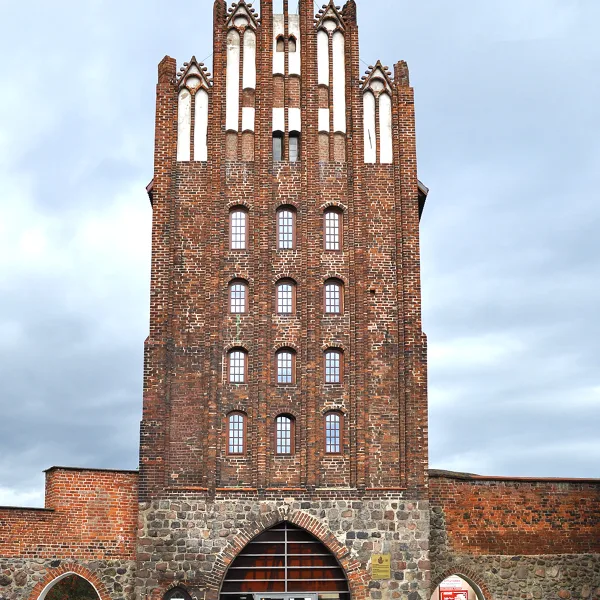
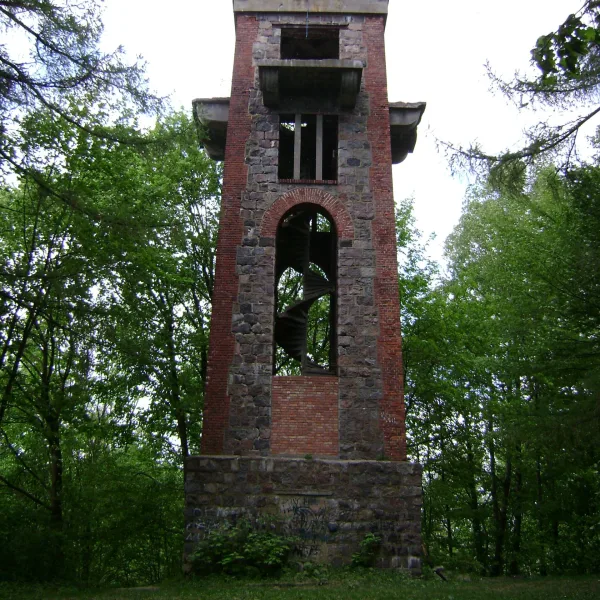
In Stargard, the Mill Gate (Brama Młyńska) spans the Mill Canal: a medieval gate with two octagonal towers and water flowing through it. Together with St Mary's Collegiate Church and the defensive walls it forms a Monument of History. In Koszalin you can climb Góra Chełmska (Chełmska Hill), a moraine ridge with a sanctuary and a late 19th-century observation tower, a few kilometres from the Baltic.
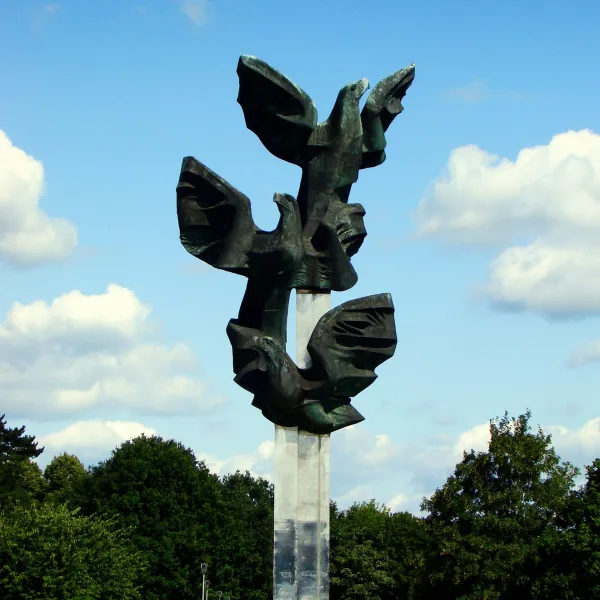
In the south of the province, near Osinów Dolny, stands Góra Czcibora (Czcibor Hill), with an eagle monument and 270 steps, commemorating the Battle of Cedynia of 972. In Biały Bór, on the eastern edge of the region, you can see the Cerkiew Narodzenia Przenajświętszej Bogarodzicy w Białym Borze, a postmodern Greek Catholic church designed by Jerzy Nowosielski. Old towns full of Gothic brick are covered in the Historic sites category, and more than eight hundred places of worship in Churches and monasteries.
Walking and cycling routes across West Pomerania
Two long routes link most of the region. Around the Szczecin Lagoon is a Polish-German cycling loop divided into seven stages: it starts and ends in Szczecin and passes through Goleniów, Wolin, Świnoujście and Międzyzdroje.
On foot along the sea runs the E9 European long-distance path, coastal section, which in this province leads from Świnoujście to Jarosławiec via Międzyzdroje and Dziwnów. Shorter routes, moraine hills and viewpoints are gathered in the Hills and trails category.
Places of remembrance in West Pomerania
A separate category, Places of remembrance, covers several dozen sites connected with the war and the Holocaust. They form a group of their own, kept apart from the listings for leisure and sightseeing.
In Police lie the ruins of the synthetic fuel plant, the German Hydrierwerke Pölitz, where forced labour camps and a concentration subcamp operated during the Second World War; an educational path now leads through the site. In Szczecin, the New Synagogue, burned down on the night of 9 to 10 November 1938, is commemorated by a plaque next to the Pomeranian Library. Kłomino, in the Borne Sulinowo municipality, is a deserted forest settlement where the Gross-Born POW camps once stood, later a Soviet garrison.
How to choose places for a weekend in the region?
The easiest way is to filter by tags. More than two hundred places are marked as free, mostly lakes, parks, squares and trails. Several dozen are tagged as family-friendly, more than a hundred as good for couples, and more than a hundred for their views.
Frequently asked questions
What can I see in Szczecin in one day?
The Old Town with the Maiden's Tower and St James's Cathedral, Chrobry Embankment with the National Museum, then the Harbour Gate and Grunwald Square. If time allows, cross the Oder to Łasztownia and the Maritime Science Centre.
What free things are there to do in and around Szczecin?
Without a ticket you can see the star-shaped squares, Jasne Błonia, the shores of Lake Dąbie and the fortress gates from outside. In the region, the lakes, trails, the piers in Kołobrzeg and Międzyzdroje and Chełmska Hill in Koszalin are all free.
Where can I take children in Szczecin when it rains?
To the Maritime Science Centre on Łasztownia, where visitors operate the exhibits themselves, or to the Museum of Technology and Transport in the former tram depot in Niebuszewo, with its tram simulator. Both are tagged as rainy-day places.
Which lighthouses can you climb?
The lighthouses in Gąski, Darłówko and Jarosławiec are among those open to visitors. In Gąski, 190 steps lead to the terrace, with a view of the coast from Sarbinowo to Unieście.
Which lake in West Pomerania is best for sailing or diving?
For sailing: Dąbie in Szczecin, Drawsko near Czaplinek or Jamno by Mielno. Divers often choose Lake Ińsko, which is deep and has a varied bottom.

 Churches and monasteries