Things to do in Szczecin: more than two hundred places, from the Ducal Castle and Chrobry Embankment to parks, lakes and museums for rainy days.
Szczecin lies on the Oder and its side channels, and its sights fall into a few clear areas: the Gothic Old Town, the terraces above the river, the star-shaped squares of the city centre and the green districts on the outskirts. The sections that follow lead through them in turn and show what suits a first day, a wet afternoon or a calmer walk.
What should you see in Szczecin on a first visit?
The first day is best spent in the Old Town and by the Oder. The castle, cathedral, town hall, tower and fountain all stand here, and the distances between them are a matter of a few minutes on foot. It is also the district with the most places on the list: several dozen entries, more than in any other part of the city.
The castle, the tower and the cathedral
The Ducal Castle (Zamek Książąt Pomorskich) rises over the river on the hill where the Griffin dukes of Pomerania once resided. The Renaissance building was reconstructed after the war and keeps a princely crypt and a tower you can climb for views; cultural institutions work inside. Just below it, at Panieńska 47, stands the Maiden Tower (Baszta Panieńska), a Gothic tower from the 14th century, left over from the old fortifications and rebuilt in the 1960s, nicknamed the Tower of the Seven Cloaks. It is one of the recognisable symbols of the city.
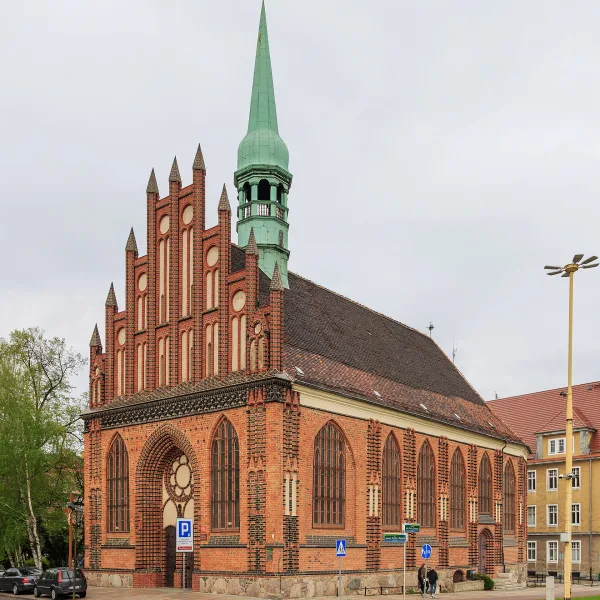
The Gothic brick hall church of the Old Town is the Archcathedral Basilica of St James the Apostle, the main church of the archdiocese. The helmet of its tower reaches over a hundred and ten metres, and viewing points have been built into it. Inside are Gothic altars brought from destroyed churches of the region and twelve chapels. Nearby is the small Church of Saints Peter and Paul, Gothic and built of brick, now Polish Catholic, with a painted ceiling from the early 18th century.
The town hall, the square and the townhouses
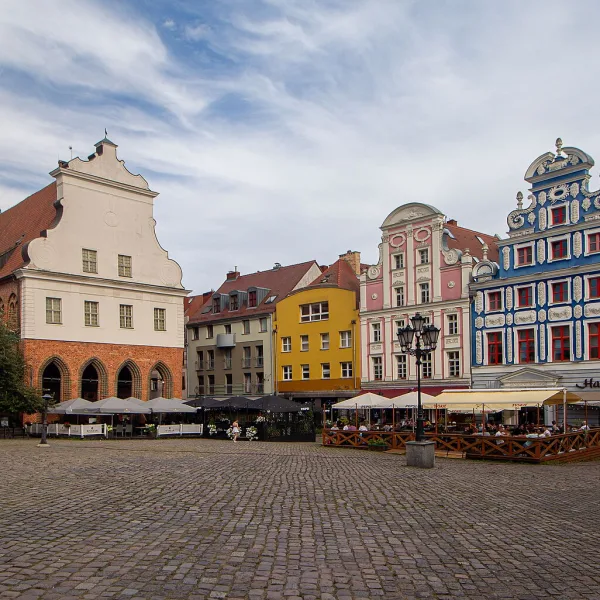
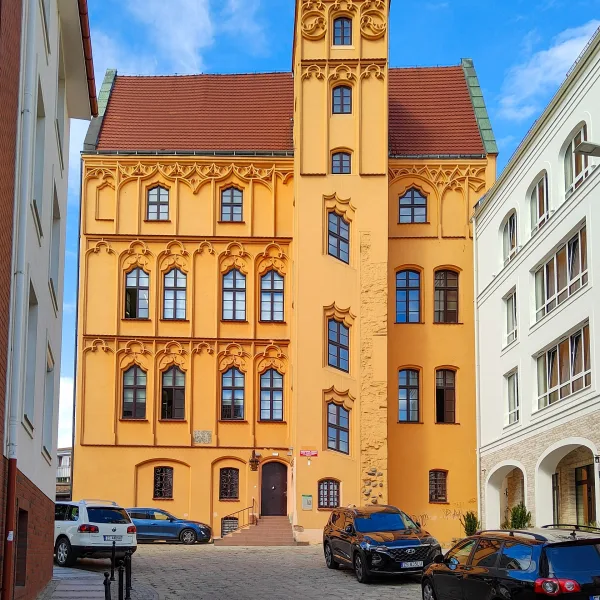
The Rynek Sienny (Hay Market), formerly the Heumarkt, is a cobbled Old Town square with rebuilt townhouses, and next to it stands the Old Town Hall, the Gothic seat of the town authorities from the 15th century, reconstructed after wartime damage in the 1970s, and home to the Museum of the History of Szczecin. From the square it is close to the Loitz Townhouse at Kurkowa 1, a late Gothic house put up for a banking family between 1539 and 1547, today an art school, which is seen from the outside.
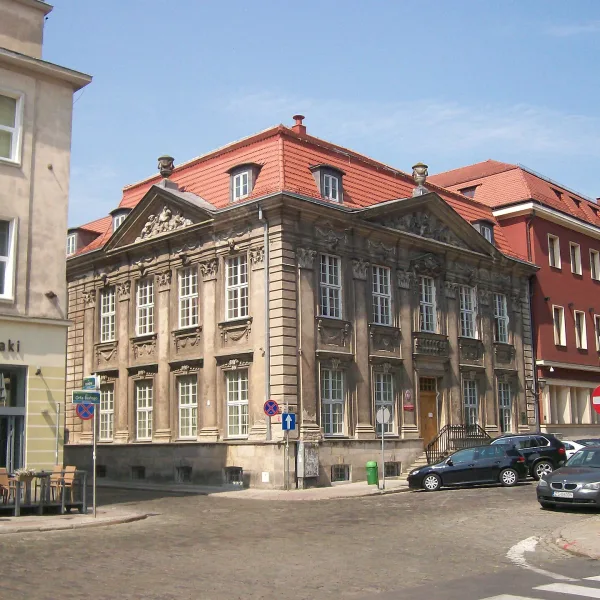
Three monuments around Plac Orła Białego can be covered in a quarter of an hour. The White Eagle Fountain of 1729-1732 is the oldest baroque fountain that still stands in Szczecin. The Palace Under the Globe is a neo-baroque palace crowned with a sculpted globe, now the seat of the Academy of Art. The Velthusen Palace of 1778-1779, once a wine house and piano factory, has housed a music school since 1963. Next to the church of Saints Peter and Paul works the alternative theatre Kana (teatr), set up in 1979 and housed in a townhouse beside that church.
What is there to see by the Oder: Chrobry Embankment, gates and the port?
The second half of the day belongs by the river. The terrace of the Chrobry Embankment, two baroque gates of the Prussian fortress and the port make a route that can be walked, and the views from the quay suit the end of a day in the Old Town.
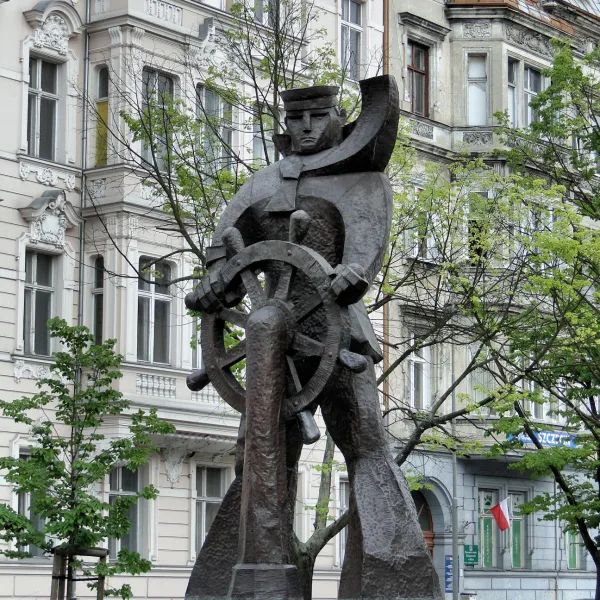
The Wały Chrobrego (Chrobry Embankment) is a viewing terrace about five hundred metres long above the Oder, created in the early 20th century alongside the neighbouring museum, voivodeship office and maritime university buildings. Here stands the National Museum in Szczecin, the largest cultural institution in the region, with four branches in the city. Beside it is the Voivodeship Office building, three linked buildings completed between 1906 and 1911, with a seventy-two-metre tower topped by a sailor figure.
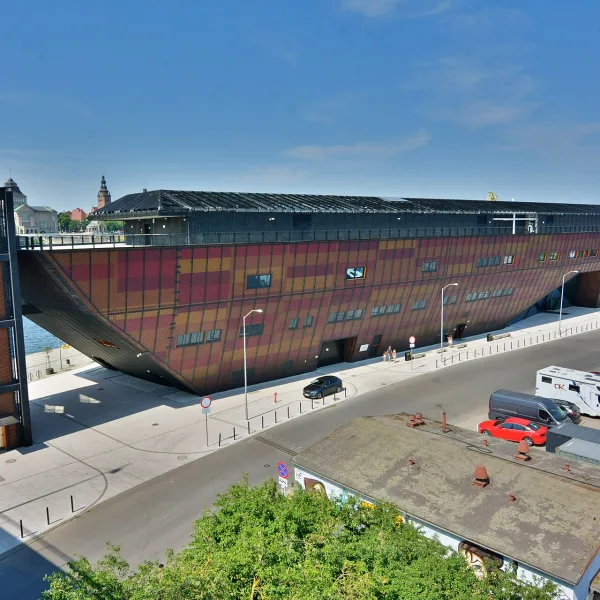
Two gates survive from the old fortress. The King's Gate on Plac Hołdu Pruskiego is decorated with gable sculptures of Mars and Hercules, and the Harbour Gate on Plac Brama Portowa, formerly the Berlin Gate, carries a Latin inscription and the Prussian arms. Further on, on Łasztownia island, lies the Port of Szczecin, a working sea and river port where visitors mostly see the quays and can take a boat trip around the port waters. On the same island stands the Maritime Science Centre, modelled on a ship's hull, with a planetarium and a viewing terrace.
Which squares and buildings are worth seeing in the city centre?
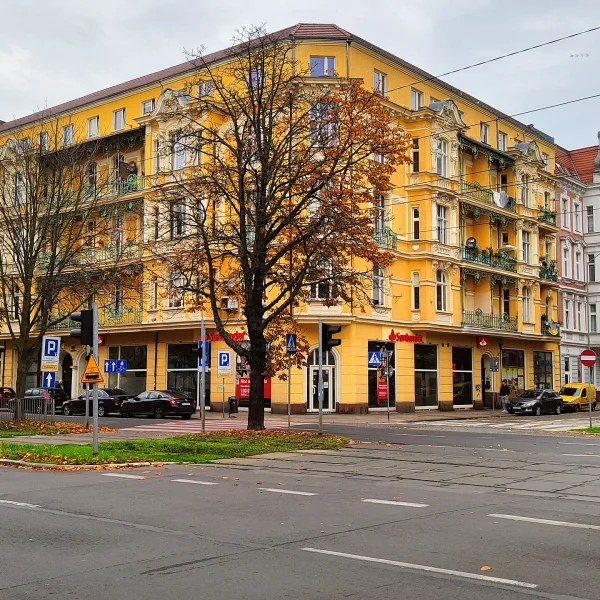
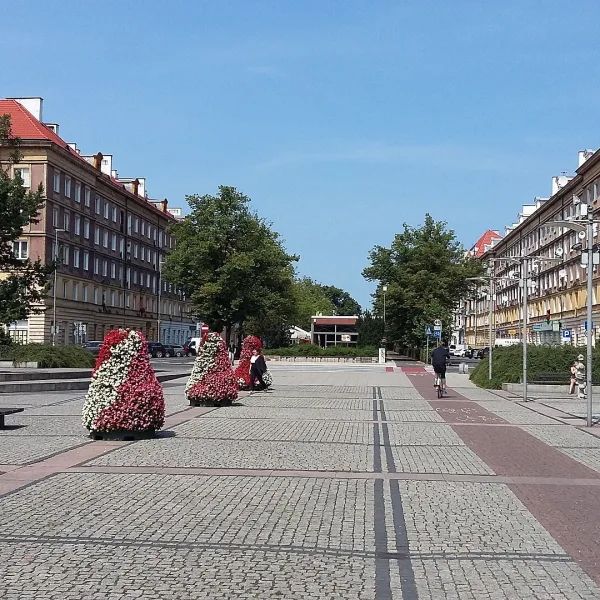
In central Szczecin the streets radiate from star-shaped squares modelled on Parisian solutions. It is a district of townhouses from the late 19th century, public buildings and churches that suits a walk without a plan. The list architecture in Szczecin gathers these buildings in one place.
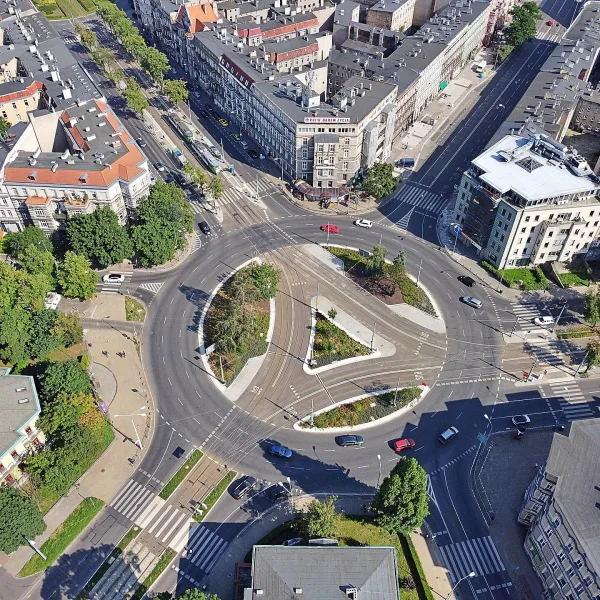
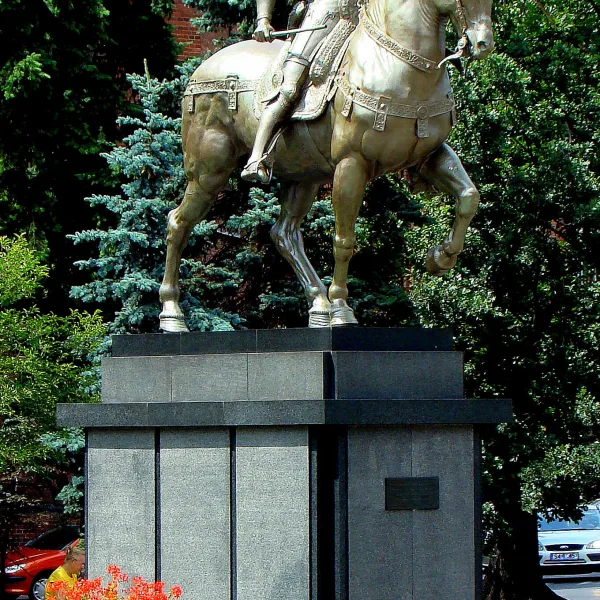
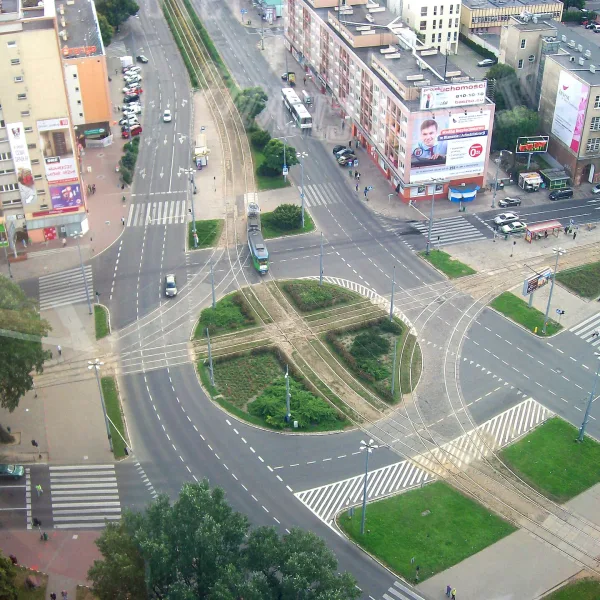
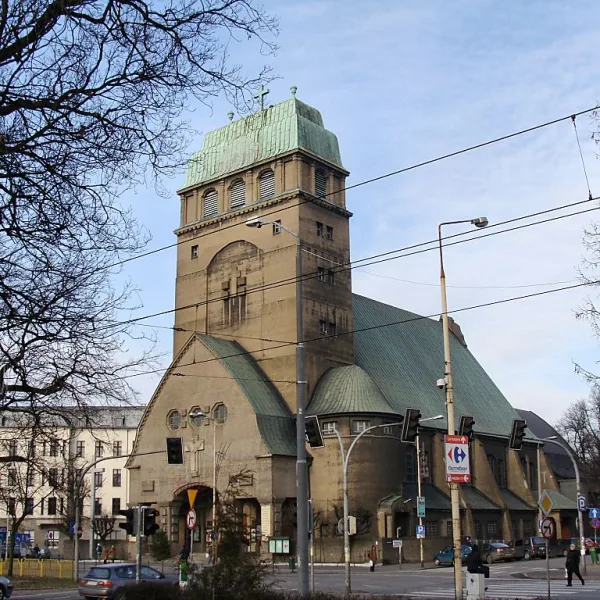
The Plac Grunwaldzki is the biggest of the city's star squares, where eight carriageways meet; its layout became part of the logo of the city's bid for the title of European Capital of Culture. Plac Szarych Szeregów, the former Arndtplatz, has five radiating streets, late 19th-century townhouses and a monument to Józef Piłsudski. Among churches, the easiest to reach is the Basilica of St John the Baptist, a neo-Gothic hall church finished in 1890 that has been a minor basilica since 2008.
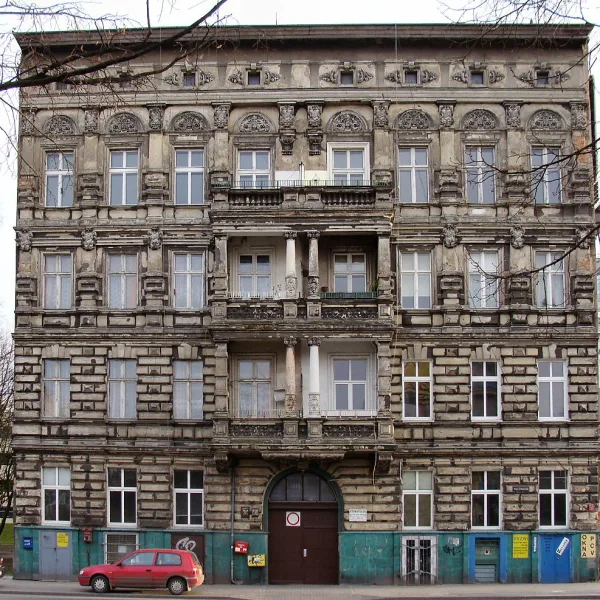
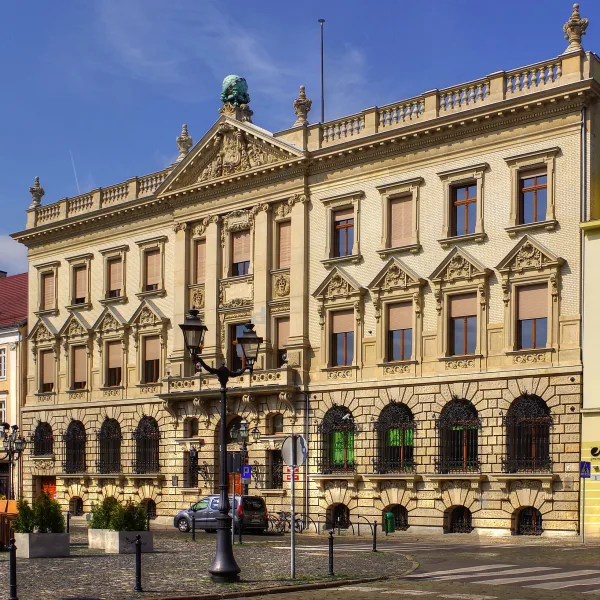
Two surviving townhouses stand out. Malczewskiego 34, nicknamed the Sandwich, survives as the sole pre-war house of its block, and has been on the monuments register since 2004. Piłsudskiego 7 of 1897 is the only preserved building of the street's eastern frontage, with oriel windows and sculpted women on the third floor. The route is completed by the neo-baroque Pomeranian Estates Palace on Aleja Niepodległości, now part of the Academy of Art, and the brick building of the State Archive in Szczecin from 1901.
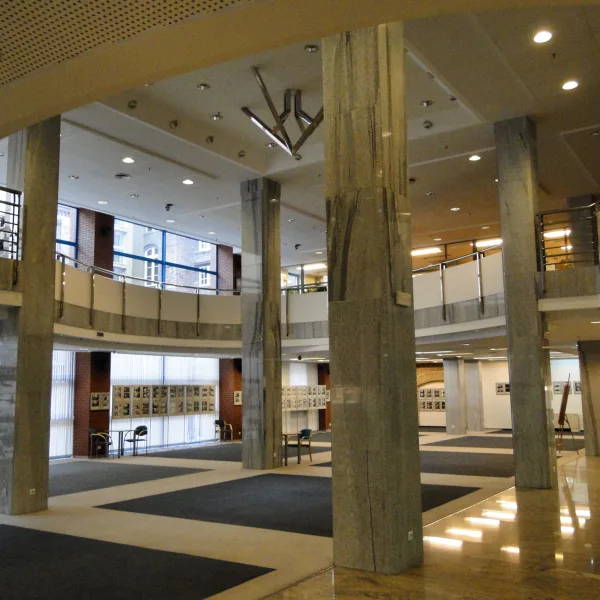
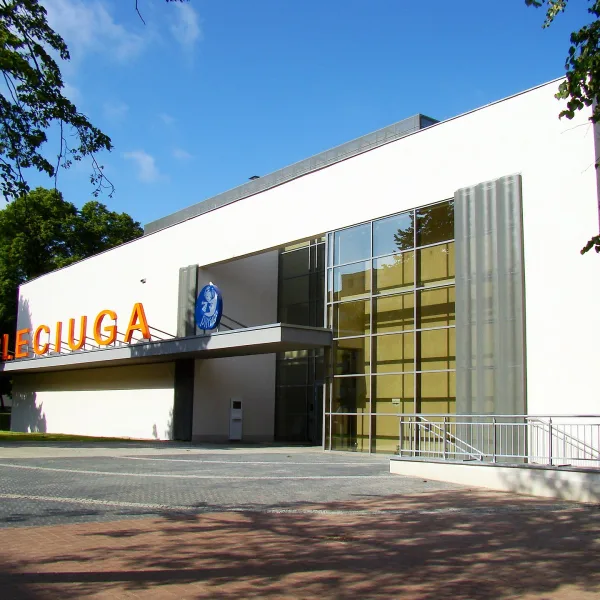
The Red Town Hall on Plac Batorego, a neo-Gothic building from 1875-1879, is viewed from outside because offices now occupy it. A green counterpoint is the Jasne Błonia, a green from 1925-1927 with 213 plane trees, and a musical one is the Mieczysław Karłowicz Philharmonic, a white building at Małopolska 48 with a symphony hall seating nearly a thousand.
Where in Szczecin can you go for a park, a lake or a viewpoint?
Greenery in Szczecin is more than squares in the centre. Large parks lie on the slopes of the Niemierzyn Valley and in Łękno, while lakes and forests on the outskirts allow longer outings. The full list is under parks and nature in Szczecin, and views are gathered under beautiful views in Szczecin.
City parks
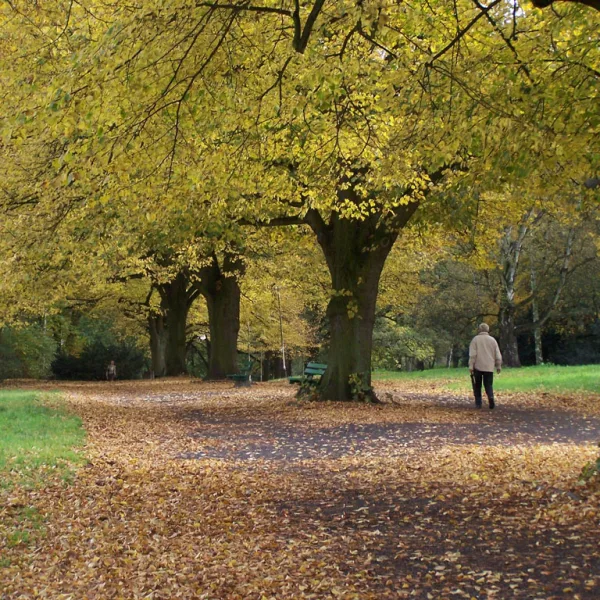
The Jan Kasprowicz Park, dating from 1900, covers about twenty-seven hectares, lies by Lake Rusałka and holds the Summer Theatre and rare tree species. The Stefan Żeromski Park is the second largest city park, a dendrological one, laid out where cemeteries once lay, with sculptures and 177 species of trees. The Rose Garden in Szczecin in Łękno was laid out in 1928 and has more than nine thousand roses in ninety-nine varieties, with a recreated Bird Fountain. The Syrenie Stawy (Mermaid Ponds) are a group of ponds in the Niemierzyn Valley, about three kilometres from the centre, beside a walking and cycling avenue.
Lakes and viewing towers
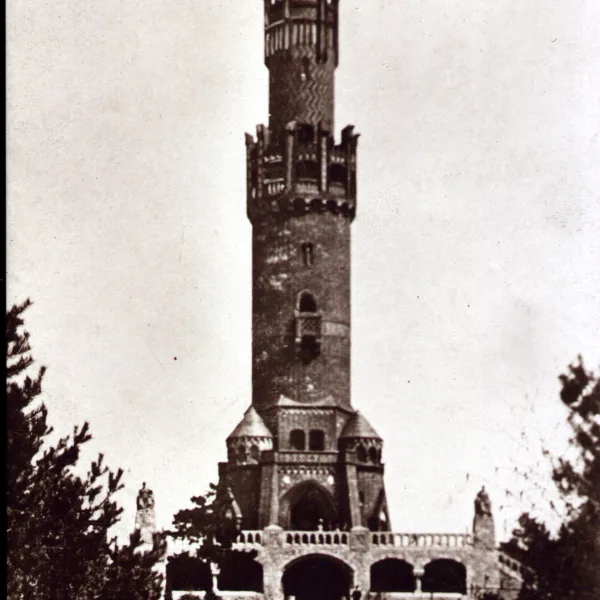
The Emerald Lake appeared when an abandoned chalk quarry filled with water in 1925 and lies in the Bukowa Forest, in the Zdroje district; it takes its name from the colour of the water. Dąbie is a delta lake of 54 square kilometres with a fairway for sea-going ships, marinas and sailing harbours. Two sites involve hilltop towers: the Quistorp Tower in the Arkoński Wood is a ruin that cannot be climbed, while the Bismarck Tower on the Green Hill is a twenty-six-metre structure with a viewing terrace that is sometimes closed for renovation, so check before you go whether it is open.
What can you do in Szczecin when it rains?
On a wet day choose a museum, the philharmonic hall, a theatre or a library. The list Szczecin in the rain gathers several dozen such places, and museums have their own category, museums in Szczecin. What they share is a roof overhead and the chance to spend a whole afternoon inside.
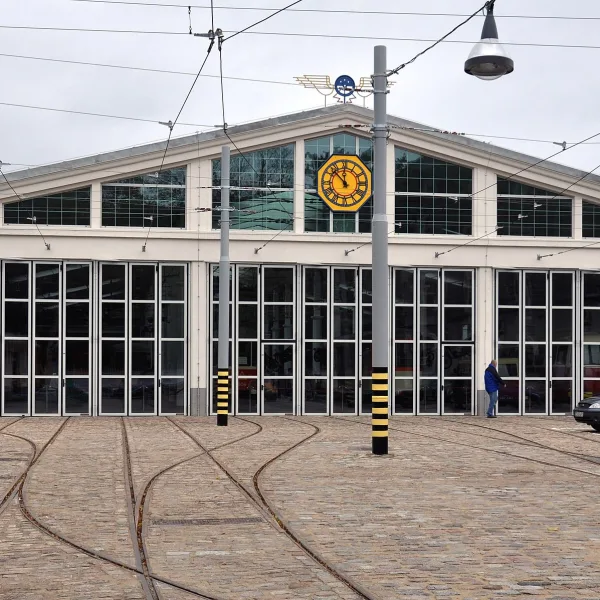
The Museum of Technology and Transport in Szczecin occupies a historic tram depot in Niebuszewo-Bolinko and shows local vehicles and an interactive science centre. For older children and families the Maritime Science Centre mentioned above is a good choice, with more than two hundred exhibits that you can touch yourself. The Pomeranian Library on Podgórna street has operated since 1905 and is the largest library in West Pomerania. Family suggestions are gathered under for families in Szczecin.
Which memorial sites and burial grounds can you find in Szczecin?
Szczecin has places commemorating the history of the city, including its destroyed Jewish community. They are approached with gravity, which is why they are described plainly, and the full set is in the category memorial sites in Szczecin.
The New Synagogue in Szczecin stood on today's Dworcowa street, was built in 1873-1875 and was set on fire in November 1938; a plaque beside the Pomeranian Library commemorates it. The Central Cemetery in Szczecin is an active necropolis in Gumieńce covering more than a hundred and seventy hectares, founded in 1901, with a historic avenue and a botanical trail; it was the first site in the city declared a Historic Monument. It is visited with respect for the people buried there. Other cemeteries and monuments are gathered under cemeteries and monuments in Szczecin.
Frequently asked questions
How do you see Szczecin in a single day?
Begin in the Old Town with the castle, the Maiden Tower and the archcathedral, then walk to the Chrobry Embankment and the gates, and spend the evening on the squares of the centre or at the philharmonic hall. That route can be covered on foot.
Which attractions in Szczecin are free?
Many outdoor monuments, squares, parks and terraces are free, including the Chrobry Embankment and Plac Grunwaldzki. The full list is in the category free places in Szczecin.
Where should you go in Szczecin on your own or as a couple?
For a solo walk, parks, villas and squares are a good fit, and the list Solo in Szczecin covers more than a hundred places. For a date or a walk for two, try the set for couples in Szczecin.
Which districts of Szczecin have the most attractions?
Most places lie in the Old Town and the Centre, followed by Nowe Miasto, Pogodno and Śródmieście-Północ. Dąbie, Łękno and Zdroje mostly mean lakes, parks and woodland.
Are there concerts and plays in Szczecin?
Yes, the city has a philharmonic hall, theatres and an opera house; they are listed in the category theatres and opera in Szczecin, and dates are in the events calendar.

 Historic sites