Parks and nature in West Pomerania: the Szczecin Beech Forest, nature reserves, arboretums, canoe rivers and city parks in Szczecin and Koszalin.
This guide is for anyone looking for green space for a walk, a bike ride or a paddle, and wondering where to go. Entry is free almost everywhere, and the selection covers nearly a hundred places: from parks in town centres and dendrological gardens to strict nature reserves and national parks. In Szczecin itself, the beech woods begin at the edge of the housing estates.
Where in West Pomerania can you go for a walk in nature?
The easiest start is Szczecin, because the Beech Forest (Puszcza Bukowa) begins almost at the city's estates, and the city parks have old trees and trails. To go further, choose a national park: Wolin National Park on the Baltic or Drawa National Park in the Drawa Forest.
The choice depends on your time. For an hour, a city park will do; for half a day, a forest and a reserve; for a whole day, a river by canoe or the island of Wolin with its cliffs. It is worth knowing that many city parks were laid out on former cemeteries, which the layout of the paths and the names of places still recall.
Which parks in Szczecin are worth visiting?
Szczecin has a dozen or so green places in this list: city parks, a rose garden, a dendrological garden and parts of the Beech Forest. It is best to combine them by district, because they lie in several different parts of the city.
Kasprowicz Park, the Mermaid Ponds and Łękno
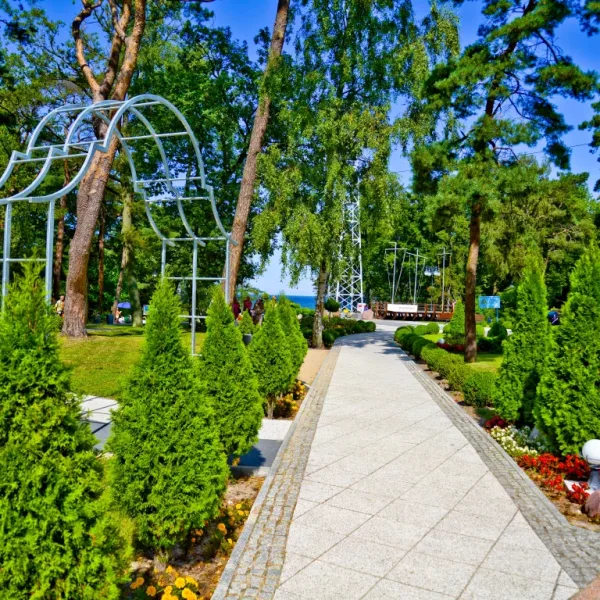
Jan Kasprowicz Park is the largest city park in Szczecin: about 27 hectares, laid out in 1900 on the slopes of the Niemierzyn Valley above Lake Rusałka. You will find the Summer Theatre, sculptures and rare tree species. Further into the valley, roughly three kilometres from the centre, lie the Syrenie Stawy (Mermaid Ponds), a group of ponds in the Kasprowicz-Arkona park complex. A park avenue there serves as a walking and cycling route.
Also in Łękno, nearby, is the Rose Garden (Ogród Różany), known as Różanka. It is a two-hectare garden from 1928 with more than nine thousand roses in 99 varieties, plus a restored Bird Fountain.
Jasne Błonia and the parks of the Old Town
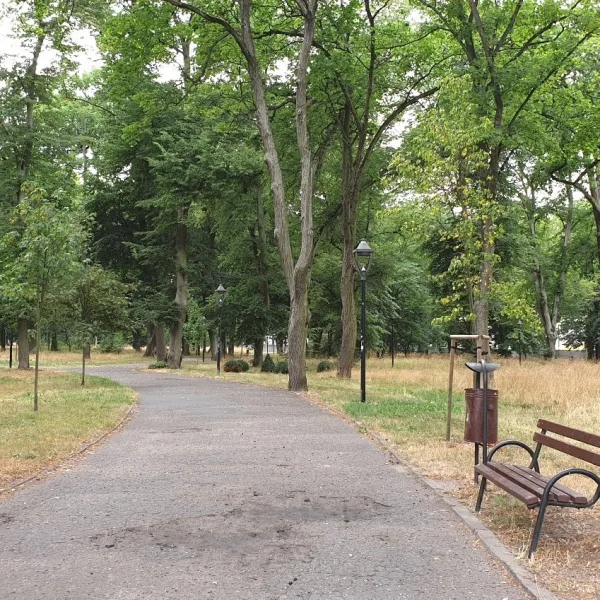
Jasne Błonia is a green square from 1925-1927 in Śródmieście-Północ, with 213 plane trees and monuments. The City Hall stands on one side, so it is a good stop between sightseeing and a rest on a bench. Stefan Żeromski Park is the second largest city park in Szczecin, about 22 hectares, with a collection of 177 tree species and sculptures. It was laid out on the site of former cemeteries.
The Stefan Kownas Dendrological Garden in Niebuszewo-Bolinko has a similar origin. It was created in 1973-1974 on the former Majdański Cemetery, and the layout of paths and terraces still shows it. It has ancient beeches, more than three hundred yews and glacial boulders. Brodowski Park in Żelechowa, on the Warszewo Hills, is a forest park from the 1970s on the site of the former Brodowo Cemetery, with monumental trees.
The Central Cemetery in Gumieńce needs separate mention. It is an active necropolis from 1901 laid out as a park, covering 172.33 hectares, with a historic trail and a botanical path. Visit it with respect, because burials still take place.
The Beech Forest inside the city
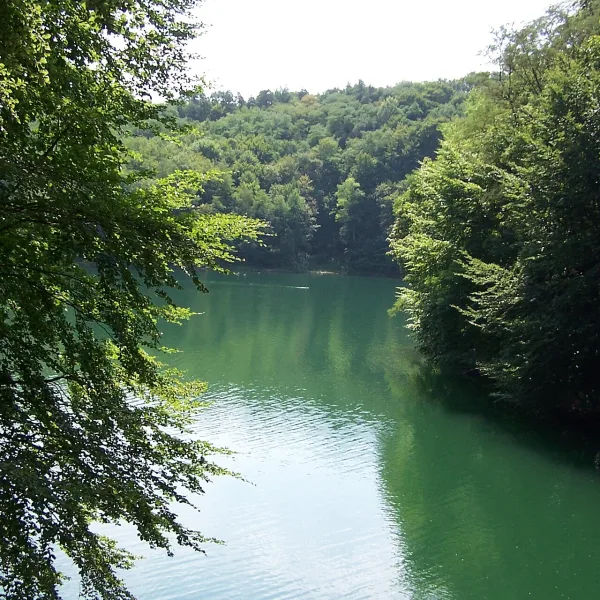
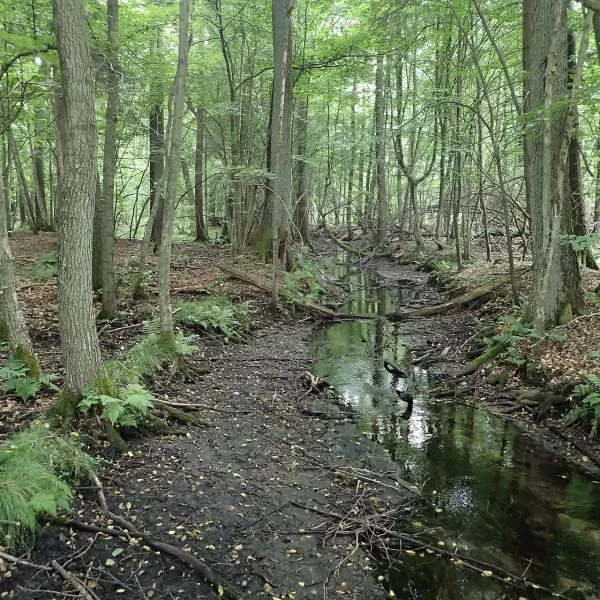
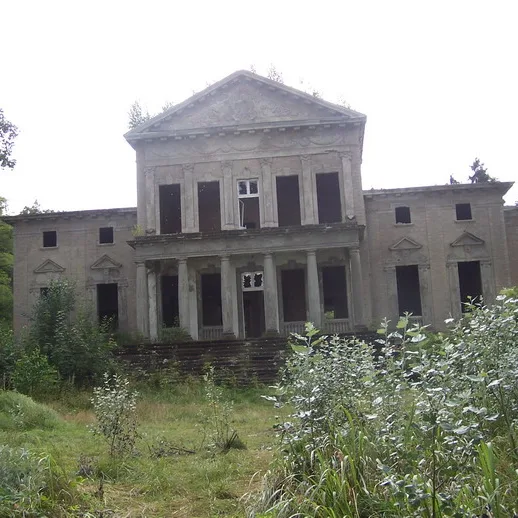
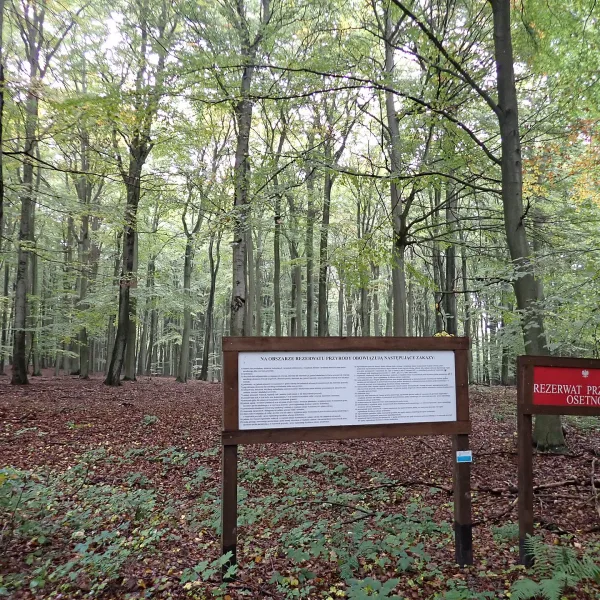
The most forested side of Szczecin is the Zdroje Forest Park, 173 hectares of the north-western part of the Beech Forest with beech woods, trails, viewpoints and access to Lake Szmaragdowe. On the right bank lies the Klęskowo Forest Park: 23 hectares with century-old beeches, exotic trees and the ruins of a manor. The Bukowe Zdroje reserve lies just outside Szczecin. It is the largest reserve in the Beech Forest: 221 hectares of beech woods and riverside woodland with 31 natural monuments. The Buczynowe Wąwozy reserve is under strict protection, with a yellow trail along its border. You can read more about places inside the city in the article on Szczecin's parks and on the page parks and nature in Szczecin. Zdroje has a page of its own: Zdroje.
What parks and gardens do Stargard and other towns have?
Stargard, Koszalin, Kołobrzeg and Szczecinek have their own city parks that combine greenery with history: old ramparts, walls, a lake or a spa. They make good walks between sightseeing in town.
In Stargard, Bolesław Chrobry Park is the oldest and largest green area in the city, wrapping around the Old Town from the north and west on former ramparts, beside medieval walls and towers, with the Nightingale Avenue. A fuller account is in the article on the parks of Stargard, and the full list is on the page parks and nature in Stargard.
In Koszalin, three places are worth a look. The Park of the Pomeranian Dukes lies in the Dzierżęcinka valley and has a castle pond and a fragment of the walls. The Amphitheatre Park is an eight-hectare park from 1887 with an amphitheatre, natural monuments and sculptures along the paths. Tadeusz Kościuszko Park, 7.5 hectares, was laid out on the former Old Cemetery and has a library in the middle. All of them are on the page parks and nature in Koszalin.
In Kołobrzeg the green places are linked to the spa. Stefan Żeromski Park in the Spa District was founded in 1853, and its features are the Monument to the Wedding of Poland to the Sea, a concert shell and a swamp cypress. The park also shields buildings from storms. In the centre lies Plac 18 Marca, a square from 1880 laid out as a French garden, with a fountain and natural monuments. In Szczecinek the City Park runs along Lake Trzesiecko and has a rose garden, a concert shell and five cycling routes. Full lists are on the pages for Kołobrzeg and Szczecinek.
Where are the arboretums and themed gardens in West Pomerania?
Arboretums and show gardens lie in several places in the region and make a calm outing. The nearest to Szczecin is Glinna, with Przelewice and Dobrzyca further away.
The Arboretum in Glinna belongs to the Gryfino Forest District, lies on the edge of the Beech Forest and has more than eight hundred species and varieties of trees and shrubs, mostly exotic. Entry is free. The Dendrological Garden in Przelewice, by the palace, has about 1,200 plant species. Of the roughly 45 hectares in total, thirty are open to visitors. The Hortulus Themed Gardens in Dobrzyca are a group of 28 gardens on about five hectares, from Japanese and French to Mediterranean and English. Near Koszalin lies the Arboretum in Karnieszewice: a forest garden from the 1880s with Douglas fir avenues and free entry. A broader overview is in the text on gardens and arboretums of the region.
Which reserves and national parks suit walkers and canoeists best?
The region's reserves protect very different environments: beech woods, peat bogs, heaths, steppe grasslands, glacial-channel lakes and shallow bird lagoons. Before you go, check the rules for moving around the area, because some sites are under strict protection.
National parks and rivers
Wolin National Park lies on the island of Wolin, between the Bay of Pomerania and the Szczecin Lagoon, and has cliffs on the Baltic, a bison enclosure, a nature museum and five viewpoints. Drawa National Park in the Drawa Forest is above all a canoe route along the Drawa, with educational trails and beech woods. The Drawa itself can be paddled from Czaplinek to Krzyż, but paddling through the military training ground is prohibited. The Parsęta and the Rega are also popular canoe routes: the Parsęta reaches the Baltic at Kołobrzeg, and the Rega at Mrzeżyno.
Reserves with a particular specialty
For lovers of post-glacial landscape there are Dolina Pięciu Jezior (Valley of Five Lakes) with the sources of the Drawa near Połczyn-Zdrój, and Dolina Rurzycy with a 25-kilometre canoe route. A raised bog can be seen in the Bagno Kusowo reserve, and heathland on a former military training ground in the Diabelskie Pustacie reserve near Borne Sulinowo, with a viewing tower and educational trails.
Steppe grasslands are protected at Brodogóry near Pyrzyce, and above the Oder valley lies Bielinek, the only site of the downy oak in Poland. Waterbirds can be watched at the Liwia Łuża Lake reserve near Niechorze, where a 9.3 km circular trail runs with three piers. In spring, visit the Grądowe Zbocze reserve near Recz, known for flowering wild garlic and fumewort, or the Dęby Wilczkowskie reserve with its old oak stand.
What natural curiosities can you see along the way?
Besides the reserves, the region has individual places worth a short detour: natural monuments, tree avenues and remarkable boulders. An hour and a car are usually enough for each.
The Krzywy Las (Crooked Forest) in Nowe Czarnowo is a natural monument of about 0.33 hectares, with pines bent at the base at an angle of about 90 degrees. Various hypotheses try to explain the bends. The beech avenue from Jacinki to Nacławie is about 400 old beeches along road no. 206, forming a tunnel about five kilometres long. In Tychowo stands Trygław, an erratic boulder regarded as the largest in Poland, a natural monument since 1954, with glacial striations.
How do you combine parks and nature with other places?
Green space combines best with sightseeing in the same town or a trip to the water: a museum, a castle or a walk around an old town fits well. That gives the day more than one goal.
If you are travelling with children, look at the For children section or read the guide to Szczecin with a child. When it rains, museums or aquaparks and swimming pools are better. For walks with a view, try viewpoints, hills and trails and lakes. By the sea, check beaches and the coast and spa towns. To end the day, atmospheric places or entertainment fit well. For history near a park there are historic sites, churches and monasteries and cemeteries and monuments. On the coast there are also lighthouses and ports, and in town culture.
Frequently asked questions
Is entry to parks and reserves paid?
Almost all places in this list have free entry, including city parks, the arboretums in Glinna and Karnieszewice and most reserves. Check the rules for strictly protected areas and national parks with the manager.
Which park in Szczecin is the largest?
The largest is Jan Kasprowicz Park at about 27 hectares. The second largest is Stefan Żeromski Park at about 22 hectares.
Where can you canoe in West Pomerania?
Canoe routes run along the Drawa, Parsęta, Rega and Rurzyca. The Drawa flows through Drawa National Park, the Parsęta reaches the Baltic at Kołobrzeg, and the Rega at Mrzeżyno.
Where can you see heathland and peat bogs?
Heathland grows in the Diabelskie Pustacie reserve near Borne Sulinowo, and a raised bog is protected in the Bagno Kusowo reserve near Szczecinek. Both have trails, and the first has a viewing tower.
Which green places are nearest to Szczecin?
The Zdroje Forest Park, the Klęskowo Forest Park and the Bukowe Zdroje reserve in the Beech Forest, and further out the arboretum in Glinna. Both forest parks lie within the city limits.

 Parks and nature